Exchange Ranking
 Top Exchanges
 24h Volume Ranking
 Popularity Ranking
 Exchange BTC Balance
 Proof of Reserves
 Decentralized Exchanges
 Funding Rate
 Funding Heatmap
 Liquidation Data
 Max Pain
 Long/Short Ratio
 Whale L/S Ratio
 Binance/Okex/Huobi L/S
 Bitfinex Margin L/S
 ETF Tracker
 Solana ETF
 XRP ETF
 Hong Kong ETF
 Bitcoin Treasuries
 Crypto Reversal
 Ethereum Reserves
 HyperLiquid Wallet Analysis
 Hyperliquid Whale Watch
 Large Transactions
 On-chain Movement
 Bitcoin ROI
 Stablecoin Market Cap
 Options Analysis
 News
 Articles
 Economic Calendar
 Features
 Wallet
 Contract Calculator


 Security
 Collections
 Watchlist
 Following
 BTC
 ETH
 SOL
 XLM
 XRP
 XTZ
Key Insights
Tyler Winklevoss accuses the "Better Markets" group of opposing individual freedoms and cryptocurrency autonomy. Nate Geraci countered that the New York Stock Exchange, Nasdaq and DTCC (American Depository Trust and Clearing Corporation) have already launched activities in the blockchain space. After the Senate CLARITY Act stalled, Washington has yet to introduce a complete federal cryptocurrency market structure law.
Recent crypto news focuses on a public debate over digital asset regulation. Taylor Winklevoss attacked the Better Markets group for criticizing the Commodity Futures Trading Commission (CFTC)'s latest crypto initiative. The incident reflects broader divisions: Should federal policy prioritize ensuring market access and innovation, or implement stricter investor protection?
"Better Markets" questioned the practicality of cryptocurrencies and criticized the CFTC's proposed direction of retail crypto regulation. Industry figures including Nate Jerachy and Winklevoss hit back, pointing out that major financial institutions are already building blockchain-based products and infrastructure.
Winklevoss directs the encryption debate to personal freedom
Winklevoss posted on platform X, using the word "Better Marxists" to criticize the "Better Markets" organization. He described the group as hostile to innovation and personal sovereignty, and even called it "anti-American." 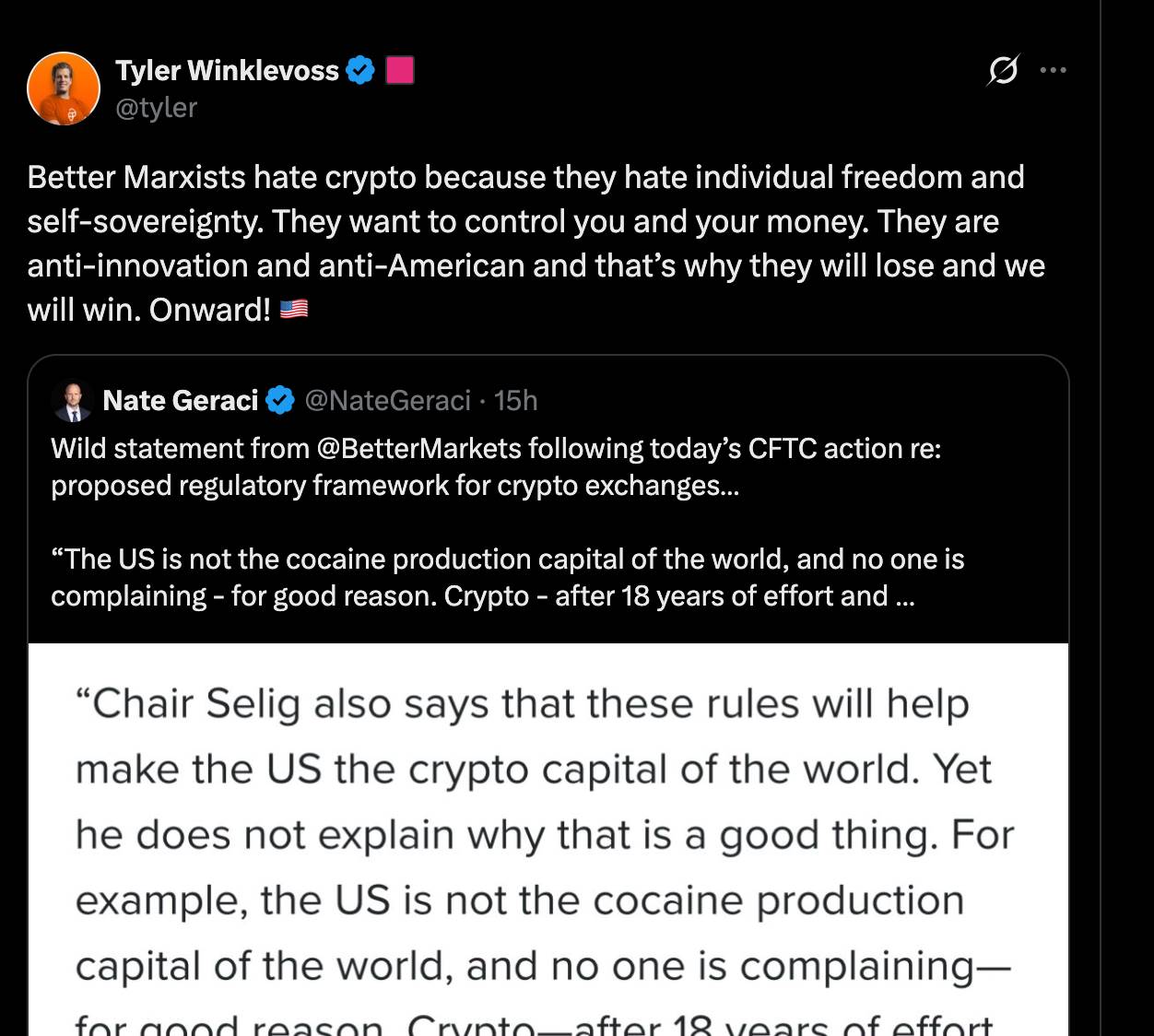
These evaluations represent his reaction to the organization's positions rather than the results of investigations into its specific activities. Gerachi previously shared a statement from Better Markets that challenged the role of cryptocurrencies 18 years after their birth. The organization claims that cryptocurrencies lack practical uses and only serve speculative or criminal purposes. Its statement also compared the U.S. leadership ambitions in the cryptocurrency space with the U.S.'s lack of leadership in cocaine production.
Gerachi refuted this assessment by listing major financial institutions being built in the space, such as the New York Stock Exchange, Nasdaq and DTCC. He said the industry wanted policymakers to provide clear operating rules, adding that if politicians failed to provide those rules, the CFTC and the Securities and Exchange Commission would need to take action.
Regulatory proposal focuses on institutional authority
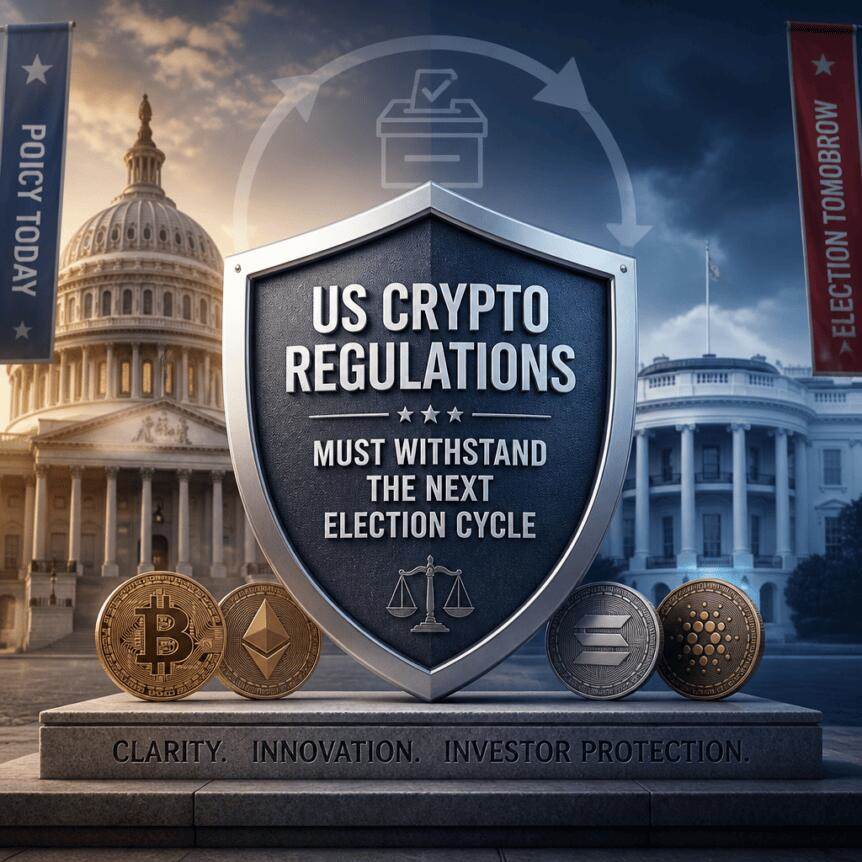
Behind this open controversy, there is an open question: which federal agency should supervise different digital assets. Congress is considering market structure legislation to clarify the responsibilities between the U.S. Securities and Exchange Commission (SEC) and the Commodity Futures Trading Commission (CFTC).
The proposals could expand the CFTC's jurisdiction over the priced digital commodity market while retaining the SEC's regulatory authority if securities laws apply. CFTC Chairman Michael Selig has cited Bitcoin, Ethereum, Solana, Stellar, Tezos and XRP as examples of digital goods. However, the legislative proposal may change before it is approved by Congress. Both online exchanges and regulatory initiatives suggest that policymakers have not yet addressed all classification issues.
Broader crypto policy efforts also include stablecoins, custody services and blockchain settlements. Stabiloins are gradually forming a clearer federal framework, and banking regulators have clarified matters related to institutional participation in digital asset services. Still, questions remain about the precise boundaries of decentralized finance (DeFi) and the responsibilities of the SEC and CFTC.
Gemini's law enforcement history adds background
For Taylor Winklevoss, the dispute follows the federal law enforcement actions that Gemini itself experienced. In January 2023, the SEC sued Genesis Global Capital and Gemini, alleging that its Gemini Earn lending program constituted an unregistered securities offering. The case is part of a broader controversy involving the application of existing securities laws to cryptocurrency companies. The SEC also took enforcement actions against Ripple, Coinbase and Binance. Subsequently, brothers Gemini and Winklevoss advocated changes in U.S. encryption policy.
Although the rules are clearer, companies operating under emerging frameworks still have compliance requirements. Legislation may determine registration obligations, customer asset protection, disclosure requirements, capital requirements and market monitoring. These obligations remain at the heart of the policy debate that accompanies criticism of "Better Markets".
The latest crypto news confrontation comes as the United States continues to improve its regulatory approach. Congress has not yet resolved the remaining market structure issues described in the proposal.