
 Exchange Ranking
 Top Exchanges
 24h Volume Ranking
 Popularity Ranking
 Exchange BTC Balance
 Proof of Reserves
 Decentralized Exchanges
 Funding Rate
 Funding Heatmap
 Liquidation Data
 Max Pain
 Long/Short Ratio
 Whale L/S Ratio
 Binance/Okex/Huobi L/S
 Bitfinex Margin L/S
 ETF Tracker
 Solana ETF
 XRP ETF
 Hong Kong ETF
 Bitcoin Treasuries
 Crypto Reversal
 Ethereum Reserves
 HyperLiquid Wallet Analysis
 Hyperliquid Whale Watch
 Large Transactions
 On-chain Movement
 Bitcoin ROI
 Stablecoin Market Cap
 Options Analysis
 News
News Articles
 Economic Calendar
 Features
 Wallet
 Contract Calculator


 Security
 Collections
 Watchlist
 Following
When blockchain is suspended, your tokens will not disappear. The balance stays exactly in the state recorded in the last valid block. What disappears is the ability to move that balance. Therefore, the key question after the chain is suspended is not whether your assets are still there, but when you will be able to access them again.
As far as MANTRA is concerned, this question can now be answered accurately, and the answer is divided into two almost unrelated parts.
This chain has started to be ejected again from August 22, 2026, 03:38:07 UTC. However, the withdrawal function of Binhang OM tokens was still suspended at 18:38 UTC on the same day.
About fifteen hours after the blockchain restart, holders of OM held on the exchange still had no access to their balance.
Both data are derived from our queries on their respective original sources, with block heights, timestamps and specific wording attached below. The significance of this case goes far beyond this token, as it clearly draws a line between two concepts that are often confused every time the chain closes: the state of the network and the state of your exchange. How different trading platforms handle such interruptions, and which platforms publish network status, are covered in our comparison of the best cryptocurrency exchanges.
What is a chain pause and why does a team stop its own blockchain?
Chain suspension refers to the state where the verifier of the blockchain stops generating new blocks, resulting in no transaction being confirmed. A verifier is a machine that examines incoming transactions, packages them into a block, and confirms the block with other verifiers. If enough of these machines stop in a coordinated manner, the chain will come to rest.
For networks in the Cosmos ecosystem, this stop is a designed emergency switch, not an accident. The verifier may agree to suspend production while the failure is investigated. The price is high: as long as the chain stops, all recharges and withdrawals will expire, all applications on the chain run on frozen data, and no one can close the position. The advantage is that when no one understands the failure, the damage does not continue to spread.
This trade-off has occurred multiple times in recent days. What it looks like when another network is stopped for an emergency, and what the owners of that network actually need to do, we have covered in our article on the suspension of the MAYAChain network.
Why a suspension is not a loss
The status of the blockchain is the sum of all confirmed blocks. If the chain stops, the state is preserved exactly as it was recorded in the last block. Your address still holds the same amount of tokens, and your private key is still valid. The only thing missing is the confirmation work required for new transactions. Therefore, suspension is a usability issue and does not involve ownership.
The distinction may sound academic, but it determines whether you stay calm in this situation or panic and make a mistake. Anyone who thinks the balance is gone will rush to sell it elsewhere or fall into the scam that occurs after every major event: the so-called recovery service, which requires you to provide mnemonic words. No recovery service can restart a suspended chain for you.
Detailed explanation of block data: The MANTRA chain is suspended for 28 hours and 25 minutes
A block is a set of confirmed transaction packages containing a timestamp and serial number (block height). Because these numbers are assigned continuously to each chain, pause times can be accurately measured without having to trust any reports. At 18:38 UTC on August 22, 2026, by querying the public REST endpoint with chain ID of mantra-1, the following information was obtained:
Last block before suspension: 17,449,399, timestamp August 20, 2026 23:13:04 UTC.
The first block after restart: 17,449,400, timestamp August 22, 2026 03:38:07 UTC. This block can be queried directly on the chain.
Pause duration: 28 hours, 25 minutes and 3 seconds.
Chain head at the time of measurement: 17,463,074 at 18:38:06 UTC, that is, 13,674 blocks were produced after restart.
Average block exit time for the last 1000 blocks: 3.32 seconds.
The last number is the most convincing. The out-block time is the average interval between two consecutive blocks, and 3.32 seconds is the normal rhythm of the network. As a result, the chain is running normally rather than falling behind. The first block after the restart immediately carried 301 transactions, which is consistent with the restart situation: transactions accumulated during the pause were processed in the first few blocks.
What this measurement proves, and what remains unsolved
What is proven to be the operating state of the blockchain, independent of any report. What is left of the measurement is what is happening offline: whether the exchange has reconnected to its systems, whether individual verifiers are still re-synchronizing, and whether the cause of the event has been ascertained. Anyone who concludes from the running block counter that the problem has been solved is over-interpreting. The block counter answers only one question, and it answers very reliably: Will the chain accept transactions again?
Why the exchange is still closed: Network status and funds gateway are two switches
The exchange runs a separate funds gateway for each token and each network. This is part of the exchange's software that receives top-ups from the blockchain and sends withdrawals to the blockchain; it works separately from the matchmaking engine and switches on and off separately. If the chain stops, the exchange will close this gateway to prevent withdrawal cards from being transported.
The key point is that this switch will not automatically reopen when the chain resumes running. Exchanges must resynchronize their nodes, check the balance of each recharge address with the restored chain, and grant licenses internally. This takes time, and each transaction takes different time. It is during this window that holders are stuck: the blockchain will accept their transactions, but the exchange will not let them go.
How the same mechanism works when the network is reset to an earlier state after an event is described in our article on blockchain rollback after exploit. There the data itself changes; here the data remains unchanged, only access is prohibited.
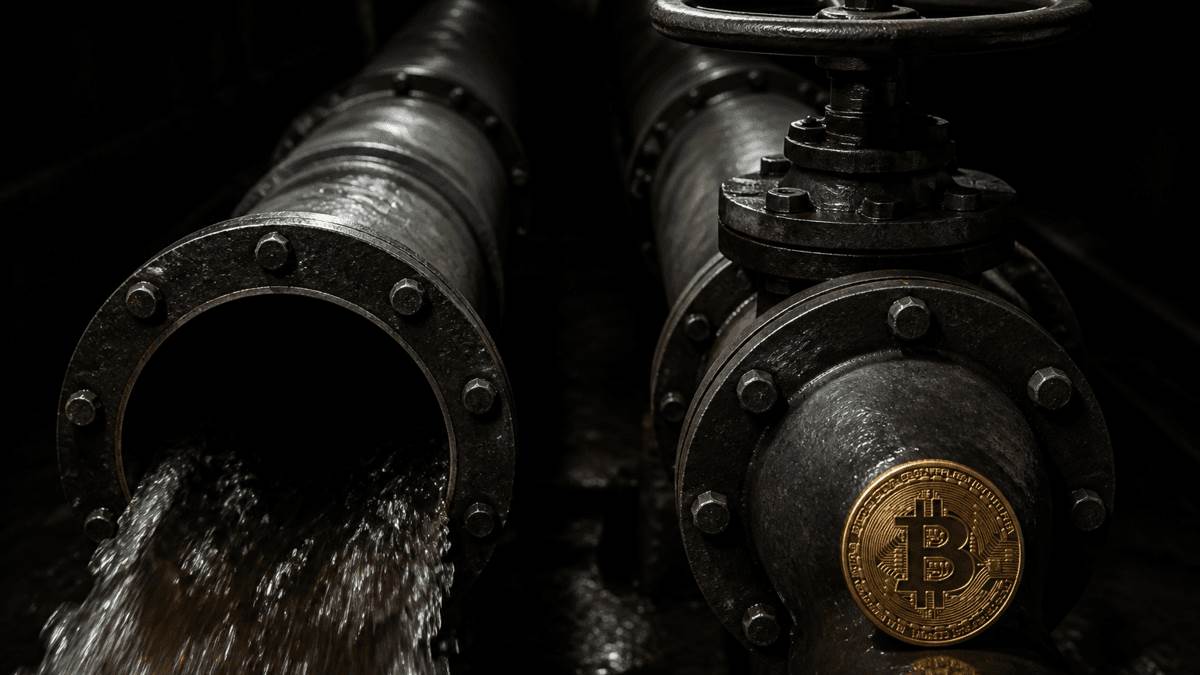
Two separate lines with separate valves: re-flow of the chain will not subsequently open the exchange's valves.
Recharge, withdraw, and trade: Which functions of the coin OM are open and which are frozen
The exchange's public network endpoint lists all support chains for each token and their respective switches. At approximately 18:38 UTC on August 22, 2026 (approximately 15 hours after the chain restart), OM displayed the following:
Network: Mantra Chain: Recharge suspended, withdrawal suspended.
Network: BNB Intelligent Chain (BEP20): Recharge is open, withdrawal is suspended.
At the overall token level: Withdrawal suspended.
The explanation text provided by the exchange itself, for the withdrawal field, the original text reads: "The network is currently experiencing problems and withdrawal has been suspended to prevent assets from getting stuck during the processing process or causing financial losses." Withdrawal of this asset will resume soon."
For recharge, the original text reads: "The network is currently experiencing problems. Once confirmed on the blockchain, your funds in transit are safe and will be credited to your account shortly after the recharge is restored."
In short: The exchange declares that the confirmed recharge is safe and promises to receive it later. The text does not promise when the withdrawal will be reopened. The word "soon" is not a deadline you can rely on, nor does it constitute a commitment to any date.
There is a bit of caution about rigour because it is easy to use this data source incorrectly: two entries containing the token in the same query have conflicting values in the transaction status field. Whether spot trading was suspended there cannot be clearly drawn from this data, so the bank cannot use it as evidence. What has been determined at this time is the withdrawal freeze. The token can still be traded elsewhere, which is shown by a second independent source: Kraken's public asset endpoint still listed OM as "enabled" at 18:38 UTC on August 22, 2026, and the same exchange disclosed interruptions in its recharge and withdrawal route on the status page.
Self-custody versus exchange custody: Differences revealed by chain suspensions
Self-hosting means that you hold the private key of your address yourself, whether in a hardware wallet or a software wallet. Exchange custody means that the exchange holds the private key and credits a claim for you in its own database. In normal operation, you hardly notice the difference because the two look the same: a number on the screen. Chain suspension makes this difference visible.
In self-hosting, you rely only on the chain itself. If the chain stops, you cannot send; if the chain resumes running, you can send in the same minute. There is no third party between you and your token that needs to be released. In exchange custody, you rely on two conditions at the same time: the chain must be running, and the exchange must have its gateway open. If any of the conditions are not met, you will not be able to pass. The current case is a rare example of teaching because one condition is met here and the other is not.
The conclusion drawn from this in practice
The conclusion drawn from this is not a blanket recommendation, that is, to withdraw all assets from the exchange. Anyone actively trading needs to hold assets on a trading platform, and a wallet in a drawer cannot protect you from your own mistakes. The conclusion is to split it according to purpose: the portion of assets you intend to move in the foreseeable future should be placed where you can move; the portion of assets you intend to hold for the long term should be placed where there is no second switch between you and your balance.
The second practical point involves decentralized holding. In a similar situation, holders of the same token on two exchanges are in a better position: one door remains open. In the current case, the asset was active on the second large exchange at the same time and frozen on the first. This is not a coincidence, but a rule: each exchange decides its own gateway.
Why detour via other networks is usually not the solution
Many tokens exist on multiple blockchains simultaneously. BEP20 is the token standard for BNB smart chains, which describes the secondary version tokens maintained on the chain, while the original tokens are located on the main chain. So during the pause, one obvious thought was: I just had to withdraw cash through other networks.
In the current case, this idea does not hold true. During measurement, withdrawals through the BEP20 are also suspended with a short reminder: "Withdrawal of this token is not supported. Please try another network." Recharge through the network is open. This combination is typical and often misunderstood: an open recharge channel does not guarantee that you can withdraw money back through the same channel.
On top of that, there is a trap that will cause losses regardless of interruption. The exchange's recharge instructions require a note on the main chain in addition to the address. A note (called a tag on other chains) is a short identifier used to assign incoming payments to the correct customer account; if missing, the amount falls into a collection address and requires manual tracking. Anyone who hastily moves between different networks in the panic of a pause will make this mistake, and it will be costly.
The third point concerns the time after that. Tokens whose withdrawal function has been turned off for a long time by an exchange may also be removed for trading at a later stage. This is not automatic and has not been announced in the current case, but this is why you should not just wait for the withdrawal to close without following up further.
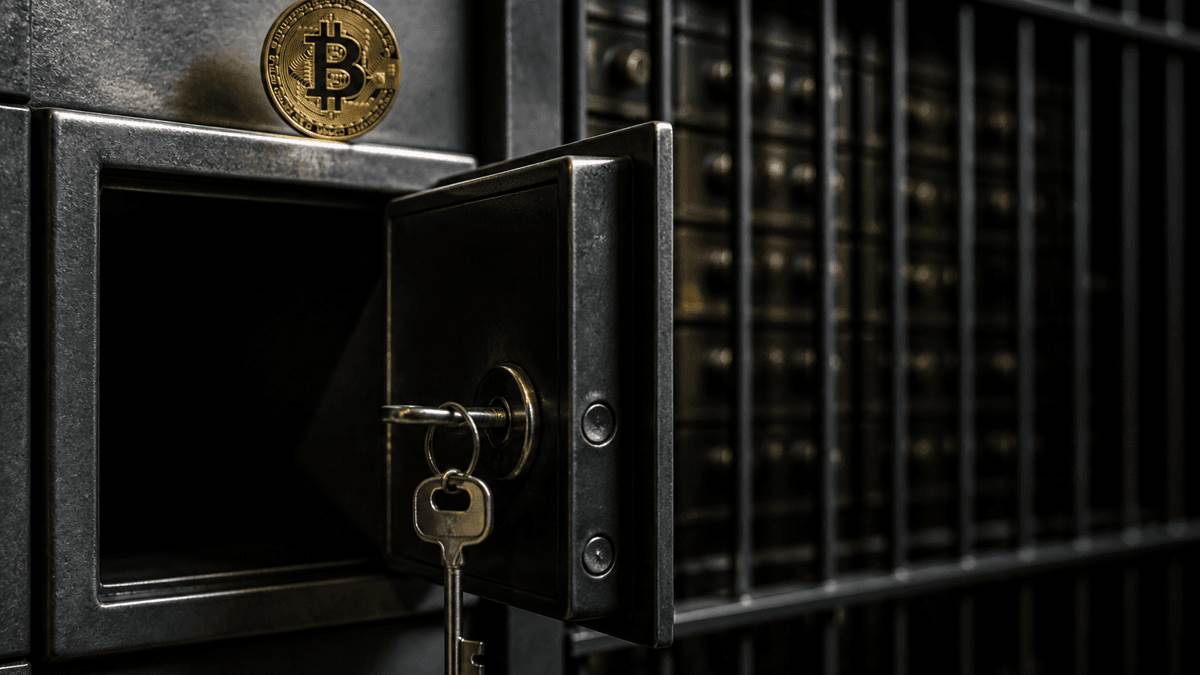
Your own locked box and your own keys, or a shared fenced vault: This determines who remains mobile during the timeout.
How to check the status of the blockchain yourself in two minutes
The most valuable part of this case is the method. Almost every large blockchain runs a public endpoint that can report the latest generated blocks without any login. With it, you can verify a headline in the time it takes for the page to load and stay ahead of those newsrooms that left yesterday's old reports.
Calls the newly generated block. For chains in the Cosmos ecosystem, the REST path /cosmos/base/tendermint/v1beta1/blocks/latestJust provides this information. For chains with an Ethereum interface, the JSON-RPC call eth_blockNumber.
Read the timestamp. If it was only a few seconds ago, the chain is running. If it was a few hours ago, the chain has stopped. This one number replaces any speculation.
Compare two blocks. Call additional blocks in the following thousands of locations and divide the time difference by the number of blocks. This tells you whether the chain is running at a normal pace or chasing slowly.
Inspect the exchange separately. The network status of your exchange is displayed on its deposit and withdrawal page or status page. A running chain has no explanation for this.
Time all data. Record UTC time for each discovery. In a situation that changes every hour, numbers without a timestamp are worthless.
This method does not cost a penny, which is why the data in this article is trustworthy. Each of the above numbers comes from such a query, accompanied by the time of acquisition.
What OM prices say about chain suspensions and what they don't say
Market data is useful only in one place, but can be misleading elsewhere. According to CoinGecko data, at 18:35 UTC on August 22, 2026, the OM price was US$0.00456 (EUR 0.00391), and the market value was approximately US$28.8 million, ranking 672nd. It fell by about 5.4% in 24 hours and by about 8.4% in 7 days. Market value is the price multiplied by the number of tokens in circulation and describes the size of the project in the market rather than its quality.
There is one data point that is revealing, and it is revealing because of its timing. The historical low of US$0.00412644 appears on August 20, 2026 at 23:09:10 UTC. The timestamp for the last block before the pause is 23:13:04 UTC. This resulted in a difference of 3 minutes and 54 seconds between the price low and the chain pause. The market priced the incident immediately as it occurred. Feel the decline: The historical high for this token is $0.02627 on March 4, 2026.
These numbers clearly do not support any statement about future price movements. The price at an all-time low is neither a reason to buy nor a reason to sell; it is just an observation. Anyone who derives predictions from technical events is confusing two unrelated matters.
Why is unexplained: Why "exploit" is an attribution here rather than an established fact
Accuracy is important at this time because many reports lack it. There are no conclusive, publicly verifiable findings regarding the cause of the incident. There are different accounts: CoinDesk called it an exploitation in the title, The Block neutrally described it as an incident, and Cryptopolitan explicitly wrote that no one knew why the chain was frozen. According to reports, the team itself called it a precautionary measure after receiving notification of vulnerabilities in upstream software components and stating that user balances had not been stolen.
As a reader, this means two things. First: As long as there is no reliable investigation, the attacks attributed to them are statements from the relevant newsroom, not established facts. Second: The question of what to do does not depend on it anyway. Whether the chain is suspended due to an attack or a software failure has no impact on how you check your balance and where you can still move during the suspension.
The same caution applies to consequences. Chain suspension does not support drawing any conclusions about the subsequent development of the project, going concern matters, or attribution of responsibilities. Anyone who draws such a conclusion is guessing, and that guessing is not part of an article designed to help you make a decision.
Check MANTRA withdrawals: Points to remember
Check the chain itself before believing the headlines. The simple operation of querying the latest generated block can tell you in seconds whether the network is running. In the current case, when the chain had been re-blocked for more than five hours, German reports still described it as frozen. If you want to hold your balance for a long time and be independent of other people's switches, you can find the corresponding device in the hardware wallet comparison.
treats network status and exchange status as two separate issues. A running blockchain does not guarantee that your withdrawals have been released, and frozen withdrawals do not prove that the chain has stopped. Check the two separately and record the time. Which trading platforms publicly disclose their interruptions and how they are regulated are shown in the overview of regulated cryptocurrency exchanges.
Divide your assets according to purpose before the next interruption comes. The part you want to move in the short term should be placed where you can move it; the part you plan to hold in the long term should be placed under your own key. You should make this split calmly, not during a pause. For the parts you use daily, you can find the corresponding program in the software wallet comparison.
(As of August 22, 2026. This article is not investment advice. Price and fee structures are subject to change; please check terms with your provider before purchasing.)
























