Exchange Ranking
 Top Exchanges
 24h Volume Ranking
 Popularity Ranking
 Exchange BTC Balance
 Proof of Reserves
 Decentralized Exchanges
 Funding Rate
 Funding Heatmap
 Liquidation Data
 Max Pain
 Long/Short Ratio
 Whale L/S Ratio
 Binance/Okex/Huobi L/S
 Bitfinex Margin L/S
 ETF Tracker
 Solana ETF
 XRP ETF
 Hong Kong ETF
 Bitcoin Treasuries
 Crypto Reversal
 Ethereum Reserves
 HyperLiquid Wallet Analysis
 Hyperliquid Whale Watch
 Large Transactions
 On-chain Movement
 Bitcoin ROI
 Stablecoin Market Cap
 Options Analysis
 News
News Articles
 Economic Calendar
 Features
 Wallet
 Contract Calculator


 Security
 Collections
 Watchlist
 Following
 BTC
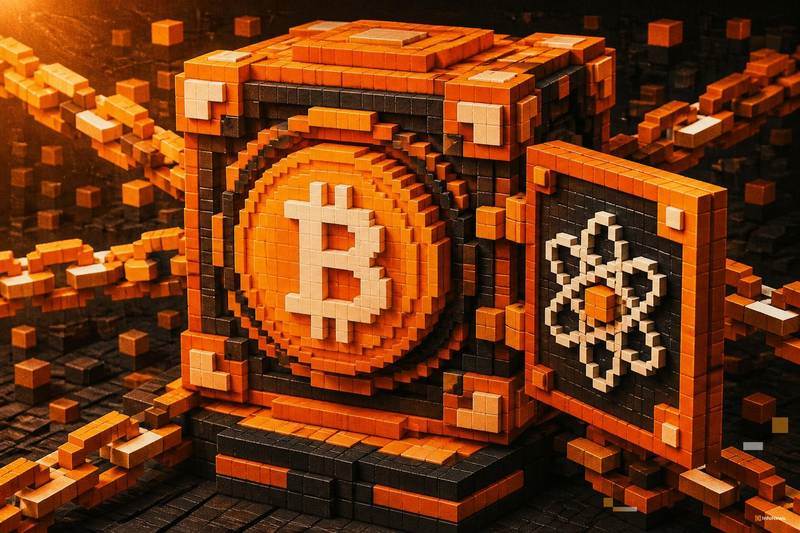
BTC StarkWare claims to have executed its first quantum-secure bitcoin transaction
StarkWare said it has executed what it calls its first quantum-secure bitcoin transaction. If this claim withstands independent review, it would mark an early attempt to strengthen Bitcoin's defenses against future cryptographic threats posed by quantum computing.
What StarkWare claims to have done
In a company blog post, StarkWare said that the first quantum-secure Bitcoin transaction has been successfully unearthed. The statement is defined as a technical demonstration by StarkWare and not an independently confirmed change to the Bitcoin protocol. Quantum-resistant Bitcoin transactions are transactions whose signature or spending conditions are designed to withstand a sufficiently powerful quantum computer attack. Currently, Bitcoin relies on elliptic curve cryptography for signature, and researchers most often point out that this component may be breached by quantum machines in the future. The statement does not mean that Bitcoin itself has shifted to a post-quantum security system. It describes a separate transaction rather than a network-wide upgrade-that is, not a comprehensive change in the way all wallets and nodes process keys and signatures.
Why this statement is crucial to Bitcoin holders
The statement is most relevant to Bitcoin holders, developers and infrastructure operators because the demonstration touches on the most exposed part of the network that faces long-term cryptographic risks: how transactions are signed and verified. StarkWare has previously made achievements in the field of Bitcoin verification, including its commitment to implementing Bitcoin verification on mobile devices. Concerns about quantum computing center on the possibility that in the future, a machine could derive private keys from public private keys, allowing attackers to spend coins that do not belong to them. A transaction built to withstand this scenario is a proof of concept for a path that the Bitcoin developer community has debated for years-a debate that coincides with broader institutionalized moments of the web, such as Bitcoin breaking through $80,000 in the context of accelerating demand for ETFs. There is limited research available on this specific demonstration, so the technical methods, tools used and exact cost conditions are not detailed here, based only on what has been released by StarkWare. Readers should view the announcement as a milestone pending more comprehensive technical disclosure.
What does the next step mean and what does not mean
Executing a quantum secure transaction is not the same as changing Bitcoin's foundational consensus rules, nor is it the same as establishing new standards between wallets and exchanges. The announcement does not indicate widespread deployment, soft fork or adoption by major Bitcoin service providers-such trusteeship level infrastructure is critical when governments transfer and seize Bitcoin. Open questions remain about compatibility with existing UTXOs, the size and cost of post-quantum signatures, and how any such scheme interacts with Bitcoin block space constraints. These are the same engineering trade-offs that shape other efficiency debates (such as whether a Bitcoin node database can be shrunk through reconstruction). For developers, the next things to focus on: independent verification of transactions on blockchain browsers, peer review of cryptographic methods, and any formal proposal to incorporate post-quantum signatures into the Bitcoin standard. Until then, the difference between a demonstration transaction and deployed network security remains the most noteworthy focus.