Exchange Ranking
 Top Exchanges
 24h Volume Ranking
 Popularity Ranking
 Exchange BTC Balance
 Proof of Reserves
 Decentralized Exchanges
 Funding Rate
 Funding Heatmap
 Liquidation Data
 Max Pain
 Long/Short Ratio
 Whale L/S Ratio
 Binance/Okex/Huobi L/S
 Bitfinex Margin L/S
 ETF Tracker
 Solana ETF
 XRP ETF
 Hong Kong ETF
 Bitcoin Treasuries
 Crypto Reversal
 Ethereum Reserves
 HyperLiquid Wallet Analysis
 Hyperliquid Whale Watch
 Large Transactions
 On-chain Movement
 Bitcoin ROI
 Stablecoin Market Cap
 Options Analysis
 News
News Articles
 Economic Calendar
 Features
 Wallet
 Contract Calculator


 Security
 Collections
 Watchlist
 Following
 BTC
BTC Bitcoin Market Weekly: Consolidating gains and macro changes
Bitcoin (BTC) has been consolidating for most of the week after hitting a four-month high of $81,500 on August 28. Profit-taking behavior at the high range was consistent with a 3.58% decline in total open interest, but the core story that dominates the cryptocurrency market is the return of investor demand. Net inflows of spot Bitcoin ETFs reached US$3.5 billion in August, the first time since July 2025 that such a high level has occurred. At the same time, total net inflows of Bitcoin ETFs on September 3 exceeded $731 million, of which IBIT contributed $453 million.
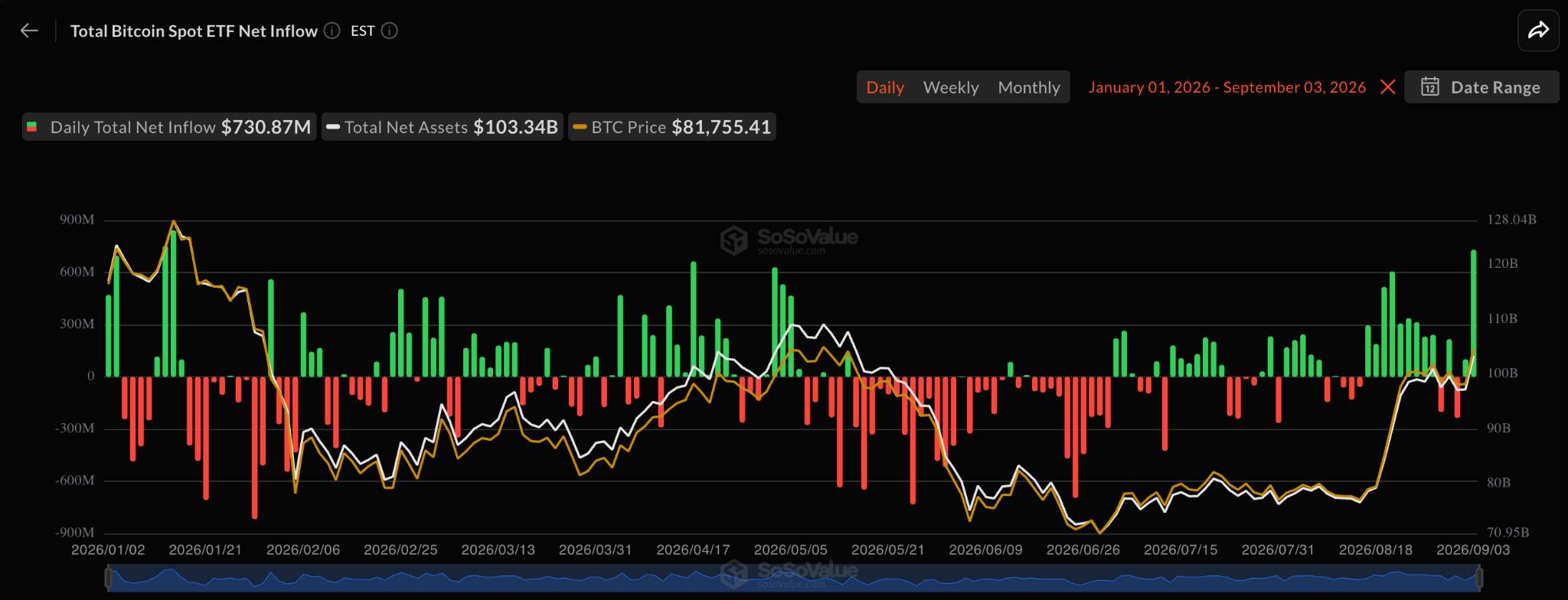 Total net inflow of spot Bitcoin ETF. Source: SoSoValue
Bond market pressures return, with yields rising to 20-year highs. Faced with a $40.18 trillion bond size, the standoff in Iran, Brent crude oil prices approaching $97 and worrying fluctuations in global bond yields, markets have questioned the effectiveness of U.S. Treasury Secretary Scott Bessent's long-term bond repurchase program.
Bond markets forecast higher-for-longer yields. Source: Robin Brooks / XAccording to Brian Russ, founder of 1971 Capital: "The market will test Besant. Once the Treasury shows what level they intend to defend, markets will hit and put pressure on it. He must now be held accountable for his decisions. To curb long-term yields, the measures needed will have to become increasingly aggressive to hold this line of defense. The more extreme the measures, the greater the gains for bitcoin and gold. I expect a lot of fluctuations in the process."
For cryptocurrencies and precious metals, the "currency devaluation transaction" narrative still dominates. Investors believe U.S. inflation will remain above the Fed's 2% target and that the global bond sell-off is more than just a short-term policy-driven panic.
Commodities, BTC rally as Iran tensions, debasement trade peak. Source: Kobeissi Letter/XDuring the Jackson Hole meeting, investors interpreted Chairman Kevin Warsh's speech as hawkish remarks, leading to renewed doubts about the Fed's credibility. Although Walsh clarified the Fed's commitment to the 2% inflation target, his speech failed to allay specific concerns among investors about how the Fed would reduce inflation.
In an interview with Bloomberg, Wei Li, BlackRock's global chief investment strategist, said: "Chairman Walsh needs to first build credibility before he can take any action. Creditworthiness affects the term premium, which in turn affects long-term interest rates. Long-term interest rates and government financing methods are iron laws that cannot be violated. So counter-intuitively, in order to control long-term interest rates, Washi may have to appear hawkish first. Markets listened to his Jackson Hole speech, and the probability of a September rate hike jumped to the current benchmark scenario. Can tomorrow's non-farm payrolls data provide the Fed with reasons not to raise interest rates? If they can't, and they choose not to raise interest rates, credibility and term premiums will come back into focus."
After the Jackson Hole meeting, the probability of a September rate hike rose from 35% to 53%, according to data from the CME FedWatch tool. That probability rose further to about 58%, after the September 4 employment report beat expectations. The shift suggests that markets are increasingly incorporating interest rate hikes into pricing, which means maintaining the status quo could bring unexpected surprises and could continue the bullish momentum seen in the past few weeks.
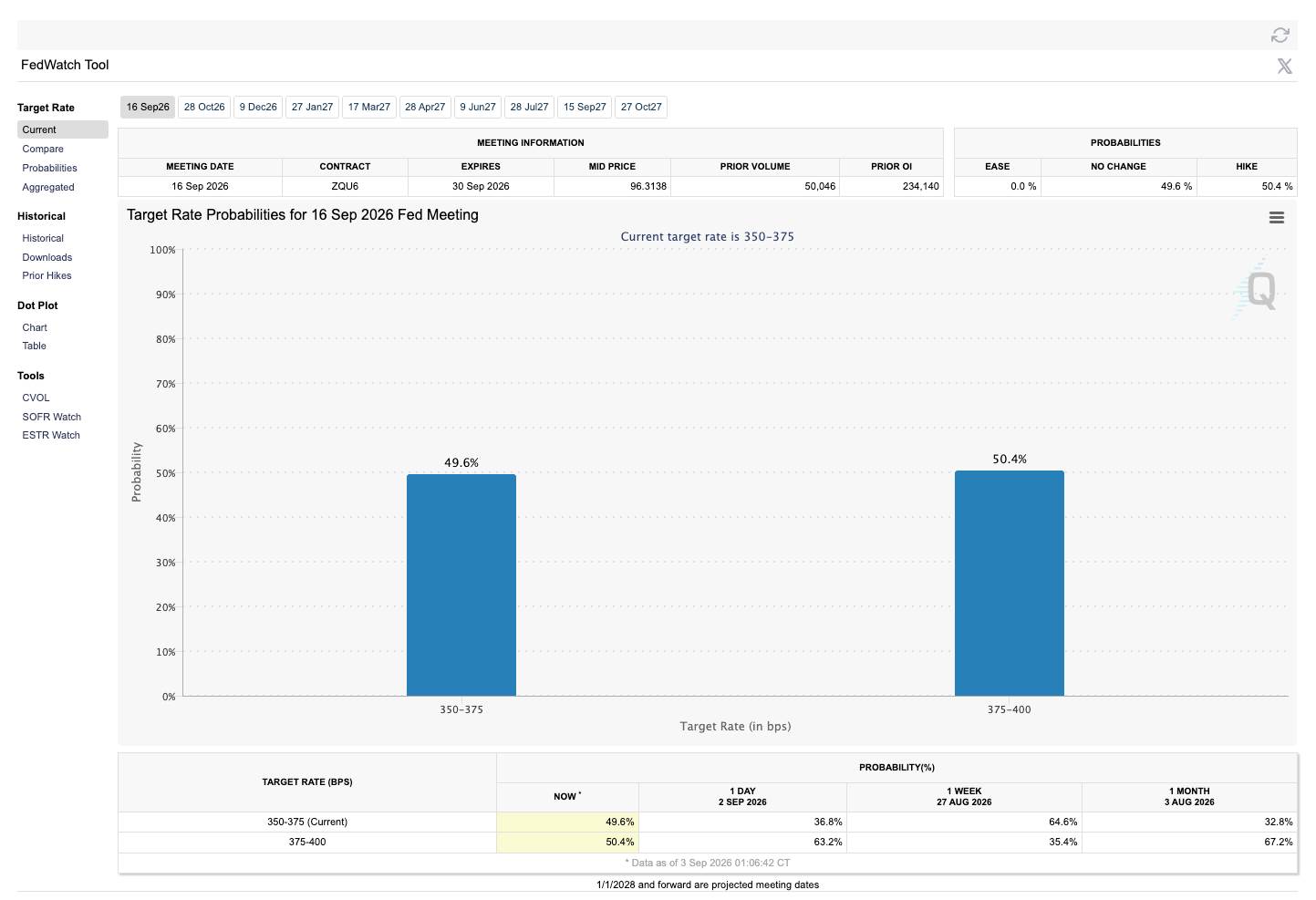 The probability of a rate hike in September. Source: CME Group
This week's economic report may reshape investors 'expectations ahead of the Federal Reserve's September interest rate decision. Initial jobless claims and producer price index (PPI) on September 10, as well as consumer price index (CPI) and core CPI data on September 11, are likely to affect markets before the FOMC meeting on September 16.
Taken together, the market interprets treasury bond repurchase as a policy similar to quantitative easing (QE) or yield curve control, coupled with sticky inflation and out-of-control government debt, which promoted Bitcoin's "currency devaluation transaction" narrative and briefly pushed BTC above $82,000 on September 4.
Is $90,000 the next target for Bitcoin?
Hyblock's liquidation heat chart data shows short liquidity in the US$84,000 to US$87,000 range, while at the time of writing, there is a cluster of resistance levels at US$81,500.
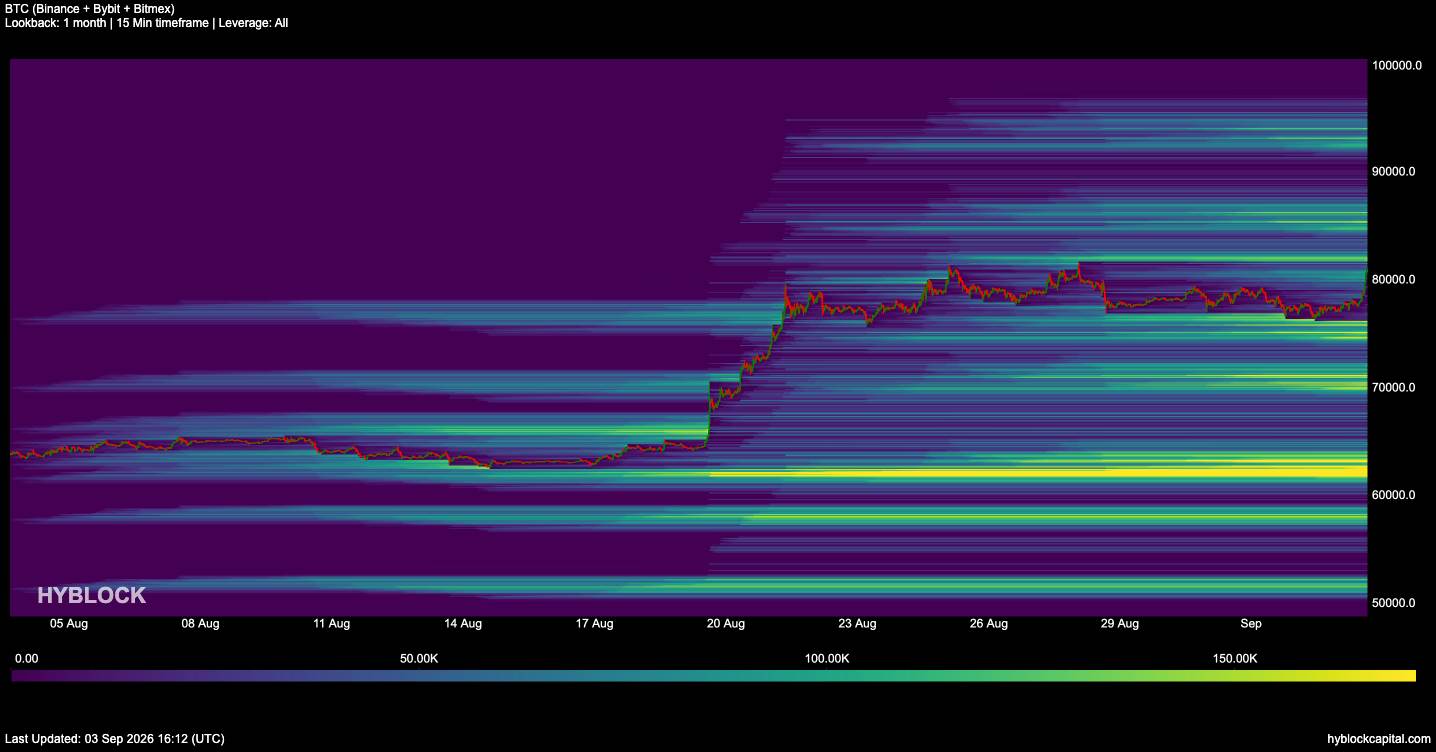 BTC/USD clearing heat chart, 1 month backtracking. Source: Hyblock
Cumulative volume spread data for spot and futures shows that Bitcoin selling increased on August 28. Previous short squeezing has pulled BTC prices into a heavy supply area (starting at $81,000), with increased opportunities for redistribution and consolidation in the area.
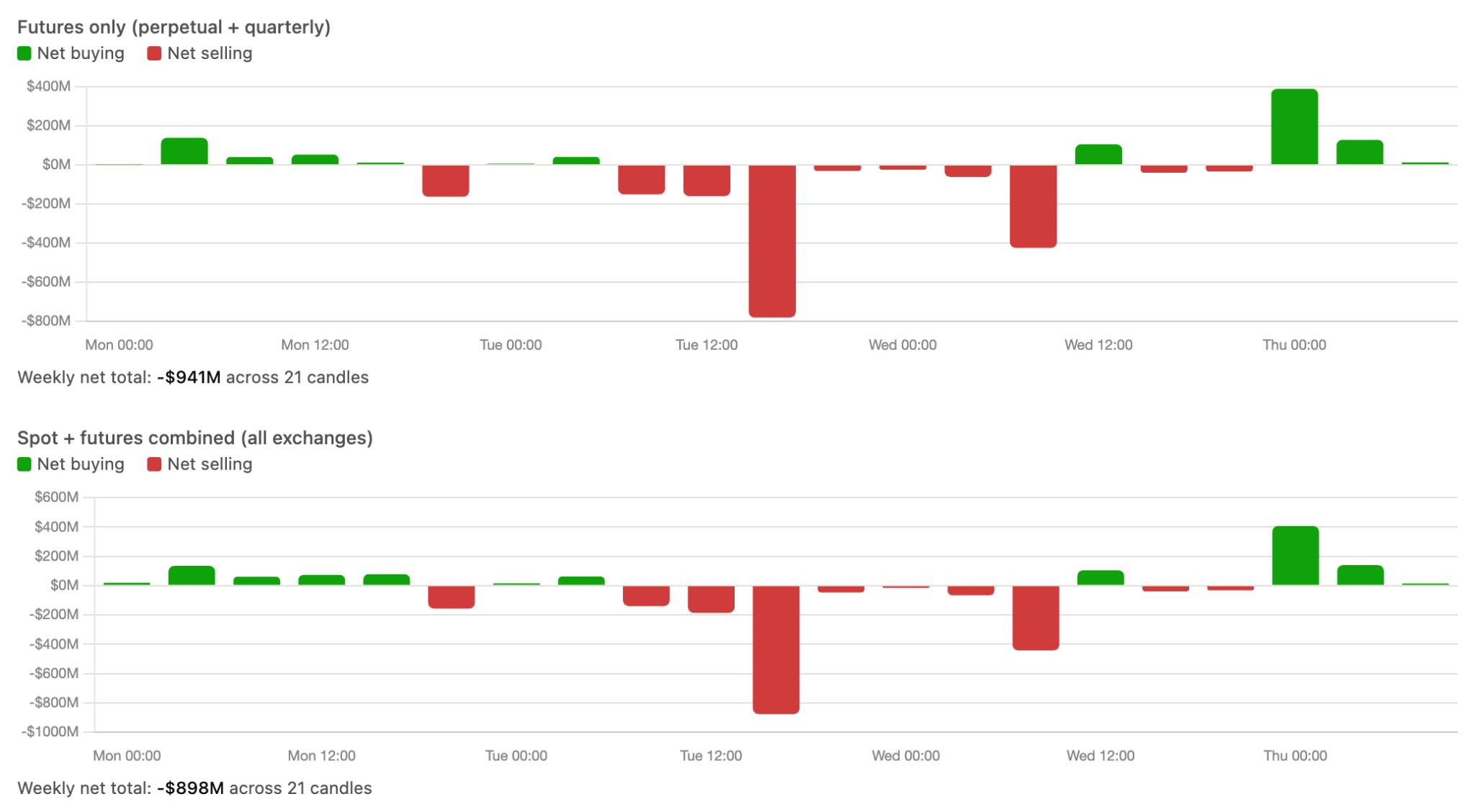 Cumulative trading volume difference between spot and futures in BTC/USD. Source: Ray Salmond/ Hyblock
Glassnode's data reinforces this view, showing that at the current range high, the proportion of supply that is profitable (68%) is higher than the proportion when BTC was trading in the same range in May (65%). Glassnode analyst Frederik Theissen described the profitable coin as "an expanded pool of potential selling liquidity when spot tests previous highs."
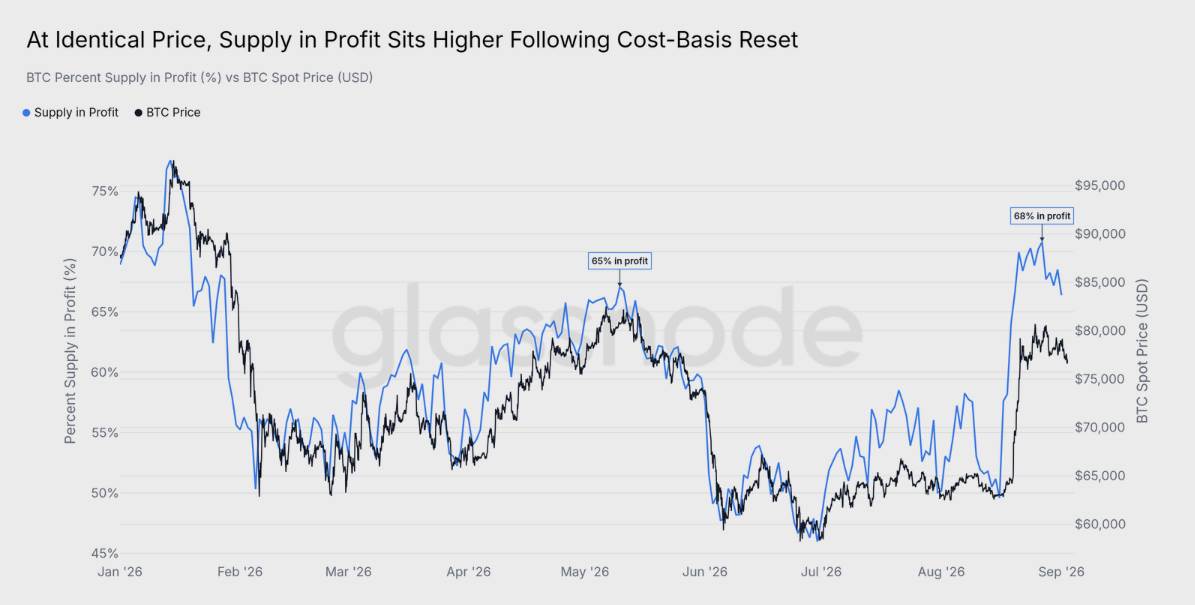 After bouncing back to $81,000, profitable Bitcoin positions increased selling pressure risk. Source: Glassnode
Is the market ready for the CLARITY bill?
In an interview with Fox Business on September 2, SEC Chairman Paul Atkins expressed optimism about the advancement of the CLARITY bill in the Senate, and expected a procedural vote on September 15. "I oppose and hope it will be passed by the Senate and eventually sent to the president for signature," Atkins said.
However, by the weekend, the outlook darkened as the Republican leadership of the U.S. House of Representatives canceled meetings in the last two weeks of September. The House has only four voting days starting on September 14, after which members will leave Washington before the midterm elections, greatly narrowing the window for the CLARITY bill to pass through the Senate and the House to consider any amendments.
On the X platform, Crypto in America co-founder Eleanor Terrett shared a realistic view, pointing out that because of the multiple votes required,"in any case, the bill technically takes about a week and a half to two weeks to pass in the Senate."
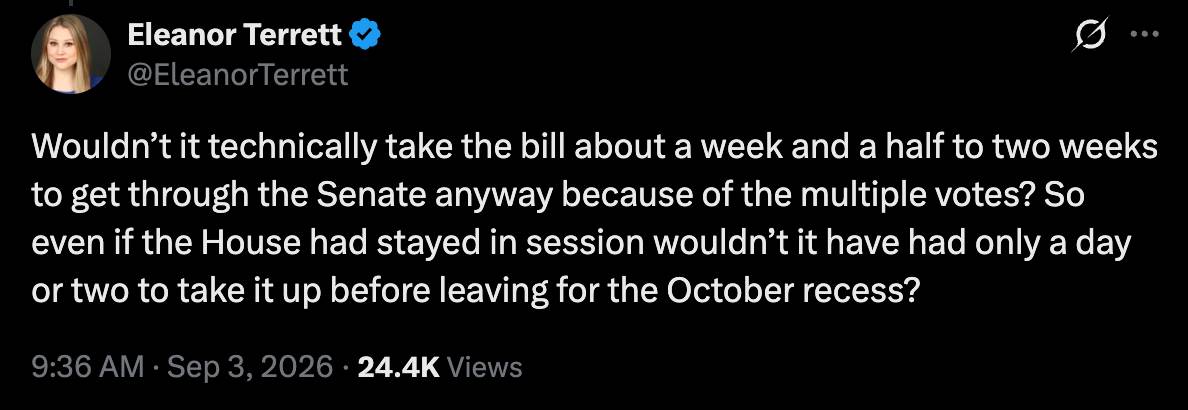 A full house vote on the CLARITY bill may not be critical. Source: Eleanor Terrett / X
If the full Senate vote fails and the CLARITY bill fails to become law before the U.S. midterm elections, leaders of the SEC, CFTC and the Trump administration have publicly stated that regulators will develop rules that support cryptocurrencies to promote industry development.
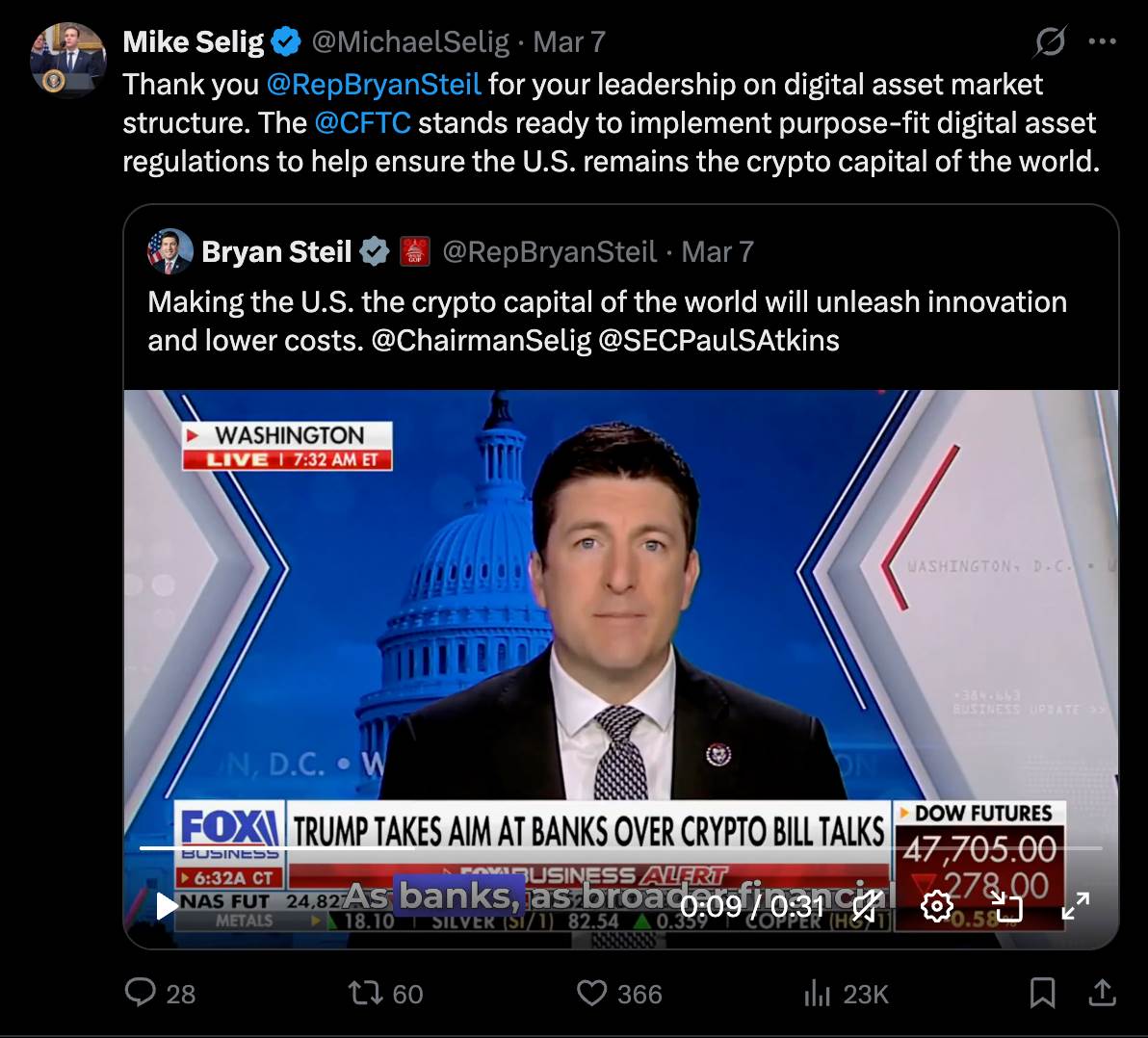 Even if the CLARITY Act fails to become law, the SEC and CFTC are committed to implementing cryptocurrency rules. Source: Mike Selig / X
Dynamics on the Radar
- US$84,000 to US$87,000 Bitcoin short heads hang overhead. Will clearing them open the way to $92,000?
- Initial jobless claims and producer price index (PPI) on September 10, as well as consumer price index and core CPI data on September 11, are likely to affect the market before the FOMC meeting on September 16.
- With the release of data, how will the probability of raising interest rates be adjusted? Will the market continue to consider these data "priced"?
- A Senate procedural vote on the CLARITY bill is expected on September 15.
- Perpetual market positions and total open interest contracts in BTC, ETH, HYPE and UNI may provide insight into pre-vote probabilities and investor risk appetite.
- Without the support of cash centralized exchange (CEX) trading volume, ETFs net flow, Strategy and crypto purchases from the digital asset treasury need to continue to maintain buying momentum.
- Will a suspension lead to a loss of market momentum?