Exchange Ranking
 Top Exchanges
 24h Volume Ranking
 Popularity Ranking
 Exchange BTC Balance
 Proof of Reserves
 Decentralized Exchanges
 Funding Rate
 Funding Heatmap
 Liquidation Data
 Max Pain
 Long/Short Ratio
 Whale L/S Ratio
 Binance/Okex/Huobi L/S
 Bitfinex Margin L/S
 ETF Tracker
 Solana ETF
 XRP ETF
 Hong Kong ETF
 Bitcoin Treasuries
 Crypto Reversal
 Ethereum Reserves
 HyperLiquid Wallet Analysis
 Hyperliquid Whale Watch
 Large Transactions
 On-chain Movement
 Bitcoin ROI
 Stablecoin Market Cap
 Options Analysis
 News
News Articles
 Economic Calendar
 Features
 Wallet
 Contract Calculator


 Security
 Collections
 Watchlist
 Following
 BTC
BTC  ETH
ETH Senate Republicans reject Democrats 'last-minute counterproposal, and CLARITY bill advances to 60 votes procedural test
Summary: The Senate will review the issue of H.R. A closing debate motion on Bill 3633 is voted on. Since the Republican Party only has 53 seats and has not reached the 60-vote threshold, it needs Democratic support. Democratic demands cover government ethics, decentralized finance (DeFi) policies and protections for tribal gambling laws. Republicans said the latest version of the bill already contains 126 substantive changes requested by Democrats.
According to Katie Warbinton, a spokeswoman for Republican Senator Cynthia Lummis, Democrats were "not backing down" after introducing another counter-proposal shortly before the scheduled vote. Senate Republicans have signaled that they will not renegotiate last-minute counter-proposals put forward by Democrats.
Negotiations Breakdowns and Legislative Process
"They need to really start negotiating, rather than submitting the same requirements repeatedly and calling it progress," Wobington said. Republican senators decided not to review the text, arguing that after more than a year of negotiations, the latest version was the final compromise. Senator Loomis, Senate Banking Committee Chairman Tim Scott, and Senate Agriculture Committee Chairman John Boozman all pointed out that the bill contained 126 substantive changes requested by Democrats.
Democratic senators filed the counterproposal after a meeting Monday night in the office of Senate Minority Leader Chuck Schumer. Details have not been fully disclosed as the procedural vote approaches, but the requirements reportedly include stricter moral restrictions, rules affecting decentralized finance, and protections for tribal gambling laws.
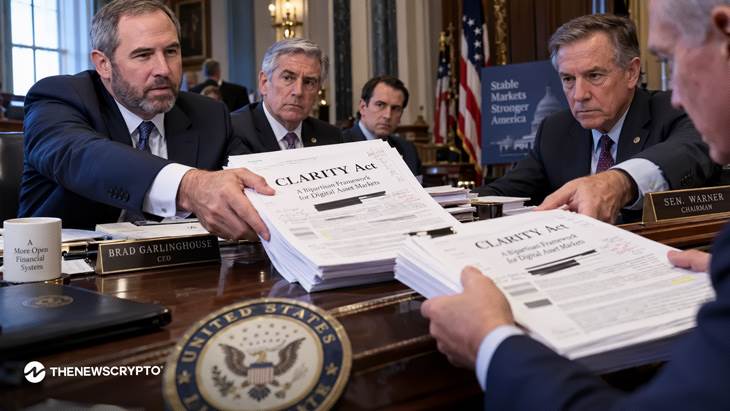
The Senate is scheduled to vote against H.R. at 2:15 pm EST on September 15. A motion to close debate on Bill 3633, the House version of the Digital Asset Market Clarity Act. Passing the motion would allow senators to begin formal debate; but it does not mean the bill is passed or sent to President Donald Trump for signature.
Cloture voting requires 60 votes. Republicans control 53 seats in the Senate, and if all Republicans support the motion, party leaders will need the support of at least seven Democrats or independent senators to meet the bill.
Ethics becomes the main point of disagreement
Previously, Republican lawmakers warned that disputes over ethics, stablecoin rewards and DeFi protection could lead to a lack of sufficient support for the bill. Loomis argued at the time that repeated demands from Democrats put the bill at risk. If the vote fails, the Senate leadership has little chance of reviving the legislation before the November midterm elections. The Senate resumed on September 14 with a tight schedule, while the House has reduced the number of voting days in September.
众议院于2025年7月以294比134的票数通过了H.R. 3633号法案。此后,参议员们制定了一个与众议院批准文本不同的修订版,这意味着任何参议院的通过都无法完成立法程序。根据立法程序,众议院需要接受参议院的修改,或通过进一步的国会行动协商达成共同法案。在两院都批准相同的文本之前,该措施无法送达总统手中。
这一步骤面临着紧迫的时间表,因为众议院领导层取消了八天的九月投票日。缩短后的众议院日程导致议员们将在参议院cloture投票两天后,即9月17日离开华盛顿,直到11月3日选举结束后才返回处理常规事务。
民主党参议员马克·华纳(Mark Warner)、鲁本·加列戈(Ruben Gallego)和拉斐尔·沃诺克(Raphael Warnock)表示,共和党的道德条款还不够彻底。他们的担忧包括规则是否能防止总统、亲属及其他联邦官员在职期间从数字资产企业中获利。另一项争议涉及执法问题。民主党人对州总检察长在违反限制时是否拥有足够的权力直接对在职总统采取行动提出了质疑。
Senator Elizabeth Warren has focused her criticism on conflicts of interest that may be related to the Trump family's crypto business. Trump's financial connection to digital assets has become a central part of the ethics debate, although Republicans said the revised language would apply to public officials and resolve requests from early Democrats.
The latest Republican text follows the ethical framework previously discussed by Republican Senators Thom Tillis and Gallego. Republican sponsors believe their restrictions have the president's support, while Warner said senators who are negotiating in good faith are still preparing counterproposals. "We have nothing left to give in," Loomis said, accusing some Democrats of opposing the legislation regardless of the terms.
Reuters reported on September 14 that the revised draft adds restrictions aimed at preventing public officials from profiting from cryptocurrencies and gives state attorneys general a possible law enforcement role. Democratic lawmakers still do not believe the rules provide sufficient protection.
DeFi intensifies dispute with tribal gaming rules
In addition to ethics, Democratic negotiators are also seeking to change the bill's treatment of decentralized finance. The legislation protects some unmanaged software developers, validators and node operators, while directing federal agencies to resolve agreements that retain certain forms of control.
The updated DeFi clause is critical for U.S. developers because the CLARITY bill will help determine when releasing software or maintaining blockchain infrastructure creates obligations under federal financial law. Industry groups believe that developers who do not control client funds should not be regarded as traditional financial intermediaries.
Lawmakers are still debating how the measure may affect forecasting markets and tribal gaming rights. Tribal groups and state gaming regulators have challenged federally regulated event contract platforms that offer sports-related markets, arguing that such products can bypass state and tribal gambling rules.
Democratic counter-proposals reportedly seek protection for tribal gambling laws as Congress considers the boundary between event contracts regulated by the Commodity Futures Trading Commission (CFTC) and gambling supervised by state or tribal governments. The full counterproposal was not made public before the vote, which limited direct comparisons with the Republican text.
Bill will divide crypto regulatory powers between the SEC and the CFTC
For U.S. investors and crypto companies, the CLARITY bill will establish federal rules for the classification of digital assets and divide regulatory powers between the Securities and Exchange Commission (SEC) and the Commodity Futures Trading Commission (CFTC).
Under this framework, the CFTC will gain jurisdiction over qualified digital goods and registered spot market intermediaries. The SEC will retain jurisdiction over crypto assets and transactions that fall within the scope of federal securities laws.
支持者表示,国会通过的法案将确立一套规则,使其不受总统行政当局更迭的影响。在没有立法的情况下,联邦机构可以继续根据现有法规发布解释和条例,但后来的行政当局可能会修改这些政策。
白宫加密顾问帕特里克·维特(Patrick Witt)、财政部长斯科特·贝森特(Scott Bessent)和Ripple首席执行官布拉德·嘉林豪斯(Brad Garlinghouse)敦促参议员推进该项措施。他们的公开支持集中在为数字资产建立联邦市场结构,并结束多年来关于应由哪个机构监管不同代币和交易平台的不一致局面。
银行业团体则对稳定币奖励和存款竞争提出了单独的异议。他们认为,与支付型稳定币挂钩的收益或奖励可能会将资金从受保险的银行中抽走,而加密公司则反驳了将稳定币与银行账户进行类比的观点。
参议院的投票将首先决定H.R. 3633号法案的辩论是否可以开始。如果cloture成功,参议员可能会考虑修正案,并在对立法进行最终投票之前面临更多的程序性投票。