Exchange Ranking
 Top Exchanges
 24h Volume Ranking
 Popularity Ranking
 Exchange BTC Balance
 Proof of Reserves
 Decentralized Exchanges
 Funding Rate
 Funding Heatmap
 Liquidation Data
 Max Pain
 Long/Short Ratio
 Whale L/S Ratio
 Binance/Okex/Huobi L/S
 Bitfinex Margin L/S
 ETF Tracker
 Solana ETF
 XRP ETF
 Hong Kong ETF
 Bitcoin Treasuries
 Crypto Reversal
 Ethereum Reserves
 HyperLiquid Wallet Analysis
 Hyperliquid Whale Watch
 Large Transactions
 On-chain Movement
 Bitcoin ROI
 Stablecoin Market Cap
 Options Analysis
 News
 Articles
 Economic Calendar
 Features
 Wallet
 Contract Calculator


 Security
 Collections
 Watchlist
 Following
 BTC
 ETH
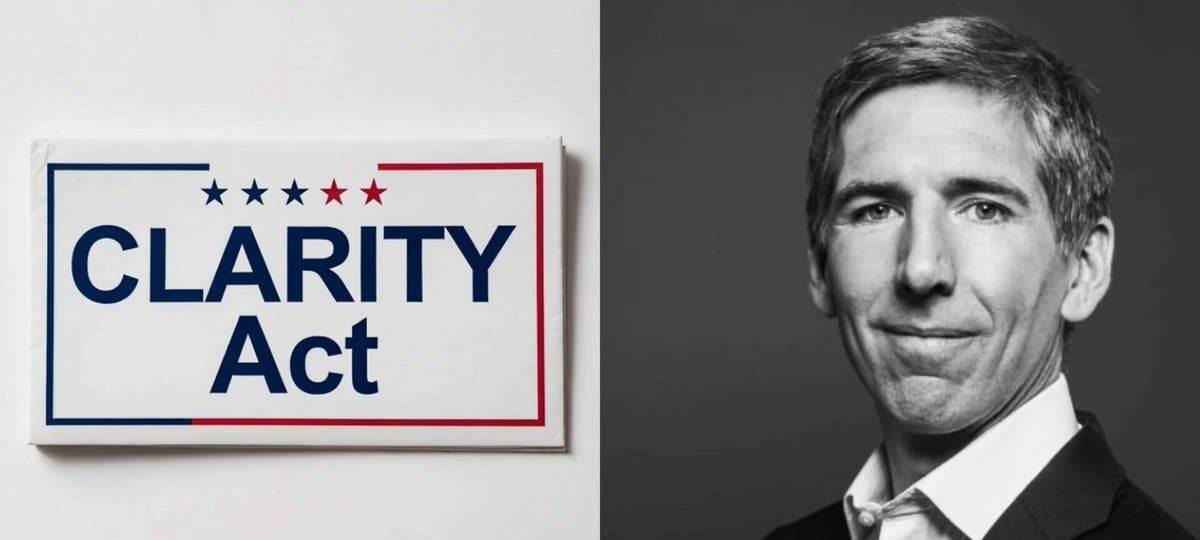
Bitcoin and Ethereum surged after the Senate vetoed the Clarity Act.
On September 15, the Clarity Act failed to pass in the U.S. Senate with a vote of 49 to 50. However, the market reaction was unexpected: Bitcoin has risen nearly 11% since the vote, Ethereum has risen about 12%, and the total market value of cryptocurrencies has climbed to about $2.95 trillion.
Why does failure turn into a good thing?
Matt Hougan, chief investment officer of Bitwise, pointed out in a memo released Wednesday that while the cryptocurrency industry has lost the clarity of federal law, it has also avoided restrictions on core business parts imposed by compromise terms. Many market participants had expected that the bill's rejection would cause prices to fall, but the contrary was true.
Hogan analyzed that the bill required 60 votes to pass, but after three years of negotiations, it only received 49 votes in support. This result reflects the deadlock in the legislative process, while also reserving a certain amount of autonomy for the industry.
stablecoin rewards and exchange advantages
Hou Gen specifically pointed out that the stablecoin field is a benefit point. The original text of the Clarity Act prohibited platforms from paying interest or income on stablecoins in any form and set a fine of up to $5 million for each violation. Due to the suspension of the bill, the GENIUS Act passed in 2025 continues to be in effect. Although the law prohibits stablecoin issuers from paying interest, it does not involve the exchange level. This means that mainstream platforms such as Coinbase can continue to provide stablecoin balance rewards.
In addition, established exchanges like Coinbase and Kraken have benefited. The Clarity Act, if passed, would establish a nationwide licensing regime for physical cryptocurrency exchanges, which could lower entry barriers for new competitors and restrict companies that act as both exchanges and brokers. Failure to pass the bill effectively preserves the market position of existing giants.
SEC approves tokenized stock exemption
With regard to securitized assets, the original act directed the Securities and Exchange Commission (SEC) to study tokenized securities, a process that could take years. But two days after the vote, the SEC announced a five-year "innovation exemption" that would allow tokenized U.S. stocks to be traded through approved automated market makers and liquidity pools.
The order exempts these trading platforms from the obligation to register as exchanges, but only for listed U.S. stocks, and sets a limit on the processing volume of each trading venue. Hou Gen mentioned that Securitize, which provides fund tokenization services to institutions such as BlackRock, Apollo and KKR, is one of the main beneficiaries.
Meanwhile, SEC staff last week released the latest FAQ on token repurchases, making it clear that announcing a repurchase for an existing network does not in itself constitute a sale of an investment contract.
Potential risks and long-term prospects
Hagen warned that the current regulatory framework is not legal and there is uncertainty in the future. The new administration that takes office in 2029 may appoint leaders of the SEC and the Commodity Futures Trading Commission (CFTC) who take a more stringent stance.
不过,他对此表示适度乐观。他认为到那时,大型金融机构已在区块链上构建了多年的基础设施,“加密行业牺牲了长期的确定性,换来了更快、更好的规则。”
据The Block数据显示,自9月15日投票以来,比特币上涨近11%,以太坊上涨约12%。加密货币总市值从投票日的2.65万亿美元上升至目前的约2.95万亿美元。