Exchange Ranking
 Top Exchanges
 24h Volume Ranking
 Popularity Ranking
 Exchange BTC Balance
 Proof of Reserves
 Decentralized Exchanges
 Funding Rate
 Funding Heatmap
 Liquidation Data
 Max Pain
 Long/Short Ratio
 Whale L/S Ratio
 Binance/Okex/Huobi L/S
 Bitfinex Margin L/S
 ETF Tracker
 Solana ETF
 XRP ETF
 Hong Kong ETF
 Bitcoin Treasuries
 Crypto Reversal
 Ethereum Reserves
 HyperLiquid Wallet Analysis
 Hyperliquid Whale Watch
 Large Transactions
 On-chain Movement
 Bitcoin ROI
 Stablecoin Market Cap
 Options Analysis
 News
News Articles
 Economic Calendar
 Features
 Wallet
 Contract Calculator


 Security
 Collections
 Watchlist
 Following
 BTC
BTC Fifteen years ago, Bitcoin closed at US$7.97
Today, it has been fifteen years since Bitcoin first achieved a meaningful price record. At that time, Bitcoin closed at $7.97. Today, its price is about US$79,500, which means that Bitcoin has achieved a value increase of nearly 10,000 times, with a cumulative increase of approximately 998,000%, and an annualized return of nearly 85% over 15 years.
Historical pricing data shows that on September 5, 2011, Bitcoin opened at US$8.36. After briefly touching US$9.96 during the session, it finally closed at US$7.97. However, the true significance of this anniversary lies not only in the changes in price numbers, but also in the market position of Bitcoin at the time.
US$8 Bitcoin is already a "troubled asset"
Buying BTC for US$8 in September 2011 does not make people feel that this is an obvious successful investment. In fact, Bitcoin has already experienced its first sharp rise and fall. In June 2011, Bitcoin soared to about $31.91, bringing the network's market value to about $206 million. However, within a few days, the market suffered one of the most severe early crashes.
In the summer of the same year, Mt. The Gox Exchange was hacked when an attacker gained administrator account privileges and caused the transaction price to briefly drop to 1 cent. As a result, by the time Bitcoin closed at $7.97 on September 5, its price had fallen by about 75% from its June peak.
This background gave the anniversary of WatcherGuru a different meaning: the people who bought Bitcoin for $8 were not buying an untested technology early in the trend, but were buying an asset that had experienced a drastic collapse and had a high degree of uncertainty in the future.
Four halving reshaping the supply economy
The Bitcoin supply mechanism in 2011 is also very different from today. At that time, miners were rewarded with 50 BTC for every block they dug, and Bitcoin had not experienced any "halving".
The first halving occurred in November 2012, when the block reward was reduced to 25 BTC; then it dropped to 12.5 BTC in 2016, to 6.25 BTC in 2020, and further to 3.125 BTC in 2024. This means that since Bitcoin was traded at around $8, new issuance per block has dropped by 93.75%.
The transformation of prices has been accompanied by falling supply rates, repeated boom and bust cycles, and the gradual rise of institutional custody and regulated investment products.
From Mt. Perhaps the clearest comparison between Gox and 100 billion dollar ETF
is not US$8 versus US$80,000, but Mt. Gox v. BlackRock.
In 2011, Bitcoin transactions were concentrated on small cryptocurrency exchanges with limited infrastructure and extremely high operational risks. Today, the U.S. spot Bitcoin ETF alone holds approximately US$103.34 billion in assets, equivalent to more than 6% of Bitcoin's total market value. Among them, BlackRock's IBIT funds accounted for more than half of the total. Since their launch in 2024, these funds have received cumulative net inflows of approximately US$55.4 billion.
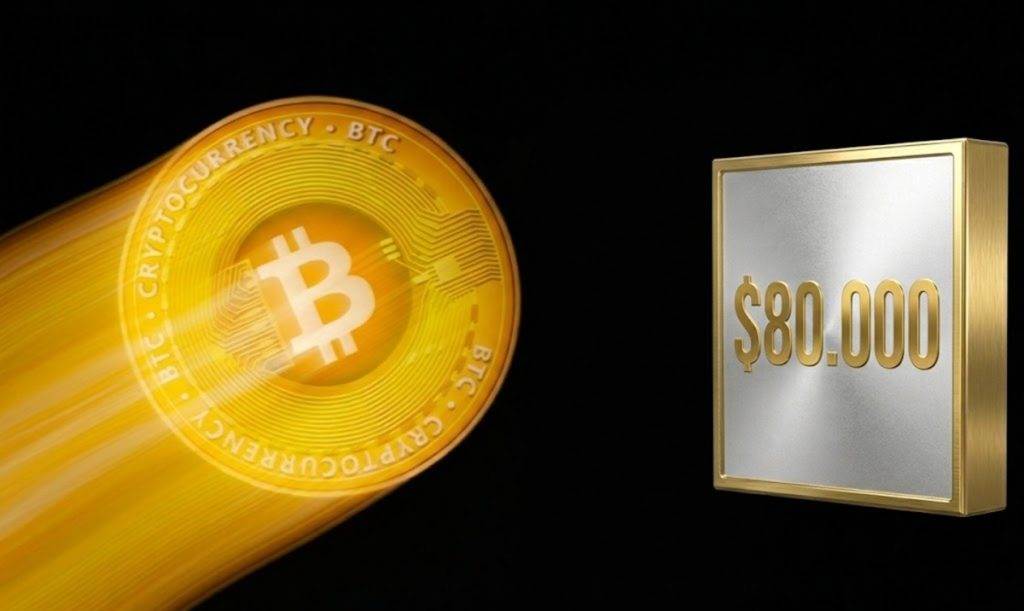
Even as Bitcoin recently struggled at the $80,000 mark, these ETFs still recorded a net inflow of $731 million in a single day, the largest one-day inflow since January this year. This demand for ETFs highlights the shift in the investor base from early exchange-driven markets to a highly institutional and compliant system.
Bitcoin's anniversary provides a useful reminder: the asset didn't simply climb from $8 to nearly $80,000. It went through multiple crashes, four halves, exchange failures and years of regulatory uncertainty before eventually becoming a nine-figure or even billion-dollar asset held by Wall Street.
Perhaps the most counterintuitive detail is this: When you can buy Bitcoin for $8, it is already an asset in trouble.