Exchange Ranking
 Top Exchanges
 24h Volume Ranking
 Popularity Ranking
 Exchange BTC Balance
 Proof of Reserves
 Decentralized Exchanges
 Funding Rate
 Funding Heatmap
 Liquidation Data
 Max Pain
 Long/Short Ratio
 Whale L/S Ratio
 Binance/Okex/Huobi L/S
 Bitfinex Margin L/S
 ETF Tracker
 Solana ETF
 XRP ETF
 Hong Kong ETF
 Bitcoin Treasuries
 Crypto Reversal
 Ethereum Reserves
 HyperLiquid Wallet Analysis
 Hyperliquid Whale Watch
 Large Transactions
 On-chain Movement
 Bitcoin ROI
 Stablecoin Market Cap
 Options Analysis
 News
 Articles
 Economic Calendar
 Features
 Wallet
 Contract Calculator


 Security
 Collections
 Watchlist
 Following
 ETH
Buterin: Hegotá will become the last "regular" fork for Ethereum
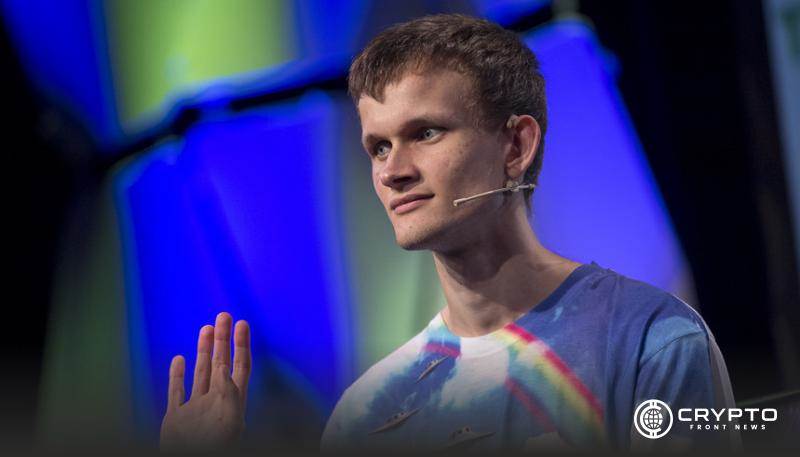
Ethereum co-founder Vitalik Buterin said that the next upgrade to the network planned to be launched in 2027,"Hegotá" is likely to be its last "regular" fork. After that, more advanced cryptography technology will take over the dominant position. Buterin pointed out in an article published on Sunday that the network is evolving towards what he calls a "cryptographic world computer" rather than continuing to exist as a traditional blockchain, Cryptopotato reported.
Key Facts
Buttlin said that Hegotá is likely the last "regular" fork before the development focus shifts to recursive STARKs, automated formal verification, optimized consensus mechanisms, and resistance to quantum cryptography. He paints a long-term transformation picture: By 2030, zero-knowledge proof will play a more important role in the system.
Cointelegraph also reported on the comments and pointed out that Butrin believes Hegotá may be the last upgrade, and its functions and technology are still recognizable to people familiar with the 2015 Ethereum architecture. The two media outlets agreed on core content, and Cointelegraph added further details on how architecture changes application design.
PearDAS (Peer Data Availability Sampling) marks the beginning of Ethereum's transition from "just a blockchain" to "a more powerful system." This technology allows nodes to verify data availability by sampling part of the data without having to download the entire content. In addition, Buterin also mentioned FOCIL, EIP-8288, lean consensus, formal verification, and modifications to the Ethereum memory pool, which together constitute a system design that relies more on proof and distributed processing.
From block-by-block replay to proof sampling
Buterin compares the direction Ethereum is developing with the way blockchain worked in the early days. In Bitcoin's original model, each participant downloaded blocks, inspected blocks, and re-executed transactions in them, a pattern that Ethereum still largely follows.
According to the roadmap he described, the verification process will shift to the PeerDAS model combined with SNARKs. This allows the network to confirm that a large number of calculations were completed correctly without repeating all calculations. He pointed out that this pattern is already visible in consensus mechanisms: Ethereum has moved from proof-of-work (PoW) to proof-of-stake (PoS) and is moving towards a more efficient version of PoS.
Production methods in theblock may also change. Instead of building an entire block by a single entity, multiple participants may participate together. At the same time, state management needs to handle access to more information without having to require each participant to perform the same work.
Different roles of decentralization
这一转变将改变开发者构建应用的方式。布特林认为,以太坊将越来越倾向于将计算分解为较小的部分并分别处理,而不是将其打包进单个大型交易中。开发者可以将网络需要直接记录的信息保留在链上,而在最终区块达成之前进行其他工作。
这重新定义了去中心化本身。分布式网络有时不仅能为了安全而接受成本,还能帮助以太坊同时处理更多数据和计算。布特林写道,网络可以“不仅为了稳健性,而且为了提高可扩展性而去中心化”——这是那些在2010年代中期构建它时曾希望实现的目标。
Cointelegraph 报道指出,这篇文章引发了关于多少计算和状态最终应移至链下的辩论。匿名评论员 Cryptographic 认为,该架构可以通过允许智能合约之外进行更复杂的计算来扩展 DeFi 应用的功能,同时由以太坊验证生成的交易是否符合协议规则。他以借贷为例,说明抵押品分析、清算路由或匹配借款人与贷款人等操作可以在链下发生,最后由以太坊验证并结算结果。
为何重要
如果 Hegotá 确实是最后一个传统分叉,那么以太坊在2027年之后的自我升级方式将发生改变。该路线图用围绕证明、形式化验证和抗量子设计的长期计划,取代了可识别的功能分叉周期。这一转变影响着节点运营商、开发人员以及设定网络方向的Researchers。围绕 Barnabé Monnot 和 Gabriel Shapiro 观点的辩论同样重要:这是一场关于基于证明的架构与基于声誉和监管的系统将在金融服务中占据多大权重的实时争论。对于读者而言,这场辩论才是真正的信号,而非具体的分叉名称。
在 Cryptopotato 报道发布时,以太坊价格约为2,700美元,24小时内下跌近2.5%,14天内上涨近5%,30天内上涨8%,但较一年前低约34%,较接近4,950美元的历史高点低约47%。分析师 Daan Crypto Trades 将2,800美元水平称为主要障碍,因为上周价格在收复200日均线后被该水平拒绝。
值得关注
具体的下一步是 Hegotá 本身:布特林的路线图将其定位为转折点,其计划的2027年交付将是决定分叉后程序是否按 outlined 方案推进的关键里程碑。在近期,分析师指出的水平——以太坊的200日均线和2,800美元阻力位——仍是需要关注的价格标记。
常见问题解答
什么是 Hegotá?计划何时推出?
Hegotá is the next major network upgrade for Ethereum and is scheduled to be launched in 2027. Vitalik Buterin said it is likely to be the last upgrade whose features are still recognizable to those familiar with 2015 Ethereum.
What is a "Cryptographic World Computer"?
This is the term Butrin uses to describe an architecture that combines blockchain, cryptographic verification, privacy protection, and decentralized off-chain components, rather than requiring each node to download and re-execute every transaction.
What is the role of PeerDAS?
PeerDAS allows nodes to verify data availability by sampling part of the data without having to download the entire content. Buterin said this marked the beginning of Ethereum's transition from "just a blockchain" to a "more powerful system."
What are the researchers 'reactions to the roadmap?
Ethereum researcher Barnabé Monnot said that off-chain computing combined with on-chain proof can reduce network workload and achieve lighter nodes, but he emphasized that important records should still be kept on the chain. Cryptocurrency lawyer Gabriel Shapiro questioned how much demand there is for evidence-based systems compared to traditional trust-based financial services.
What is the recent price trend of Ethereum?
At the time of the Cryptopotato report, Ethereum was trading at about $2,700, down nearly 2.5% in 24 hours and about 2% in a week, but still about 34% lower than a year ago and about 47% lower than its all-time high of nearly $4,950.