Exchange Ranking
 Top Exchanges
 24h Volume Ranking
 Popularity Ranking
 Exchange BTC Balance
 Proof of Reserves
 Decentralized Exchanges
 Funding Rate
 Funding Heatmap
 Liquidation Data
 Max Pain
 Long/Short Ratio
 Whale L/S Ratio
 Binance/Okex/Huobi L/S
 Bitfinex Margin L/S
 ETF Tracker
 Solana ETF
 XRP ETF
 Hong Kong ETF
 Bitcoin Treasuries
 Crypto Reversal
 Ethereum Reserves
 HyperLiquid Wallet Analysis
 Hyperliquid Whale Watch
 Large Transactions
 On-chain Movement
 Bitcoin ROI
 Stablecoin Market Cap
 Options Analysis
 News
 Articles
 Economic Calendar
 Features
 Wallet
 Contract Calculator


 Security
 Collections
 Watchlist
 Following
 ETH
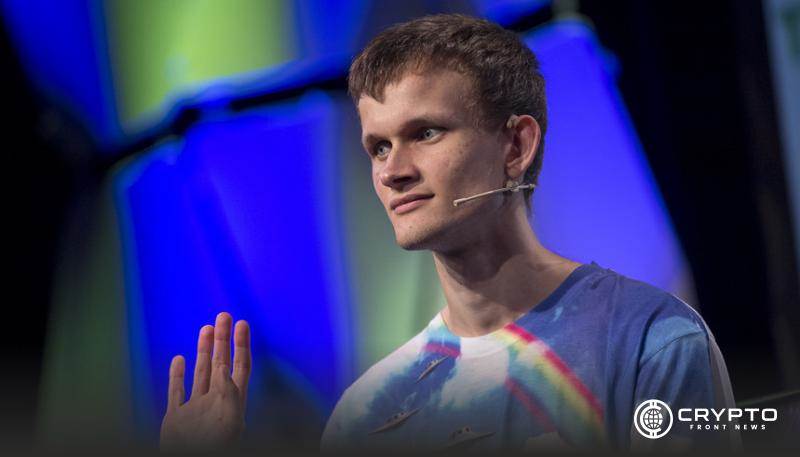
Ethereum moves towards a "cryptographic world computer": Vitalik Buterin outlines a blueprint for the future
Vitalik Buterin defines the future of Ethereum as a "cryptographic world computer" that aims to deeply integrate blockchain infrastructure with advanced cryptographic technology. He outlined a number of planned changes including FOCIL (Final Consistency Optimization Layer), recursive STARKs, formal verification, consensus mechanism optimization, state management, and stronger privacy protection.
Beyond traditional blockchain architecture
Buterin pointed out that Ethereum still retains the core blockchain characteristics related to Bitcoin's original design. However, since its launch, its technical foundation has changed significantly. Today's networks not only support general purpose computing, proof-of-stake (PoS), and zero-knowledge applications, but also extensively support Layer 2 extended networks.
Future designs will further introduce dedicated computing and multi-participant block construction mechanisms. It is worth noting that Buterin proposed that the verification method may shift from the traditional "download and re-execute blocks" to relying on PeerDAS sampling and SNARK verification. This means that users do not have to repeat all transactions to trust the validity of their data.
At the consensus level, Ethereum will evolve towards a more optimized proof-of-stake system. At the same time, the construction of blocks will be completed by multiple participants, rather than just a single producer, which will further improve the decentralization and efficiency of the network.
Tradeoffs and benefits of new design
According to Buterin's plan, future Ethereum will provide stronger anti-censorship capabilities through FOCIL. He expects transaction finality to improve, with block-out intervals of about four to eight seconds. In addition, execution costs will depend more on how the application organizes the computing logic.
Buterin said that if developers leverage dependencies that support parallel processing or pruning, the fees they pay may be reduced. At the same time, information about ordering and non-swapping state changes will remain on the chain, while other calculations can be aggregated before entering the final block.
This decentralized infrastructure allows data and calculations to be distributed among participants. Buterin emphasized that modern cryptography solves the early verification challenges that limited the method. Past systems relied on committee mechanisms, which often brought high set-up costs, delays, and risks of failure, and new technologies are expected to overcome these obstacles.
Hegota upgrade: embarking on the next phase
Buterin has marked the Hegota upgrade originally scheduled for next year as the last regular fork for Ethereum. After that, Ethereum will enter a new stage centered on recursive STARKs, automated formal verification, optimization consensus and anti-quantum development.
He also discussed the possibility of obfuscation technology as a long-term development, and believed that feasible obfuscation solutions could support cryptographic computing environments involving multiple parties.
尽管前景广阔,Buterin 也承认以太坊仍面临高效零知识证明生成和大规模状态管理等挑战。最终的建筑风格将是区块链、密码学验证、隐私工具以及去中心化离线组件的有机结合。