Exchange Ranking
 Top Exchanges
 24h Volume Ranking
 Popularity Ranking
 Exchange BTC Balance
 Proof of Reserves
 Decentralized Exchanges
 Funding Rate
 Funding Heatmap
 Liquidation Data
 Max Pain
 Long/Short Ratio
 Whale L/S Ratio
 Binance/Okex/Huobi L/S
 Bitfinex Margin L/S
 ETF Tracker
 Solana ETF
 XRP ETF
 Hong Kong ETF
 Bitcoin Treasuries
 Crypto Reversal
 Ethereum Reserves
 HyperLiquid Wallet Analysis
 Hyperliquid Whale Watch
 Large Transactions
 On-chain Movement
 Bitcoin ROI
 Stablecoin Market Cap
 Options Analysis
 News
 Articles
 Economic Calendar
 Features
 Wallet
 Contract Calculator


 Security
 Collections
 Watchlist
 Following
 APT
 ARB
 AVAX
 BNB
 BTC
 ETH
 SOL
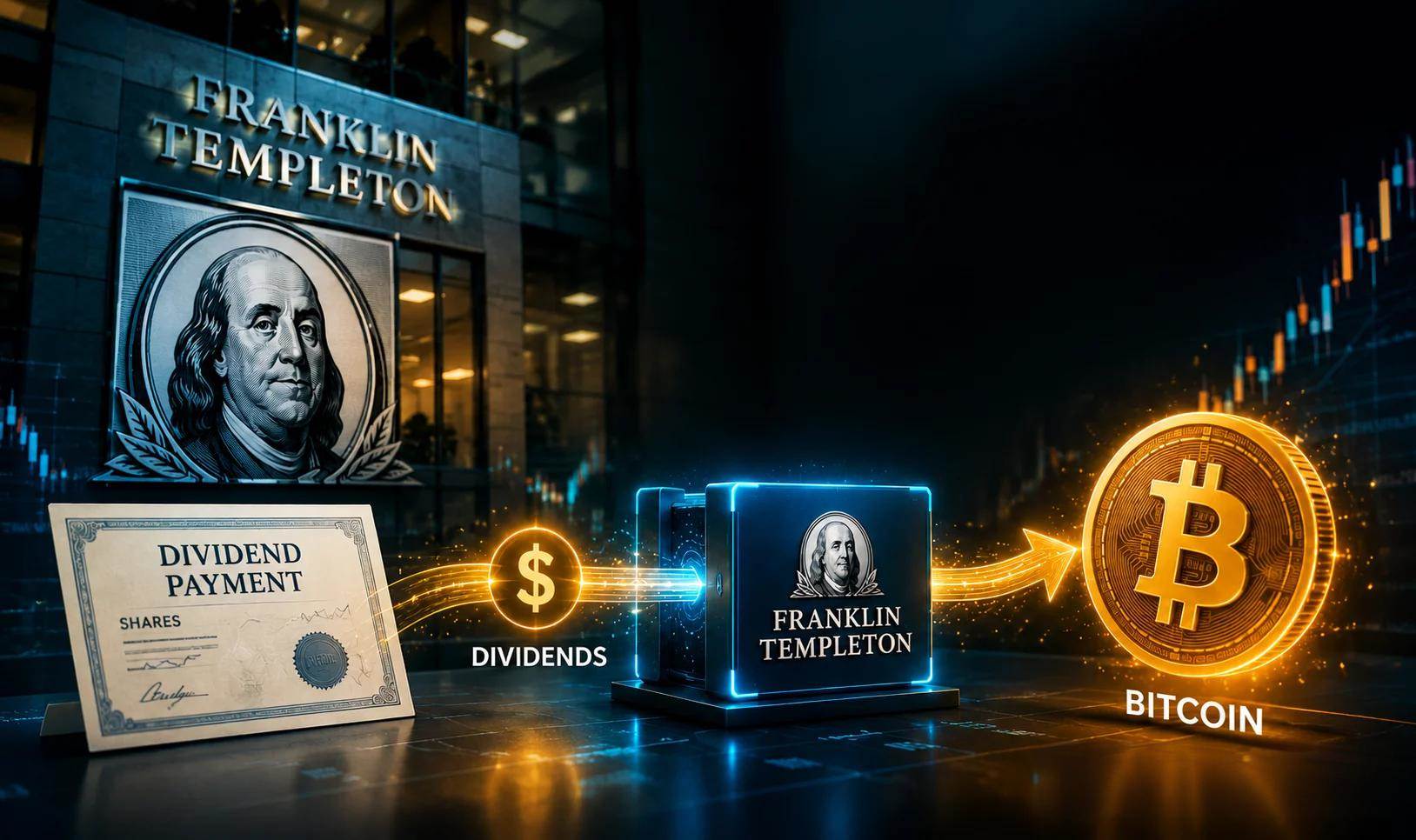
Franklin Templeton CEO Jenny Johnson criticized competitors 'tokenized fund models at TOKEN2049 conference in Singapore
Franklin Templeton CEO Jenny Johnson pointed out at the TOKEN2049 conference in Singapore that many competitors' tokenized fund models are still only the "digital twins" of traditional products, rather than truly using blockchain as the main ledger layer of record.
Core Views and Platform Advantages
Johnson emphasized during the meeting that Franklin Templeton's BENJI platform stores fund ownership records on the public blockchain and supports daily earnings accumulation calculated in seconds. She compared and pointed out that the transaction cost through traditional fund processing systems is approximately US$150, while the transaction cost using the BENJI platform is only approximately US$1.13.
According to recent market data, the tokenized assets managed by Franklin Templeton's BENJI platform are approximately US$2.5 billion. Previously, the agency also used BENJI tokens as part of the payment consideration in the acquisition agreement reached in April, and completed the relevant transaction in June.
Technical Architecture: True On-Chain Native vs Digital Twin
During the discussion session of TOKEN2049, Johnson discussed issues such as tokenized assets, liquidity and on-chain settlement with Binance Co-CEO Richard Teng and Canton Network CEO Yuval Rooz. She clearly distinguished Franklin Templeton's model from tokenized funds that only map ownership records within traditional systems on-chain.
Franklin Templeton also defined the former as a "digital twin" in his internal research: that is, tokens are only used as representations of assets recorded elsewhere, and their ownership records remain in the off-chain system. In contrast, its "digital native" model integrates official transaction and ownership information directly into the blockchain system.
The BENJI platform was launched in 2021 through the Franklin Chain Treasury Bond Money Market Fund (FOBXX), becoming the first U.S. registered mutual fund to use the public blockchain as the official recording system to process transactions and record share ownership. The product was originally based on the Stellar Network and has since expanded to multiple public networks.
Compliance structure and regulatory interaction
The structure of this system is more complex and rigorous than simply public shareholders 'register. According to a letter dated August 12 from employees of the Securities and Exchange Commission (SEC), Franklin Templeton Investor Services maintains an internal system that contains private shareholder information, while on-chain records contain anonymous trading data. These two sets of records are connected in real time and together constitute the official shareholder documents of the fund.
In this structure, the transfer agent retains administrative control of the system. The SEC letter states that transfer agents can correct unauthorized transactions or errors, freeze or migrate wallet records, and restore official records if necessary. As a result, blockchain records form part of the official system, while registered transfer agents maintain control of shareholder records.
Currently, Franklin Templeton's Benji website shows that its deployment scope covers multiple networks such as Stellar, Polygon, Arbitrum, Avalanche, Aptos, Ethereum, Base, Solana and BNB Smart Chain. Availability for retail investors varies across different networks, but institutional access channels are extensive.
Re-examination of cost data
The cost comparison mentioned by Johnson in TOKEN2049 requires a more detailed interpretation. The initial meeting report stated that BENJI costs $1.13, compared with about $150 per transaction for traditional methods. However, Johnson provided a more detailed explanation during Franklin Resources 'earnings conference call in January 2026: The company compared its legacy transfer agency system with approximately 50,000 transactions on the Stellar blockchain. According to call records, the cost per transaction on traditional systems is approximately $1.50, while the total cost of running all 50,000 transactions on Stellar is approximately $1.13.
This early explanation does not support the claim that each traditional transaction costs $150. Therefore, unless Franklin Templeton provides separate calculations or methodological support, the $150 figures reported at the TOKEN2049 meeting should be considered unconfirmed meeting data.
Asset Size and Institutional Applications
Franklin Templeton claims that his BENJI platform enables the ability to calculate profits in seconds. The system accurately calculates the proportional return to seconds when transferring between investors in tokenized securities and distributes the return on each calendar day, including weekends and holidays.
Current on-chain data shows that Franklin Templeton's tokenized operations have exceeded the previously quoted US$2.5 billion. RWA.xyz data shows that as of October 8, Franklin Templeton Benji Investments 'distributed assets in four products have a value of approximately US$2.6 billion, making it ranked second among the tokenized US Treasury fund platforms.
It should be noted that this figure should not be confused with the size of the independent US BENJI fund. RWA.xyz lists BENJI itself at approximately $760.6 million and iBENJI at approximately $1.71 billion. Franklin Templeton's traditional funds page shows FOBXX's net assets as of August 31 were US$686.64 million. This suggests that different dates and definitions of broader platforms can cause data differences.
Franklin Templeton is introducing these tokenized shares into institutional trading arrangements. For example, Bybit allows eligible institutions to pledge fund shares to obtain USDT or USDC trading credit lines; its previous cooperation with Binance also allows institutions to use shares of money market funds issued by Benji as over-the-counter collateral, while assets remain in regulated custody. In addition, the platform is integrated with MoonPay Trade, allowing qualified customers to convert between supported stablecoins and Franklin Templeton tokenized money market fund exposure.
Regulatory exemptions and business expansion
8月份的一项美国监管发展为富兰克林邓普顿提供了新的内部使用路径。SEC员工授予了无行动救济(no-action relief),允许关联的富兰克林基金在富兰克林邓普顿投资者服务部门担任股份托管人的情况下投资BENJI。该救济措施受到授权、独立区块链钱包、每日对账、记录保存和独立会计师检查等控制的约束。SEC强调,该信函仅代表员工执法立场,不具有法律效力,也不构成委员会对该安排的批准。
富兰克林邓普顿已将BENJI应用于基金认购和抵押之外的领域。在4月宣布收购加密投资管理公司250 Digital时,公司表示BENJI代币将成为支付对价的一部分。富兰克林邓普顿于6月22日完成收购,并成立了富兰克林加密货币部门,吸纳了被收购团队及加密策略。
关于Stellar网络故障的说明
针对BENJI最初部署在Stellar网络的相关争议,需单独说明。Stellar Development Foundation(SDF)披露,其在2025年10月发现了一个网络状态归档漏洞,导致478个数据条目损坏。大多数条目已修复,剩余84个需要受影响协议或发行人进行缓解。SDF表示问题已于10月10日得到控制,并于10月23日解决。
官方事后分析报告并未将富兰克林邓普顿或BENJI列为受影响条目之一,因此根据现有的主要证据,不能将这478条损坏记录归因于BENJI。SDF表示,其已通过加强监控、验证者协调、测试、代码审查以及与外部安全审计师的合作来应对此问题。