Exchange Ranking
 Top Exchanges
 24h Volume Ranking
 Popularity Ranking
 Exchange BTC Balance
 Proof of Reserves
 Decentralized Exchanges
 Funding Rate
 Funding Heatmap
 Liquidation Data
 Max Pain
 Long/Short Ratio
 Whale L/S Ratio
 Binance/Okex/Huobi L/S
 Bitfinex Margin L/S
 ETF Tracker
 Solana ETF
 XRP ETF
 Hong Kong ETF
 Bitcoin Treasuries
 Crypto Reversal
 Ethereum Reserves
 HyperLiquid Wallet Analysis
 Hyperliquid Whale Watch
 Large Transactions
 On-chain Movement
 Bitcoin ROI
 Stablecoin Market Cap
 Options Analysis
 News
 Articles
 Economic Calendar
 Features
 Wallet
 Contract Calculator


 Security
 Collections
 Watchlist
 Following
This year can be described as a year when “everyone around the world is involved in blockchain technology”. Looking back at the first report on the state of cryptocurrencies a few years ago, the market was still in its “adolescent stage” – with a market value only half that of today. Blockchain technology was slow, expensive, and not very stable. But in just three years, the entire industry has gone through both bear markets and regulatory challenges, yet it continues to evolve. From underlying technologies to application ecosystems, the crypto world is becoming faster, more stable, and more practical. Today, cryptocurrencies are no longer just speculative investments; they are becoming an important part of the modern economy.
The story of cryptocurrencies in 2025 will be one of their maturity. In short, cryptocurrencies have grown significantly:
Traditional financial institutions such as Visa, BlackRock, Fidelity, and JPMorgan Chase, along with tech companies like PayPal, Stripe, and Robinhood, are all offering or introducing crypto-related products.
Currently, blockchain technology processes over 3,400 transactions per second (more than a 100-fold increase in the past five years).
Stablecoins support transactions worth $46 trillion per year (adjusted to $9 trillion), making them competitive with Visa and PayPal.
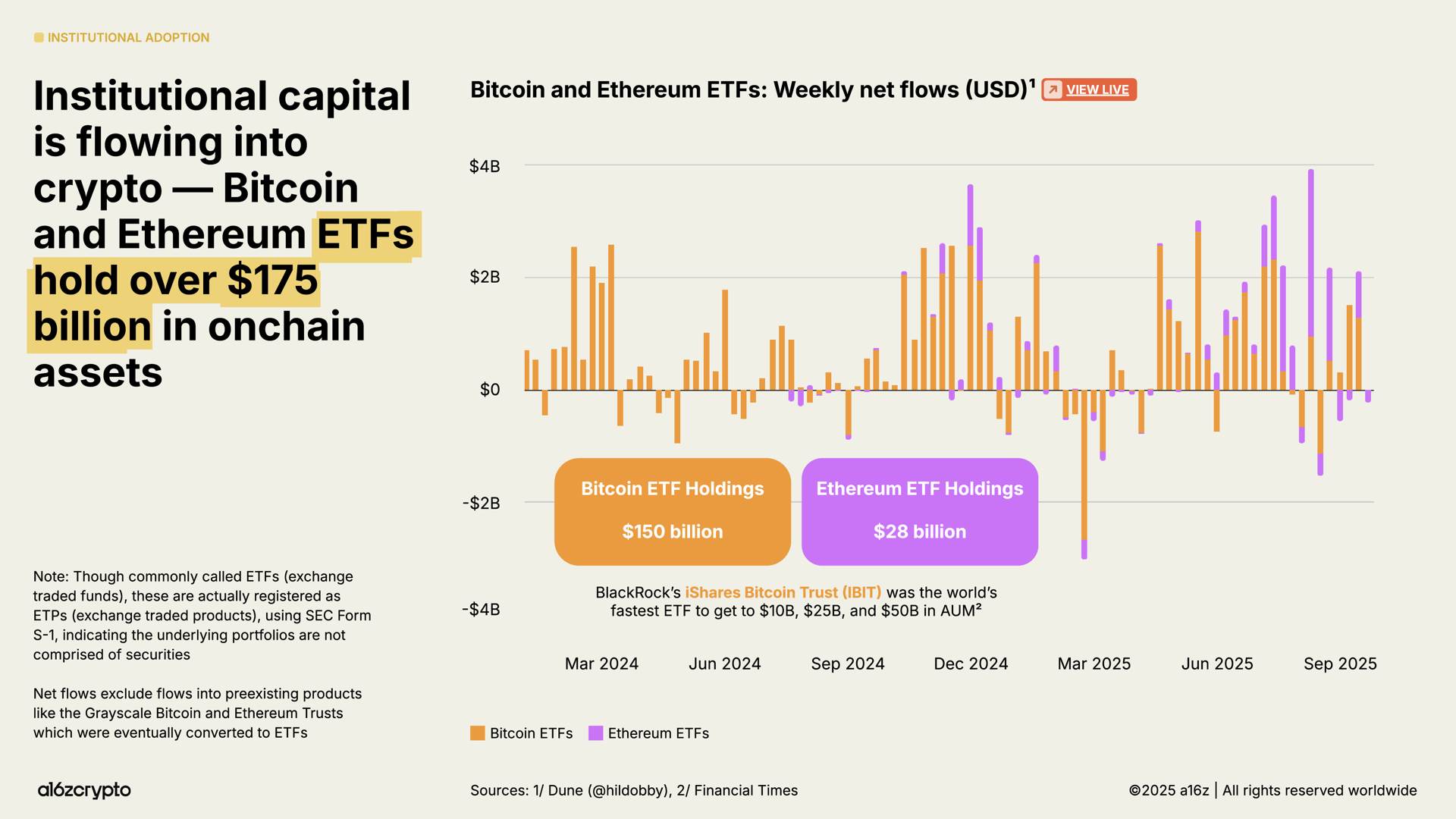
The value of exchange-traded products of Bitcoin and Ethereum exceeds $175 billion.
Our latest report, "The Current State of Cryptocurrencies," explores this industry's transformation. It covers topics such as institutional adoption, the rise of stablecoins, and the integration of cryptocurrencies with artificial intelligence. Additionally, we've introduced a new approach to analyzing data and tracking industry developments through key indicators: the "Current State of Cryptocurrencies" dashboard.
Let's take a look at the findings…
The market is massive, globalized, and continues to grow.
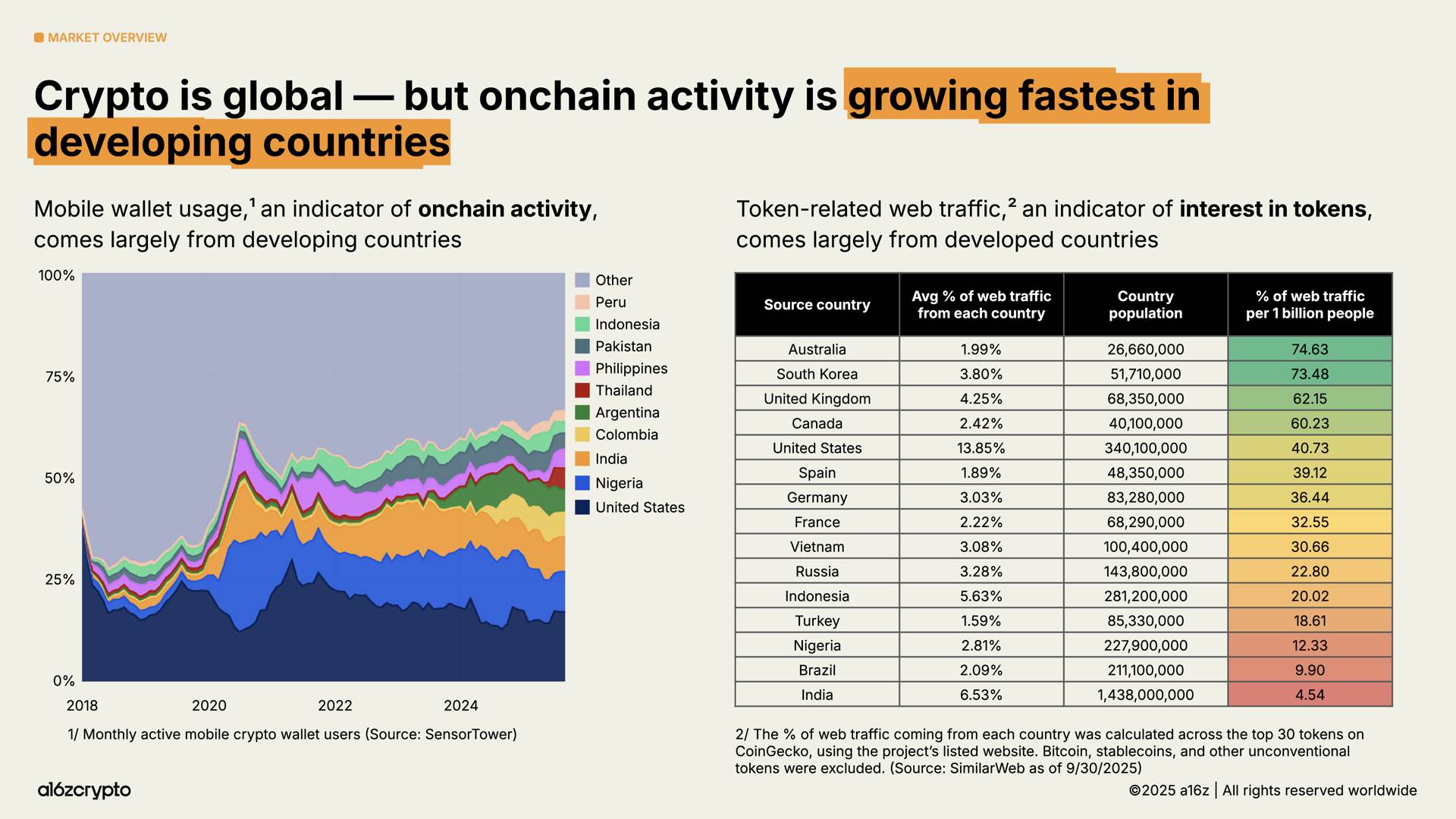
By 2025, the total market value of cryptocurrencies is expected to exceed $4 trillion for the first time, marking a significant milestone in the industry’s development. The number of users of encrypted mobile wallets also reached a record high, representing a 20% increase compared to last year.
The transition from hostile regulatory environments to more supportive ones, along with the accelerated adoption of these technologies—from stablecoins to the tokenization of traditional financial assets, to other emerging applications—will determine the direction of the next phase of development.
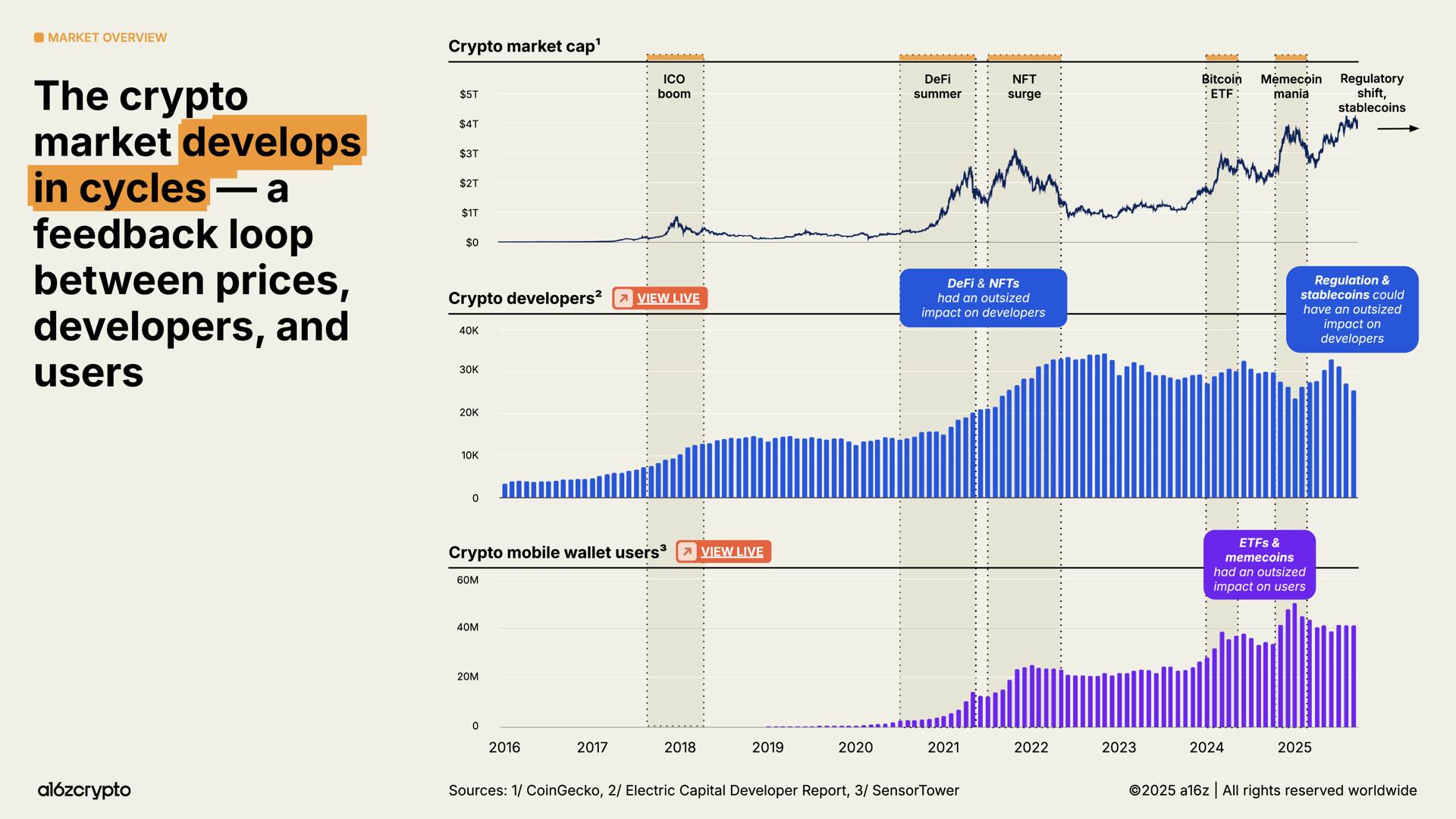
Based on our updated analysis, we estimate that there are approximately 40 million to 70 million active users of cryptocurrencies, which is an increase of about 10 million compared to last year.
This is just a small portion of the estimated 716 million cryptocurrency holders, representing a 16% increase compared to last year. It’s also a small portion of the approximately 181 million active addresses per month, although there has been a 18% decrease compared to last year.
被动加密货币持有者(拥有加密货币但不进行链上交易的人)和活跃用户(定期进行链上交易的人)之间的差距为加密货币构建者提供了一个机会,可以接触到更多已经拥有加密货币的潜在用户。
那么这些加密用户在哪里,他们在做什么?
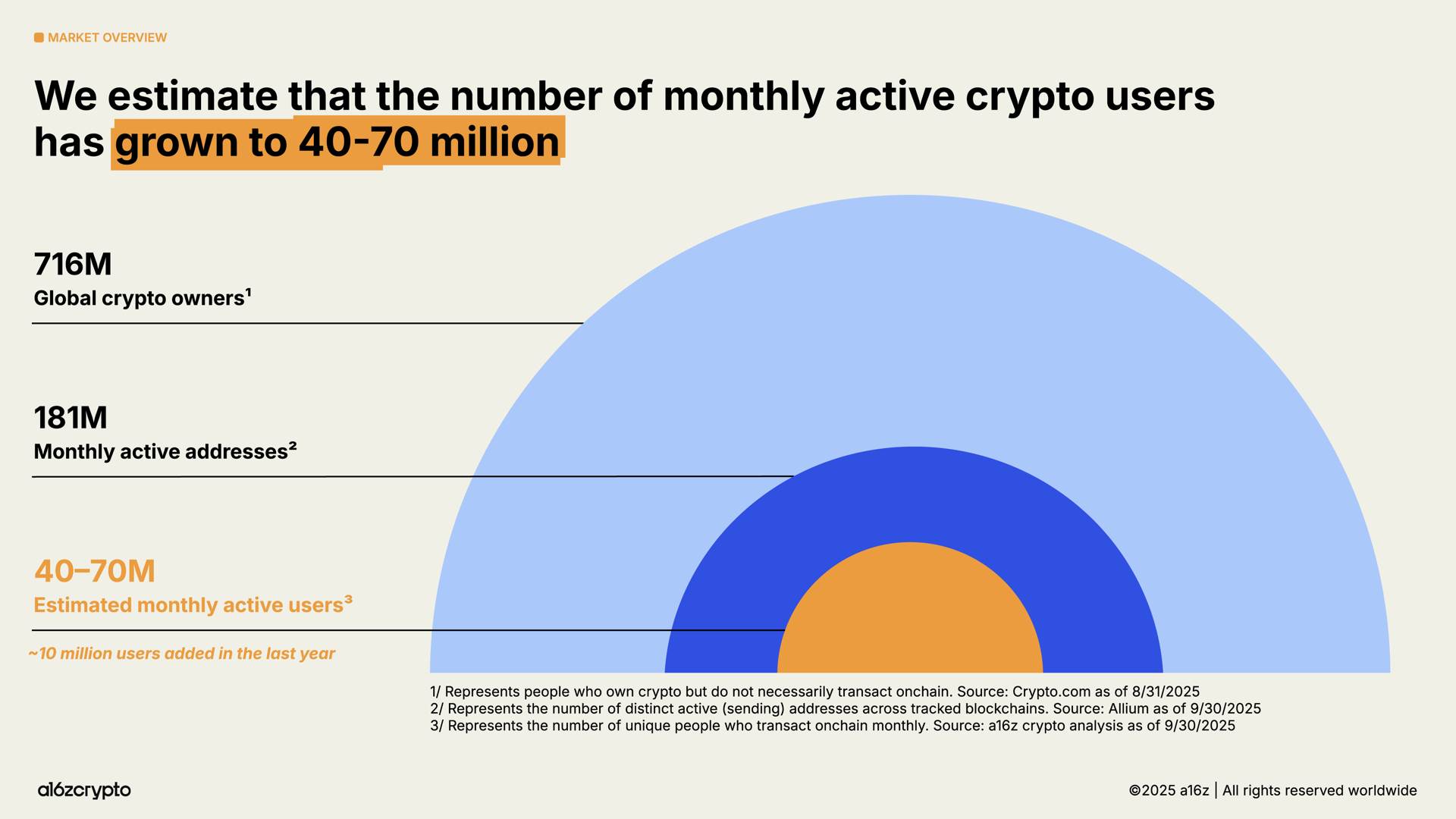
加密货币是全球性的,但世界各地的使用方式似乎各不相同。移动钱包的使用率(链上活动的指标)在阿根廷、哥伦比亚、印度和尼日利亚等新兴市场增长最快。(尤其是在阿根廷, 由于货币危机不断升级,过去三年里,加密移动钱包的使用率增长了 16 倍 。)
与此同时,我们对代币相关网络流量地理来源的分析显示,人们对代币的兴趣指标更倾向于发达国家。 与发展中国家的用户行为相比, 这些国家(尤其是澳大利亚和韩国 )的活动可能更侧重于交易和投机 。
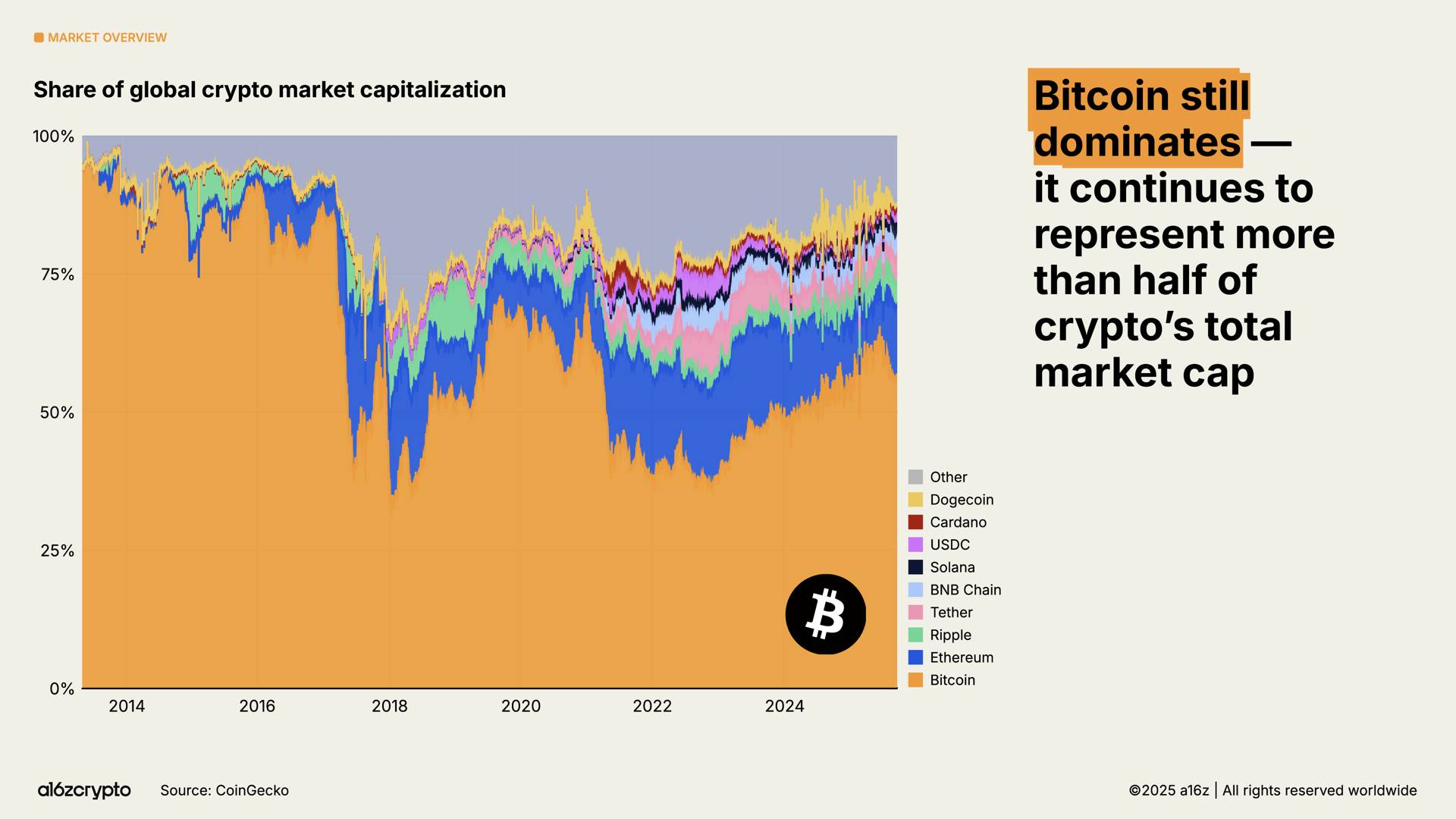
比特币仍占加密货币总市值的一半以上,并创下 12.6 万美元的历史新高,因其作为价值储存手段越来越受到投资者的青睐。与此同时,以太坊和 Solana 收复了 2022 年后的大部分跌幅。
As the scale of blockchain technology continues to expand, the cost market becomes more mature, and new applications emerge, certain metrics become increasingly important. One of these metrics is “actual economic value” – the actual costs that people are willing to pay for using blockchain technologies. At present, Hyperliquid and Solana account for 53% of all revenue-generating activities, which is quite different from the dominance of Bitcoin and Ethereum in previous years. In terms of developers, cryptocurrencies remain a multi-chain ecosystem, with Bitcoin, Ethereum (and its Layer-2 versions), and Solana attracting the most developers. Ethereum and its Layer-2 versions will be the preferred choices for new developers in 2025. Meanwhile, Solana is one of the fastest-growing ecosystems, with developer interest having increased by 78% over the past two years. According to the analysis by a16z’s cryptocurrency investment team, this reflects many founders’ interest in which ecosystem they want to build on. You can explore these trends and others in our “Cryptocurrency Status” dashboard. Financial institutions have already accepted cryptocurrencies. 2025 will be a year of institutional adoption. In last year’s “Cryptocurrency Status Report,” Stripe noted that stablecoins have found suitable applications in various markets. Just five days later, Stripe announced its intention to acquire the stablecoin infrastructure platform Bridge. Competition is now underway: traditional financial companies are also ready to launch stablecoins publicly.A few months later, Circle’s $1 billion IPO marked the emergence of stablecoin issuers as mainstream financial institutions. In July, the GENIUS Act was passed by both parties, providing clear guidelines for developers and institutions working with stablecoins. In the following months, mentions of stablecoins in SEC documents increased by 64%. Various financial institutions also released a series of announcements regarding their use of stablecoins. Traditional institutions such as Citigroup, Fidelity, JPMorgan Chase, Mastercard, Morgan Stanley, and Visa are now offering or planning to offer encrypted products to consumers, allowing them to buy, sell, and hold digital assets, as well as stocks, exchange-traded products, and other traditional instruments. At the same time, platforms like PayPal and Shopify are investing more heavily in payment services, building infrastructure for everyday transactions between businesses and customers. In addition to directly offering products, leading fintech companies like Circle, Robinhood, and Stripe are actively developing or announcing plans to develop new blockchain technologies, focusing on payments, physical assets, and stablecoins. These efforts can lead to increased online payments, encourage adoption, and ultimately create a larger, faster, and more global financial system. These companies have extensive distribution networks. If they continue to grow, cryptocurrencies could become an integral part of the financial services we use every day.Exchange-traded products are another key driver of institutional investment. Currently, the total value of cryptocurrencies held in these products exceeds $175 billion, representing a growth of 169% compared to $65 billion a year ago.
BlackRock’s iShares Bitcoin Trust (IBIT) is considered the most traded exchange-traded product related to Bitcoin. In recent months, there has been significant inflow of funds into its Ethereum-related exchange-traded products as well. (Note: Although these products are often referred to as Exchange-Traded Funds, they are actually registered as ETPs under the S-1 form issued by the U.S. Securities and Exchange Commission. This means that their underlying portfolios do not contain any securities.)
These products make cryptocurrencies more accessible, thereby attracting a large amount of institutional capital that was previously confined to the fringes of the industry.
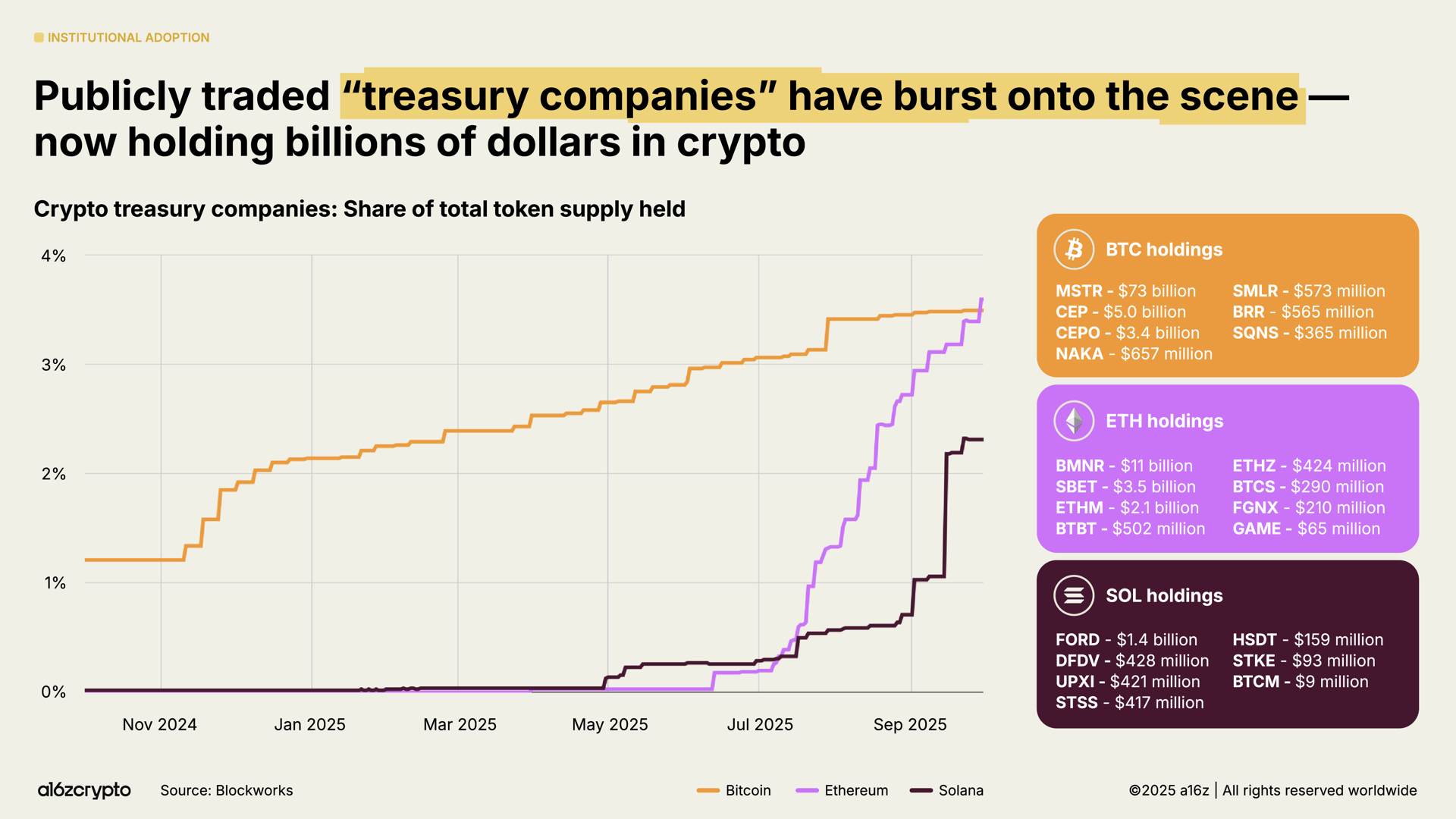
Companies like “Digital Asset Trusts” – entities that hold cryptocurrencies on their balance sheets, just as corporate finance departments hold cash – currently hold approximately 4% of the total supply of Bitcoin and Ethereum tokens. Together, these Digital Asset Trusts and exchange-traded products account for about 10% of the total supply of Bitcoin and Ethereum tokens.
Stablecoins are becoming mainstream.
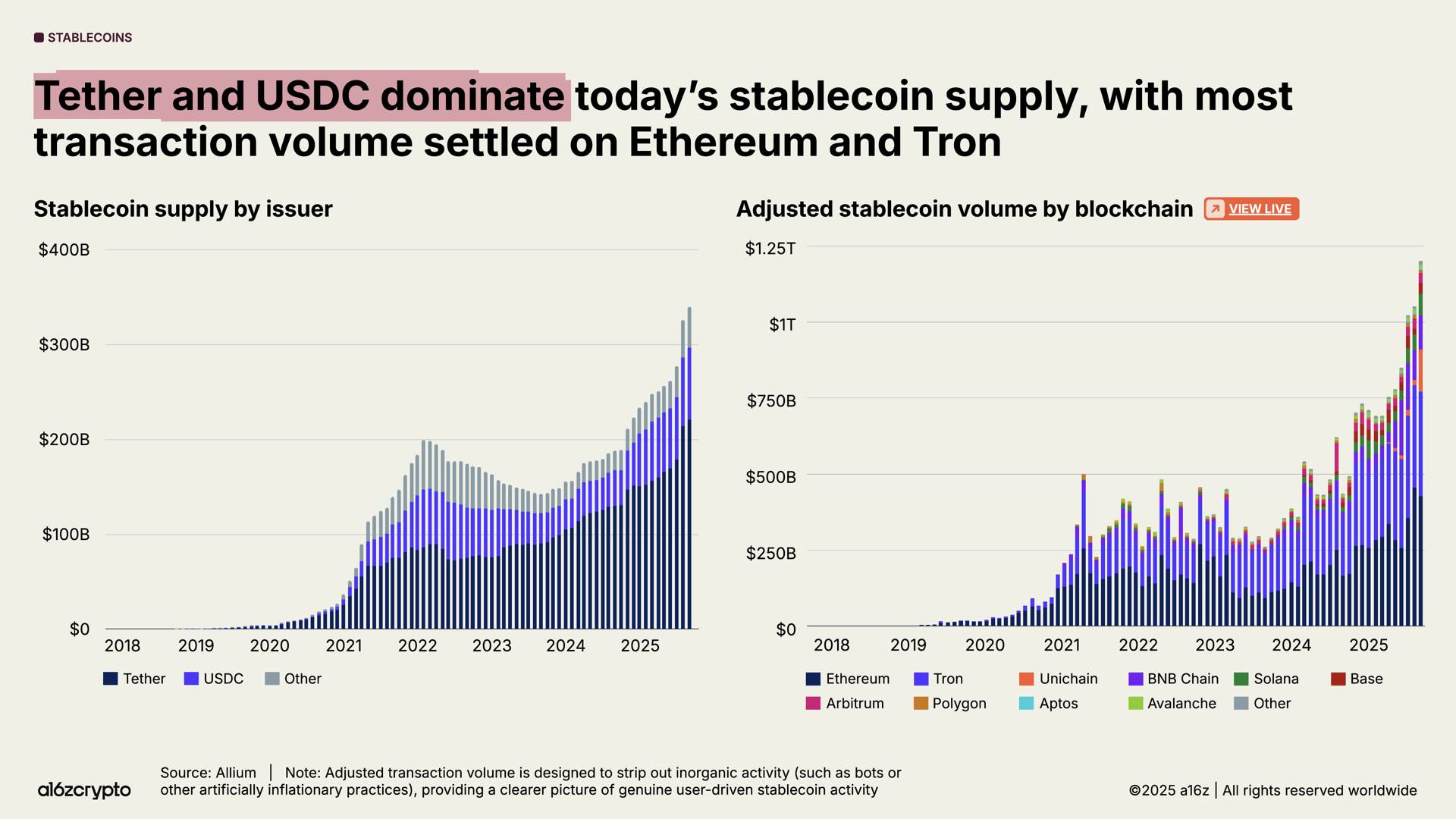
There is nothing more indicative of the maturity of cryptocurrencies in 2025 than the rise of stablecoins. In recent years, stablecoins have been used primarily for settling speculative cryptocurrency transactions. However, in recent months, they have become the fastest, cheapest, and most globalized way to transfer dollars—in less than a second, for just a fraction of a cent, with transfers possible to almost any location in the world. This year, stablecoins have become the backbone of the blockchain economy. Last year, the total volume of transactions involving stablecoins reached 46 trillion dollars, an increase of 106% over the previous year. Although this figure represents financial transactions rather than retail payments via credit cards, it is still nearly three times the volume of Visa transactions, and close to the size of the ACH network that operates across the entire U.S. banking system. After adjusting for more accurate measures of activity, stablecoin transactions have reached 9 trillion dollars over the past 12 months, a 87% increase. This is more than five times the volume of PayPal transactions, and more than half of Visa’s total transactions. The adoption rate of stablecoins is accelerating rapidly. Monthly adjusted stablecoin transactions have reached record highs, with September 2025 alone seeing transactions worth nearly 1.25 trillion dollars. It is worth noting that this activity is largely unrelated to overall cryptocurrency transactions. This indicates that stablecoins are used for non-speculative purposes, and more importantly, their products align well with market demands.The total supply of stablecoins has also reached a historical high, currently exceeding $300 billion.
The two most prominent stablecoins in the market account for 87% of the total supply: Tether and USDC. In September 2025, the volume of stablecoin transactions on the Ethereum and Telegram blockchain reached $772 billion, accounting for 64% of all transactions. While these two issuers and blockchains dominate stablecoin transactions, growth is also accelerating among new blockchains and new issuers.
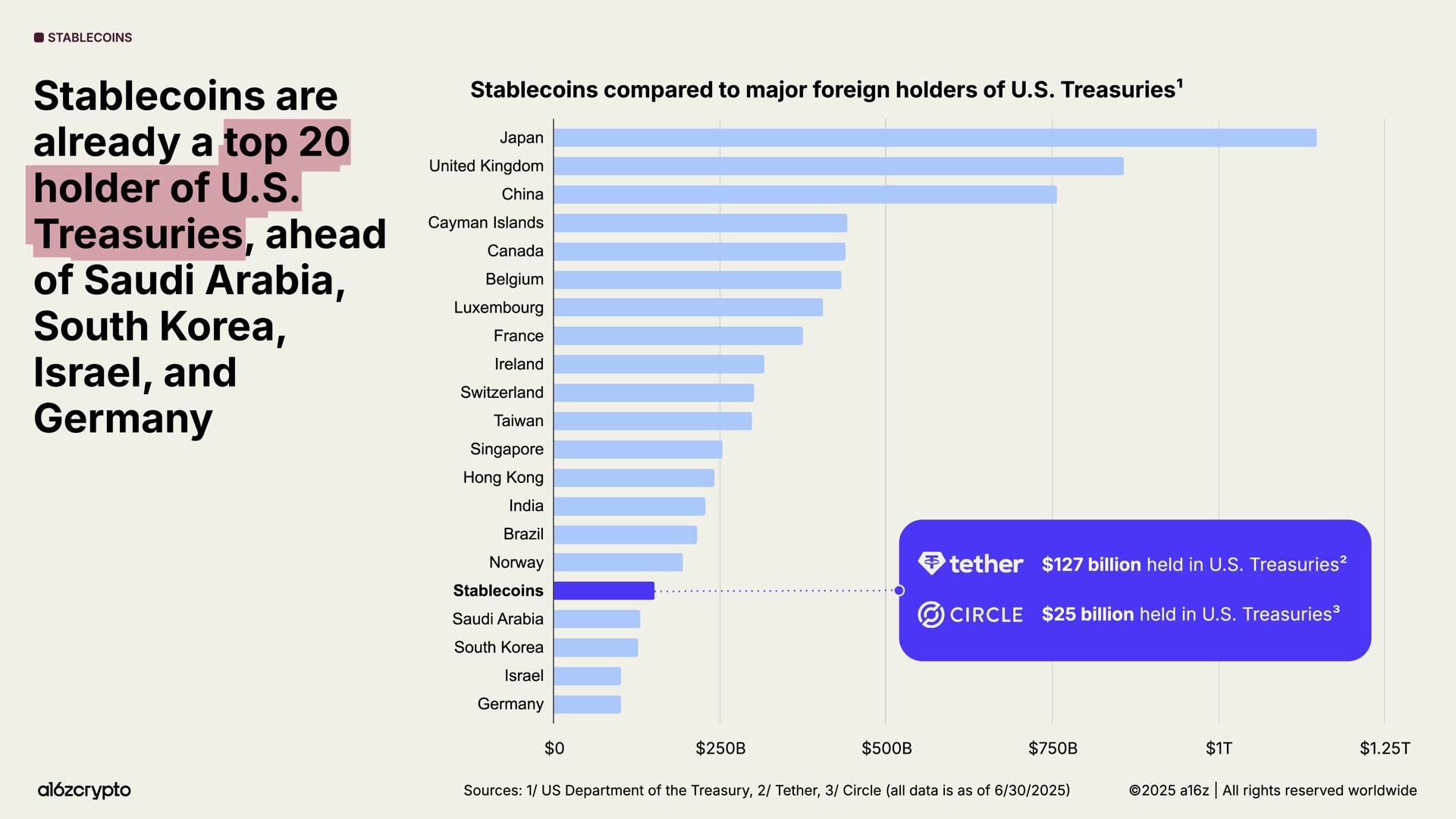
Today, stablecoins have become a significant force in global macroeconomics: more than 1% of US dollars are currently represented by tokenized stablecoins on public chains. The amount of US Treasury bonds held by stablecoins has also risen from 20th place last year to 17th place. Stablecoins hold a total of over $150 billion in US Treasury bonds, surpassing the bond holdings of many sovereign countries.
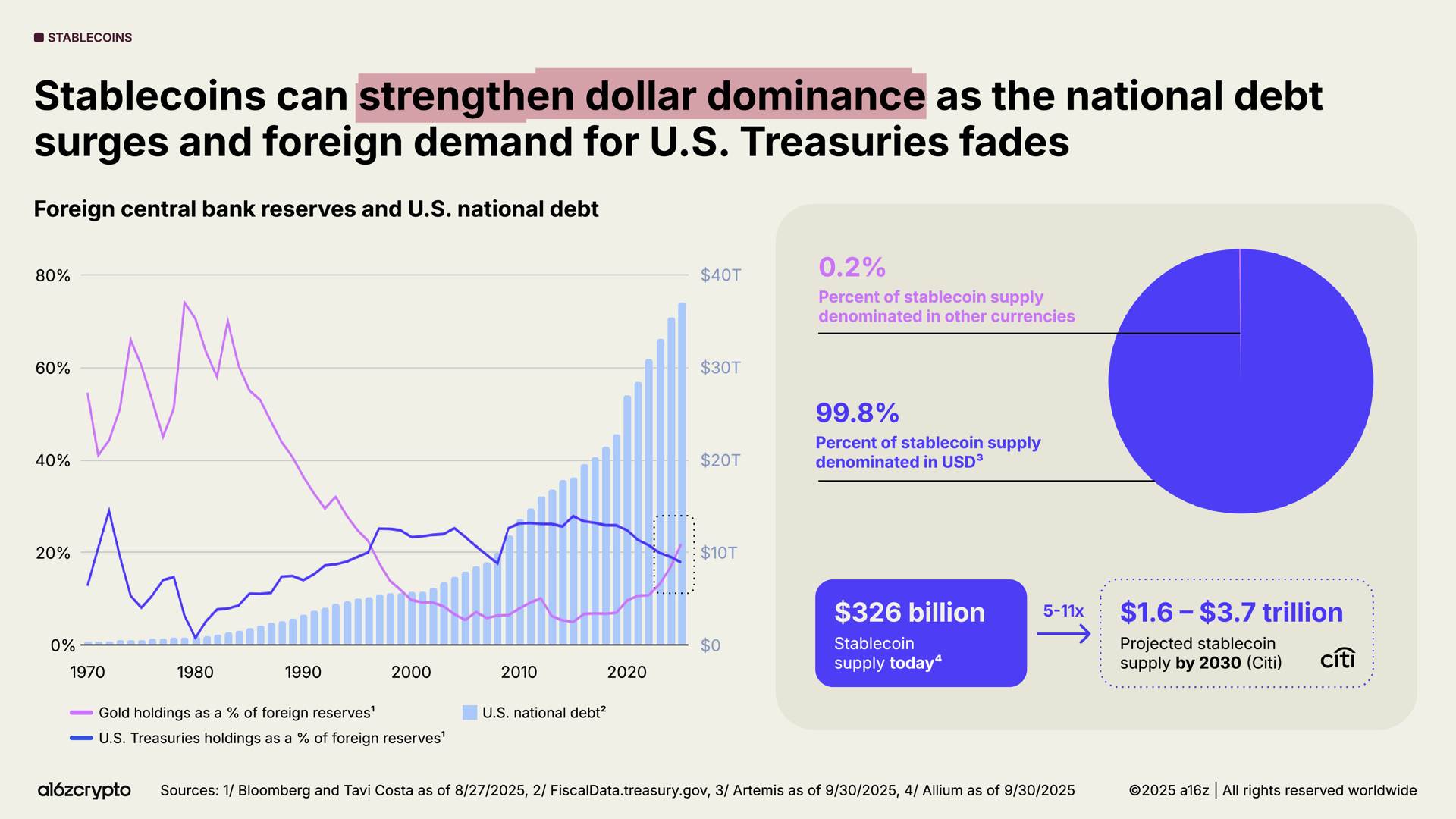
Meanwhile, despite declining demand for US Treasury bonds globally, the size of US Treasury bonds continues to grow. For the first time in 30 years, foreign central banks’ gold reserves have surpassed their holdings of US Treasury bonds.
But stablecoins are bucking this trend: over 99% of stablecoins are denominated in US dollars. It is estimated that by 2030, their value will increase tenfold, reaching over $3 trillion. This could provide a strong and sustainable source of demand for US debt in the coming years.
Even if foreign central banks reduce their holdings of US Treasury bonds, stablecoins will continue to strengthen the dominance of the US dollar.
加密货币在美国比以往任何时候都更加强大
美国已经改变了之前对加密货币的敌对立场,重振了建筑商的信心。
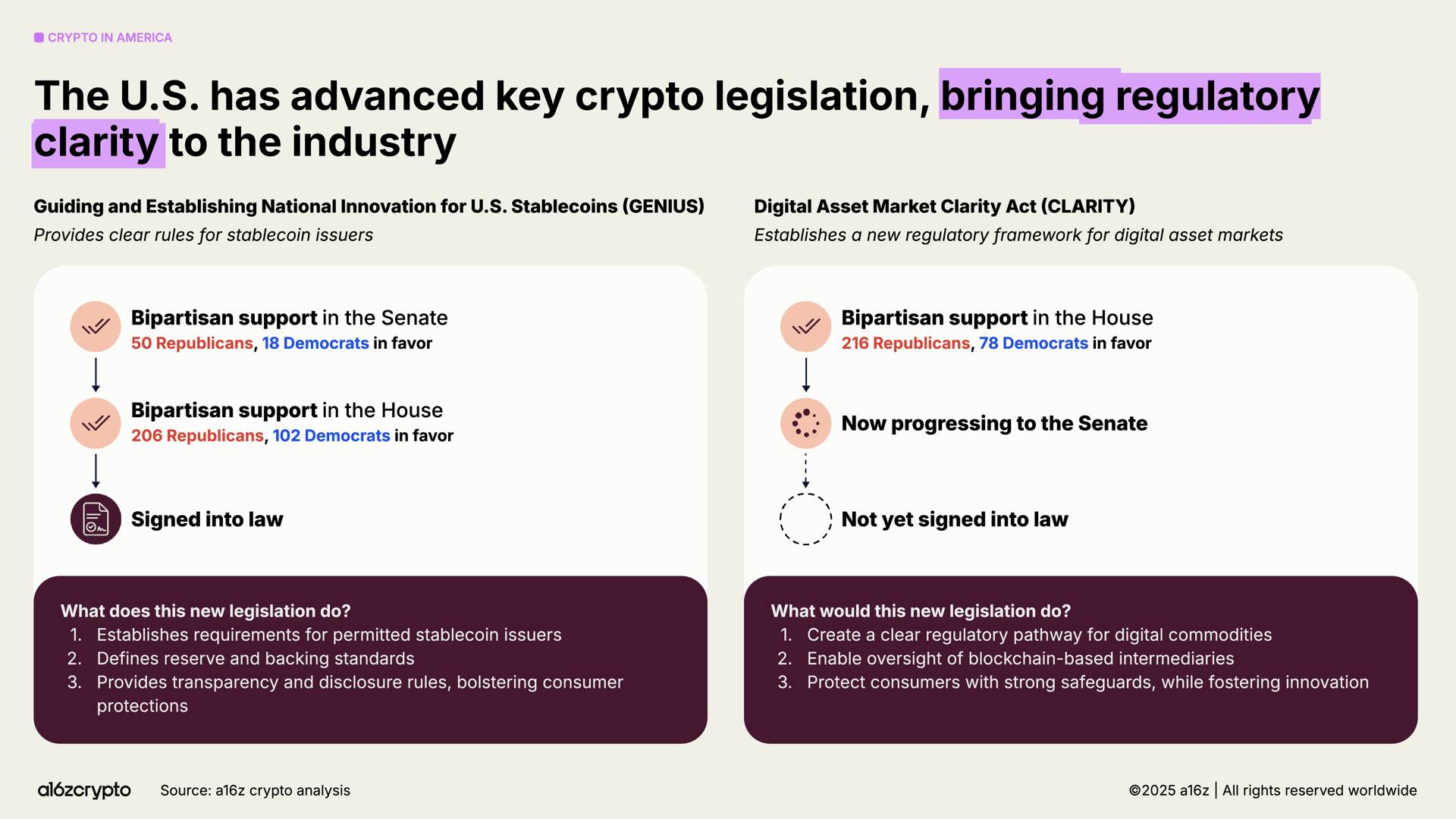
今年,《 天才法案》(GENIUS Act) 的通过和众议院对《 清晰法案》(CLARITY Act) 的批准标志着两党达成共识,即加密货币在美国不仅会继续存在,而且有望蓬勃发展。这些法案共同构建了稳定币、市场结构和数字资产监管框架,在创新与投资者保护之间取得平衡。此外,第 14178 号行政命令对该法案进行了补充,该命令推翻了此前的反加密货币指令,并成立了一个跨机构工作组,以推进联邦数字资产政策的现代化。
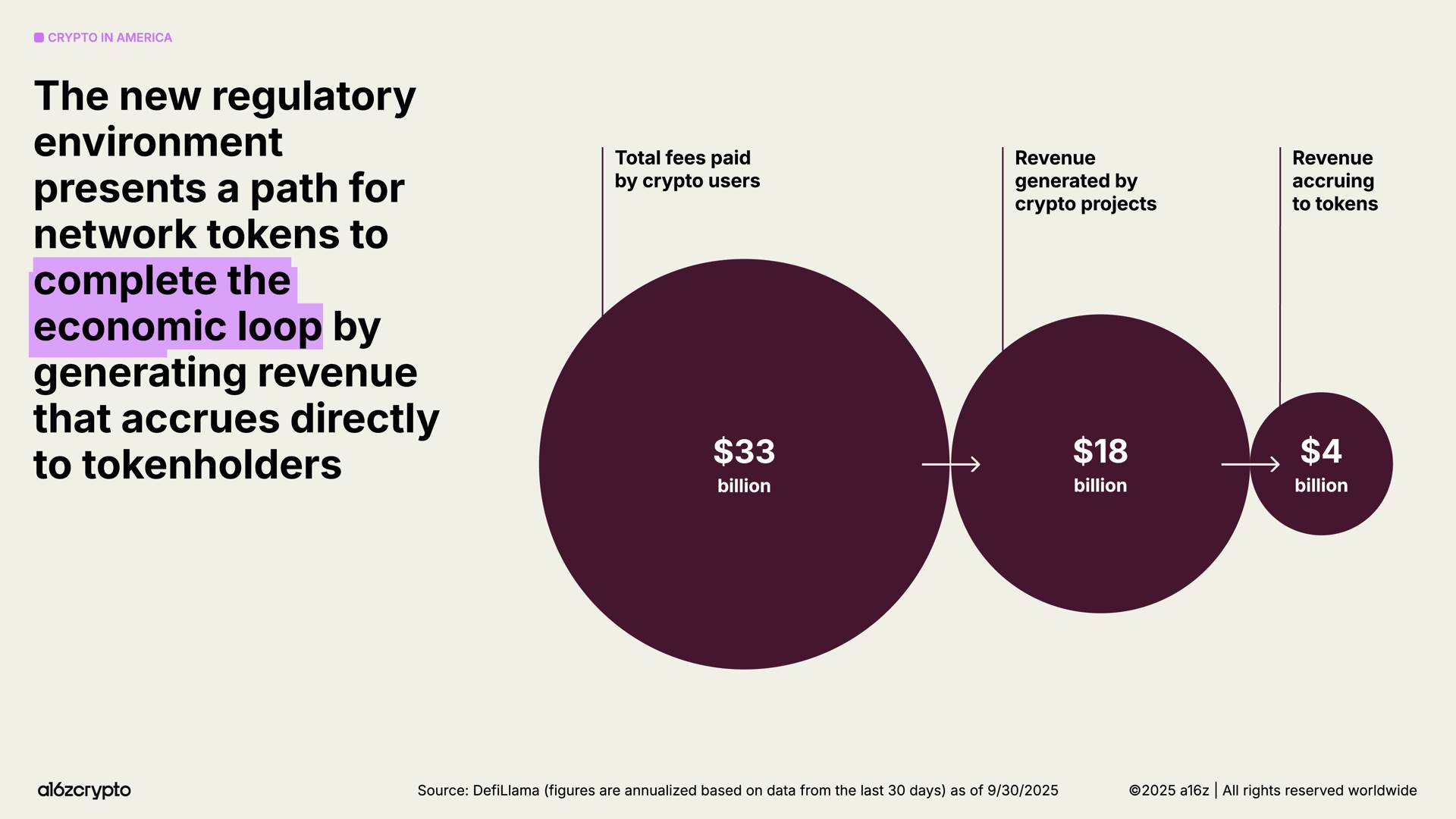
监管环境正在为构建者铺平道路,使其能够充分发挥代币作为一种新型数字原语的潜力 ,类似于前几代互联网中的网站。随着监管的清晰化,更多网络代币将能够通过创造收益来完成其经济循环,这些收益将归属于代币持有者,从而为互联网创造一个能够自我维持、让更多用户在系统中拥有权益的全新经济引擎。
世界正在走向链上
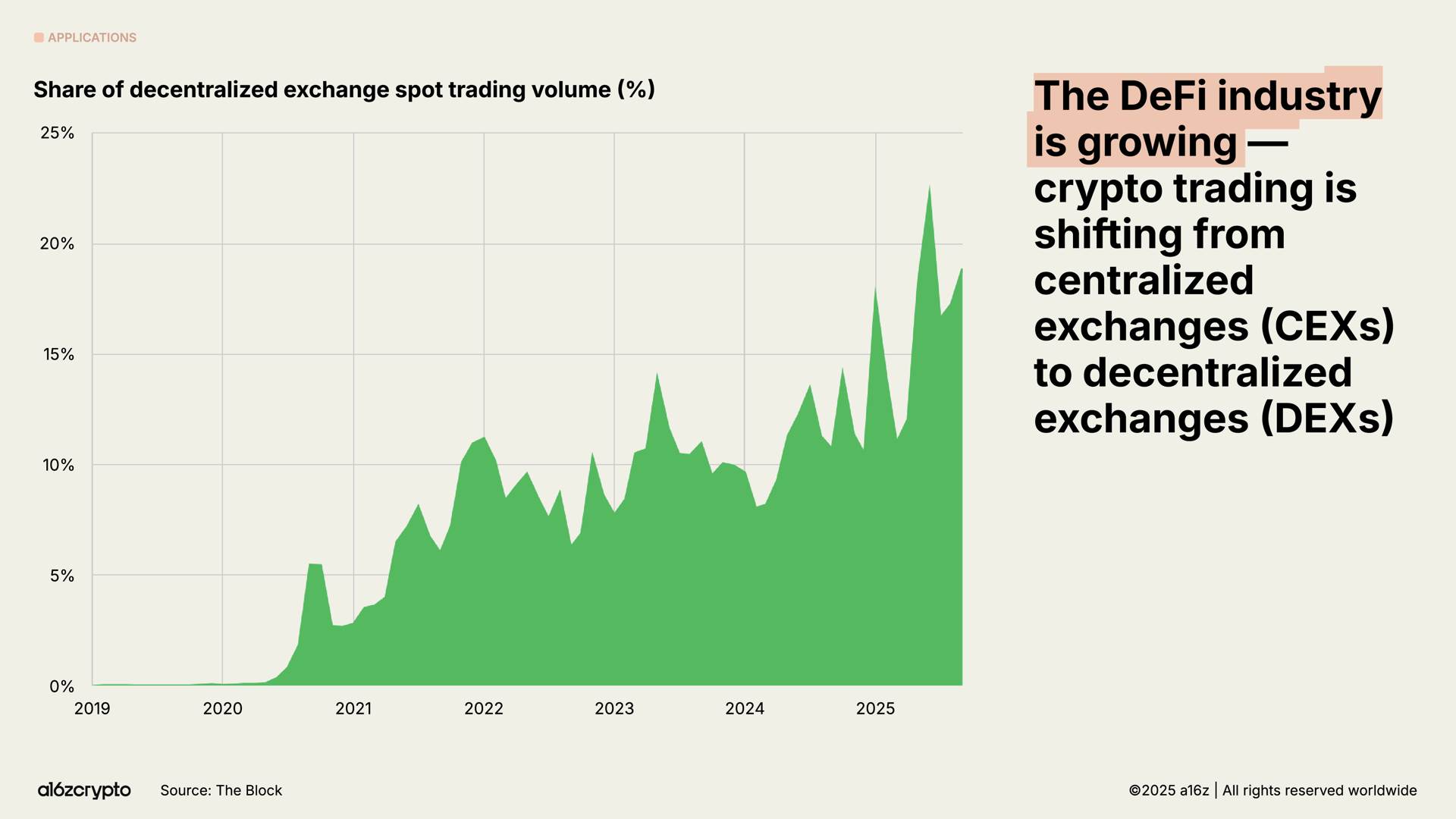
链上经济曾经只是早期尝试者的小众游乐场,如今已发展成为一个每月拥有数千万参与者的多领域市场。目前,近五分之一的现货交易量发生在去中心化交易所。
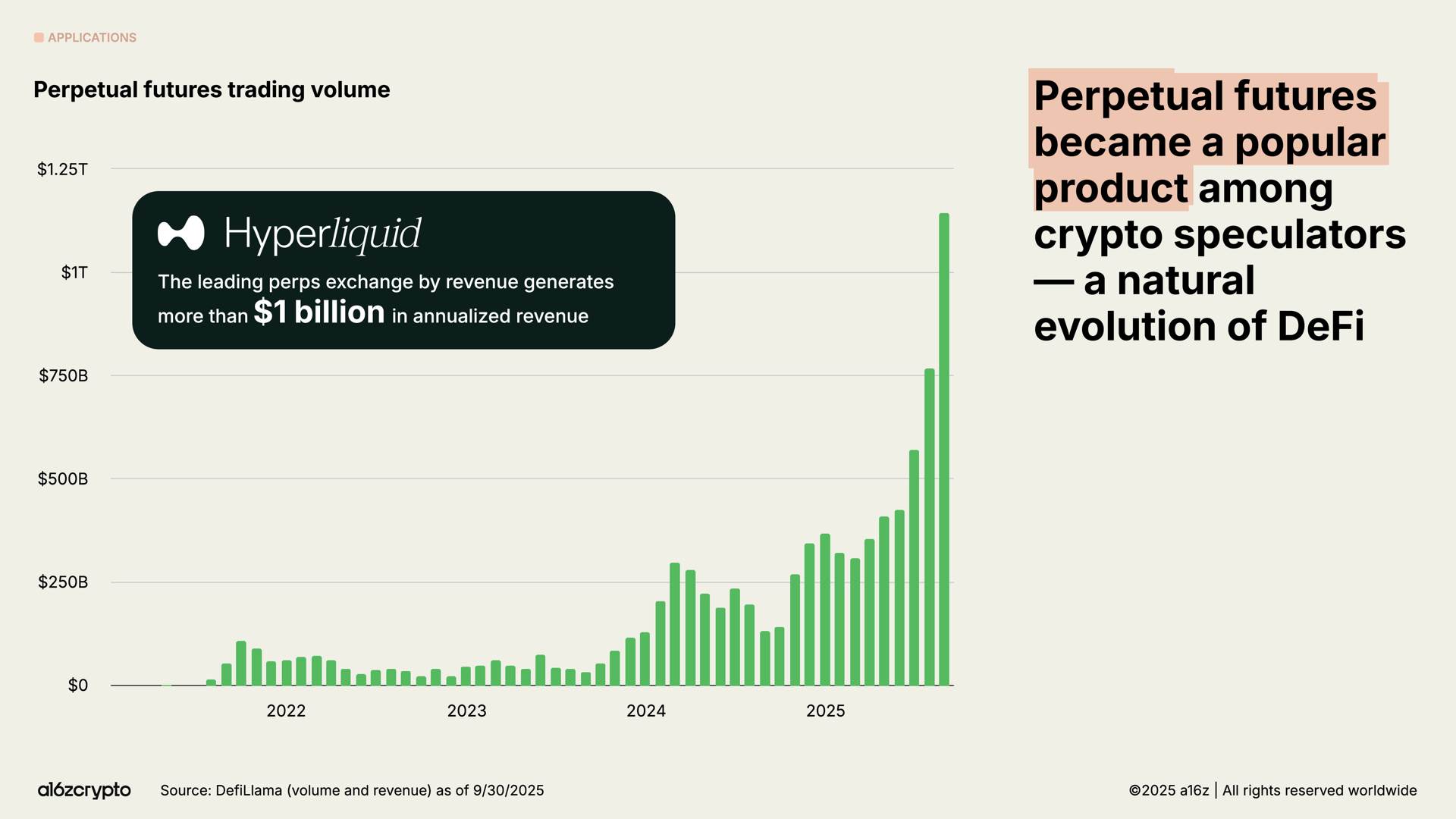
永续期货的交易量在过去一年增长了近 8 倍,在加密货币投机者中迅速蹿红。像 Hyperliquid 这样的去中心化永续期货交易所已经处理了数万亿美元的交易,今年的年化收入超过 10 亿美元 ——这些数字足以媲美一些中心化交易所。
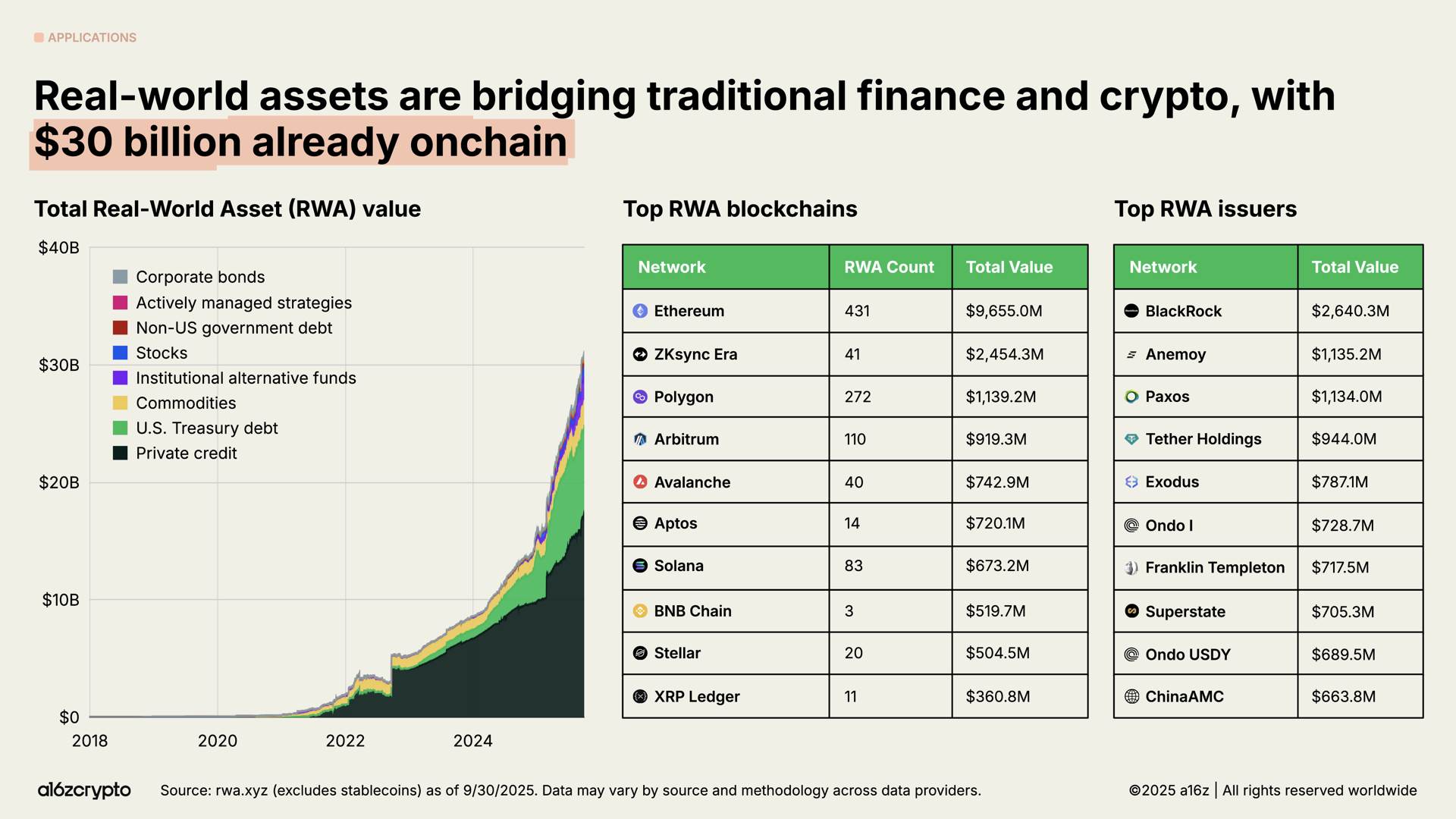
现实世界资产(RWA)——例如美国国债、货币市场基金、私人信贷和房地产等传统资产,在链上呈现(“代币化”)——连接着加密货币和传统金融。代币化 RWA 的总市场规模为 300 亿美元, 在过去两年中增长了近 4 倍 。
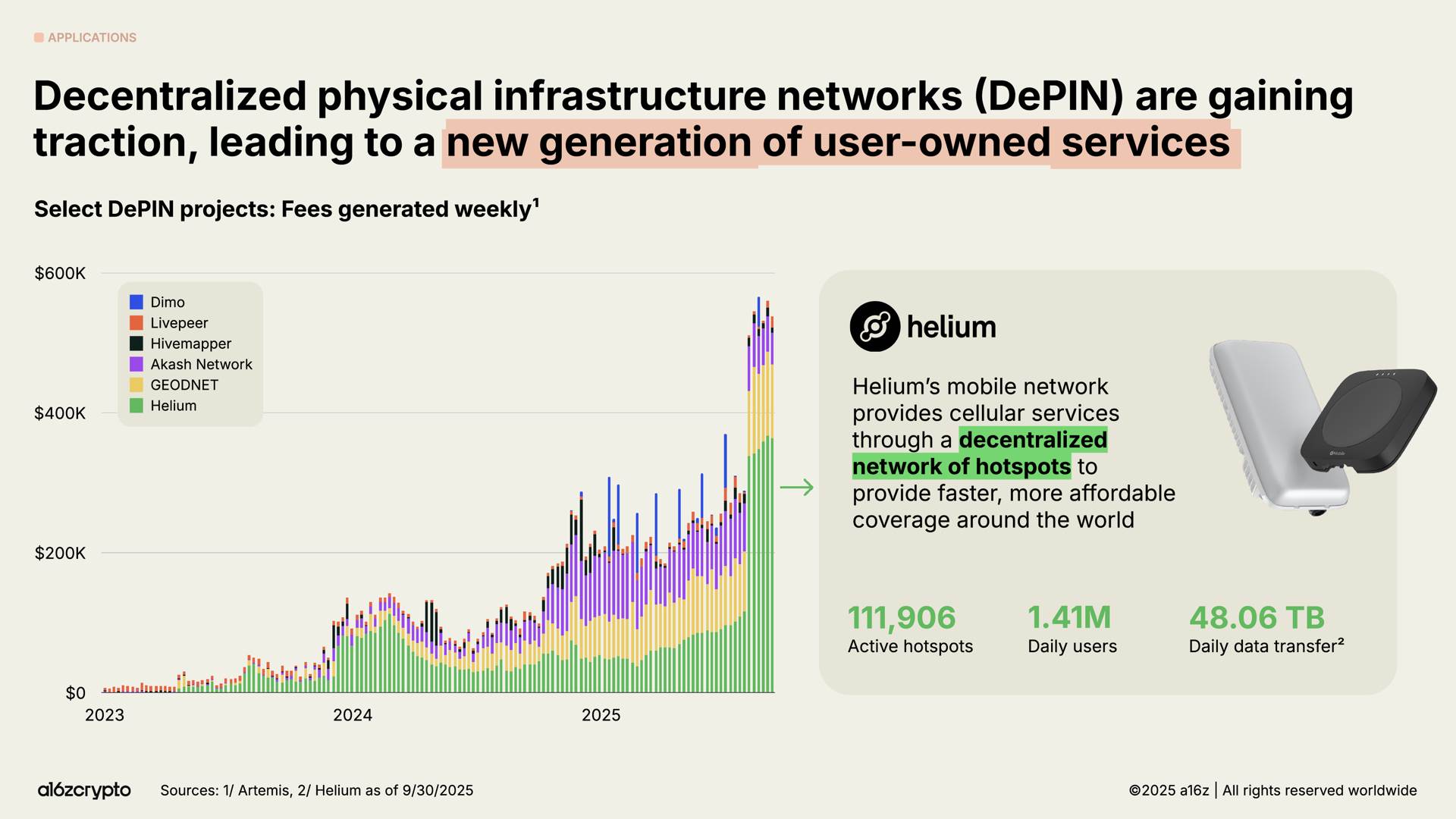
除了金融之外,2025 年区块链最雄心勃勃的前沿之一就是 DePIN,即去中心化物理基础设施网络 。
DeFi 重塑了金融, 而 DePIN 则重塑了实体基础设施,包括电信和交通网络、能源网络等等。DePIN 的机遇巨大:世界经济论坛预测, 到 2028 年,DePIN 的市场规模将增长到 3.5 万亿美元。
Helium 网络就是最著名的例子。该草根无线网络目前为超过 111,000 个用户运营的热点的 140 万日活跃用户提供 5G 蜂窝覆盖。
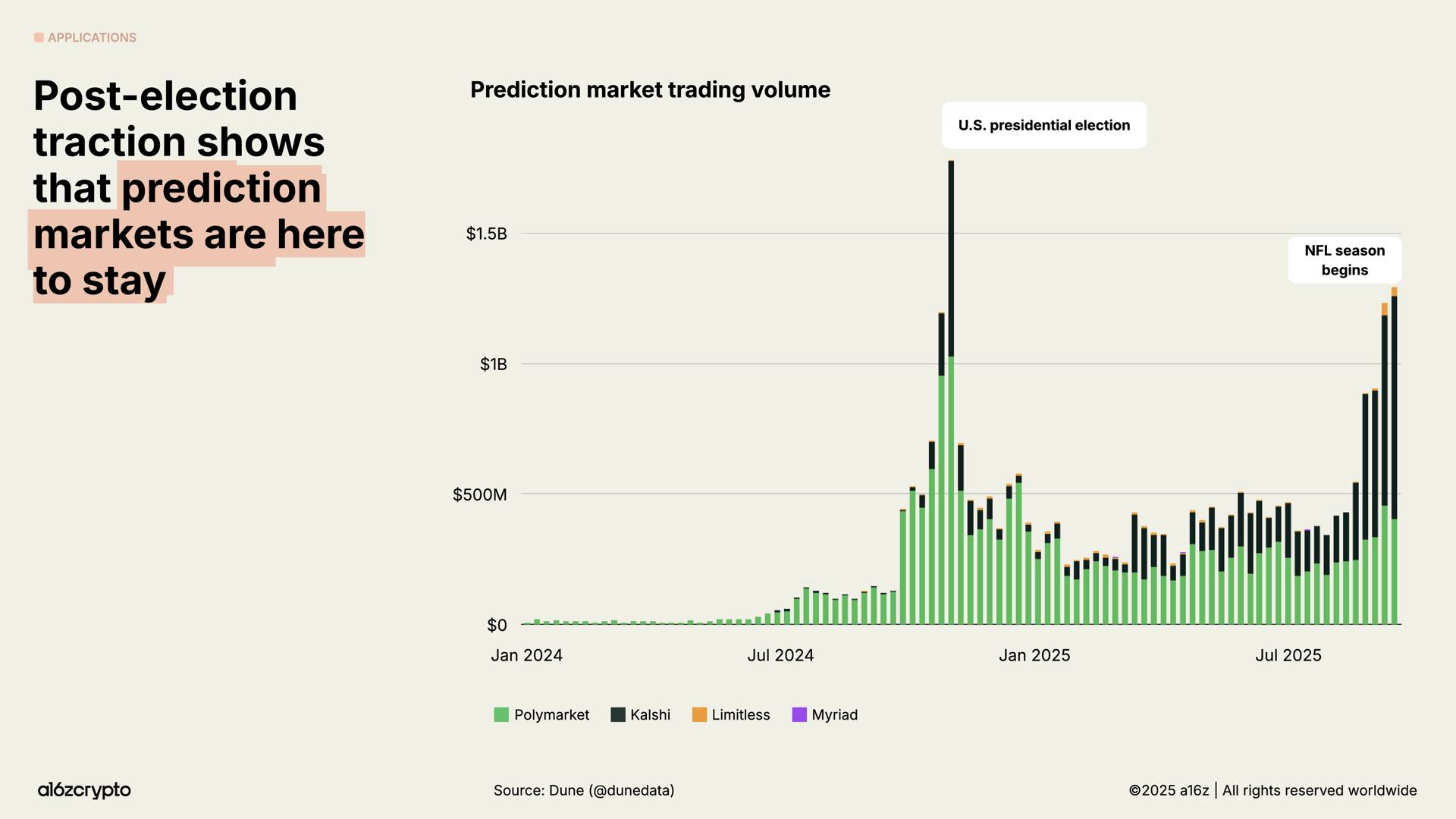
在 2024 年美国总统大选期间, 预测市场进入主流,其中最受欢迎的平台 Polymarket 和 Kalshi 的月交易量总计达数十亿美元。尽管人们对这些平台能否在选举年之外保持活跃度心存疑虑,但自 2025 年初以来,它们的交易量增长了近 5 倍 ,接近历史最高水平。
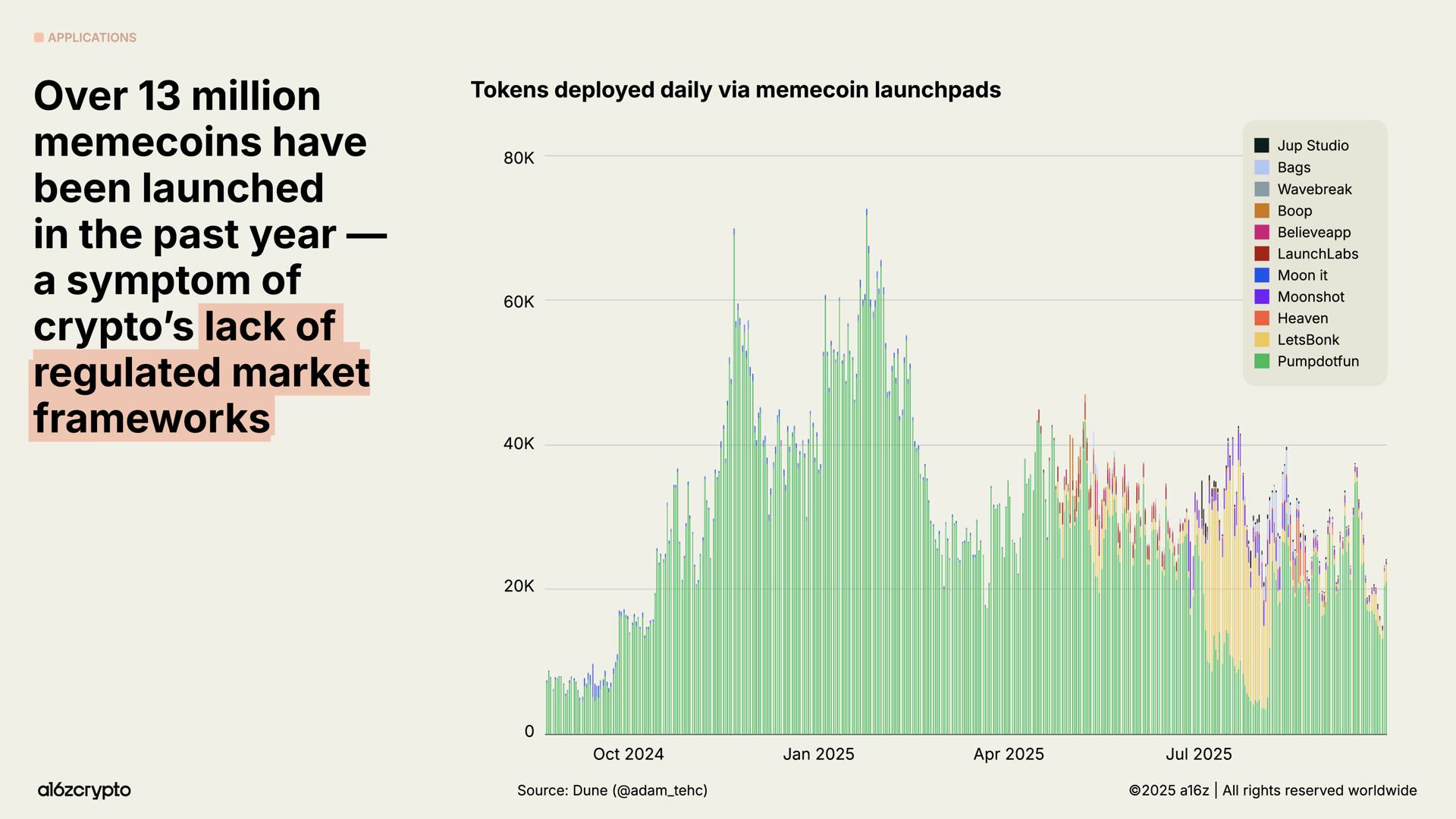
在缺乏明确监管的情况下,模因币蓬勃发展。 去年, 超过 1300 万个模因币被发行。近几个月来,这一趋势似乎有所降温——9 月份的发行量比 1 月份减少了 56 %——因为健全的政策和两党立法为更高效的区块链用例铺平了道路。
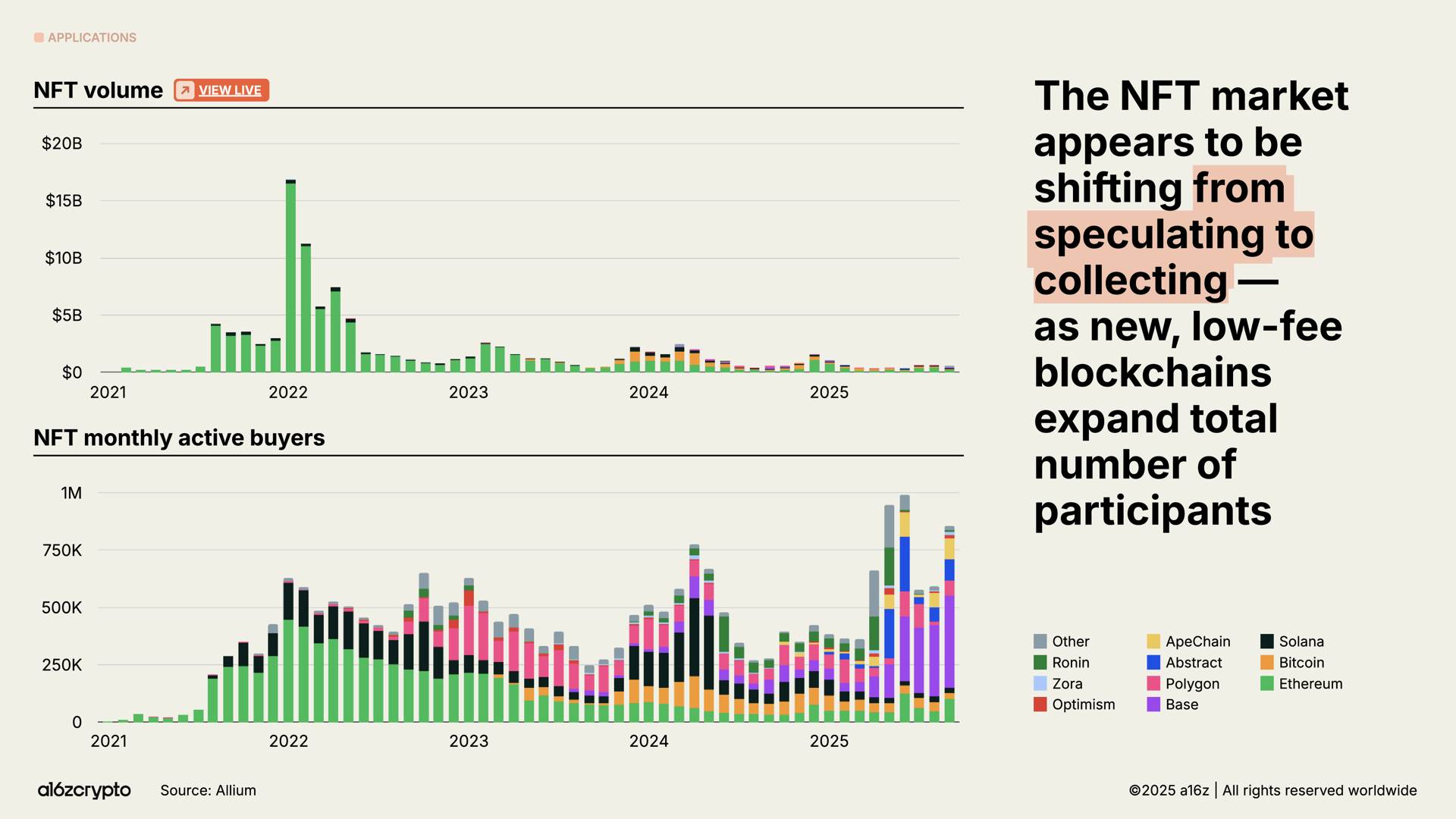
NFT 市场规模远未达到 2022 年的峰值,但月活跃买家数量一直在增长。这些趋势似乎预示着消费者行为正在从投机转向收藏,而这得益于 Solana 和 Base 等跨链平台更廉价的区块空间的出现。(有关加密货币与创作者经济交汇的更多信息,请参阅我们的 Voices Onchain 项目 。)
区块链基础设施(几乎)已准备好迎接黄金时段
如果没有区块链基础设施的重大进步,所有这些活动都不可能实现。
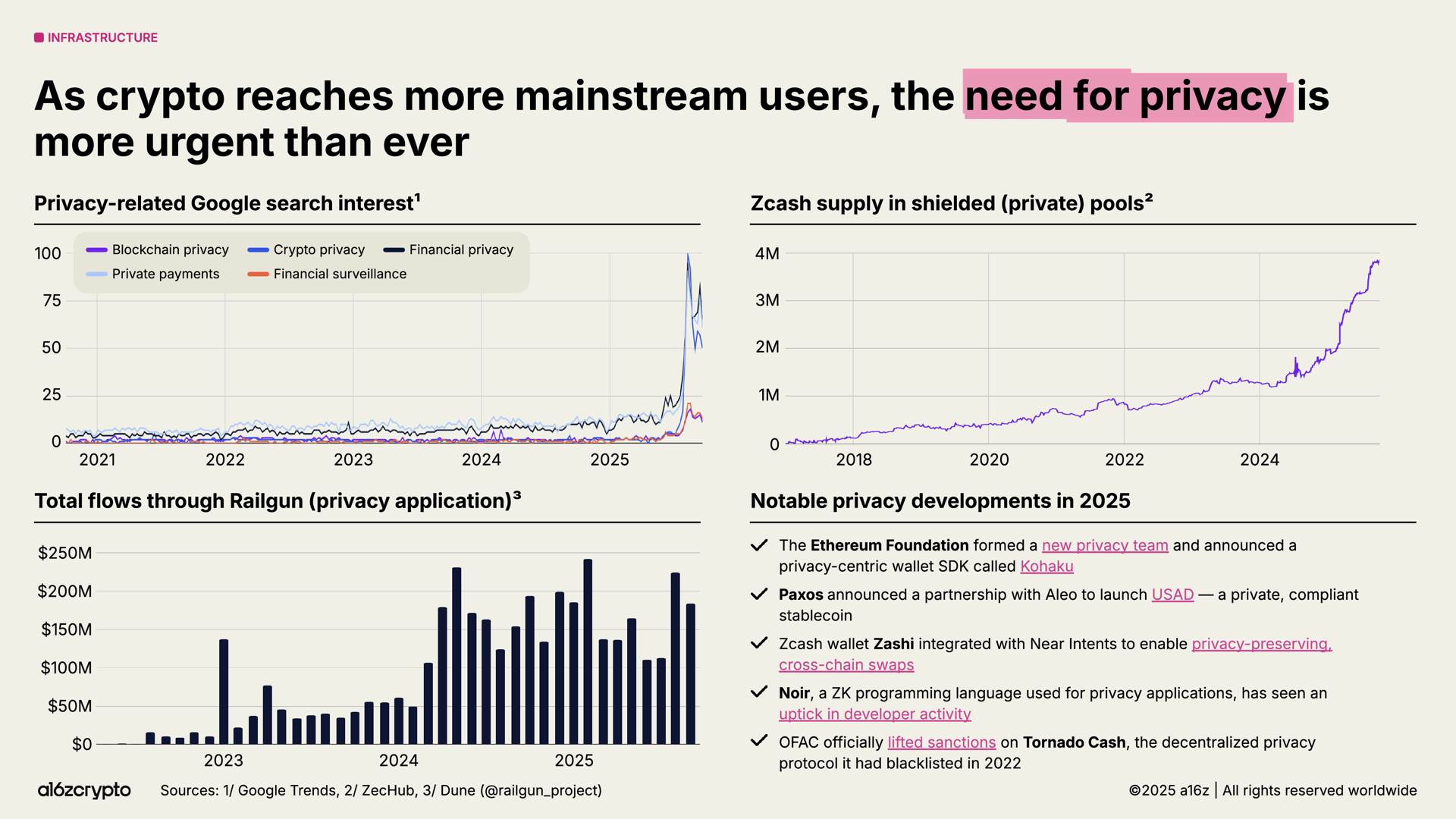
In just five years, the total transaction volume of various blockchain networks has increased by more than 100 times. At that time, blockchain networks could handle less than 25 transactions per second. Today, they can process up to 3,400 transactions per second, comparable to the global transaction volumes of NASDAQ or Stripe on Black Friday. Moreover, the cost involved is only a fraction of historical levels. Among many blockchain ecosystems, Solana has become one of the most outstanding ecosystems. Its high-performance, low-cost architecture supports a variety of applications, from DePIN projects to NFT markets. In the past year, Solana’s native applications have generated revenues of $3 billion. It is expected that by the end of the year, Solana’s upgrade plan will double the network’s capacity. Ethereum continues to advance its expansion roadmap, with most of its economic activities being migrated to Layer-2 solutions like Arbitrum, Base, and Optimism. The average transaction cost on Layer-2 has decreased from around $24 in 2021 to less than 1 cent today, making block space for Ethereum transactions affordable and abundant. Bridging protocols enable interoperability between different blockchains. Protocols like LayerZero and Circle’s cross-chain transfer protocols allow users to move assets between multiple chains. Hyperliquid’s bridging protocols have already processed transactions worth $74 billion so far this year.隐私问题正重新成为人们关注的焦点,并可能成为更广泛应用的先决条件。以下指标表明人们对此问题的兴趣日益增长:2025 年,与加密隐私相关的谷歌搜索量激增;Zcash 的屏蔽池供应量增长至近 400 万 ZEC ;Railgun 的月交易流量超过 2 亿美元 。
更多发展迹象:以太坊基金会组建了新的隐私团队;Paxos 与 Aleo 合作推出了一款合规的私有稳定币(USAD);美国外国资产控制办公室解除了对去中心化隐私协议 Tornado Cash 的制裁 。我们预计,随着加密货币继续成为主流,这一趋势在未来几年将获得更大的发展动力。
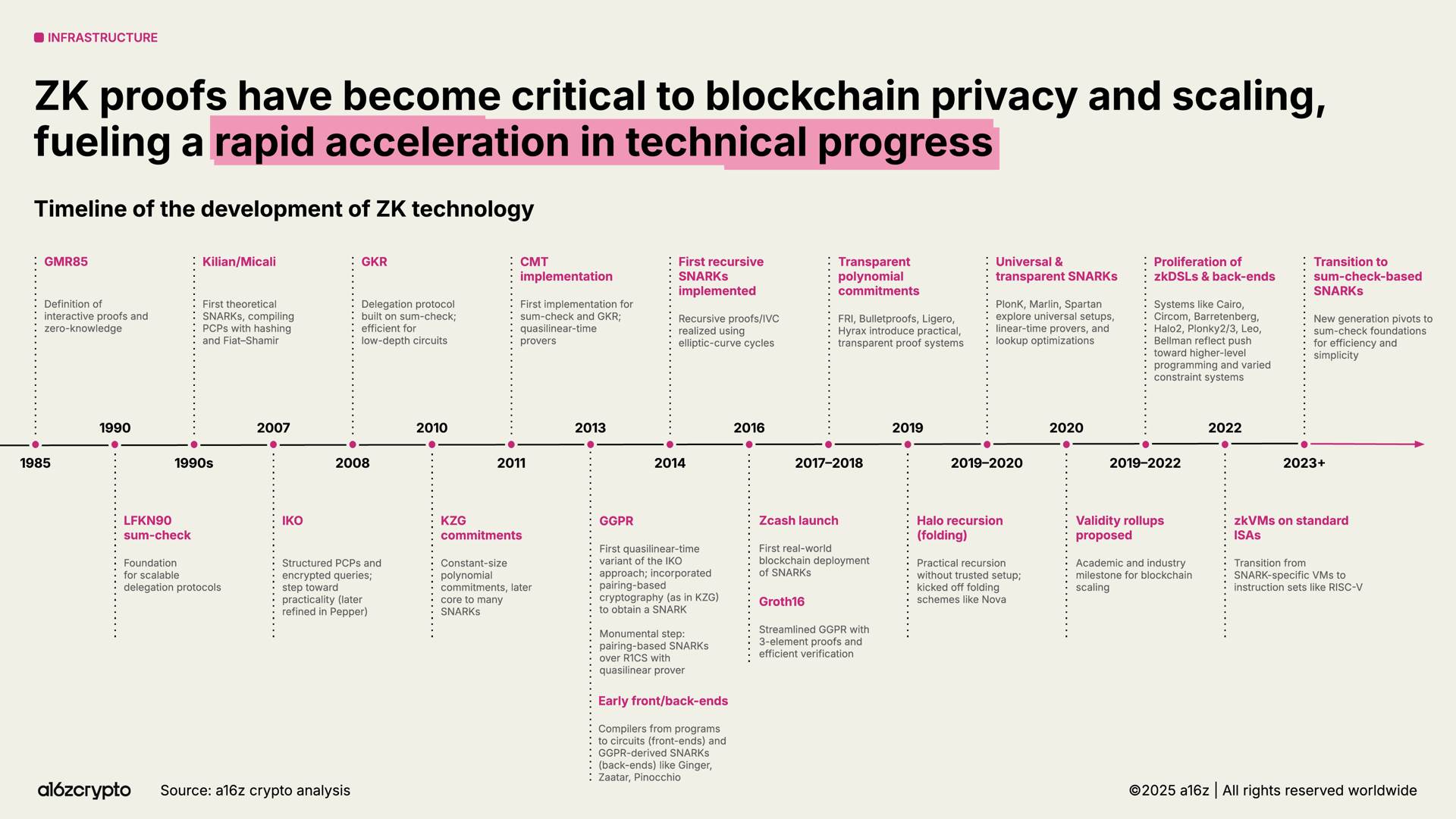
同样, 零知识 (ZK) 和简洁证明系统也正在迅速从数十年前的学术研究演变为关键基础设施。零知识系统现已集成到 rollup、合规工具甚至主流 Web 服务中—— 谷歌新的 ZK 身份系统就是一个例子。
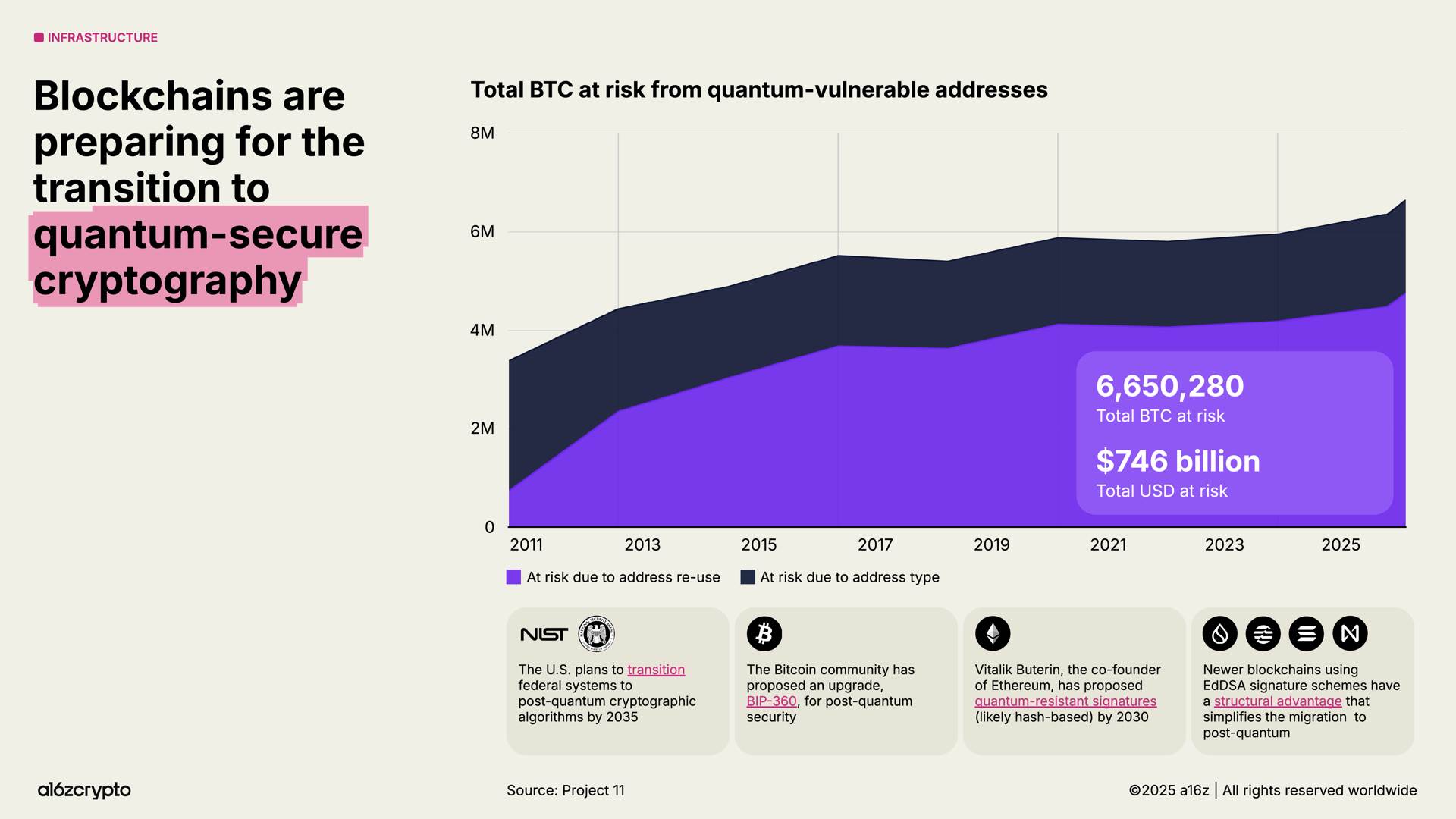
与此同时,区块链正在加速后量子路线图的推进。约有 7500 亿美元的比特币存放在易受未来量子攻击的地址中。美国政府计划到 2035 年将联邦系统过渡到后量子密码算法 。
人工智能和加密货币正在融合
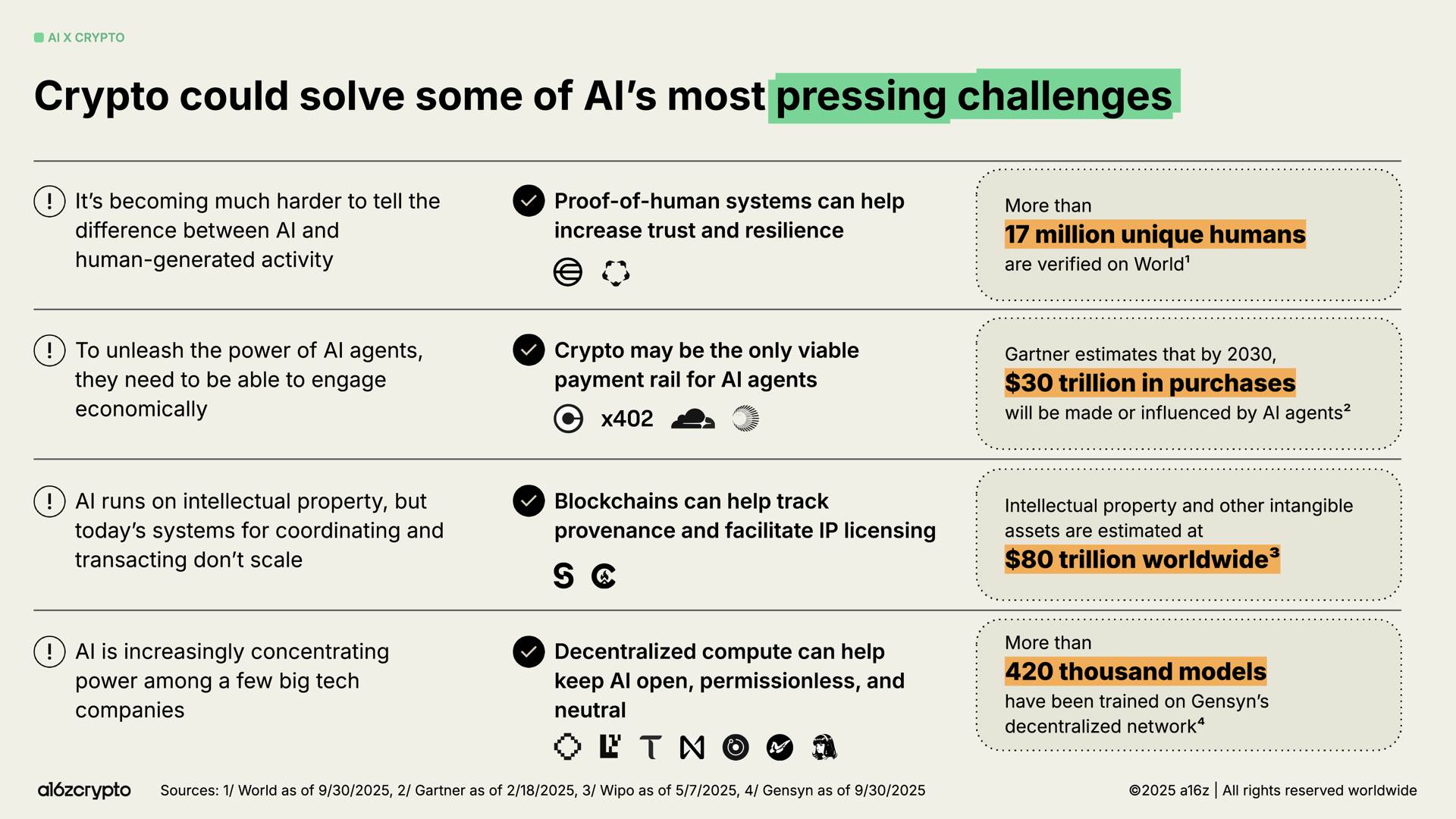
Among other advancements, the introduction of ChatGPT in 2022 made artificial intelligence a focal point of public attention—opening up significant opportunities for cryptocurrencies. From tracking sources and IP licensing to providing payment channels for agents, cryptocurrencies could become a solution to some of the most urgent challenges posed by artificial intelligence.
Decentralized identity systems like World have already verified the identities of over 17 million people. Such systems can provide “human verification” and help distinguish humans from robots.
Protocols like x402 are becoming a potential financial foundation for autonomous AI agents, enabling them to conduct small transactions, access APIs, and settle payments without intermediaries. Gartner estimates that this market could reach $30 trillion by 2030.
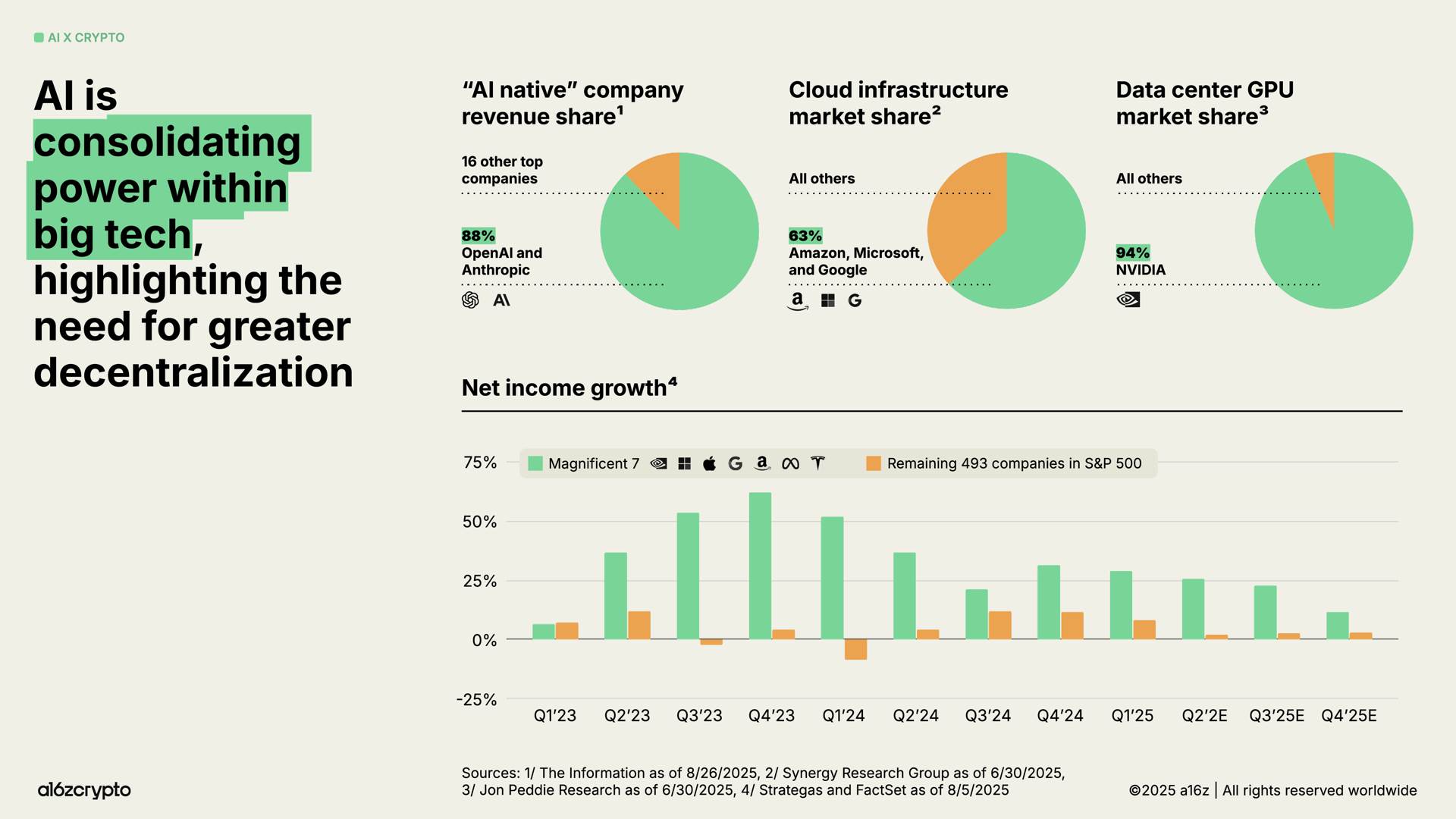
At the same time, the computational power of artificial intelligence is concentrated in the hands of a few tech giants, raising concerns about centralization and censorship. OpenAI and Anthropic control 88% of the revenue generated by “artificial intelligence-native” companies. Amazon, Microsoft, and Google dominate 63% of the cloud infrastructure market, while NVIDIA holds 94% of the data center GPU market. This imbalance has allowed these “Seven Giants” to experience double-digit quarterly net income growth over the past few years, while the overall profitability of the remaining 493 companies on the S&P index has failed to keep up with inflation.
Blockchain technology can help balance the concentration of power within artificial intelligence systems.
Amid the surge of interest in artificial intelligence, some developers have abandoned the cryptocurrency industry. Our analysis shows that since the launch of ChatGPT, approximately 1,000 jobs have been transferred from the cryptocurrency sector to the field of artificial intelligence. However, this number is offset by an equal number of developers who have moved from other industries, such as traditional finance and technology, to work in the cryptocurrency sector.
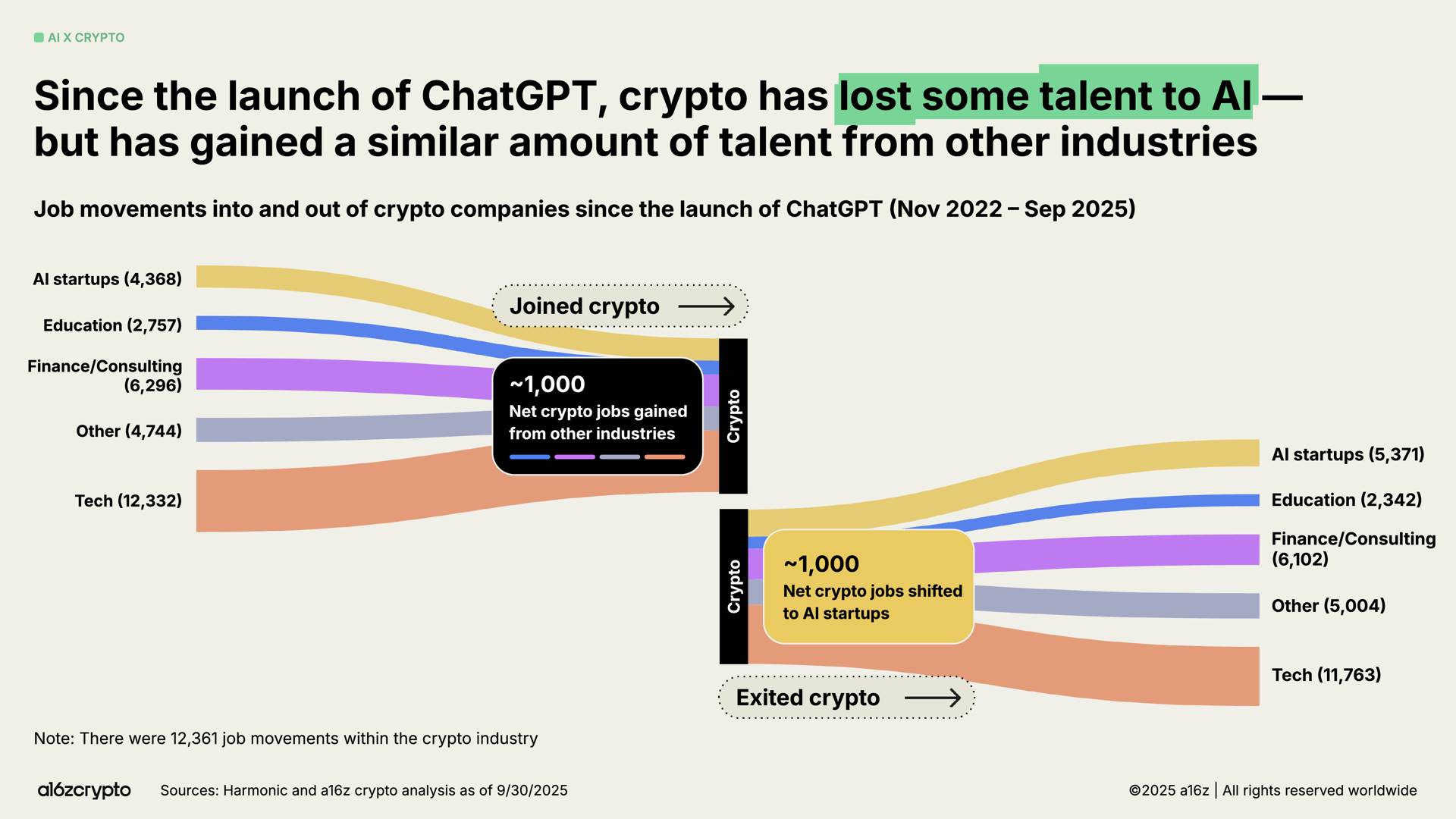
What does this mean for us? As regulations become clearer, it becomes increasingly possible for tokens to generate real income through fees. The adoption of cryptocurrencies by traditional financial and fintech industries will continue to accelerate. Stablecoins will integrate into traditional systems, thereby democratizing global financial services. New consumer products will also contribute to the growth of the cryptocurrency user base.
We have the infrastructure and distribution channels needed, and we hope to soon see clear regulatory frameworks that will make this technology mainstream. It’s time to upgrade our financial systems, rebuild global payment networks, and create what the world deserves: a truly innovative Internet.
Seventy years have passed, and cryptocurrencies are now emerging from their adolescence and entering a mature stage.