Exchange Ranking
 Top Exchanges
 24h Volume Ranking
 Popularity Ranking
 Exchange BTC Balance
 Proof of Reserves
 Decentralized Exchanges
 Funding Rate
 Funding Heatmap
 Liquidation Data
 Max Pain
 Long/Short Ratio
 Whale L/S Ratio
 Binance/Okex/Huobi L/S
 Bitfinex Margin L/S
 ETF Tracker
 Solana ETF
 XRP ETF
 Hong Kong ETF
 Bitcoin Treasuries
 Crypto Reversal
 Ethereum Reserves
 HyperLiquid Wallet Analysis
 Hyperliquid Whale Watch
 Large Transactions
 On-chain Movement
 Bitcoin ROI
 Stablecoin Market Cap
 Options Analysis
 News
 Articles
 Economic Calendar
 Features
 Wallet
 Contract Calculator


 Security
 Collections
 Watchlist
 Following
 XMR
 ZEC
As we move into 2025, privacy coins are attracting increasing attention. With stricter on-chain censorship measures and rising demands from users for data security and transaction anonymity, established privacy coins like Monero (XMR) and Zcash (ZEC are once again gaining attention from investors. Especially in the context of decentralized finance (DeFi) and cross-chain transactions, privacy protection is becoming a key aspect of new encrypted applications. Market analysts believe that as more projects attempt to integrate privacy layers into mainstream blockchain ecosystems, Monero and Zcash could see both usage rates and prices increase significantly.
With the increasing popularity of blockchain applications, projects like Tempo and Base are exploring the use of privacy-oriented stablecoins to protect users’ data. By 2025, efforts to protect on-chain privacy will become even more prominent. Driven by the need for secure, anonymous payments without compromising transparency, the prices of privacy coins like Monero and Zcash have increased by over 100%.
● There is growing interest in privacy: Global payments conducted using stablecoins highlight the importance of protecting transactions to prevent data breaches.
● On-chain privacy solves the problem of blockchain transparency, allowing users to control their financial details.
According to Artemis data, the privacy coin industry has seen a growth of 112% so far this year. Among these cryptocurrencies, Monero and Zcash have performed particularly well, driving this growth trend.
With the prices of privacy coins rising by 100%, let’s explore the rise of on-chain privacy in 2025. Learn why projects like Tempo and Base prioritize secure transactions. Explore investment opportunities now.
What is on-chain privacy? Why will it be crucial in 2025?
On-chain privacy refers to the technology of conducting confidential transactions directly within the blockchain network, thereby hiding information about the sender, receiver, and amount of money from public view. This approach balances the need for transparency in blockchain systems with the requirement to protect user privacy, especially in cases where stablecoins play a role in facilitating global on-chain payments. By 2025, with increasing regulatory scrutiny and data breaches, on-chain privacy will be essential for building trust and enabling widespread adoption without revealing sensitive financial information.
How will the privacy coin industry perform in 2025?
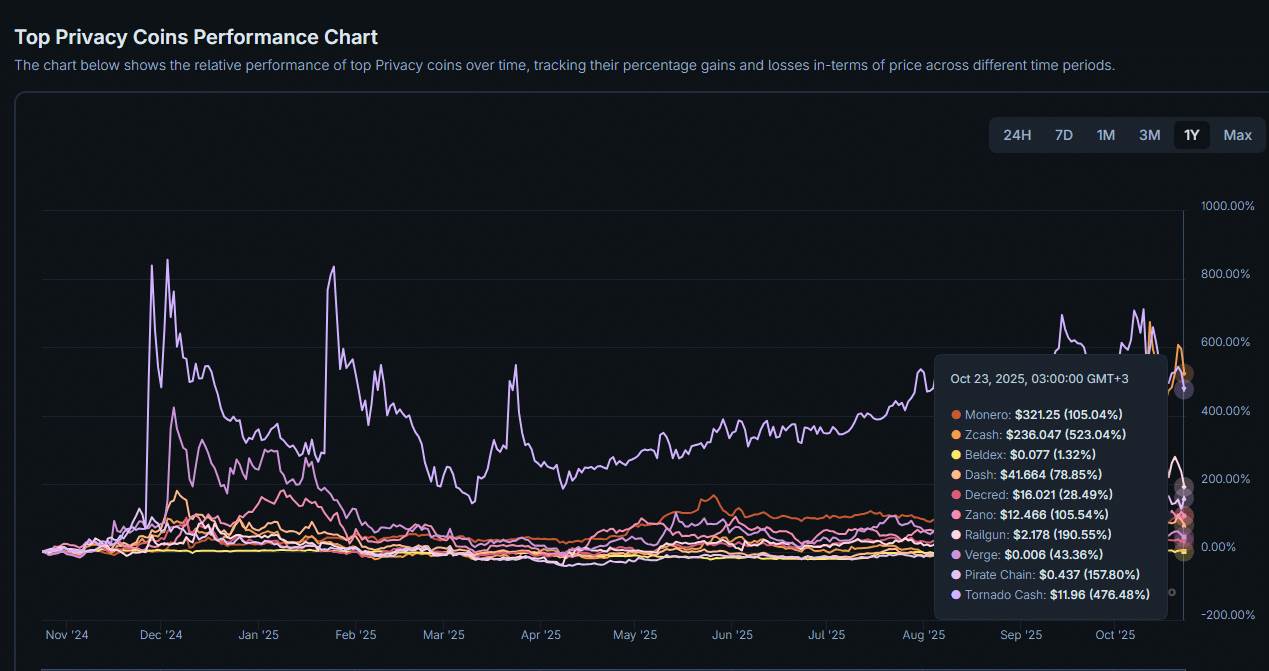
In 2025, the privacy coin sector is expected to perform better than the broader cryptocurrency market, with an average increase of over 100% since the beginning of the year. According to Artemis data, due to investors’ interest in anonymous assets, this category has seen a total increase of 112%. Leading cryptocurrencies include Monero (XMR) and Zcash (ZEC), which have experienced significant growth thanks to their robust privacy protocols. Other notable assets, such as Zano (ZANO) and Railgun (RAIL), have also achieved impressive returns, indicating that the market is shifting towards more privacy-oriented innovations. Experts at CoinGecko believe that these coins benefit from advancements in zero-knowledge proofs, allowing them to withstand surveillance while adhering to evolving legal standards. Even amidst ongoing debates over regulatory impacts, this performance highlights the resilience of the industry.

链上隐私的势头已从独立加密货币扩展到集成区块链解决方案。例如,由 Stripe 和 Paradigm 开发的支付导向型区块链 Tempo 正在整合隐私功能以增强用户安全性。Paradigm 联合创始人兼 Tempo 开发关键人物 Matt Huang 指出,这些增强功能源自设计合作伙伴的反馈,他们寻求更好地保护日常交易。同样,Coinbase 首席执行官 Brian Armstrong 宣布探索在其支持的以太坊 Layer 2 网络 Base 上进行隐私稳定币交易。这些进展标志着 Coinbase 向在协议层面嵌入隐私的战略转变,旨在解决长期以来人们对区块链公共账本暴露用户行为的担忧。
隐私需求激增
区块链技术经常被误解为本质上具有隐私性,但其公共属性却允许不受限制地访问交易历史记录,从而引发了巨大的隐私风险。批评者常常将隐私需求与洗钱等非法活动联系起来,但合法用例却比比皆是。想想日常购物,比如用数字钱包买咖啡;公共区块链不仅可以向任何拥有基本工具的人披露交易信息,还可以披露个人的完整消费模式和余额。
这种漏洞对于知名人士来说尤其严重,因为数据泄露可能导致有针对性的诈骗或隐私侵犯。链上隐私解决方案旨在在 Web3 环境中复制传统金融的保障措施,使用加密方法模糊细节,同时验证交易有效性。Solana 开发公司 Helius Labs 的创始人 Mert Mumtaz 强调,这种方案具有指数级增长的潜力,随着越来越多的用户重视数据安全,其采用率可能会大幅提升。

以隐私为重点的举措激增,与加密货币生态系统的成熟相呼应。随着稳定币成为跨境支付和去中心化金融不可或缺的一部分,对隐私转账的需求也日益增长。Tempo 和 Base 等项目正通过集成隐私层来应对这一挑战,确保符合“了解你的客户” (KYC) 的要求,同时保护用户的匿名性。行业追踪数据显示,2025 年上半年,隐私增强型网络的交易量翻了一番,这表明散户和机构用户的需求都十分强劲。
隐私币获胜
在加密货币的投机领域,隐私币已成为领跑者,尤其是 Zcash (ZEC)(常被称为比特币 (BTC) 的隐私增强替代品)和门罗币 (XMR)。自 2025 年下半年以来,这些资产凭借人们对监控风险的认知度提升,大幅上涨。从行业角度来看,隐私币已超越其他类别,据 Artemis 报道,今年迄今已上涨 112%。
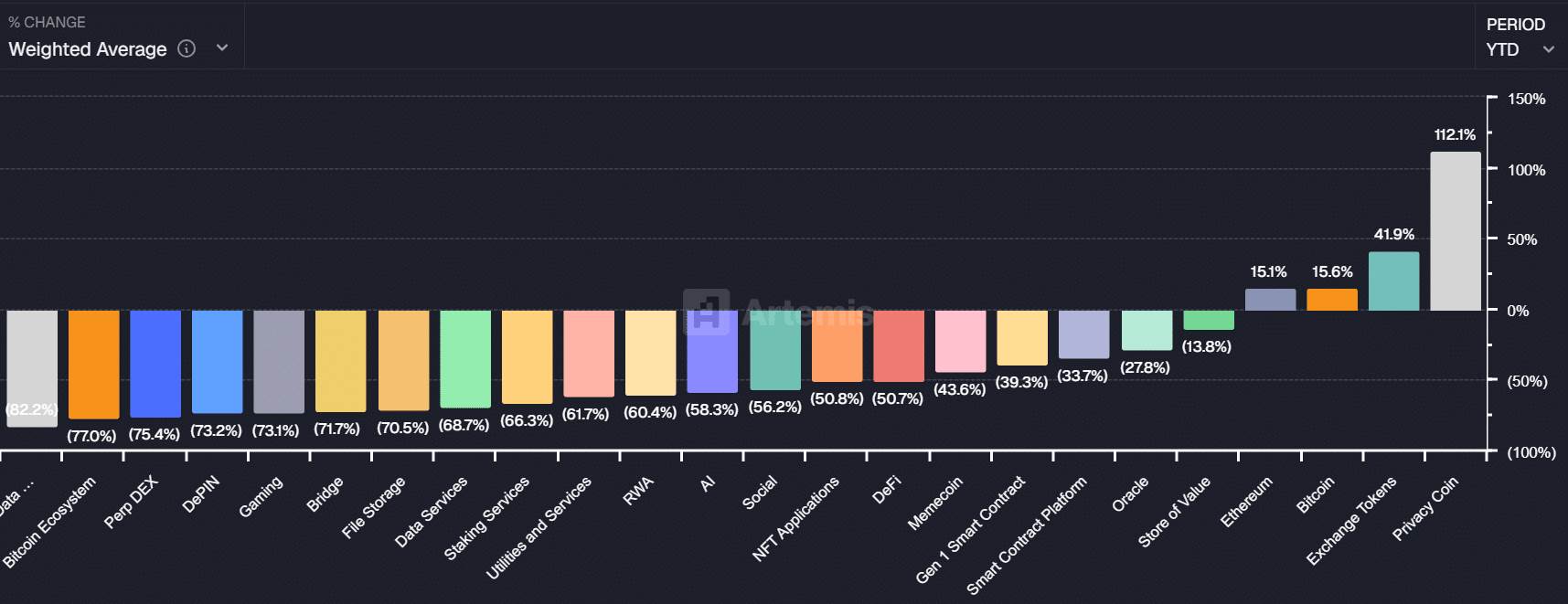
Monero and Zcash performed exceptionally well, utilizing ring signatures and zk-SNARKs to achieve untraceable transactions. In addition, cryptocurrencies like Zano (ZANO) and Railgun (RAIL) also saw strong growth, attracting users who seek privacy protection in decentralized applications. Data from CoinGecko shows that the market value of these cryptocurrencies has increased, with Zano experiencing particularly significant growth due to its privacy-focused blockchain architecture.
Although privacy coins have promising prospects, their operation lies in a regulatory gray area. Past efforts to regulate tools like Tornado Cash highlight the tension between innovation and compliance. Lawmakers around the world are closely monitoring these developments and may establish frameworks that balance privacy concerns with anti-money laundering requirements. Nevertheless, the growth trajectory of this industry indicates that on-chain privacy will continue to be a cornerstone of future blockchain development.
Frequently Asked Questions
Which privacy coins are most worth watching in 2025?
Leading privacy coins in 2025 include Monero (XMR) and Zcash (ZEC), which offer advanced anonymity features such as ring signatures and zero-knowledge proofs. According to data from Artemis and CoinGecko, these two coins have seen gains of over 100% so far this year, leading the industry. Investors should consider Zano (ZANO), as it has a privacy-focused ecosystem. However, given the uncertain regulatory environment, it’s important to assess risks carefully.
Why do large platforms like Coinbase and Stripe adopt on-chain privacy measures?
In an era where data privacy issues become increasingly urgent, various projects are integrating privacy-enhancing features into their blockchain systems, in order to meet users' needs for secure and confidential transactions. Brian Armstrong of Coinbase highlighted Base's efforts in developing privacy-oriented stablecoins. Matt Huang of Paradigm mentioned that Stripe's Tempo has incorporated privacy features based on feedback from partners. This ensures that blockchain payments can mimic the protective measures of traditional finance, thereby facilitating their adoption in everyday applications.
Conclusion
By 2025, the rise of privacy-enhancing technologies on the blockchain will mark a key milestone in the cryptocurrency industry. Privacy-focused coins will offer significant benefits, and platforms will prioritize user safety above all else. From Monero's strong anonymity features to Tempo's innovative capabilities, these advancements are helping to create a more trustworthy Web3 ecosystem. As applications continue to evolve, it's crucial to stay informed about regulatory trends in this rapidly developing field. Consider exploring privacy-enhancing solutions to protect your digital assets.