Exchange Ranking
 Top Exchanges
 24h Volume Ranking
 Popularity Ranking
 Exchange BTC Balance
 Proof of Reserves
 Decentralized Exchanges
 Funding Rate
 Funding Heatmap
 Liquidation Data
 Max Pain
 Long/Short Ratio
 Whale L/S Ratio
 Binance/Okex/Huobi L/S
 Bitfinex Margin L/S
 ETF Tracker
 Solana ETF
 XRP ETF
 Hong Kong ETF
 Bitcoin Treasuries
 Crypto Reversal
 Ethereum Reserves
 HyperLiquid Wallet Analysis
 Hyperliquid Whale Watch
 Large Transactions
 On-chain Movement
 Bitcoin ROI
 Stablecoin Market Cap
 Options Analysis
 News
 Articles
 Economic Calendar
 Features
 Wallet
 Contract Calculator


 Security
 Collections
 Watchlist
 Following
 BTC
Hardware wallets: Analysis of actual protection boundaries and design differences
The core design intention of hardware wallets is to reduce one of the most persistent risks in the cryptocurrency space: preventing private keys from being exposed to malware, phishing or infected devices. Unlike traditional mobile phones or laptops that directly approve payments, hardware wallets isolate the transaction authorization (i.e., signing) process and often feature separate screens and security components that allow users to verify the transaction they are approving.
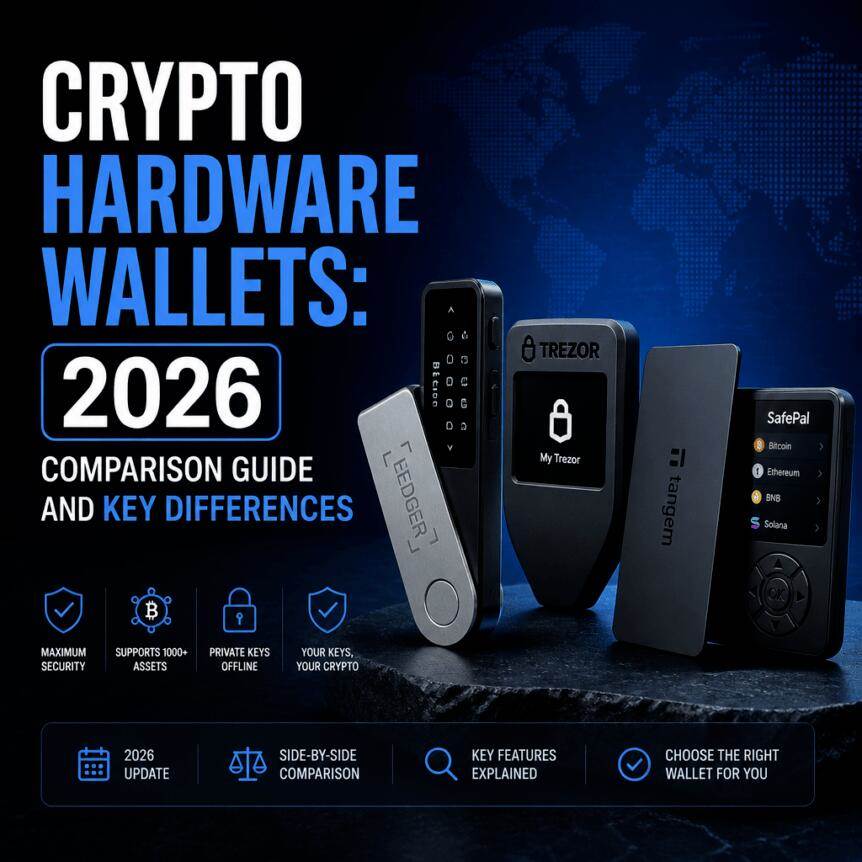
Cointelegraph's latest evaluation combines practical operation tests and manufacturer documentation to conduct in-depth evaluations of many popular models. The testing scope includes Trezor Safe 7, Ledger Stax, Flex, Nano Gen5, Nano X, Nano S Plus, and Coinkite's Opentime. In addition, the review also explains in detail how different wallet designs, from Bluetooth connections, QR code-based signatures to NFC cards, affect the security tradeoffs of ordinary users.
Core Points
- Hardware wallets provide protection mainly by isolating the transaction signing process from the phone or computer, but funds can still be lost if the user approves a fraudulent transaction or mishandles the backup.
- When a wallet is equipped with a screen, users can cross-check transaction details on the device itself-an important security measure to prevent malicious interface prompts on connected devices.
- Cointelegraph's tests found input latency issues with Ledger Stax and attributed this to its wrap-around screen design.
- Not all "air-isolated" designs are equally safe: QR-code-based wallets eliminate data connections for signature purposes, but still require careful verification because QR codes alone cannot prevent fraud.
- NFC wallet cards such as Tangem do not have a dedicated display, which may make it difficult for users to detect whether an infected phone is misleading them.
Practical protection capabilities and limitations of hardware wallets
The core of most hardware wallets is the separation of duties: your cryptocurrency remains on the blockchain, while the hardware device stores the private key used to authorize transactions. This design keeps signature logic away from phones or computers, reducing the risk of malware on these devices directly stealing keys.
Many models come with screens that allow users to review transaction details directly on their wallets before approval. This is critical because infected connected devices can display error messages, and the wallet screen provides users with a second chance to spot a mismatch.
However, this protection is not absolute. Wallets must provide enough context for users to understand what they are approving. Funds are still at risk if users authorize fraudulent transactions, lose recovery backups, or use insecure wallet software. Restoring backup is seen as a separate security boundary: Anyone who obtains a backup has the potential to regain access.
Design differences in multi-asset wallets
For users holding multiple cryptocurrencies, the primary screening criterion is actual compatibility: whether the wallet supports specific currencies and networks, and which features rely on the manufacturer's application rather than third-party software.
Cointelegraph describes the practices of several major brands in terms of hardware interfaces and connectivity. Ledger's Stax, Flex, Nano Gen5 and Nano X models connect via Bluetooth or USB. Stax features a 3.7-inch e-ink touch screen with a curved "wrap around" design;Flex and Nano Gen5 use a flat 2.8-inch e-ink touch screen; and Nano X relies on a smaller 1.1-inch OLED screen with physical buttons and a folding metal cover.
In actual testing, Cointelegraph reported that Stax, the most expensive product in the Ledger series, appeared to have input delays. Ledger allegedly confirmed that the delay was related to the surround screen, which Cointelegraph interpreted as an input problem that could cause users to repeatedly enter wrong PIN codes, slowing them down for correction. Based on this experience, reviews recommended avoiding Stax and recommending "cheaper touchscreen models" instead for a smoother user experience.
在软件理念方面,Cointelegraph 对比了 Trezor 和 Ledger。Trezor Safe 7 被呈现为完全开源,而 Ledger 使用经过认证的 Secure Element 芯片,并因法律限制未对其部分软件进行开源。从功能上看,评测指出这两个生态系统通常都提供广泛的第三方支持、数千种资产的支持以及用于移动和计算机使用的专用管理软件。
评测还强调了两大生态系统之外的其他多资产选项。BitBox02 Nova Multicoin 被描述为一款具备蓝牙功能的通用钱包,它在 OLED 显示屏上使用电容控制,并支持主要平台。它还允许用户将私钥备份到 microSD 卡上——Cointelegraph 指出这是评测中首次提及此类方法,并提醒用户必须将卡片安全地单独存放。
SafePal X1 定位为低成本替代方案,拥有全键盘和单色界面,使用蓝牙连接,同时支持超过 200 条区块链。Cointelegraph 提到其典型零售价格约为 70 美元,但当时通过特定渠道购买的价格低至 29.99 美元,比常规价格低约 57%。
USB 优先选项与“类手机”签名方式
除了蓝牙模型外,Cointelegraph 还概述了一个有线类别,包括 Ledger Nano S Plus、Trezor Safe 5 Universal、Safe 3 Universal 和 BitBox02 Multicoin。这些设备通过 USB 连接到支持的计算机或设备,从而缩小了交易设置和批准过程中数据移动的途径。
In the Trezor product line, Cointelegraph distinguishes between Safe 5 Universal and Safe 3 Universal. The former is a wired device with a colored touch screen, while the latter uses a monochrome display and two buttons. The actual conclusion of the review is that the functions of the two are roughly similar, but the input and output of the Safe 5 Universal can be "much less troublesome."
SafePal's QR code-based wallet represents a different approach. Cointelegraph describes the SafePal S1, S1 Pro and Ngrave Zero as devices that exchange transaction data via QR codes: users use a camera to scan the QR code displayed on their wallets and then sign it without using USB or Bluetooth for data transfer. Importantly, Cointelegraph emphasized that QR codes do not automatically guarantee security-users still need to verify transaction details.
Cointelegraph also explained that the SafePal S1 and S1 Pro share the same QR code-based concept and color screen, with the Pro version using aluminum and glass construction and an additional 25% increase in battery capacity. Ngrave Zero is described as an air-isolated, smartphone-like hardware wallet equipped with a colored touch screen, fingerprint sensor (used for authentication, and along with a random number generator and ambient light data as part of its randomness generation).
NFC Wallet Cards: Convenience vs. Verificability
根据 Cointelegraph 的描述,Tangem 钱包卡片采取极简路线:它们是没有任何专用显示屏的基于 NFC 的硬件钱包。由于设备本身无法展示交易详情,Cointelegraph 警告这可能会限制用户检测受感染手机的能力,而这些手机可能会尝试显示与实际授权不同的交易。
评测进一步指出,Tangem 支持有或无助记词的钱包设置。在“无助记词”设置中,密钥在卡片内部生成。如果有助记词,Cointelegraph 表示手机应用程序会生成助记词并将生成的密钥传输到卡片。
比特币专用设备与 Coldcard 固件教训
如果用户仅持有比特币,Cointelegraph 指出,一些品牌通过移除对其他资产的支持,提供某些钱包的比特币专用版本。这种权衡减少了那些用户的复杂性,但购买者仍需考虑交易验证、备份保护和及时的固件更新。
Coinkite 的 Coldcard 系列是比特币专用讨论的核心部分。Cointelegraph 描述 Coldcard Mk5 为数字键盘设备,而 Coldcard Q 包括更大的屏幕、全键盘和用于扫描二维码的相机,配合 Sparrow 等兼容钱包软件准备交易。
A significant security detail in the review involved Coldcard firmware. Cointelegraph reported that in July 2026, Coinkite warned that affected Coldcard firmware could generate wallet keys that were easier for attackers to guess. The issue reportedly affected multiple models and software versions.
Cointelegraph subsequently cited a report by Galaxy Research's Alex Thorn, blaming the breach for the theft of approximately 1,789 BTC from 8,865 addresses. Cointelegraph also said the stolen bitcoins were worth approximately $114.7 million at the time.
According to Cointolegraph's summary, Coinkite's response included instructing users to install corrected firmware, create new wallets, and transfer Bitcoin. The review also pointed out an important limitation: updating firmware does not repair keys that have been generated using defective behavior. Cointolegraph guides readers to Coinkite's security bulletins for affected versions, exceptions and migration instructions.
Reviews also include Coinkite's Opentime, described as a Bitcoin credit chip that only supports Bitcoin and button-based cold storage. Cointolegraph describes Opendime as a "piggy bank" concept: Bitcoin is stored until the seal is broken, revealing the private key needed to spend the assets it holds.
How to choose based on your workflow
Cointolegraph frames wallet selection as a workflow problem: Start with the assets you hold and then match the wallet to the phone or computer you will use. Next, focus on how you will verify transactions and restore access if your device is lost-because reviews have repeatedly emphasized that verification steps and backup processing are key elements in determining the final security outcome.
Reviews also suggest that different wallet designs may suit different user threat models. For other multi-signature settings with stronger transaction checking for keys, screenless NFC wallet cards may be appropriate; while for users who do not need other networks, Bitcoin-specific devices can reduce the attack surface. But the publication emphasizes that price alone does not ensure greater protection; higher costs can buy better screens, quality materials or convenience, but it does not necessarily translate into better security.
Looking ahead, Cointolegraph's broader message is that ownership requires proactive habits: protecting and restoring backups, carefully verifying transaction details, and monitoring firmware and security updates. As the Coldcard incident illustrates, the most important "feature" in practice is often how quickly and accurately users respond when fixes are released.