Exchange Ranking
 Top Exchanges
 24h Volume Ranking
 Popularity Ranking
 Exchange BTC Balance
 Proof of Reserves
 Decentralized Exchanges
 Funding Rate
 Funding Heatmap
 Liquidation Data
 Max Pain
 Long/Short Ratio
 Whale L/S Ratio
 Binance/Okex/Huobi L/S
 Bitfinex Margin L/S
 ETF Tracker
 Solana ETF
 XRP ETF
 Hong Kong ETF
 Bitcoin Treasuries
 Crypto Reversal
 Ethereum Reserves
 HyperLiquid Wallet Analysis
 Hyperliquid Whale Watch
 Large Transactions
 On-chain Movement
 Bitcoin ROI
 Stablecoin Market Cap
 Options Analysis
 News
News Articles
 Economic Calendar
 Features
 Wallet
 Contract Calculator


 Security
 Collections
 Watchlist
 Following
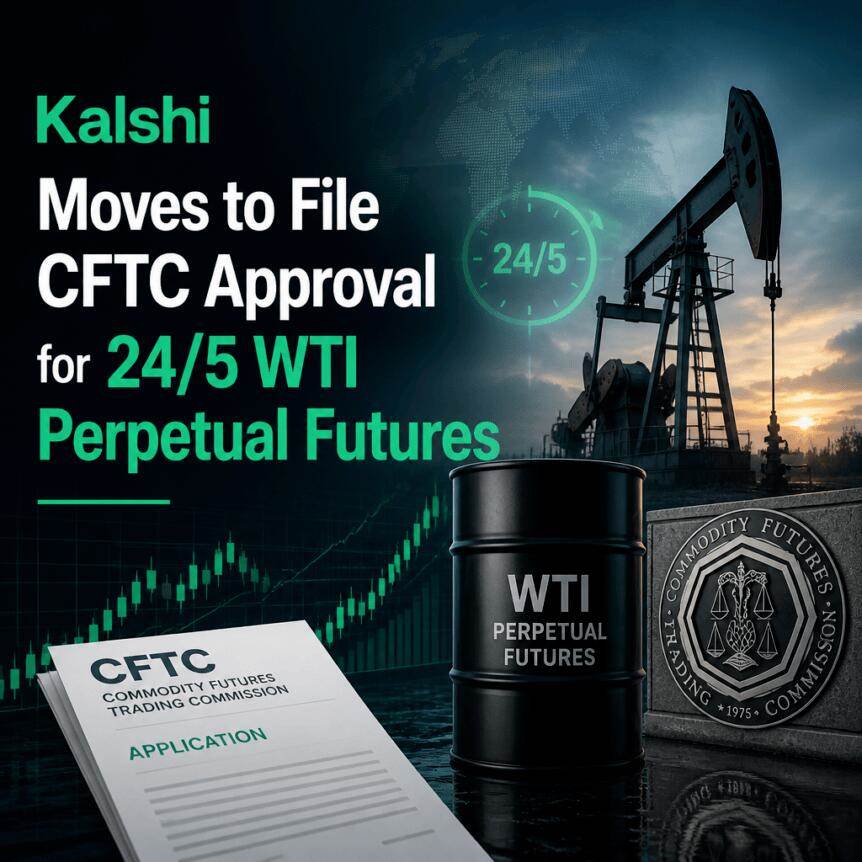
Forecast market platform Kalshi is reportedly looking to expand into energy derivatives with plans to launch a never-expiring West Texas Intermediate (WTI) perpetual futures contract. If successful, it would be the first oil-linked "perpetual" product on a regulated trading platform in the United States. [TAG Kalshi could file the product with the Commodity Futures Trading Commission as early as next week, Bloomberg reported, citing people familiar with the matter. Reuters reported that the contract will be traded 24 hours a day, five days a week. Cointelegraph has contacted Kalshi seeking comment.
Core Points
It is reported that Kalshi plans to submit a WTI crude oil perpetual futures contract with the CFTC with no expiration date. If approved, this will be the first crude oil-linked perpetual futures product traded in a U.S. regulated exchange environment. The proposal supports near-continuous trading (24/5), reflecting current regulatory discussions around a 24/7 market structure model. Kalshi's foray into the derivatives market comes as it faces conflicting legal disputes between federal commodity rules and state gambling enforcement.
Why perpetual crude oil futures are important
Perpetual futures (often referred to simply as "perps") are derivatives that have no expiration date. In effect, this structure allows traders to hold positions indefinitely without having to transfer positions into new contracts before expiration. If Kalshi's WTI perpetual contract is approved, traders will have a regulated venue to hold positions related to crude oil price fluctuations for a long time, avoiding the operational troubles caused by frequent rollover. According to reports, the contract is traded 24 hours a day, five days a week, with shorter downtime compared to the trading hours in the traditional futures market. Investors often view traditional market trading time limits as a major shortcoming in relying on continuous monitoring strategies.
CFTC moves towards a 24/7 model of energy-linked perpetual contract
The report was released at a time when regulatory review was active. In June this year, the CFTC publicly solicited public opinions on extending trading of standard futures contracts to a 24/7 model and allowing perpetual contracts linked to physically deliverable or storable energy commodities, including crude oil. These efforts have caused friction. In July this year, the CFTC suspended the listing of a self-certified contract on the CME Group aimed at introducing 24/7 crude oil futures trading. Regulators said they are reviewing whether the product complies with federal commodity laws. Kalshi's filing plan is a new attempt at the same broader agenda: how to build a sustainable derivatives market under existing commodity regulations. If the CFTC approves a perpetual contract format for storable, physically linked commodities such as crude oil, it will effectively broaden the range of tools available to U.S. traders and will also test whether regulators are willing to treat perpetual contracts as compatible with existing legal frameworks. A product compatible with the framework.
Regulatory spillover effects: Other sustainable products and "onshore" claims
Interest in sustainable derivatives is not limited to the energy sector. Earlier reports pointed out that Ondo Finance submitted an opinion letter to the U.S. Securities and Exchange Commission (SEC) and the CFTC on August 24, urging regulators to "onshore" equity-linked perpetual futures. In his letter, Ondo argued that perpetual contracts linked to individual stocks could operate within the existing securities and futures framework without the need for new rules. Although Kalshi's proposal targets WTI crude oil rather than stocks, the similarities highlight a common industry theme: Market operators are pressing for a clearer path to listing perpetual derivatives in regulated markets, rather than leaving them in offshore arrangements or decentralized trading venues.
Kalshi faces jurisdictional issues that go beyond derivatives design
Kalshi's entry into the space of crude oil-linked perpetual contracts is also intertwined with another ongoing dispute over jurisdiction and enforcement. Its forecast markets business has always faced the question of whether federal commodity laws take precedence over state gambling enforcement actions against event contracts traded on CFTC regulated exchanges. On Tuesday, a Michigan court issued a preliminary injunction banning Kalshi from offering sports-related event contracts in the state and ordering it to maintain a geofence to deter Michigan residents. The legal battle also continues at the federal level. On Wednesday, New Jersey asked the U.S. Supreme Court to resolve a jurisdiction dispute after a federal appeals court issued conflicting rulings in cases involving New Jersey and Nevada, Reuters reported.
Taken together, the documents reported by Bloomberg and Reuters highlight two major challenges Kalshi currently faces: first, convincing regulators that new derivative structures such as perpetual crude oil contracts and 24/5 trading comply with commodity laws; and second, how to deal with the application of state gambling restrictions when offering contracts on CFTC regulatory platforms.
Focus on next steps
If Kalshi submits a WTI perpetual contract proposal as early as next week, the key question will be how the CFTC evaluates compliance with (1) the non-expiration-date perpetual structure for storable energy commodities and (2) market timing for near-continuous transactions. Traders and market builders should pay close attention to regulatory responses, as approval could set important precedents for other energy-linked perpetual contracts-and the outcome of Kalshi's jurisdiction litigation could determine how much its broader predictive market model can be expanded in the United States.