Exchange Ranking
 Top Exchanges
 24h Volume Ranking
 Popularity Ranking
 Exchange BTC Balance
 Proof of Reserves
 Decentralized Exchanges
 Funding Rate
 Funding Heatmap
 Liquidation Data
 Max Pain
 Long/Short Ratio
 Whale L/S Ratio
 Binance/Okex/Huobi L/S
 Bitfinex Margin L/S
 ETF Tracker
 Solana ETF
 XRP ETF
 Hong Kong ETF
 Bitcoin Treasuries
 Crypto Reversal
 Ethereum Reserves
 HyperLiquid Wallet Analysis
 Hyperliquid Whale Watch
 Large Transactions
 On-chain Movement
 Bitcoin ROI
 Stablecoin Market Cap
 Options Analysis
 News
News Articles
 Economic Calendar
 Features
 Wallet
 Contract Calculator


 Security
 Collections
 Watchlist
 Following
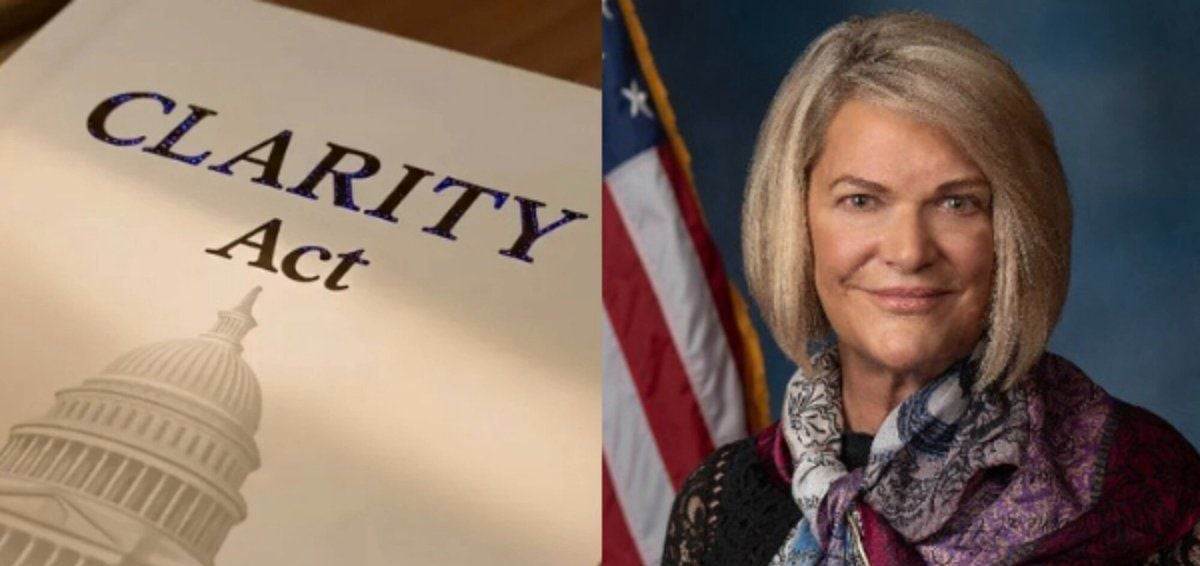
Senate Republicans announce amendments to the Digital Asset Market Clarity Act
On the eve of a key procedural vote that could determine the bill's fate, U.S. Senate Republicans announced a statement against H.R. Alternative amendment to 3633 to the Digital Asset Market Clarity Act. The new version retains several core pillars of the legislation, including an ethics chapter with a 2029 sunset clause, the Blockchain Regulatory Definiteness Act, and provisions prohibiting payment stablecoins from generating interest and benefits.
Title 1 of the bill has been renamed the "Loomis-Gibran Responsible Financial Innovation Act of 2026," reflecting the long-standing efforts of Senators Cynthia Lummis and Kirsten Gillibrand to establish a comprehensive federal digital asset framework.
DeFi rules are tightened and credit unions have clear authority
According to relevant reports, this alternative amendment introduces three significant changes. First, the Decentralized and Decentralized Finance (DeFi) protocol needs to be registered with the Commodity Futures Trading Commission (CFTC). Secondly, DeFi-related regulations only apply to spot or cash digital commodity transactions. Third, the text clarifies the authority of credit unions in terms of encryption activities.
The proposed registration requirements for non-decentralized protocols mark a major shift. The updated bill draws a clear line between truly decentralized platforms and platforms that do not meet this standard: the former will be exempted from registration obligations, while the latter will have to be regulated by the Commodity Futures Trading Commission.
Follow-up progress
The Senate's first procedural test, a cloture vote on advancing the motion, is scheduled for Tuesday, September 15. Closing debate is a procedure used by the Senate to overcome lengthy debate or potential filibusters. When the Senate is full, supporters typically need 60 votes to pass. The Republican Party currently holds 53 seats, which means that even if the Republican Caucus is fully unified, at least 7 Democratic or independent votes will still be needed to move the bill forward.
A successful closing debate vote would remove a major procedural hurdle, but it does not mean that the Clarity Act has passed the Senate. The bill will still face debate, amendments and a separate vote on final passage. The most controversial items, including stablecin rewards, ethics, anti-money laundering rules and regulatory jurisdiction, may still change.
The Clarity Act was passed by the House of Representatives on July 17, 2025 by a vote of 294 to 134, and passed by the Senate Banking Committee on May 14, 2026 by a vote of 15 to 9. Subsequently, Senator Loomis issued the text of a consolidated market structure bill that would replace the Senate Banking Committee's revised version of H.R. The merger of 3633 and the Agriculture Council's Digital Goods Intermediary Act into a single plan marks an important step towards establishing a comprehensive U.S. digital asset market framework.
Tuesday's vote will be the clearest signal yet to measure whether the bill has the bipartisan support it needs to move forward before the end of the 119th Congress.