Exchange Ranking
 Top Exchanges
 24h Volume Ranking
 Popularity Ranking
 Exchange BTC Balance
 Proof of Reserves
 Decentralized Exchanges
 Funding Rate
 Funding Heatmap
 Liquidation Data
 Max Pain
 Long/Short Ratio
 Whale L/S Ratio
 Binance/Okex/Huobi L/S
 Bitfinex Margin L/S
 ETF Tracker
 Solana ETF
 XRP ETF
 Hong Kong ETF
 Bitcoin Treasuries
 Crypto Reversal
 Ethereum Reserves
 HyperLiquid Wallet Analysis
 Hyperliquid Whale Watch
 Large Transactions
 On-chain Movement
 Bitcoin ROI
 Stablecoin Market Cap
 Options Analysis
 News
News Articles
 Economic Calendar
 Features
 Wallet
 Contract Calculator


 Security
 Collections
 Watchlist
 Following
 BTC
BTC  ETH
ETH The SEC and CFTC advance coordination of digital asset regulation
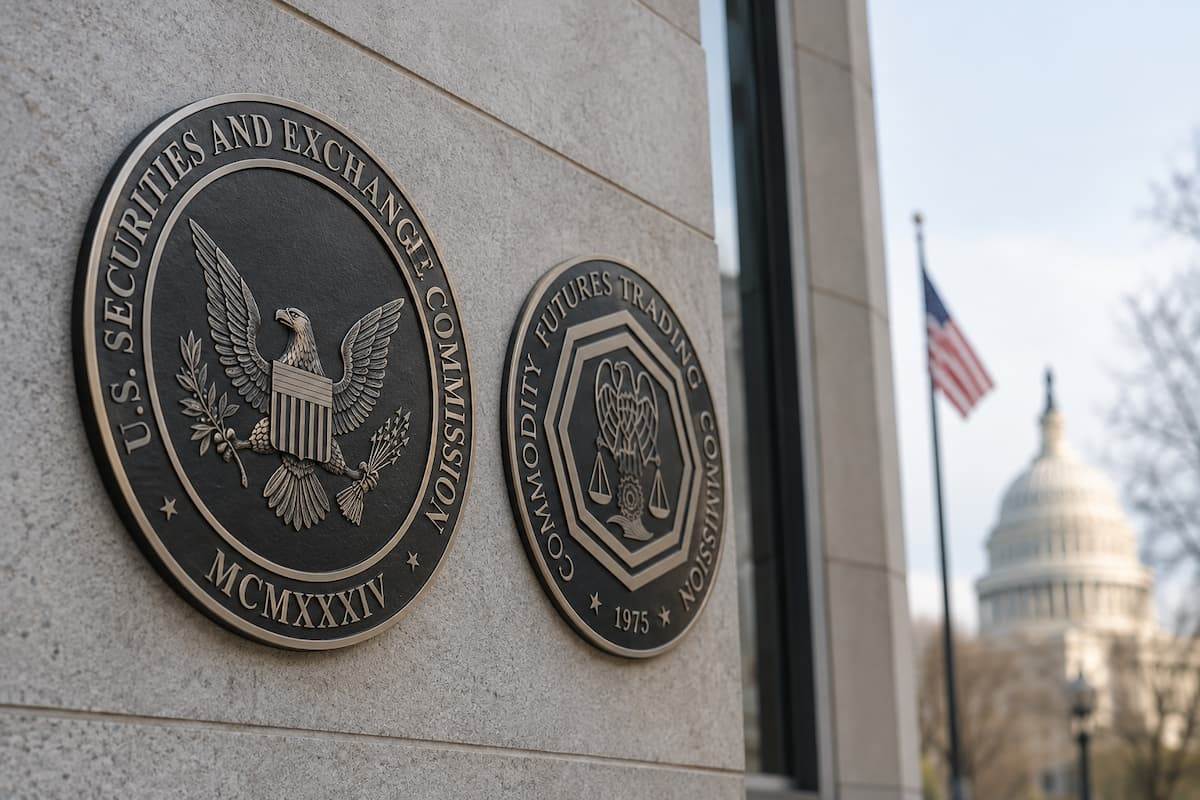
The U.S. Securities and Exchange Commission (SEC) and the Commodity Futures Trading Commission (CFTC) have officially launched a joint coordination initiative aimed at unifying the two institutions 'regulatory standards for digital assets. Both regulators have issued statements clarifying how existing securities and commodity laws apply to crypto assets within their respective jurisdictions. The move stems from a previously signed memorandum of understanding between the two sides, which established a formal coordination framework.
Over the past decade, one of the most common complaints among crypto companies operating in the United States has been that they are subject to the jurisdiction of two regulatory agencies, which often disagree or even lack communication with each other, leaving the long-standing question of who has jurisdiction over which digital assets. This is the core issue that the SEC and CFTC are working on this year. By formally signing a memorandum of understanding and launching a joint coordination initiative, the two agencies committed to moving from "parallel operations" to "collaborative cooperation."
The actual result of this effort is not a single unified rulebook, but a separate statement issued by each agency clarifying how current laws apply to crypto assets within their jurisdiction. The SEC has issued its own guidance clarifying how federal securities laws apply to cryptoassets, designed to help issuers and platforms more clearly determine which tokens or structures fall within the scope of securities law and which do not. At the same time, based on the same coordination framework, the CFTC also issued a parallel statement to explain the commodity attributes side in the same boundary division work.
The reason why this matter is more important than ordinary inter-agency memoranda is that the potential jurisdictional ambiguity is not just an abstract issue in legal theory, but it imposes real operating costs on crypto companies. Historically, compliance procedures for platforms that provide products that may be classified as securities or commodities had to meet both agencies 'more conservative interpretations of the rules, because if the classification was wrong, they would face actual enforcement risks from either regulatory agency. While a formal coordination framework does not completely eliminate classification disputes, it does increase the likelihood that the SEC and CFTC will reach consistent conclusions when evaluating the same product or architecture.
The background of this coordinated move is that Congress is advancing its own market structure legislation. If the legislation is passed, most of the delineation of jurisdictional boundaries will be left to statutory law rather than relying on agency discretionary interpretation. The two efforts are related but different in nature: the SEC and CFTC initiative focuses on how to interpret and enforce currently existing laws, while pending legislation could redefine which institutions have the power to regulate which asset classes in the future. Companies currently building compliance procedures must balance these two paths, because no matter how permanently future legislation ultimately resolves jurisdiction issues, current coordination measures will still govern enforcement risks in the short term.
Whether the initiative can significantly reduce disputes in practice depends not on the public statements of the two agencies, but on how the next batch of controversial product classification cases will be resolved. Issuing a joint statement is relatively easy; the real test of the effectiveness of the coordination framework will be whether two agencies with independent staff teams and historical traditions can consistently apply these principles in their respective enforcement actions.