Exchange Ranking
 Top Exchanges
 24h Volume Ranking
 Popularity Ranking
 Exchange BTC Balance
 Proof of Reserves
 Decentralized Exchanges
 Funding Rate
 Funding Heatmap
 Liquidation Data
 Max Pain
 Long/Short Ratio
 Whale L/S Ratio
 Binance/Okex/Huobi L/S
 Bitfinex Margin L/S
 ETF Tracker
 Solana ETF
 XRP ETF
 Hong Kong ETF
 Bitcoin Treasuries
 Crypto Reversal
 Ethereum Reserves
 HyperLiquid Wallet Analysis
 Hyperliquid Whale Watch
 Large Transactions
 On-chain Movement
 Bitcoin ROI
 Stablecoin Market Cap
 Options Analysis
 News
 Articles
 Economic Calendar
 Features
 Wallet
 Contract Calculator


 Security
 Collections
 Watchlist
 Following
 ETH
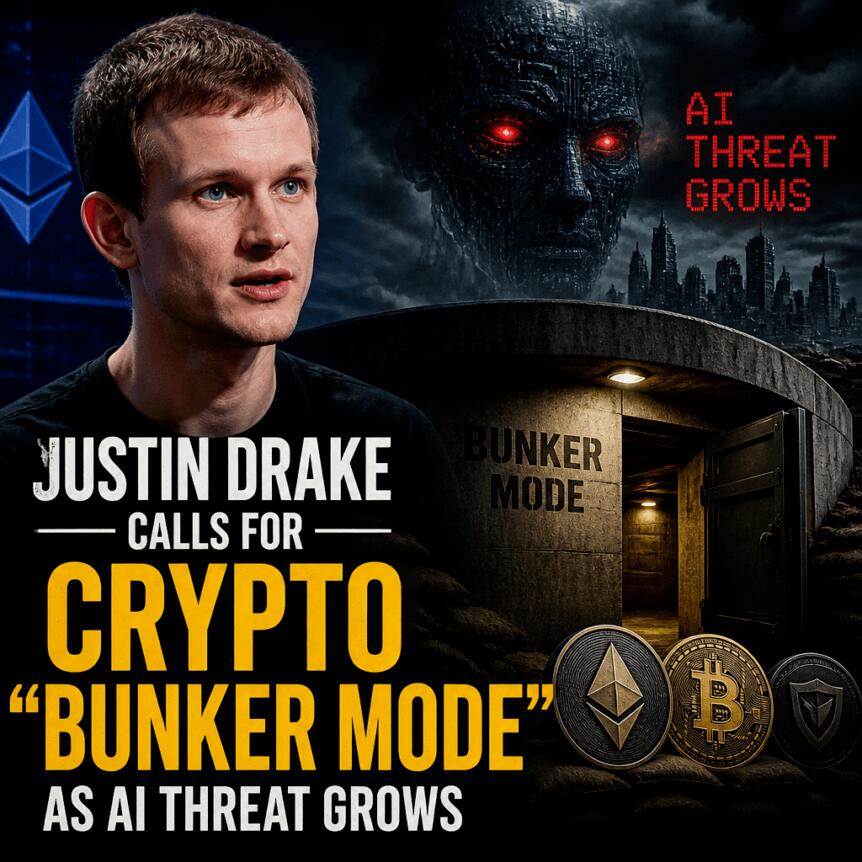
以太坊联合创始人警告:AI进步或致抗量子密码学在两年内失效
以太坊联合创始人维塔利克·布特林(Vitalik Buterin)指出,人工智能系统的快速发展可能对一种日益依赖的抗量子安全加密方法构成潜在威胁。据多家媒体报道,布特林表示,人工智能在未来两年内“有很大几率”破解基于格的密码学(Lattice-based cryptography)。
基于格的密码学是一种数学方法,正逐渐被研究人员和标准制定机构视为传统加密方法的替代方案。由于被认为能够抵御量子计算机的攻击,它已成为后量子密码学标准的主要候选者。鉴于包括RSA和椭圆曲线系统在内的传统加密技术在量子计算成熟后将变得脆弱,各国政府和科技企业正在向基于格的方案迁移。
布特林的警告将讨论焦点从量子计算机转移到了人工智能身上,将其视为潜在的近期风险。他的言论表明,人工智能能力的快速提升,而非单纯的量子硬件,可能是对安全架构师多年来视为稳固的密码学假设构成的更直接挑战。
This statement carries particularly important weight given Buterin's role in shaping the Ethereum technology roadmap. Like most blockchain networks, Ethereum relies on cryptographic primitives to protect wallets, verify transactions, and secure consensus mechanisms. Any erosion of confidence in cryptographic methods proposed for future upgrades could affect the prioritization of research on alternative or hybrid security models by developers.
In recent years, the entire cryptocurrency industry has been debating how to prepare for the "post-quantum" era, today's era when encryption technology may theoretically be cracked. Lattice-based cryptography stands out in this process, receiving extensive academic research support and in some cases formal recognition by national standardization bodies. Butrin's comments, however, introduced a different variable: Machine learning systems may evolve faster than quantum processors, thus being the first to weaken these defenses.
According to reports, Buterin did not specify the technical mechanism by which artificial intelligence might crack lattice cryptography, nor did he provide a specific timeline beyond the two-year window period he mentioned. This claim seems to reflect a forward-looking assessment of the trajectory of artificial intelligence, rather than the disclosure of specific vulnerabilities or active exploits. Still, given Buterin's standing in the blockchain community, the remarks may prompt the industry to revisit cryptographic assumptions.
Market Impact
Because Butrin's comments dealt with long-term infrastructure risks rather than identified loopholes or exploits, it is unlikely to trigger immediate price fluctuations. However, this may accelerate discussions among developers and researchers about diverse encryption methods rather than relying too much on a single lattice-based approach.
For the broader cryptocurrency industry, this comment highlights the ongoing tension between the rapid development of artificial intelligence and the security model on which blockchain relies. Post-evaluation projects for quantum migration may face pressure, requiring re-evaluation of schedules or simultaneous hedging of multiple crypto risks, not just those targeted at quantum computing.
Butrin's warning adds a new dimension to the industry's post-quantum security debate, juxtaposing the development of artificial intelligence with quantum computing as potential threats. Although the accuracy of the two-year timeline remains to be verified, these remarks are likely to keep cryptographic resilience high on the agenda of blockchain developers.
FAQs
What is lattice-based cryptography?
It is a mathematical encryption method that is believed to be resistant to attacks from quantum computers and is one of the leading candidates for a future post-quantum security standard.
Does Vitalik Buterin say that artificial intelligence has cracked this cryptography?
No. He said there was a "high probability" that it would occur within two years, describing a possible future risk rather than a confirmed current breach.
Why is this important for Ethereum and other blockchains?
Blockchain relies on cryptographic methods to protect wallets and verify transactions, so the weakening of any trusted cryptographic method could affect long-term cybersecurity planning.
Does Buterin explain how artificial intelligence can crack lattice-based cryptography?
The report did not show that he detailed the specific technical mechanism, only that he proposed this possibility based on the rapid development of artificial intelligence.