Exchange Ranking
 Top Exchanges
 24h Volume Ranking
 Popularity Ranking
 Exchange BTC Balance
 Proof of Reserves
 Decentralized Exchanges
 Funding Rate
 Funding Heatmap
 Liquidation Data
 Max Pain
 Long/Short Ratio
 Whale L/S Ratio
 Binance/Okex/Huobi L/S
 Bitfinex Margin L/S
 ETF Tracker
 Solana ETF
 XRP ETF
 Hong Kong ETF
 Bitcoin Treasuries
 Crypto Reversal
 Ethereum Reserves
 HyperLiquid Wallet Analysis
 Hyperliquid Whale Watch
 Large Transactions
 On-chain Movement
 Bitcoin ROI
 Stablecoin Market Cap
 Options Analysis
 News
 Articles
 Economic Calendar
 Features
 Wallet
 Contract Calculator


 Security
 Collections
 Watchlist
 Following
 ETH
以太坊联合创始人维塔利克·布特林支持新警告:人工智能可能削弱区块链的密码学基础
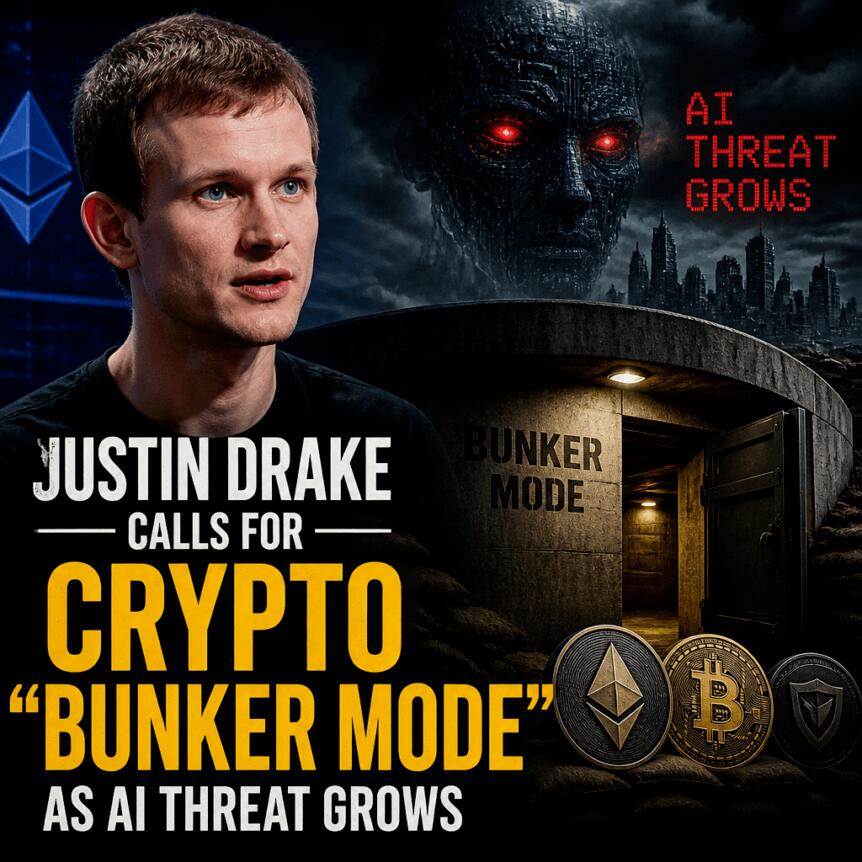
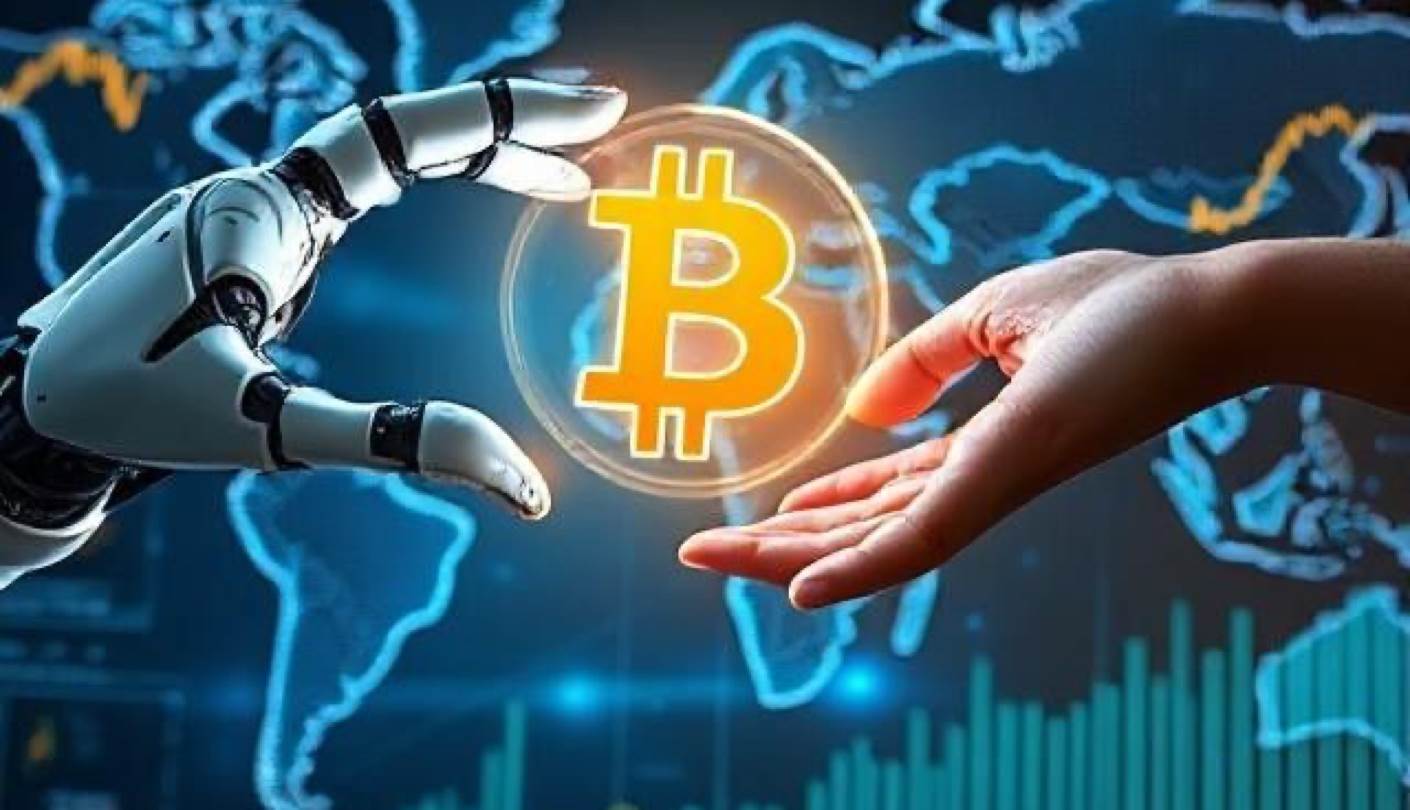
以太坊联合创始人维塔利克·布特林(Vitalik Buterin)支持了以太坊研究员贾斯汀·德雷克(Justin Drake)提出的最新警告。该警告指出,人工智能的快速进步最终可能会削弱支撑许多区块链系统的密码学假设——这甚至可能在量子计算机构成直接威胁之前发生。
在X平台(原Twitter)的单独帖子中,这两位研究人员强调,近期的重点应放在谨慎、可选的风险降低措施上,而非陷入恐慌。他们都指出,由人工智能加速的数学进步可能会使破解或实质性削弱广泛使用的签名方案(如ECDSA)变得更容易,同时也对某些类型的密码学在中期内自动“安全”这一观点提出了质疑。
核心要点
- 布特林和德雷克表示,原则上,由人工智能驱动的数学进步可能会在量子计算机到来之前就破坏区块链的密码学安全性。
- 德雷克提出的“地堡模式”框架包含一个渐进式的迁移策略:将资金转移到尚未暴露公钥的新地址。
- 两人都强调,持有者不应匆忙行动——迁移可能带来操作风险,包括导致资金损失的操作失误。
- Butrin has expanded his concerns from elliptic curves to lattice-based cryptography, and advances in suggesting artificial intelligence may also weaken its security.
From "quantum risk" to artificial intelligence-driven cryptography concerns
Drake's comments released on Wednesday urged the industry to take cryptography risks from artificial intelligence seriously as a serious and ongoing problem. His main concern is that artificial intelligence may make it feasible to crack the Elliptic Curve Digital Signature Algorithm (ECDSA) used by many crypto wallets to authorize transactions.
Importantly, Drake defines this as a long-term problem rather than an emergency crisis. He called for a gradual shift to addresses that do not publicly reveal associated keys, thereby effectively reducing the exposure of used cryptographic material.
Butlin agrees with the premise, but discourages sudden action. "I would not advise anyone to rush money into new wallets today," he wrote, adding that the industry should take seriously the cryptographic risks posed by AI-accelerated mathematical advances. [TAG
Why Drake thinks AI has changed the timeline
Drake said his concerns became more acute after OpenAI released a raft of new mathematical work covering fields as diverse as algebra, theoretical computer science and mathematical logic. In his view, the breadth and speed of these results demonstrate how artificial intelligence capabilities are advancing rapidly in areas that historically relied on human intuition.
He gave an example from last month: OpenAI used 10,000 autonomous AI agents working in parallel to solve the Navier-Stokes equation-a long-standing problem in mathematics and physics-in 88 hours.
Drake believes this acceleration is awe-inspiring for traditional methods of mathematical discovery, pointing out that once new methods are available, long-held assumptions can quickly collapse. In a technical side note, he suggested that elliptic curve cryptography may be particularly sensitive to superhuman mathematical skills. He compared the structured algebra behind the curve with a hash, which aims to minimize the available structured algebraic features.
Butrin extends warning to lattice-based cryptography
Butrin's response expands the focus from elliptic curves to other cryptographic families. He acknowledged the common view that if the elliptic curve is breached, hashes may still be secure, and lattice-based systems may continue to withstand quantum attacks. But he challenged that framework.
"So far, most people are in the mindset of 'elliptic curve broken, hash-safe, grid safe'," Butrin wrote. He added that due to artificial intelligence-driven mathematical advances, there is a high chance that the actual security of lattice-based cryptography will face a "severe blow" in the next two years.
布特林将这一担忧与以太坊在其“精简路线图”中的发展方向联系起来,指出以太坊正朝着“仅哈希”的方法迈进。其核心理念是,密码学设计选择——特别是与未来防护相关的选择——不仅需要考虑到量子计算,还需要考虑到由人工智能实现的比预期更快的算法进步。
持有者的“可控迁移”可能是什么样的
除了理论上的密码学讨论外,两位研究人员还提供了旨在减少暴露面的实际步骤。德雷克建议持有者开始受控的大规模资产迁移,转移到尚未暴露公钥的新地址。
他建议大型和复杂的持有者应率先行动,并在签署交易后将剩余资金转移到新地址——这种方法旨在将此前使用过的密钥的暴露控制在一定范围内。
布特林支持这一预防措施,称“如果你不觉得困难的话”,他认为将资金保留在未用于交易的新地址中是一个好主意。
然而,两人都强调迁移本身带有风险。布特林警告说,他因“失败的迁移”而损失的资金比黑客攻击造成的损失还要多。德雷克同样强调,仓促的迁移可能造成更大的伤害,建议采取逐步、精心管理的步骤,而不是可能导致用户错误、误发或运营中断的突兀行为。
The core tension in their advice is simple: If cryptographic risks evolve due to advances in artificial intelligence, reducing exposure by rotating addresses may help. However, rushing changes without appropriate operational safeguards can cause immediate losses that may exceed assumed future gains.
What should readers focus on next
At present, the most important signal is not the command to clear the wallet, but the way developers and users may need to rethink the cryptographic timeline-that is, strike a balance between artificial intelligence-driven mathematical advances and the actual risks of operational changes. The next key question is whether the wallet and protocol team will translate these concerns into clearer migration practices and an updated cryptographic roadmap, and how quickly best practices for reducing "controllable" key exposure spread across the ecosystem.