Exchange Ranking
 Top Exchanges
 24h Volume Ranking
 Popularity Ranking
 Exchange BTC Balance
 Proof of Reserves
 Decentralized Exchanges
 Funding Rate
 Funding Heatmap
 Liquidation Data
 Max Pain
 Long/Short Ratio
 Whale L/S Ratio
 Binance/Okex/Huobi L/S
 Bitfinex Margin L/S
 ETF Tracker
 Solana ETF
 XRP ETF
 Hong Kong ETF
 Bitcoin Treasuries
 Crypto Reversal
 Ethereum Reserves
 HyperLiquid Wallet Analysis
 Hyperliquid Whale Watch
 Large Transactions
 On-chain Movement
 Bitcoin ROI
 Stablecoin Market Cap
 Options Analysis
 News
News Articles
 Economic Calendar
 Features
 Wallet
 Contract Calculator


 Security
 Collections
 Watchlist
 Following
Core Points
- Root causes have not yet been announced
- Impact on Internet activity and platform users
- HOOD's share price rebounded partially after falling
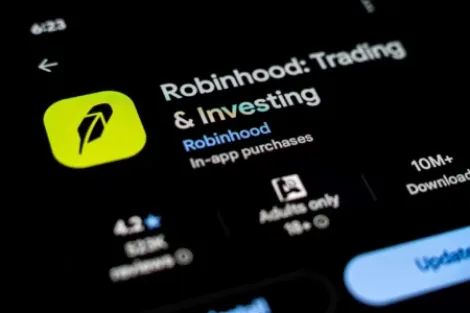
On September 4, Robinhood Chain's block production was suspended for more than 14 minutes, causing all Internet activity to stall. Based on the speed at which the chain typically produces one block every 100 milliseconds, approximately 8,400 block intervals have been missed. Currently, Robinhood has not released any official explanation or recovery timetable.
HOOD shares fell 5.1% during Friday's trading session before recovering partially. Although the network holds US$2.46 billion in assets, it only receives the lowest rating in L2BEAT's decentralized rating (below Stage 0).
Event details
The Ethereum Layer-2 blockchain operated by Robinhood experienced a complete stop of block production for more than 14 minutes on Friday. During this period, all token transfers and smart contract operations were pending without any confirmation information.
ˇ Sudden: Robinhood Chain ($HOOD) stopped generating new blocks, causing transactions to stall for at least 14 minutes.
The cause of the network outage and the estimated recovery time have not been announced.
The interruption began at around 12:57 pm UTC on September 4. Although users are still able to broadcast transactions to the web, these transactions cannot be processed during the block production freeze. Given that the chain's standard operating speed is one block every 100 milliseconds, this 14-minute interruption is equivalent to skipping approximately 8,400 block intervals.
The root cause has not yet been announced
The company has not disclosed the specific reason for triggering the network outage. During the outage, Robinhood's main status dashboard did not display any incident reports about the blockchain.
ROBINHOOD Chain is down, no new blocks are generated: Website
- Aggr News (@ Aggr News)
September 4, 2026
The block browser platform becomes the only public resource to indicate the status of network operations. The company does not have a separate page dedicated to monitoring the status of the blockchain.
The network operates through a unique sequencer built on Arbitrum Nitro technology. If the sequencer fails, there is no backup mechanism. Users cannot process transactions through other channels. Based on L2BEAT data that monitors Layer-2 network decentralization metrics, Robinhood Chain received a rating below Stage 0-the smallest classification for the platform. Concerns identified in the evaluation include a single sorter architecture, instant contract upgrade capabilities, and allowing only two authorized participants to challenge invalid network conditions.
Impact on network activity and platform users
There is currently no evidence that user balances disappeared during service outages. Transactions broadcast while the network is offline remain pending until normal block production resumes. Blockchain participants face significant disruption. Due to the lack of new blocks, traders cannot perform swaps, adjust mortgage positions, settle loan obligations, or interact with smart contracts.
Before the suspension, Internet activity was very active. Blockscout data shows that 14.14 million transactions were processed in the first 24 hours, with an average transaction cost of $0.48.
This interruption is limited to the blockchain network. Customers who use Robinhood's traditional brokerage services to trade U.S. stocks, exchange-traded funds (ETFs) and options contracts were not affected by the service interruption.
Before the network was suspended, Robinhood Chain recorded approximately $945 million in decentralized exchange (DEX) transaction volume on August 25. Since the deployment of the main network on July 1, the total transaction volume of DEX has exceeded US$47 billion.
HOOD shares fell first and then rose
Robinhood's shares opened Friday at $120.48, following Thursday's closing price of $124.72. Shares hit a low of $118.30, down about 5.1% from the previous session's close.
RH Markets, Inc., HOOD
shares subsequently recovered to about $122.81, narrowing the day's decline to about 1.5%.
Existing data cannot conclusively prove that the blockchain disruption caused the stock price to fall. Before the news of the network outage broke, HOOD shares were trading around $120 during the pre-market trading session.
Thursday's trading session saw the stock's price surge 16.6% thanks to positive analyst rating revisions and announcements about product line expansion.
L2BEAT currently estimates the total lock-in value (TVL) on Robinhood Chain at $2.46 billion. Recent metrics place the network fifth among monitored blockchains by 30-day decentralized exchange transaction volume, behind Solana, BNB Chain, Ethereum and Base.