Exchange Ranking
 Top Exchanges
 24h Volume Ranking
 Popularity Ranking
 Exchange BTC Balance
 Proof of Reserves
 Decentralized Exchanges
 Funding Rate
 Funding Heatmap
 Liquidation Data
 Max Pain
 Long/Short Ratio
 Whale L/S Ratio
 Binance/Okex/Huobi L/S
 Bitfinex Margin L/S
 ETF Tracker
 Solana ETF
 XRP ETF
 Hong Kong ETF
 Bitcoin Treasuries
 Crypto Reversal
 Ethereum Reserves
 HyperLiquid Wallet Analysis
 Hyperliquid Whale Watch
 Large Transactions
 On-chain Movement
 Bitcoin ROI
 Stablecoin Market Cap
 Options Analysis
 News
 Articles
 Economic Calendar
 Features
 Wallet
 Contract Calculator


 Security
 Collections
 Watchlist
 Following
 BNB
Analysis of the Price Discovery Mechanism
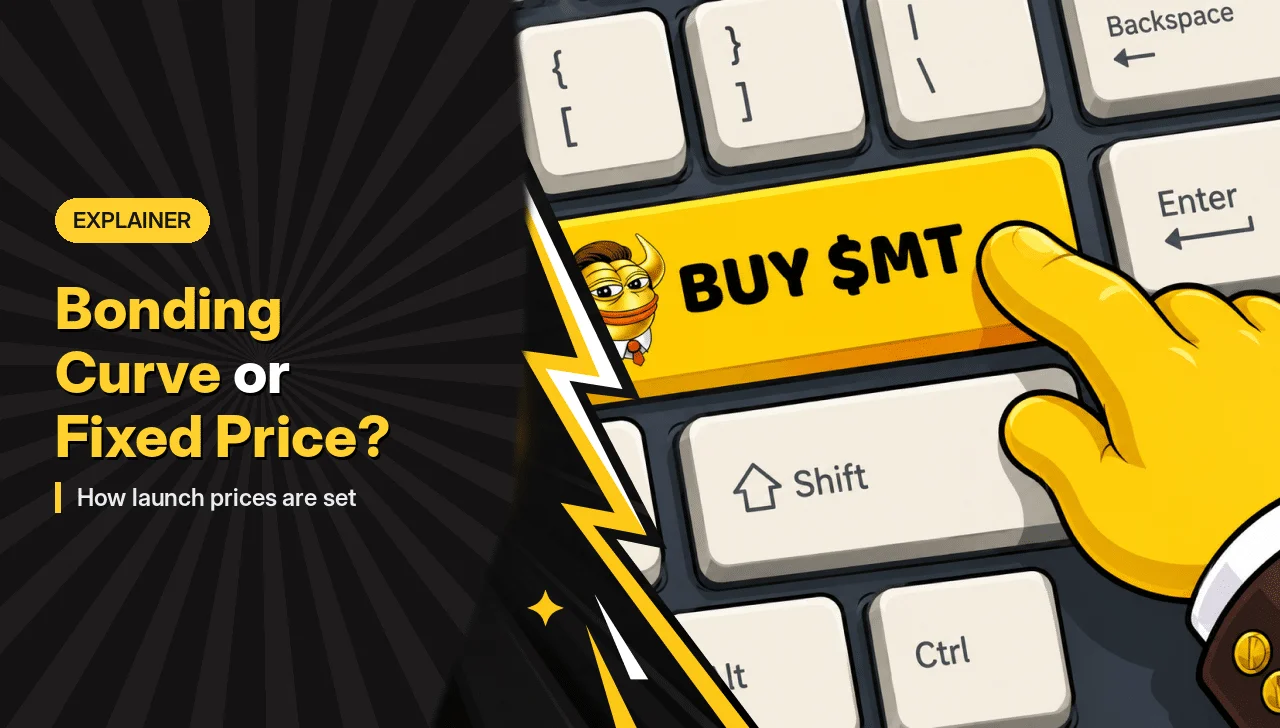
Price discovery refers to the process by which buyers and sellers establish the market value of a token. For the new Meme Coin, fixed-rate financing, Bonding Curves, and direct liquidity launches provide different paths for transactions. MemeToro is a BNB Chain-based project dedicated to developing open source AI agents and plans to launch a fair launch custody framework for standardized fixed-rate memo financing rounds. Currently, MemeToro has raised more than US$160,000 in Phase 8, and its platform supports comparative analysis of different models.
What is memein price discovery?
Memo price discovery refers to the process of early tokens transitioning from the issuance environment to a market price determined by buying and selling behavior, liquidity and demand. The release structure determines how users participate.
- Fixed rate rounds: Use a published flat price for a specific time period.
- Binding Curve: Prices automatically adjust as participants trade.
- Direct liquidity launch: Launch begins when the creator provides tokens and assets to the pool.
Users need to have a clear understanding of the applicable terms before joining a financing round or early trading pool. <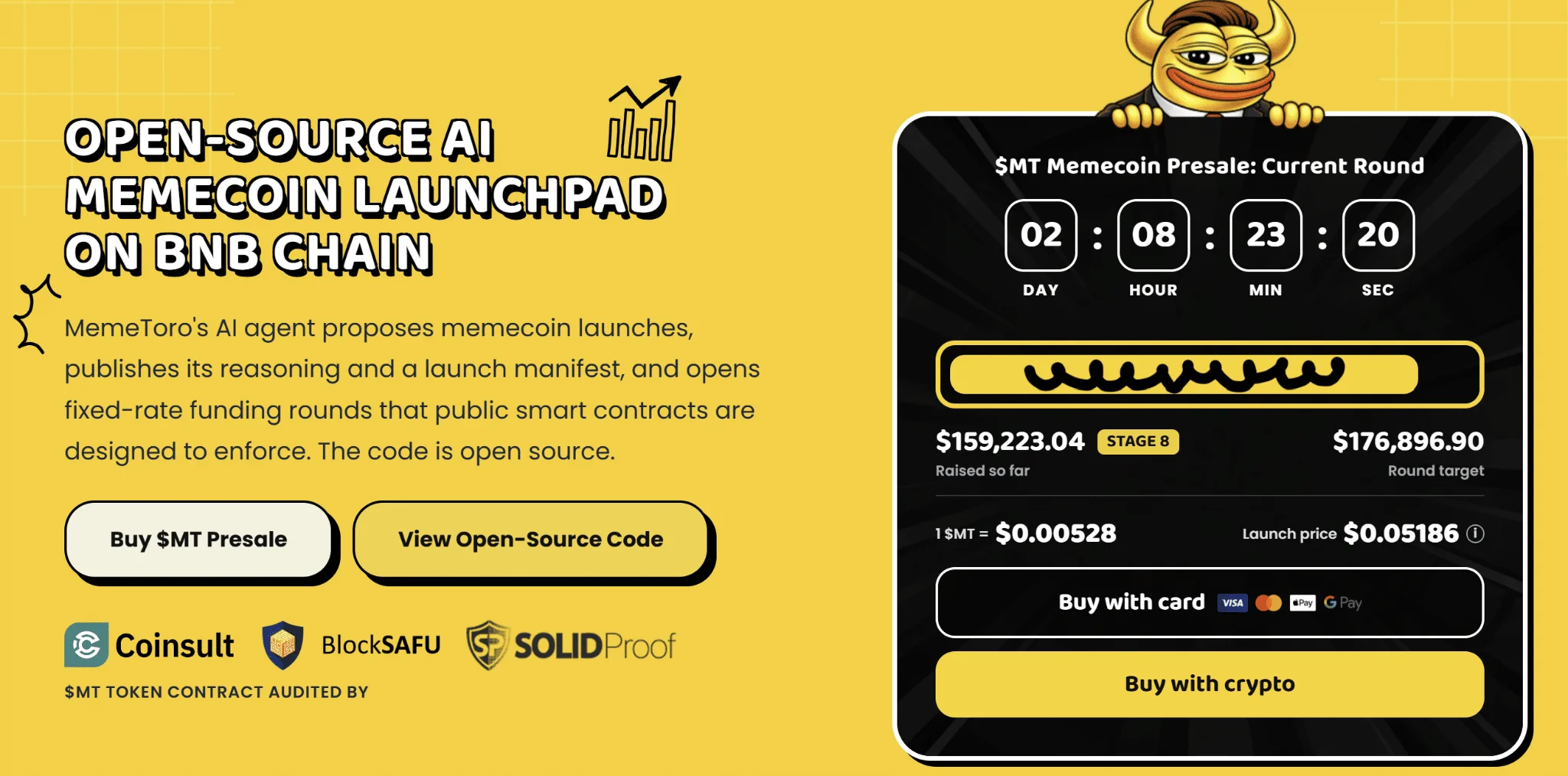 >
How to determine the price of early memin for fixed-rate financing?
Fixed rate financing ensures that all eligible participants receive the same published rate during the financing period. Users can check entry conditions before investing.
MemeToro's planning process uses open fixed-rate financing after its AI agent prepares a documented launch proposal. The proposal aims to demonstrate the token concept, supply, price, cap, timing and contract path.
The process consists of four stages:
- Proposal: Agents scan public signals and draft token ideas.
- Verify: User reviews evidence and terms.
- Fund: Conduct fixed-rate financing rounds in accordance with announced conditions.
- Launch: Apply managed logic to execute a given result. [TAG
MemeToro's open-source AI agent links early prices to open proposals, rather than relying solely on fast-moving graphs.
How did the binding curve change early token pricing?
The binding curve changes the token quote by activating the formula in the contract. As users buy, the price rises; as users sell, the price may fall based on the design curve.
This model creates real-time price discovery from the first transaction. Users should understand that the quotes, liquidity and slippage displayed may change between opening the page and confirming the transaction.
After reaching the "graduation" point, liquidity can be transferred to the pool of decentralized exchanges (DEX) to start market trading.
Before using binding curves, check:
- Starting prices and curve progression
- Supply allocated to curve
- Graduation Goals and Mobility Destinations
- Transaction fees, wallet restrictions, and anti-robot rules
How can disclosure of terms and contracts support a clearer price model?
Disclosure terms and contracts demonstrate the starting rate, financing window and working mechanism for the next phase. The launch page should explain its success, failure and exit conditions.
MemeToro's FairLaunchEscrow development connects announced terms with planned BNB Chain contract operations. Its technical materials describe contribution limits, deadlines, claims, refunds, finalization, liquidity processing, and windows for exit before relevant deadlines.
MemeToro has released code and examples for its agent pipeline, manifest and draft hosting framework. This was an early MVP (Minimum Viable Product), but it showed how research, financing terms and planned trading activities could be integrated and documented.
What should users compare before starting trading in memecoin?
Before starting trading in memes, users should compare price models, supply plans, liquidity paths, contract rules, and public information. The goal is to identify the structure behind the prices viewed by users.
MemeToro's Phase 8 fundraising of more than US$160,000 provides the context for the development of the platform. $MT is designed to support platform access, transactions, start-up financing, rewards, pledges and future memecoin transactions, while creators 'start-up are designed with their own announced conditions.
Tokens economics for $MT show a total supply of 1.2 billion units: 852,000,000 for public sale,120,000,000One for Centralized Exchange (CEX) reserves,90,720,000 for marketing partners,60,000,000 for MemeToro Trading,53,280,000 for MT rewards, and 24,000,000 for MT teams.
Whether a fixed rate, binding curve, or direct liquidity is used at the start, clear terms explain how early prices were formed.
FAQs
What is fixed rate financing?
This is a format where eligible participants join at a published token price for a specified period.
What is a binding curve?
This is a contract-based system where token quotes change as people buy or sell.
What is a slip point?
The slip point is the difference between the expected transaction price and the actual execution price.
What is liquidity migration?
It moves tokens and paired assets into the trading pool of a public decentralized exchange.
Can the starting price guarantee subsequent market prices?
No. Starting prices describe an early entry model, while subsequent prices follow changes in market activity and liquidity.