Exchange Ranking
 Top Exchanges
 24h Volume Ranking
 Popularity Ranking
 Exchange BTC Balance
 Proof of Reserves
 Decentralized Exchanges
 Funding Rate
 Funding Heatmap
 Liquidation Data
 Max Pain
 Long/Short Ratio
 Whale L/S Ratio
 Binance/Okex/Huobi L/S
 Bitfinex Margin L/S
 ETF Tracker
 Solana ETF
 XRP ETF
 Hong Kong ETF
 Bitcoin Treasuries
 Crypto Reversal
 Ethereum Reserves
 HyperLiquid Wallet Analysis
 Hyperliquid Whale Watch
 Large Transactions
 On-chain Movement
 Bitcoin ROI
 Stablecoin Market Cap
 Options Analysis
 News
News Articles
 Economic Calendar
 Features
 Wallet
 Contract Calculator


 Security
 Collections
 Watchlist
 Following
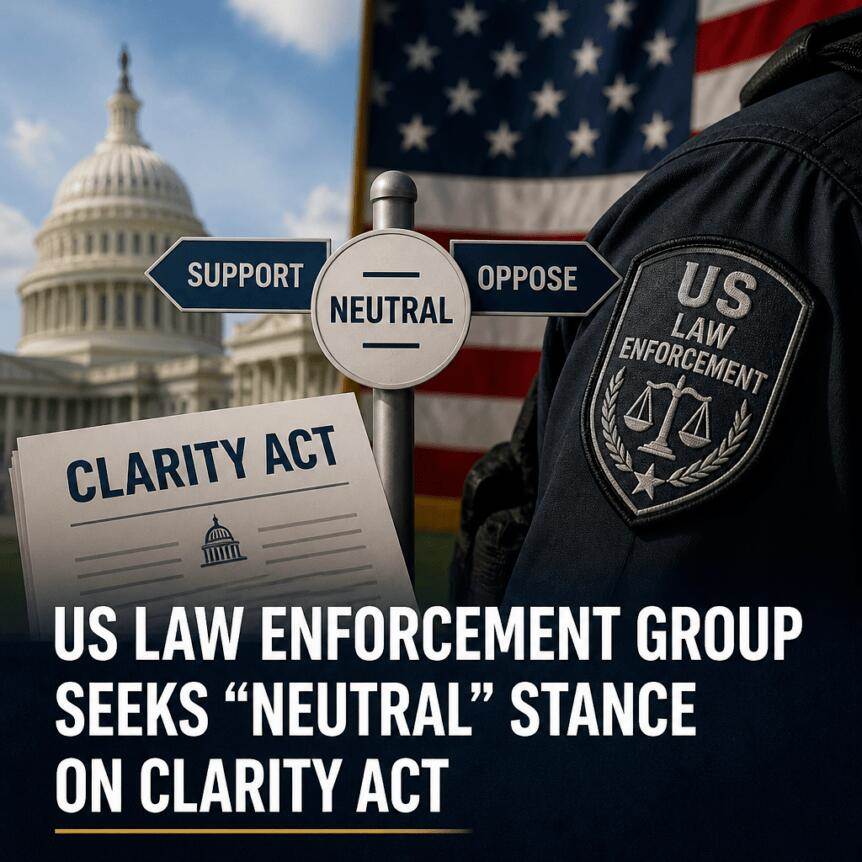
The National Sheriff's Association changes its position on CLARITY bill, with Senate vote looming
The National Sheriff's Association (NSA) has adjusted its position on the CLARITY Act from initial opposition to neutrality. The shift comes on the eve of a Senate vote expected later this month. In a letter to Senate Majority Leader John Thun and Senate Minority Leader Chuck Schumer on Thursday, the group said it would "step back" and allow the legislative process to continue moving forward to create a clearer regulatory framework for the industry.
This change is significant. Previously, the NSA's criticism has focused on provisions that could weaken law enforcement's ability to track cryptocurrency-related transactions-particularly the requirement for crypto mixers to be exempted from certain registration obligations. The group said that after "a lot of work" by Congress, the government and relevant stakeholders, they believe it is a more constructive path to remain neutral at this stage and allow the bill to move forward.
Key Points
- Position Shift: The NSA has adjusted its position on the CLARITY Act from opposition to "neutrality" as it sees broader legislative and regulatory progress.
- Core of Early Objections: Previous objections focused on the possibility of crypto-mixers exempt from registration requirements, which the NSA pointed out could hinder transaction tracking and victim fund recovery.
- Legislative process: The CLARITY bill was passed by the House in July 2025, but faces numerous obstacles in the Senate, including concerns raised by multiple stakeholders.
- Procedural vote: Senate leadership is pushing for a procedural vote. Thun has filed a motion for closure vote scheduled for September 15 after the senator returned.
- Regulatory coverage: Even if the CLARITY Act is stalled, the top U.S. cryptocurrency regulators have signaled that they may carry out rule-making work on their own through their affiliated institutions.
Background and motivation for the NSA's move to neutrality
In a letter sent Thursday, NSA Chairman Troy Wellman and CEO and Executive Director Justin Smith said the association's change in position was due to the "extensive work" by lawmakers and stakeholders to resolve legal, regulatory and enforcement issues related to the CLARITY Act. They argued that their concerns should not be re-debated at this stage, but rather that the bill should be allowed to move forward through the legislative process to establish a "clear, effective and urgently needed regulatory framework."
The NSA's statement suggested that although the enforcement issues raised earlier have not completely disappeared from the broader policy debate, the group believes the drafting of the bill has evolved enough to warrant a different stance.
Reasons for early opposition from NSA
Before changing position, the NSA had explicitly opposed parts of the CLARITY Act, particularly amendments that were believed to exempt crypto-mixers from many registration requirements. In an earlier communication to Senate Banking Committee leaders, it noted that such exemptions could "undermine law enforcement's ability to track transactions and digital assets and recover victim funds."
The association's concerns reflect long-standing tensions in cryptocurrency regulation: policymakers try to balance compliance and market integrity goals with privacy concerns and the use of legal anonymity-enhancing tools. In the NSA's view, easing regulatory obligations on currency mixers could pose practical enforcement challenges to tracking illicit financial flows.
In July this year, NSA leadership also emphasized the stakes in a video statement-at the time they believed that the CLARITY Act protected the cryptocurrency industry, not the public interest.
CLARITY's difficult journey in Congress
The CLARITY bill was passed by the U.S. House of Representatives in July 2025. After being submitted to the Senate, the bill encountered multiple procedural and political obstacles. Although the Agriculture and Banking Committee passed a version of the bill in 2026, it continues to be criticized and reviewed by lawmakers and interest groups.
Ongoing concerns include issues related to stablecoin rewards, tokenized stocks, and potential conflicts of interest involving President Donald Trump and his family. These issues suggest that the debate surrounding the CLARITY Act is not just about enforcement and transparency, but also about how legislation builds participation structures and incentives for cryptocurrency and tokenization markets.
As the Senate is about to resume session, procedural steps have been in progress. Before the August recess, Thun submitted a motion to vote on the bill on September 15 after senators return from finishing their state work schedules, aiming to overcome potential delays and move the measure forward.
Regulators hinted they would take action without the CLARITY bill
Although the legislative process continues, the regulatory track is developing. According to previous reports, Trump publicly supported the CLARITY bill and spoke out with leaders of agencies such as the U.S. Securities and Exchange Commission (SEC) and the Commodity Futures Trading Commission (CFTC). In this context, Trump nominated SEC Chairman Paul Atkins and CFTC Chairman Michael Selig have signaled that even if Congress fails to pass a market structure bill, their agencies will address cryptocurrency regulation issues.
This is crucial because it redefines what "market clarity" means in practice. If the CLARITY bill is passed, it will provide a legal basis for rules governing the structure of cryptocurrency markets; if the bill is stranded, regulators may try to fill the gap through institutional action-although this approach may produce different results than legislation, including differences in scope, timing, and court ultimately interpreting legal authority.
Impact on market participants
For market participants, the NSA's shift to neutrality adds another variable: It suggests that at least one major enforcement-related stakeholder does not intend to oppose the bill in the final stages. As a result, traders, platforms and management teams are likely to be closely watching the next procedural milestone-especially whether the September 15 closing debate vote is held as scheduled-while also watching whether the most controversial provisions, such as those affecting cryptomixers and related registration obligations, remain unchanged or modified in further Senate deliberations.
As the Senate prepares to vote, the key question facing investors and builders is whether the CLARITY bill will evolve into a version that meets market structural goals while taking into account enforcement practicality. All parties should focus not only on the timetable for ending the debate, but also on any last-minute amendments that could change specific provisions debated by the NSA and other stakeholders.