Exchange Ranking
 Top Exchanges
 24h Volume Ranking
 Popularity Ranking
 Exchange BTC Balance
 Proof of Reserves
 Decentralized Exchanges
 Funding Rate
 Funding Heatmap
 Liquidation Data
 Max Pain
 Long/Short Ratio
 Whale L/S Ratio
 Binance/Okex/Huobi L/S
 Bitfinex Margin L/S
 ETF Tracker
 Solana ETF
 XRP ETF
 Hong Kong ETF
 Bitcoin Treasuries
 Crypto Reversal
 Ethereum Reserves
 HyperLiquid Wallet Analysis
 Hyperliquid Whale Watch
 Large Transactions
 On-chain Movement
 Bitcoin ROI
 Stablecoin Market Cap
 Options Analysis
 News
 Articles
 Economic Calendar
 Features
 Wallet
 Contract Calculator


 Security
 Collections
 Watchlist
 Following
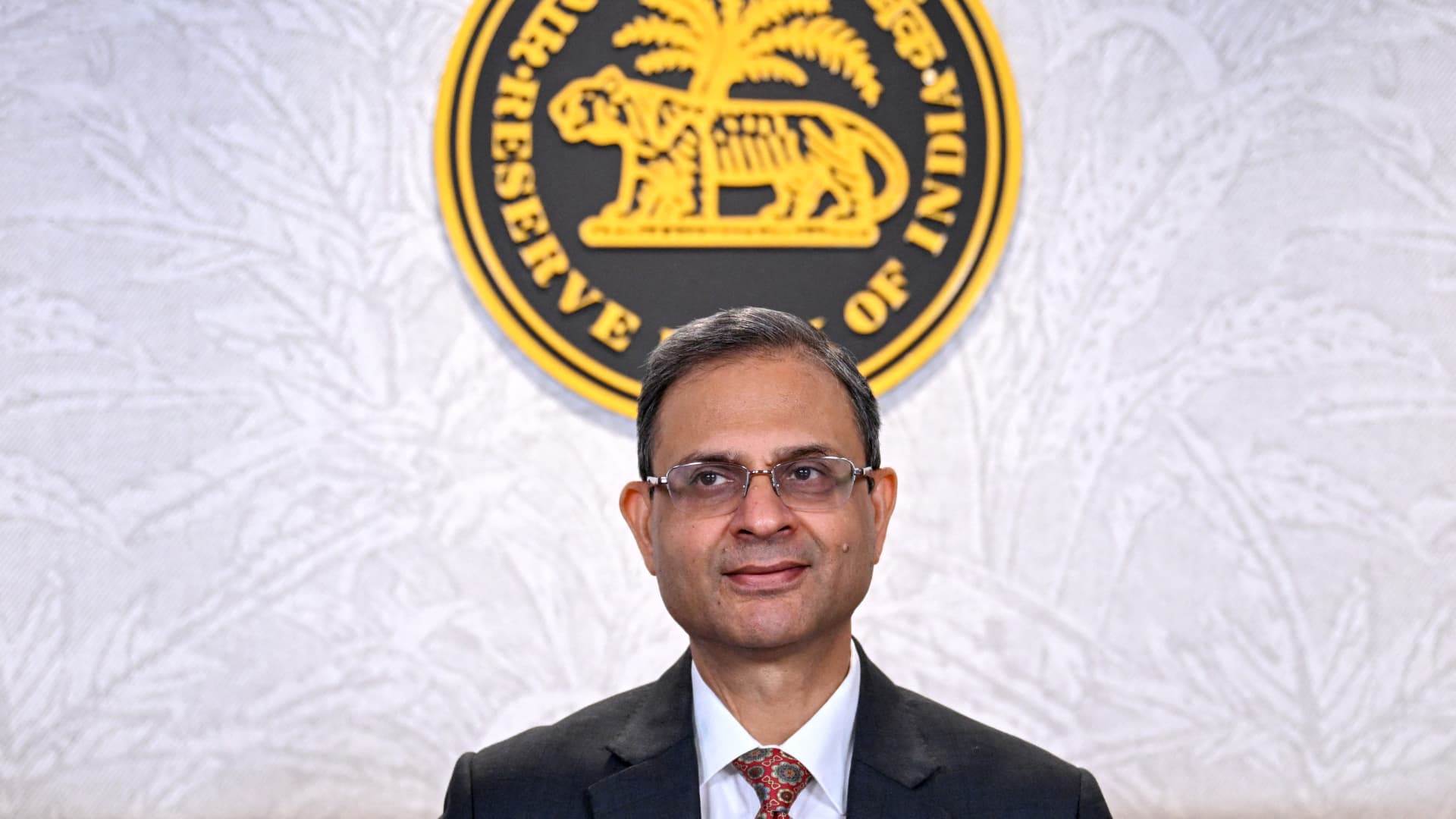
印度央行加息5.50%,但外资撤离加剧
印度中央银行将利率上调了5.50%,这是近四年来首次加息,旨在控制物价上涨并支撑疲软的卢比。然而,这一举措面临重大挑战:美国银行和金融市场为投资者提供了更高且更安全的回报,使得印度对外国资本的吸引力下降。结果是资金从印度加速外流。今年,外国投资者已从印度股市和债市中撤出约300亿美元。
印度的回购利率已回升至5.50%,这是近四年来的首次加息。政策立场已转向“校准性紧缩”,预计今年通胀率为5.2%,经济增长仍接近7%。低利率时代似乎已经结束。— GD (@TheGD_blog)October 8, 2026
卢比贬值推动印度用户转向P2P稳定币,尽管加密税率高企
印度储备银行(RBI)专门开发了其自身的数字卢比,旨在为人们提供一种国家支持的私人加密货币替代品,但该方案并未获得广泛采纳。根据印度储备银行自己的2025-26年度报告,尽管试点项目向更多银行和城市开放,但在流通中的数字卢比数量实际上下降了约24%,从1016.5亿卢比降至771.7亿卢比。然而,随着卢比对美元贬值,尽管印度对加密货币征收高额税收,印度民众正转向点对点(P2P)稳定币交易。
In September 2026, India imposes a 30% tax on cryptocurrency profits and a 1% withholding tax (TDS) on eligible virtual digital asset (VDA) transfers, including transactions that may not generate profits. This cost has prompted some users to seek P2P alternatives, with buyers and sellers directly exchanging rupees and stablecoins through payment channels such as UPI.
India's interest rate hike squeezes household savings and stock investment
For ordinary Indian households and stock investors, this interest rate increase has caused severe cash flow pressure. The $30 billion divestment by foreign investors has severely depressed the value of local company shares.
The real crisis occurs within household budgets. When the central bank raises interest rates, local retail banks immediately raise borrowing costs for homes, cars and personal loans. A family with a standard 20-year mortgage could see a monthly payment increase of hundreds or even thousands of rupees overnight.
Households have been forced to cut savings in response to these higher bank bills. The data confirms this. In March and April 2026, the number of people who discontinued the System Investment Plan (SIP) actually exceeded the number of people who started new investments, a phenomenon that has not been previously recorded by industry data from the Indian Investment Funds Association (AMFI), the agency that tracks Indian mutual fund data.
Investors warn of pressure from interest rates, inflation and rupee
Investor reaction to Reserve Bank of India interest rate hikes focuses on difficult conditions facing the Indian market.
Preete said high interest rates, rising crude oil prices and persistently high inflation could squeeze corporate profit margins and keep monetary policy tight for longer. He said he would be more cautious about new investments rather than deploying capital just because of market corrections, preferring to choose companies with strong fundamentals and reasonable valuations.
Jaspreet believes that a 25-basis point rate hike may not be enough to reverse capital outflows from India, while Ira pointed out the rupee's reaction after the decision. She said the currency weakened because investors believed the move was not hawkish enough, and emphasized that rising hedging costs were another pressure on foreign investors.
The Reserve Bank of India's interest rate hike is a good start. But the market reaction was sobering-the rupee fell because policies were not deemed hawkish enough. Yes, this is a narrow view of monetary policy, but unfortunately, the rupee and hedging costs are an important part of India's outflow problem. The solution starting here (after exhausting tools such as FCNR) is not easy (nor painless). I wrote this article with Reuters colleagues@kalrajs23 and Nimesh Vora. Read here: t.co/N674UaaL3H- Ira Dugal (@dugalira)October 8, 2026
Anindya Banerjee, head of commodities research at Kotak Securities, provides a more in-depth explanation
Anindya Banerjee, head of commodities research at Kotak Securities, provides a more in-depth interpretation that raising interest rates alone may not be enough to support the rupee.
#WATCH |Mumbai| Regarding the issue of the rupee disconnect, Anindya Banerjee, head of commodities research at Kotak Securities, said: "The Reserve Bank of India policy interest rate is definitely not a tool to stabilize the exchange rate for the simple reason that the Reserve Bank of India will not follow interest rate differences between the two countries because the two countries face very different types of risks. As long as oil prices remain high, the entire energy complex will continue to have a greater impact on the rupee. In July and August, we saw nearly $7 billion in inflows from foreign portfolio investors (FPI). Now, in September and the first week of October, outflows are $8.6 billion. The rate of capital loss is so fast... we have not yet absorbed large amounts of capital flows through the debt markets, especially short-term debt, where interest rate differentials come into play. We attract a lot of capital flows through long-term debt and also through equity. If we focus on the potential of interest rate differentials as a policy tool and continue to raise interest rates faster than the Federal Reserve, this will have a serious impact on equity... The ruble will continue to be influenced by oil, yields and the trend of the dollar."- ANI (@ANI)October 8, 2026
He pointed out that rising oil prices, a stronger dollar and high U.S. Treasury yields are the three major forces against the rupee. Since India imports most of its crude oil, higher oil prices will increase the country's demand for the U.S. dollar, further putting pressure on the rupee.
Meanwhile, earlier this year, India's Central Bank promoted a new concept that could reshape the way money flows across borders in BRICS countries, linking their official digital currencies to simplify trade and travel payments, as the global political landscape becomes increasingly fragmented.