Exchange Ranking
 Top Exchanges
 24h Volume Ranking
 Popularity Ranking
 Exchange BTC Balance
 Proof of Reserves
 Decentralized Exchanges
 Funding Rate
 Funding Heatmap
 Liquidation Data
 Max Pain
 Long/Short Ratio
 Whale L/S Ratio
 Binance/Okex/Huobi L/S
 Bitfinex Margin L/S
 ETF Tracker
 Solana ETF
 XRP ETF
 Hong Kong ETF
 Bitcoin Treasuries
 Crypto Reversal
 Ethereum Reserves
 HyperLiquid Wallet Analysis
 Hyperliquid Whale Watch
 Large Transactions
 On-chain Movement
 Bitcoin ROI
 Stablecoin Market Cap
 Options Analysis
 News
 Articles
 Economic Calendar
 Features
 Wallet
 Contract Calculator


 Security
 Collections
 Watchlist
 Following
 BTC
 ETH
 XRP
加密行业创新委员会支持货币监理署的特许状批准,指责独立社区银行家协会阻碍创新
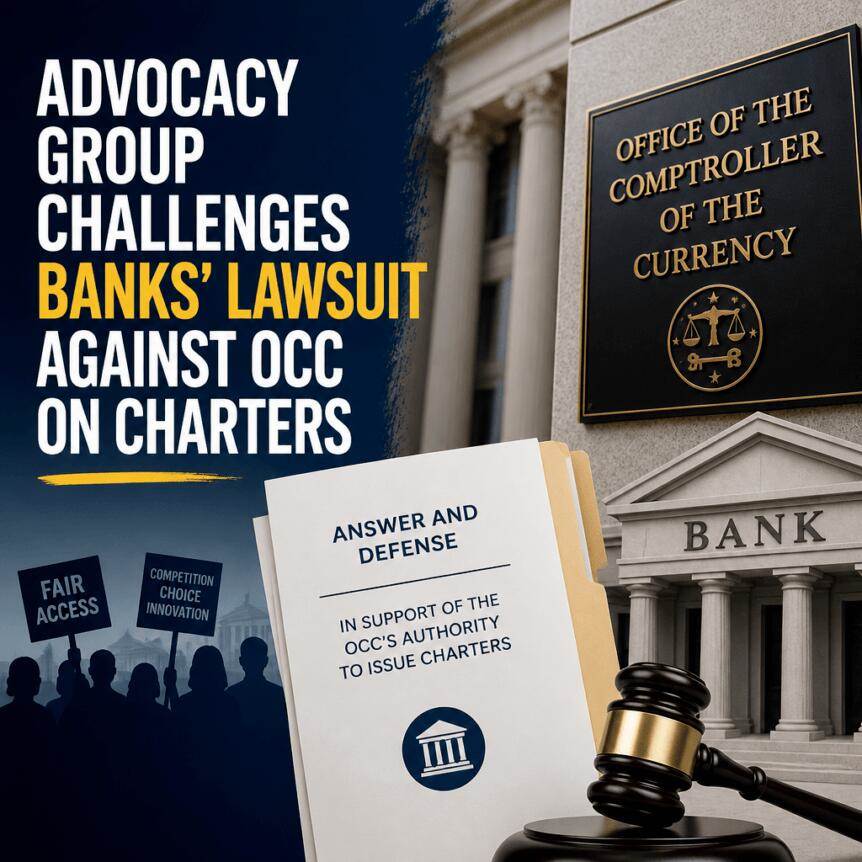
加密行业组织“加密创新委员会”(CCI)公开表态,支持美国货币监理署(OCC)向多家与加密货币相关的企业颁发国家信托特许状。CCI认为,由独立社区银行家协会(ICBA)提起的诉讼旨在延缓金融行业的创新步伐。
CCI首席执行官金基勋(Ji Hun Kim)在周一发表的评论中指出,ICBA的行动是“对国家信托特许状、支付创新以及金融服务竞争的明显抵制”。该法律诉讼于周五在美国哥伦比亚特区联邦地区法院提交,指控OCC在未设立通常适用于银行的充分保障措施和合规要求的情况下,批准了包括加密公司在内的实体获得特许状。
核心要点
- CCI主张,ICBA的诉讼意在遏制OCC支持的国家信托特许状及相关支付创新。
- ICBA的诉讼辩称,OCC在未提供足够 safeguards(保障措施)和银行合规标准的情况下,批准了类银行特许状。
- OCC的正式批准及有条件批准涵盖多家加密企业,包括Circle、Ripple、Fidelity Digital Assets、BitGo和Paxos,以及World Liberty Financial。
- 部分立法者批评这种做法可能允许交易所无需承担银行义务即可获取联邦层面的信誉背书。
- CCI characterized the lawsuit as an anti-innovation move.
CCI frames litigation as anti-innovation behavior
As the debate over OCC charter approval grows fierce, CCI's supportive stance has become increasingly prominent. Kim described the ICBA's lawsuit as an attempt to block national trust charters-which are designed to allow institutions to operate under a federal framework-while limiting competitive pressure on traditional financial services.
CCI's position puts it in the camp that supports the OCC's expansion of eligibility for U.S. financial industry charter roles. Previous reports pointed out that there is widespread support within the industry for the OCC's approval and conditional approval decisions for crypto companies seeking national trust charters.
However, this support also faces political resistance. Some lawmakers believe that certain crypto companies may seek to gain credibility and regulatory access associated with bank-like charters while circumventing protections and obligations that they consider necessary for depositaries, such as Community Reinvestment Act (CRA) obligations, merger regulation, capital and liquidity standards, and FDIC insurance.
Specific allegations in ICBA lawsuit
ICBA filed a complaint on Friday challenging the OCC's charter decision. According to related reports, the ICBA has accused the OCC of approving entities, including crypto companies, to obtain Bank of America charters without setting in place adequate safeguards or compliance measures typically linked to bank supervision.
ICBA President and CEO Rebecca Romero Rainey said in a statement that Congress did not establish the National Trust Charter to allow crypto companies to obtain the credibility conferred by the federal bank charter through a "side door" approach, while at the same time avoiding community reinvestment obligations, merger supervision, capital and liquidity standards, and FDIC insurance applicable to deposit-keeping institutions.
For investors and market participants, the actual impact is clear: the charter structure affects how a company manages risk, compliance requirements, and how it interacts with the financial system. If the legal challenge is successful, it could slow or reshape the path for crypto companies to seek concession status; if the defense is successful, it will further consolidate the OCC's broader interpretative approach.
The OCC approval list includes major crypto brands and World Liberty Financial
According to previous detailed reports, the OCC's recent decisions involve a number of cryptocurrency-related companies, including World Liberty Financial, Circle, Ripple, Fidelity Digital Assets, BitGo and Paxos, all of which have been approved or conditionally approved.
One of the approvals that has attracted special attention from lawmakers is related to World Liberty Financial. The decision was reportedly made under the leadership of OCC head Jonathan Gould. Gould is a Trump nominee and will serve from July 2025.
In addition, the report also pointed out that World Liberty Financial was the subject of investigation for suspected connections with the United Arab Emirates royal family. While these investigations do not directly determine whether OCC charter approvals meet legal standards, they can shape political pressure around regulators and increase scrutiny of the licensing process. [TAG
At the same time, the broader policy debate also includes concerns among lawmakers that some crypto companies may try to operate like banks without accepting a full framework of safeguards and obligations.
Greater regulatory issue: Access to the banking system vs. Bank obligations
At the heart of the controversy lies an asymmetry: crypto companies pursuing charters may be seeking federal authorization and the operating credibility it brings, while community bankers and some policymakers believe that these benefits should not be enjoyed without the same level of supervision and consumer protection expectations imposed on deposit-keeping institutions.
CCI's argument-that ICBA's lawsuit is an attempt to resist charter-driven competition-suggests that existing legal avenues should allow qualified applicants to expand the coverage of crypto services in the U.S. financial system. In contrast, the ICBA complaint argued that the OCC's approval circumvented elements of bank supervision that Congress intended to tie to the identity of depositories and related requirements.
This is crucial for the industry because the results of the charter not only affect the corporate image. Concession status can change relationships with bank partners, the structure of compliance procedures, and how regulators assess capital, liquidity and supervision. For traditional institutions, the lawsuit is also about maintaining fair competition: ensuring that competition takes place within comparable regulatory expectations.
Next, market participants should pay close attention to how the court handles ICBA's claims and whether litigation will affect ongoing charter approvals or additional conditions. Regardless of the outcome, the case is likely to further clarify through legal interpretation the boundaries between the "bank-like" trust framework and the obligations attached to comprehensive depositary supervision.