Exchange Ranking
 Top Exchanges
 24h Volume Ranking
 Popularity Ranking
 Exchange BTC Balance
 Proof of Reserves
 Decentralized Exchanges
 Funding Rate
 Funding Heatmap
 Liquidation Data
 Max Pain
 Long/Short Ratio
 Whale L/S Ratio
 Binance/Okex/Huobi L/S
 Bitfinex Margin L/S
 ETF Tracker
 Solana ETF
 XRP ETF
 Hong Kong ETF
 Bitcoin Treasuries
 Crypto Reversal
 Ethereum Reserves
 HyperLiquid Wallet Analysis
 Hyperliquid Whale Watch
 Large Transactions
 On-chain Movement
 Bitcoin ROI
 Stablecoin Market Cap
 Options Analysis
 News
 Articles
 Economic Calendar
 Features
 Wallet
 Contract Calculator


 Security
 Collections
 Watchlist
 Following
 ETH
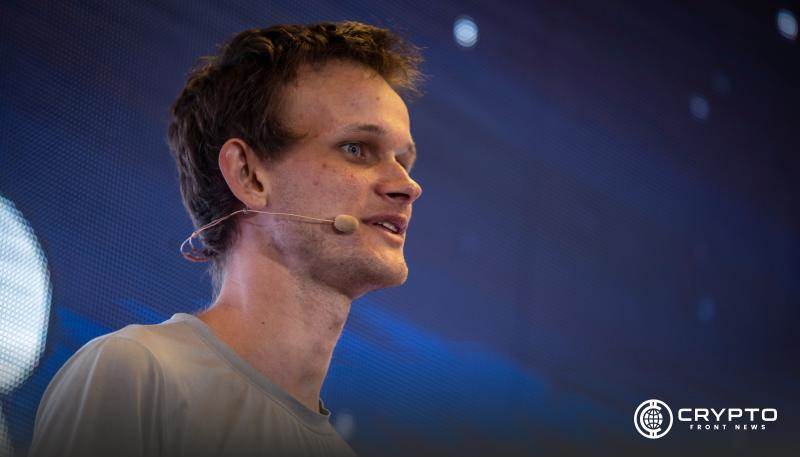
Ethereum founder warns: AI-driven mathematical breakthroughs could threaten the security foundations of elliptic curve and lattice cryptography
Ethereum founder Vitalik Buterin pointed out that artificial intelligence-accelerated mathematical research could pose risks beyond quantum computing. At the same time, Bitcoin security researcher Justin Drake called on the industry to take controlled measures to migrate to a new address and stressed the need to be cautious when operating wallets and avoid hasty actions.
New risks brought by AI mathematical advances
Buterin said that AI-accelerated mathematical development may cause new security risks behind the Elliptic Curve Digital Signature Algorithm (ECDSA), trellis cryptography and other encryption systems. He pointed out that many users have a misunderstanding that even if the elliptic curve fails, the hash algorithm and lattice system are still safe. However, he warned that the security of trellis ciphers could also be severely affected by major advances in AI mathematics.
Buterin compares this risk with progress in the field of integer factorization. Decades of research have significantly reduced decomposition costs through continuously optimized number field sieve methods. He suggested that similar hidden weaknesses could exist in elliptic curves and lattice systems, and that robots might be able to discover mathematical shortcuts that humans have not yet noticed.
Ethereum transforms into pure hash cryptography
Over the past year, Ethereum's streamlined development roadmap has gradually shifted to cryptographic solutions that use only hash-based. This strategy deliberately avoids lattice-based commitment mechanisms in lattice structures, ML-DSA, Falcon algorithms, and zero-knowledge proofs.
Currently, the signature systems used by Ethereum include hash-based schemes such as WOTS and SPHINCS+. But Buterin also pointed out that the implementation of public key encryption still faces challenges because pure hash structures are difficult to provide the required trapdoor characteristics. Implementing trapdoor structures often requires relying on systems such as group theory, homologous mapping, lattice or coding theory. He believes that in the long term, structured cryptography may require a larger key size.
In addition, Buterin believes that as the security parameters increase, hash-based systems may be more efficient than lattice-based systems, and the possibility of making major breakthroughs in hashing algorithms is relatively low.
Drake calls for controlled wallet migration strategies
Drake calls on the blockchain industry to plan for a "war readiness model" to enhance security through controlled asset migration. He recommends that users use brand new addresses with those public keys hidden behind the hash value. For large holders, Drake recommends moving funds to an address where a transaction has never been signed; after completing a signature, the remaining funds should be moved again to a new address.
Despite the above suggestions, Drake emphasized that users should not rush it. He pointed out that a hasty migration operation could lead to greater losses and cited Buterin's warning about missteps in the migration. Drake believes that before quantum computers truly have practical value, the ECDSA algorithm may be the first to be cracked. Recent mathematical breakthroughs and the latest research results of OpenAI are reasons for being more cautious.
He also urged agencies to strengthen cold storage protection and recommended rotating signature keys regularly. For multi-signature systems, Buterin recommends an off-chain confirmation mechanism to reduce the exposure risk of public keys. Drake also emphasized the application potential of SPHINCS in hash-based multi-signatures and called for accelerating the research and development process of cryptography in the post-AI era.