Exchange Ranking
 Top Exchanges
 24h Volume Ranking
 Popularity Ranking
 Exchange BTC Balance
 Proof of Reserves
 Decentralized Exchanges
 Funding Rate
 Funding Heatmap
 Liquidation Data
 Max Pain
 Long/Short Ratio
 Whale L/S Ratio
 Binance/Okex/Huobi L/S
 Bitfinex Margin L/S
 ETF Tracker
 Solana ETF
 XRP ETF
 Hong Kong ETF
 Bitcoin Treasuries
 Crypto Reversal
 Ethereum Reserves
 HyperLiquid Wallet Analysis
 Hyperliquid Whale Watch
 Large Transactions
 On-chain Movement
 Bitcoin ROI
 Stablecoin Market Cap
 Options Analysis
 News
News Articles
 Economic Calendar
 Features
 Wallet
 Contract Calculator


 Security
 Collections
 Watchlist
 Following
 BTC
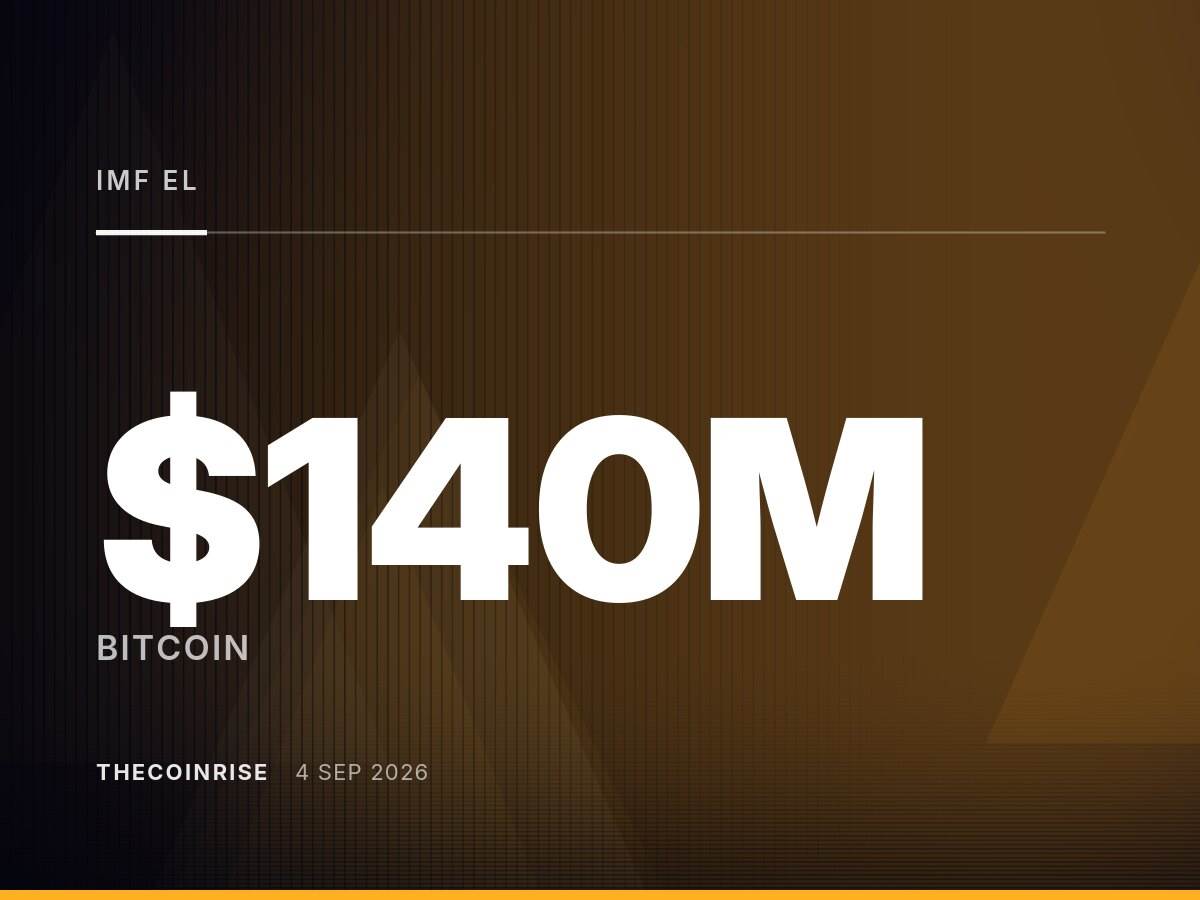
BTC The International Monetary Fund confirms that the growth in El Salvador's bitcoin reserves stems from private donations
On Thursday, the International Monetary Fund (IMF) issued a statement saying that since mid-2025, El Salvador has not used public funds to increase its bitcoin reserves. The agency confirmed that the new bitcoins came from private donations rather than government purchases.
The announcement came with news that the IMF and El Salvador reached a staff-level agreement on the second and third joint reviews of a $1.4 billion loan project. The IMF said documents provided by Salvadoran authorities confirmed that Bitcoin accumulation came from private donations and that the increase in the country's Bitcoin holdings did not reflect additional purchases funded by government resources.
In addition, the IMF also involved the state-built bitcoin wallet "Chivo". Currently, most ownership and operational control of "Chivo" has been transferred to private operators, while the government retains only a minority stake and assumes custody responsibilities. The IMF does not expect further Bitcoin accumulation beyond recorded donations.
Origin of the controversy: The game between legal status and international aid
In 2021, El Salvador designated Bitcoin as legal tender and began purchasing Bitcoin for the public treasury. However, this policy conflicts with future IMF projects, because the IMF generally believes that volatile, unsecured assets on sovereign balance sheets pose risks to foreign exchange reserves and fiscal stability.
In February 2025, the IMF approved a 40-month Extended Financing Arrangement (EFF) totaling US$1.4 billion, with an initial allocation of approximately US$113 million. Multilateral lending institutions such as the World Bank and the Inter-American Development Bank are expected to provide additional funding, bringing the total financing scale of the project over its lifetime to exceed US$3.5 billion.
In order to secure the deal, El Salvador agreed to set strict limits on its Bitcoin activities. In December 2024, before formal approval, the government agreed to make Bitcoin acceptance in the private sector voluntary, require taxes to be settled in U.S. dollars, and withdraw from government involvement in "Chivo." In March 2025, the IMF issued a further document prohibiting any form of "voluntary accumulation" of Bitcoin by the public sector.
President Naib Buker has publicly opposed this. He claimed that purchases "will not stop" and that the government will continue to buy at least one bitcoin a day. This commitment to daily purchases is publicly tracked by the National Bitcoin Office and becomes a visible indicator of how far the country is compromising on IMF terms.
First Review and Continuing Questions
On June 27, 2025, the IMF completed its first review of the extended financing arrangements, releasing approximately 86.16 million Special Drawing Rights (SDRs), or approximately US$118 million, bringing the total cumulative allocation to US$231 million. The IMF believes that the project is performing solidly and that fiscal and reserve goals are achieved within margins of safety.
However, after that, the National Bitcoin Office continued to issue daily cumulative updates, which did not fully align with the March restrictions. In July 2025, the IMF gave a preliminary explanation, stating that no new bitcoins had actually been purchased since the agreement was signed in December 2024, and that the reported increase was the result of integrating existing coins in different government wallets.
This explanation remained true for several months. Subsequently, in November 2025, El Salvador reported that it had acquired 1,090 bitcoins worth approximately US$100 million, which directly raised questions about the nature of compliance. At the time, IMF representatives told the media that the IMF would not conduct "real-time comments" and would assess compliance in a timely manner.
Developments this week
From late 2025 to early 2026, IMF Special Envoy Enrique Torres described the negotiations under the second review as making progress against the backdrop of improving economic growth, including record remittances and investment, and a projected GDP growth rate of about 4%. The IMF also confirmed that negotiations on the sale of the state-owned "Chivo" wallet were advancing, with a focus on transparency and the protection of public resources.
Thursday's announcement resolved a specific question that has been pending since November: Where did the new bitcoins come from? The IMF's answer is that growth is funded by private donors rather than the treasury, and that the ownership structure of Chivo now reflects the exit mechanism promised by the government as early as December 2024.
According to data from the National Bitcoin Office's Public Reserve Tracker, El Salvador currently holds approximately 7,764 bitcoins. With Bitcoin prices approaching $80,900, the reserve is worth approximately $628 million. This balance is well above the level it held when the IMF agreement came into effect, and the IMF now attributes the gap entirely to donations rather than state purchases.
Future Outlook
This clarification allows IMF projects to continue without compliance disputes, which is critical to continuing disbursement up to the full US$1.4 billion facility. It also provides Bucker with a way to continue maintaining the country's Bitcoin narrative without violating IMF conditions, as donated coins do not fall within the scope of a ban on public sector purchases.
However, the cost is that El Salvador's Bitcoin policy is now operating on a narrower track than it was in 2021. Public-sector purchases have ended, private sector acceptance of Bitcoin has become voluntary rather than mandatory, and "Chivo" has largely escaped government control. Although reserves are still growing, the mechanism behind them has fundamentally changed from the original fiat tender experiments.