Exchange Ranking
 Top Exchanges
 24h Volume Ranking
 Popularity Ranking
 Exchange BTC Balance
 Proof of Reserves
 Decentralized Exchanges
 Funding Rate
 Funding Heatmap
 Liquidation Data
 Max Pain
 Long/Short Ratio
 Whale L/S Ratio
 Binance/Okex/Huobi L/S
 Bitfinex Margin L/S
 ETF Tracker
 Solana ETF
 XRP ETF
 Hong Kong ETF
 Bitcoin Treasuries
 Crypto Reversal
 Ethereum Reserves
 HyperLiquid Wallet Analysis
 Hyperliquid Whale Watch
 Large Transactions
 On-chain Movement
 Bitcoin ROI
 Stablecoin Market Cap
 Options Analysis
 News
 Articles
 Economic Calendar
 Features
 Wallet
 Contract Calculator


 Security
 Collections
 Watchlist
 Following
 BTC
Bitcoin closes in the third quarter: The fourth-quarter game behind the 43% increase
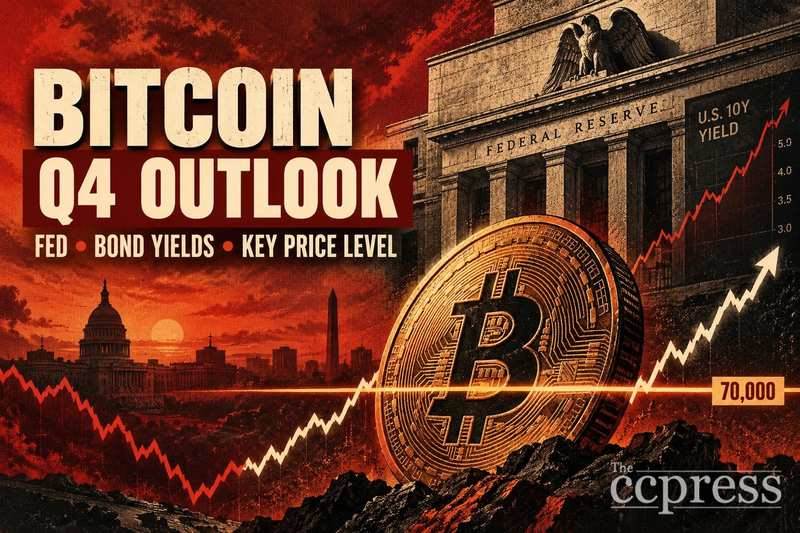
In the third quarter of 2025, Bitcoin closed strongly with a quarterly increase of 43%. This performance was mainly due to the market's rising expectations for the Federal Reserve to cut interest rates. Now that the door is open for the fourth quarter, the market is facing a more serious question: Can this rally last? Or will the macro wind direction reverse?
The core forces driving the third-quarter rally-namely, the response to the Federal Reserve's policy expectations and U.S. Treasury yields-will also become key variables in determining the future direction of Bitcoin. At present, these two factors are in dynamic changes and the dust has not yet settled.
The strong rebound in the third quarter establishes the starting point for the fourth quarter
The 43% recovery in a single quarter is not a slow and moderate increase, but a true reflection of the market's repricing of interest rate cuts expectations. In the process, Bitcoin absorbs liquidity signals faster than most other asset classes. However, a rebound based on monetary policy hopes is also exposed to the risk of policy disappointment. Entering the fourth quarter, this risk remains intact.
Bitcoin ETF inflows reached $6.34 billion in the third quarter, indicating that institutional demand provided support for the macro tailwind, but the flow of funds could quickly reverse once market sentiment changes. When tracking this trend, analysts point out that a key price level has become a technical watershed that distinguishes trend continuation and correction. Whether Bitcoin stabilizes above that level or fails to recover after a correction will define the trading landscape in the fourth quarter.
How the Federal Reserve and bond yields guide Bitcoin's direction in the fourth quarter
The Federal Reserve's FOMC meeting for the rest of 2025 is the clearest catalyst on the calendar. A dovish turn, or even a dovish signal that remains just rhetoric (even if there is no actual interest rate cut), often results in a compression of the opportunity cost of holding risky assets. Structurally, this is good for Bitcoin.
The opposite scenario is equally possible. If inflation data remains sticky and the Fed hints at rate cuts less frequently than the market has priced, Treasury yields could climb. Rising yields attract capital to bonds and increase discount rates applied to speculative assets, including cryptocurrencies. When the Fed sends a tightening signal, the crypto market responds quickly.
The interaction between these two variables is nonlinear. Even if the Fed leaves interest rates unchanged, bond yields may still rise due to increased fiscal supply or changes in term premiums. This dynamic adds a layer of uncertainty that cannot be captured by purely focusing on the Fed's movements. Bitcoin's performance in the fourth quarter depends on the common direction of movement of these two variables, rather than a single factor.
Geopolitical shocks further complicate the situation. Bitcoin has previously come under pressure from soaring oil prices linked to tensions in the Middle East, suggesting that in the short term, macro stress events can override the impact of the interest rate cut narrative.
Determine the key price level in the fourth quarter
When there is uncertainty about macro catalysts, the level of technology is particularly significant. If the Fed fulfills its interest rate cut expectations and yields weaken, Bitcoin needs to confirm this macro tailwind by holding on to or breaking through its key structural levels. Acceptance of prices above the threshold will verify that the recovery in the third quarter is a trend, not just a rebound.
If rejection is encountered at this level, especially with a hawkish surprise from the Fed or a surge in yields, the narrative will shift sharply. Once it falls below this level, Bitcoin will fall into a situation where macro conditions and technical structure are unfavorable to it.
The decision tree in the fourth quarter can be boiled down to three scenarios: first, the Federal Reserve is loose and Bitcoin holds key levels (bullish continuation); second, the Federal Reserve is inactive or has a hawkish accident, causing Bitcoin to fall below key levels (bearish reversal); Third, signals are mixed, resulting in a volatile quarter and no clear trend state of range consolidation. The 43% increase in the third quarter set a high threshold for continued momentum, and the macro environment entering October made it difficult to cross this threshold.
The results of the next FOMC meeting may be the most important input variable. Will it verify the trade that drove the rate cut in the third quarter, or will it take away the foundation?