Exchange Ranking
 Top Exchanges
 24h Volume Ranking
 Popularity Ranking
 Exchange BTC Balance
 Proof of Reserves
 Decentralized Exchanges
 Funding Rate
 Funding Heatmap
 Liquidation Data
 Max Pain
 Long/Short Ratio
 Whale L/S Ratio
 Binance/Okex/Huobi L/S
 Bitfinex Margin L/S
 ETF Tracker
 Solana ETF
 XRP ETF
 Hong Kong ETF
 Bitcoin Treasuries
 Crypto Reversal
 Ethereum Reserves
 HyperLiquid Wallet Analysis
 Hyperliquid Whale Watch
 Large Transactions
 On-chain Movement
 Bitcoin ROI
 Stablecoin Market Cap
 Options Analysis
 News
News Articles
 Economic Calendar
 Features
 Wallet
 Contract Calculator


 Security
 Collections
 Watchlist
 Following
 ZEC
ZEC Core Points
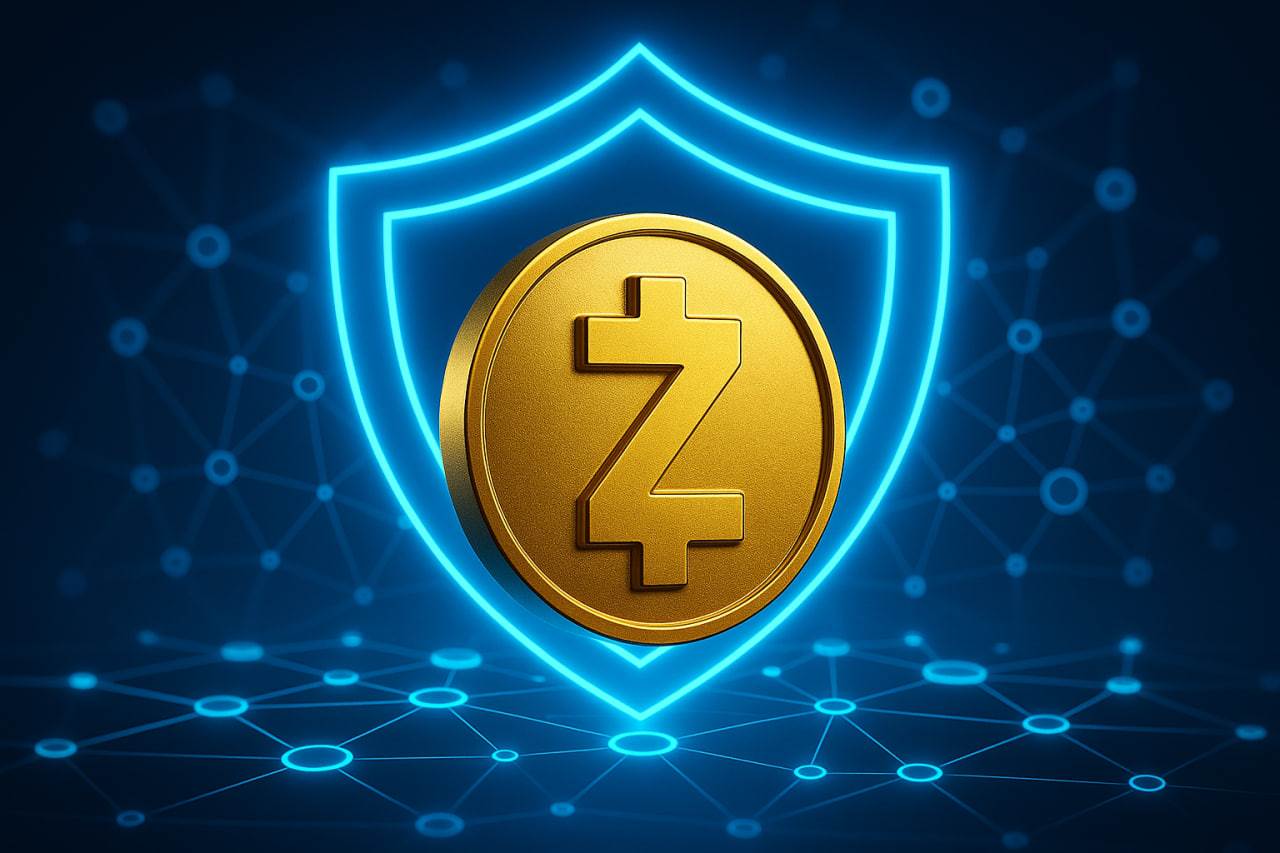
Buyers defend near the $1,070 Fibonacci support level. The daily relative strength index (RSI) has cooled down, but remains in a positive range. The Zcash Spot ETF (ZCSH) reported inflows of more than US$70 million. Focus on the next stage will include the NU7 vote and the Federal Reserve's decision-making.
Zcash pulls back after a 285% gain
Zcash pulls back from a previous strong rally that pushed the token price from a June low of approximately $337.42 to a September high of nearly $1,297. As of press time on September 12, ZEC was trading at approximately $1,150, down approximately 11% from its peak.
The decline occurred after ZEC broke through the $1,000 mark, a trend that had been discussed in previous Zcash price analysis. As that threshold has been crossed by the market, the current focus has shifted to $1,070-the 23.6% Fibonacci retracement level of the June-September gain and the first clear support reference point ZEC encountered during the pullback.
Buyers are currently successfully holding the $1,070 defense line
During the decline from $1,297, ZEC tested the $1,070 area, and then buyers stepped in and pushed the price back above $1,100. For now, this rebound maintains the structural integrity of higher lows, but the intraday rebound does not constitute a sign of trend confirmation.
If prices can close above this level and continue to trade above this level thereafter, the possibility of support formation will be enhanced. On the contrary, if the daily closing price falls below $1,070, the next retracement level of $930 will become the focus of attention; if buyers can recover that level before the close of the day, the impact of the short-term down-shadow line will be relatively small.
Kinetic energy has cooled from extreme levels
The 14-day Relative Strength Index (RSI) has retreated from the overbought reading during the strongest rally to 65, while its moving average remains high at 73.8. This suggests that momentum cooled down after the ZEC approached $1,300, but the RSI remained above 50, keeping the daily trend constructive rather than confirming that the adjustment was over.
ZEC is also well above its main moving average. The 50-day simple moving average is around $703, while the 100-day and 200-day averages are around $584 and $477, respectively. The most recent major moving average (50-day moving average) is about $450 away from current prices. This means there is a broad area between the 50-day moving averages around $1,070 and $700 that lacks support from comparable daily trends, making Fibonacci levels a more useful marker in further corrections.
Prices to pay attention to if $1,070 falls
- $1,070:23.6% retracement level and immediate support.
- $930:38.2% retracement level, which is the next key level below $1,000.
- $817: Measure the midpoint of gains, close to the consolidation zone in early September.
- $704:The 61.8% retracement level is almost aligned with the 50-day moving average.
A daily close below $1,070 will weaken the immediate bullish pattern and could bring $930 back into view. But that won't erase the entire gain since June, as ZEC will still be well above its long-term moving average. These levels demonstrate the speed at which the technical side changes if the first pullback fails to hold. The bullish alternative requires buyers to regain recent supply areas rather than just stop a deeper decline.
On the upside side, ZEC first needs to recover the $1,200-$1,220 range, where sellers have recently appeared. Continued breakthroughs in this area will bring the high of $1,297 back into focus.
A $100 million ZCSH creation is not a $100 million spot buy
A September 8 US Securities and Exchange Commission (SEC) document confirmed that DCG International Investments exchanged 85,705.33 ZECs for approximately $100 million worth of Zcash ETF (code: ZCSH) shares. The transaction values the contributing ZEC at approximately $1,167 per piece, close to ZEC's current trading area. This is useful background information on the transaction rather than evidence of a $100 million spot market purchase: as the recipient of transactions by authorized participants, DCG (Grayscale and its affiliates) received shares of ZCSH through authorized participants in exchange for the tokens they already held.
In its press release, Grayscale said that after excluding DCG's $100 million contribution, ZCSH had accumulated inflows of more than $70 million in the first two weeks. The asset management scale (AUM) of the product has exceeded US$500 million, and options began trading on NYSE Arca on September 8.
These data should not be considered interchangeable. Net inflows are a better measure of demand from new investors, and the size of assets under management also reflects the value of ZEC held by funds. This related transaction increased the size of the fund but did not create corresponding spot market demand. The price effect depends on how authorized participants obtain the ZEC used to create new shares. When participants need to purchase tokens in the market, cash inflows increase spot demand; but when creations are funded by existing inventory or contributed tokens (such as transactions in DCG), the direct impact may be small.
The NU7 vote is crucial, but it will not immediately change the network
The importance of fund data is whether there is continued over-the-counter demand follow-up. The next catalyst will test this need from two different directions: first Zcash governance, and then macro policy.
The NU7 community voting will close at 19:00 UTC on September 14. The voting itself will not change the network, but it can show whether the community supports the direction of the next upgrade. Proposals include shortening the block time from 75 seconds to 25 seconds, changing the ZEC release schedule, and setting a timetable to phase out older versions of Sprout transactions.
Once the NU7 vote ends, attention will shift from Zcash-specific events to the broader market. The Federal Reserve will meet on September 15-16, and its statement, forecast and press conference are scheduled to be released on September 16. The latest U.S. inflation report has raised market expectations for interest rate hikes. No one knows in advance how the ZEC or the broader crypto market will react, or how much of the expected decisions are already reflected in prices. Traders need to pay close attention to the Fed's forecasts and its comments on subsequent meetings, as well as immediate market reactions, rather than just viewing interest rate decisions as clear one-way signals.
Following this rapid rise, broader risk aversion may make ZEC more sensitive to selling pressures, even if the outlook for NU7 remains unchanged.
Callbacks are testing the quality of ZEC requirements
ZEC's rebound has created two different types of requirements to evaluate. ZCSH's non-related party inflows point to over-the-counter investor interest, while DCG's $100 million token for shares transaction increased fund assets but did not generate equivalent spot purchases. As prices begin to roll back, this distinction becomes even more important: huge asset size numbers alone cannot show how much independent demand is ready to absorb selling pressure.
Therefore, the $1,070 area is more than just a Fibonacci line. It was a key point for market testing to determine whether the demand built up during the rebound was strong enough to support the ZEC through cyber governance votes and potentially volatile Fed decisions. If this position is held, it will strengthen the argument that the rally is forming a foundation; if it fails, the market may need to find demand at a lower level.