Exchange Ranking
 Top Exchanges
 24h Volume Ranking
 Popularity Ranking
 Exchange BTC Balance
 Proof of Reserves
 Decentralized Exchanges
 Funding Rate
 Funding Heatmap
 Liquidation Data
 Max Pain
 Long/Short Ratio
 Whale L/S Ratio
 Binance/Okex/Huobi L/S
 Bitfinex Margin L/S
 ETF Tracker
 Solana ETF
 XRP ETF
 Hong Kong ETF
 Bitcoin Treasuries
 Crypto Reversal
 Ethereum Reserves
 HyperLiquid Wallet Analysis
 Hyperliquid Whale Watch
 Large Transactions
 On-chain Movement
 Bitcoin ROI
 Stablecoin Market Cap
 Options Analysis
 News
News Articles
 Economic Calendar
 Features
 Wallet
 Contract Calculator


 Security
 Collections
 Watchlist
 Following
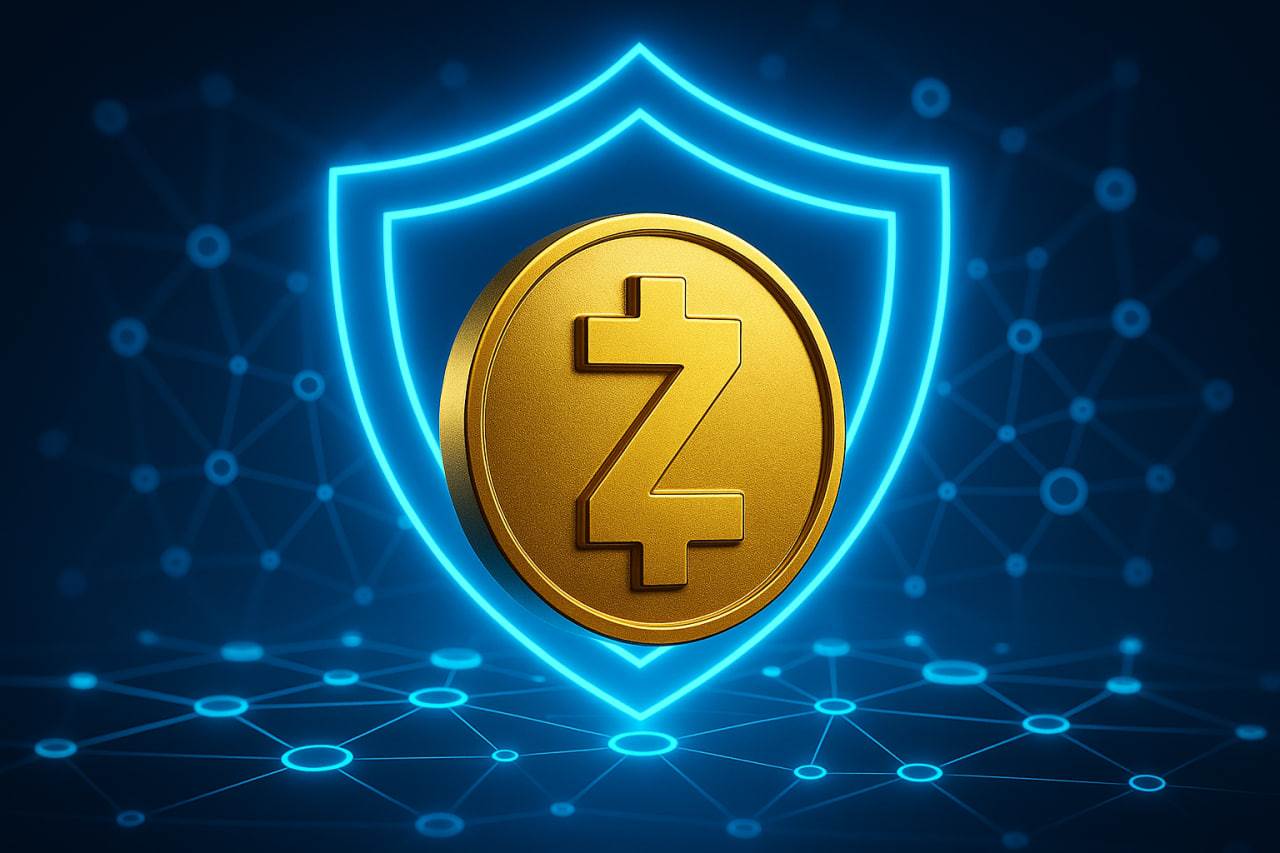
Understanding Zero-Knowledge Proofs
Zero-Knowledge Proofs (ZKP) is a cryptographic protocol that enables one party (called a prover) to convince another party (called a verifier) that a particular statement is true without having to disclose any details about the statement itself. This concept was first proposed in a 1985 paper titled \"Knowledge Complexity of Interactive Proof Systems\" and has since been developed and improved for various applications.
In ZKP, the prover strives to establish the statement, and the verifier is responsible for verifying the statement. The prover can prove to the verifier that the statement is accurate without disclosing any other information about the statement. This is achieved by providing evidence or a small amount of information that the verifier can verify to ensure that the statement is true.

Why is zero-knowledge proof important?
Zero-knowledge proofs are a development in applied cryptography because they are committed to enhancing the security of personal information. For example, consider how to prove a claim (e.g.,\"I am a citizen of Country X\") to another party (e.g., the service provider). You usually need to provide \"evidence\" to support your claims, such as a national passport or driver\'s license.
However, this approach has its drawbacks, mainly a lack of privacy. Personally identifiable information (PII) shared with third-party services is stored in central databases that are vulnerable to hackers. As identity theft becomes a key issue, people are calling for more privacy-protected ways to share information, and this is where ZKP can leverage it.
How does zero-knowledge proof work?
At a high level, zero-knowledge proof works by letting the verifier ask the prover to perform a series of actions that can be accurately performed only when the prover knows the underlying information. Prover and verifier interact in multiple rounds of the protocol, and in conclusion, the verifier develops confidence in the authenticity of the statement without having to learn any additional information about the secret.
Applications of zero-knowledge proofs
Zero-knowledge proofs have attracted attention in various fields, especially in the field of blockchain technology. They allow information to be verified without revealing the underlying data and are designed to provide a degree of security and privacy. For example, in the context of blockchain networks, the only information ZKP reveals on the chain is that certain hidden information is valid and can be known with a high degree of certainty by the prover.
Shortcomings of zero-knowledge proofs
Zero-knowledge proofs have certain shortcomings. These include hardware costs related to the computing power required to generate and verify certificates, certificate verification costs, and trust assumptions. In addition, quantum computing poses potential threats that could undermine the cryptographic security provided by ZKP.