Exchange Ranking
 Top Exchanges
 24h Volume Ranking
 Popularity Ranking
 Exchange BTC Balance
 Proof of Reserves
 Decentralized Exchanges
 Funding Rate
 Funding Heatmap
 Liquidation Data
 Max Pain
 Long/Short Ratio
 Whale L/S Ratio
 Binance/Okex/Huobi L/S
 Bitfinex Margin L/S
 ETF Tracker
 Solana ETF
 XRP ETF
 Hong Kong ETF
 Bitcoin Treasuries
 Crypto Reversal
 Ethereum Reserves
 HyperLiquid Wallet Analysis
 Hyperliquid Whale Watch
 Large Transactions
 On-chain Movement
 Bitcoin ROI
 Stablecoin Market Cap
 Options Analysis
 News
News Articles
 Economic Calendar
 Features
 Wallet
 Contract Calculator


 Security
 Collections
 Watchlist
 Following
 BTC
BTC Against the background of the continuous inflow of Bitcoin ETF funds and the rapid expansion of stablecoins and tokenized assets, top venture capitalists \'judgment on the direction of the industry has attracted increasing attention. In mid-December, a16z released its annual \"Grand Blueprint for 2026\", which no longer simply discusses the price cycle, but outlines the technical and business priorities for the next two years from infrastructure, application layer to institutional environment. This blueprint combines real data with ongoing market changes to provide a clear list of concerns for the encryption and technology industries and points the direction for long-term trends in 2026.

1. Remaking of payments, stablecoins and the financial trajectory
Argument: stablecoins will become the settlement layer of the Internet, not just the settlement layer of cryptocurrencies.
The story of stablecoins has passed the proof-of-concept stage. Today, with annual trading volumes reaching trillions of dollars, the question is no longer whether stablecoins are effective, but whether they can seamlessly interface with the real-world financial system.

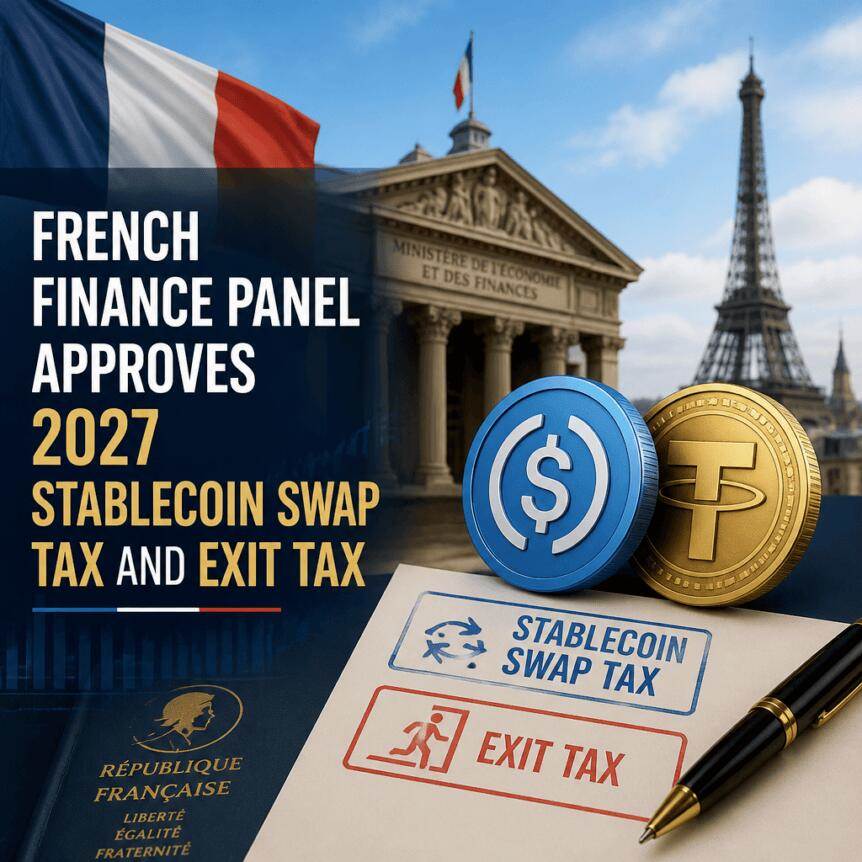
a16z\'s discussion is crucial here: stablecoins are not just money, but also an upgrade of the ledger. If stablecoins can coexist with existing systems, providing real-time settlement, programmability and global coverage, banks and fintech companies will not need to rewrite traditional software that has been in use for decades. This shifts the focus of value capture from issuing stablecoins to distribution, compliance and integration.
Who will win in 2026?
● Embedded payments.
● Card issuance (new encryption bank) and wallet.
● Bank-level compliance +API.
● Global, programmable settlement.
Concern list:
● Circle(USDC): Regulatory legitimacy + distribution + liquidity advantages. Focus: Payment API, bank integration, inter-agent use.
● m0: zero-fee USDC issuance based on modular infrastructure. Worth noting: L2 native casting, stateless proxy, browser-level stablecoin user experience.
● Ether_fi: The hottest new bank competitor in 2026; providing revenue through tokenization of treasury, cash returns and seamless payments; connecting the growth of cryptocurrencies and fiat currencies.
● Plasma: Boasted as the first Neobank built entirely around stablecoins, it aims to satisfy global users (especially emerging markets) their daily financial dependence on the U.S. dollar to support stablecoins.
● Stablecoin(Bridge)| Stripe integration: A cash and deposit infrastructure that abstracts the cryptographic layer. Focus: Integration of regional payment tracks.
● x402 Ecosystem: Focus: Promote the progress of programmable payments that are \"served by agents\" and \"executed by agents\" through native HTTP-level settlement.
2. RWA: Native issuance, not just tokenization
Argument: tokenization alone is not enough. To truly improve efficiency, funding sources must be shifted to the chain.
The first wave of real-world asset applications focused on tokenizing existing off-chain instruments (such as loans, treasury bonds and credit products) and distributing them to cryptocurrency users. While this improves accessibility, it largely retains original inefficiencies: opaque underwriting processes, high service costs, slow settlement speeds, and fragmented liquidity. In many cases, tokenization is just a new packaging for old processes.
a16z\'s core insight is that the real advantage of cryptocurrencies lies not in copying traditional financial structures, but in reshaping the credit system at its source. When loans are initiated on the chain, underwriting logic becomes programmable, service costs drop significantly, and risks can be priced and monitored in real time. It is here that cryptocurrencies are no longer just a distribution channel, but are beginning to become financial infrastructure.
Who will win in 2026?
● On-chain underwriting
● Transparent risk pricing
● Compliance-compliant credit mechanisms
● Substantial liquidity (usually achieved through Perps of Perps of Perps)
List of concerns:
● Centrifuge: On-chain credit tracks for real-world assets; Focus: institutional transaction flows and default performance.
● Blackrock(BUIDL): Tokenized money market funds on Ethereum; Focus: The amount of funds flowing into tokenized treasury bonds and the speed of adoption of traditional finance (TradFi).
● Maple: Institutional lending with underwriter governance; Focus: credit line expansion and net yield versus default risk.
● Plume: Composable credit infrastructure for programmable debt; Focus: Custom underwriting logic and DAO use cases.
● Pendle: Income divestiture of tokenized earnings; Focus: RWA\'s PT/YT adoption rate in treasury bonds and private credit.
● Ondo: Tokenized treasury bonds and credit funds; Focus: compliant USDC-RWA pipeline and L2 expansion.
● Backed: Regulated ETF and bond token packaging; Focus: DeFi-native compliance track.
3. The Internet becomes a bank (intelligent agent and payment)
Argument: As AI agnet begins to conduct autonomous transactions, payments can no longer be used as an external system attached to applications. They must be internet-native: instant, programmable, and fully automated.
The key shift is from user-driven execution to intent-driven execution. Agents no longer click buttons or approve invoices; they identify conditions, fulfill obligations, and trigger actions on their own. In this model, traditional payment processes (invoicing, batch processing, reconciliation, settlement windows) are no longer operational details, but structural bottlenecks.

Blockchain introduces a different model. Smart contracts can already achieve final global settlement in seconds. Emerging underlying technologies further advance this process, making value transfer more responsive and composable: Agents can pay other agents for data, calculations, or services immediately after a task is completed, and rules are embedded directly in the code without having to go through intermediaries. Enforcement. Money is no longer a separate operating layer, but is beginning to operate like network traffic, which the Internet can natively process.
Who will win in 2026?
● Agent native identity.
● Programmatic payment track.
● User experience without \"human\" intervention
Concern list:
● Catena: AI Agent identity and compliance infrastructure; establishing the \"Know Your Agent\"(KYA) standard. Focus: Agent entry, enterprise-level integration.
● Nevermined: Data market infrastructure for autonomous agents; enables licensed inter-agent payments for access, calculations, and services. Focus: Executable data permissions, Agent monetization flow.
● KiteAI: An AI-native Agent with embedded payment and real-world task completion capabilities. Focus: Intent-based automation, true economic throughput.
● ASI: Open ASI+ blockchain fusion layer; cross-agent collaboration and monetization of computing power. Focus: Agent settlement standards, autonomous service economy.
● EigenCloud(via EigenAI): A deterministic AI Agent for decentralized policy execution and autonomous protocol operations. Focus: Intent-driven finance, composable economic agency power.
● Fetch: A multi-agent collaboration protocol that enables decentralized computing + services. Focus: on-chain task execution, measurable Agent GDP.
● x402 implementation: Agent settlement, protocol-level payment, inter-agent transaction.
4. Privacy is the main moat
Argument: Privacy leads to user lock-in. Public blockchain commoditizes users.
The core insight of a16z privacy theory is simple: Block space has become interchangeable, but confidentiality has not. Performance, cost and throughput are no longer persistent differentiators. If everything is public, users can migrate freely, liquidity can be bridged instantly, and applications can compete in a zero-profit environment. Privacy breaks this symmetry.

Conversion costs automatically arise once a user, institution, or application puts sensitive information such as status balances, policies, counterparties, identities, and metadata into a privacy-protected environment. This creates a privacy network effect: the more activity in the private domain, the higher the value it remains in, and the greater the risk of leaving due to the risk of border information leaking.
Who will win in 2026?
● Private execution environment
● Zero-knowledge-based data access control
● Privacy protection is enabled by default rather than as an additional feature
Concern list:
● Aztec: Private smart contract +ZK native Rollup. Focus: Developer appeal, private DeFi primitives.
● Nillion: Decentralized MPC for private computing; institutional data hosting use cases are breakthrough signals.
● Arcium: The confidential computing layer in the Solana stack; Focus: performance extension and Solana native integration.
● Aleo: ZK cloud computing platform with native points; enterprise-level zkCloud usage is an indicator of Polaris.
● Walrus and Seal: Key components of the Sui stack that enable full on-chain data and privacy.
● Payy_link: A privacy-protecting stablecoin wallet that combines cryptographic privacy and practicality, and supports the optional sending/receiving of stablecoin without Gas fees, full privacy and compliance like USDC.
● Zcash: Block transfers through ZK-SNARKs; the launch of Halo 2 and the expansion of programmable privacy are key.
● Monero: Default privacy L1 with ring signature; robustness under monitoring pressure remains its core moat.
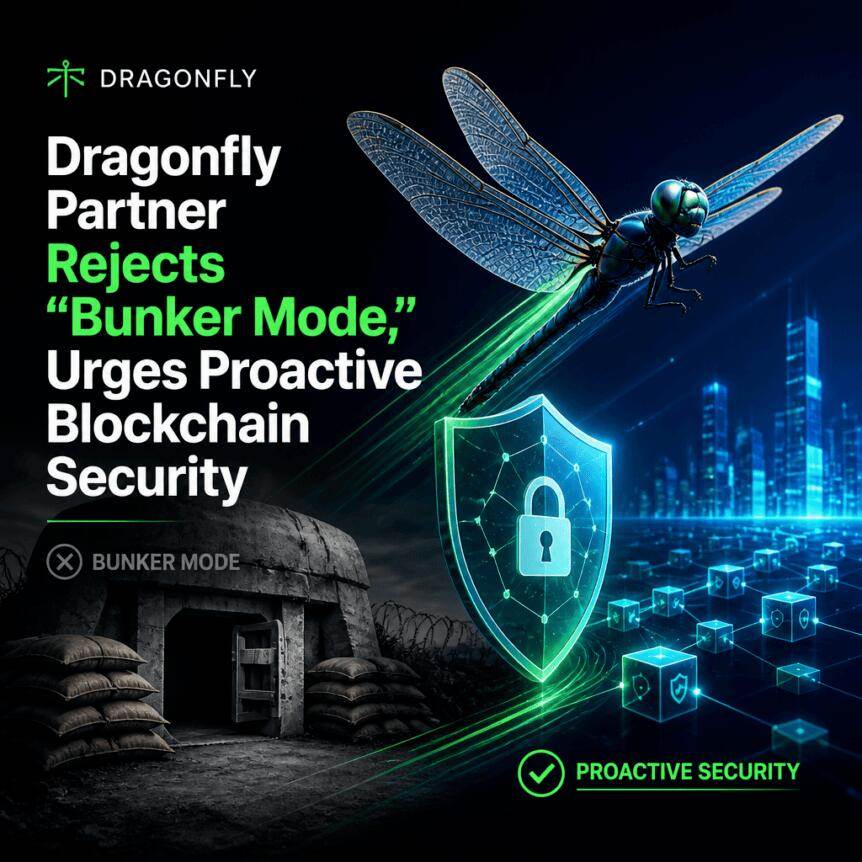
5. Security: From \"code is law\" to \"norms are law\"
Argument: Auditing is not enough to solve the problem. Run-time enforcement will become standard practice.
One point has been clear over the past two years: audits fail not because of insufficient auditor capabilities, but because the audit itself is static, localized, and fundamentally, it cannot fully reflect dynamic systems. Today, protocols operate in adversarial environments affected by factors such as maximum availability (MEV), composability, oracle latency, and incentive-driven extremes that often occur only after deployment, and often under extreme market conditions.

The conclusion reached by a16z (which is currently widely accepted in the industry) is that security must be elevated to a higher level: from checking whether the code is correct to enforcing system-level immutability is absolutely unbreakable. This marks a shift in security policy from \"code is law\" to \"norms are law\", with the agreement formally defining which rules must always be in place (e.g., collateral limits, conservation of value, solvency conditions, sequencing constraints) and continuing to enforce these attributes, not just at deployment time.
Who will win in 2026?
● Runtime safeguards
● Formal specifications
● Artificial intelligence-assisted verification
● Continuous monitoring
Concern list:
● OpenZeppelin: A runtime rule execution and upgrade security platform with deep protocol integration.
● Trailofbits: Moving to advanced security research companies that use tools for real-time invariant execution.
SpearbitDAO: A research-driven audit collective that launches a continuous audit pipeline (as opposed to static snapshots).
● Cyfrin: Smart contract security company, a tool to build education pipelines and formal-first; growing influence in the modular L2 ecosystem.
● Immunefi: A unified on-chain platform for vulnerability bounty, auditing and AI-driven threat detection to protect cryptographic projects from exploitation.
● Run-time monitoring startups.
6. Large-scale prediction market
Argument: The prediction market has evolved from a niche gambling venue to a real-time information infrastructure for the Internet.
The core shift pointed out by a16z is not just about \"more markets\" or higher trading volumes, but rather about predicting a reshaping of market structure. As block space costs decrease, oracle performance improves, and user experience friction decreases, the market is no longer an incident related to elections or sporting events, but begins to function as a continuous signal extraction layer. Everything can be included in the transaction list: macro data releases, agreement upgrades, regulatory voting, corporate behavior, even the probability results of long-tail events.

Liquidity is spread across thousands of micro-markets, but price discovery improves because information is no longer limited by polls, questionnaires, or centralized analysts.
Who will win in 2026?
● Prediction markets that can list everything.
● AI Agents continue to trade.
● Decentralization and probabilistic resolution.
Watch list:
● Polymarket: Polygon\'s leading decentralized forecasting platform; monthly transaction volume exceeds US$1 billion, dominating the cryptocurrency space.
● Kalshi: A U.S. exchange regulated by the Commodity Futures Trading Commission; monthly trading volume exceeds US$1.3 billion and has top-level app downloads in legal markets.
● FractionAI: Known as the first artificial intelligence agent forecasting market, agents can compete with real-time portfolios in a transparent on-chain environment.
● Opinion: A high-growth event exchange with a nominal monthly transaction volume of more than US$700 million and a breakthrough in the field of native cryptocurrency gambling.
● Myriad Markets: Decentralized event market infrastructure; transaction volume exceeds US$10 million, and active on-chain betting covers all segments.
7. ZkVMs and verifiable computing
Argument: Proof leaves the blockchain and enters the cloud.
The core turning point pointed out by a16z is not a slight increase in the speed of zero-knowledge proofs, but that zkVM is crossing a threshold that proves that general purpose computing is no longer a blockchain-specific luxury, but a viable system primitive, thanks to a significant reduction in proof overhead (from approximately 1,000,000 times to approximately 10,000 times), GPU-native provers, and memory footprint suitable for real-world production environments.
Together, they open up a mechanism where ordinary CPU workloads (cloud jobs, backend services, financial models, machine learning reasoning, legacy enterprise code) can be executed once and then verified anywhere, transforming assumptions of trust in cloud providers, data pipelines, and off-chain execution into cryptographic guarantees rather than contractual commitments, and creating a world where correctness rather than reputation is the default security model for distributed systems.
List of concerns:
● RiscZero: zkVM with universal Rust computing capabilities; a reliable leader in cloud compatibility proof.
● Successive: SP1zkVM (based on RISC-V/LLVM) works with arbitrary Rust/LLVM code; focuses on fast verification, light client and off-chain data feeds, has GPU-native proof (e.g., real-time proof on 16 GPUs), precompilation to improve efficiency, and recursion for on-chain/off-chain use.
● Brevis_zk: A zk coprocessor for querying data on/off the chain; specifically designed to generate modular proofs within applications.
● Axiom_xyz: A ZK coprocessor for verifiable calculations of on-chain/off-chain data; supports arbitrary expressive calculations (e.g., historical queries) off-chain and verifies ZK proof on-chain.
● ZKML stack implementation: Framework for verifiable ML inference through ZK proof/SNARK (e.g., ZKML, DSperse, JSTprove); Optimize circuits for production ML workloads (e.g., GPT-2, neural networks), reducing overhead (5-22 times faster proof/verification speed).
8. Wealth management moves up the chain
Argument: Active, personalized wealth management will become a common phenomenon.
With the native tokenization of assets (including income cash, public equity, private equity, and illiquid alternative assets), rebalancing is no longer an event, but an ongoing process. This process is performed by smart contracts that respond to real-time changes in interest rates, volatility and risk premiums, rather than quarterly meetings or advisory workflows.
AI-assisted asset allocation engines are increasingly acting as co-pilots, transforming user constraints into executable policies, while decentralized financial fundamentals such as automated vaults, tiered revenue products, and permission-based risk-weighted asset pools provide the institutional depth needed to implement these strategies without sacrificing compliance or capital efficiency. The result is not \"smart investment\" but programmable wealth, with portfolios able to self-adjust based on risk curves, from tokenized treasury bonds to credit, from Beta to Carry, from liquidity to illiquidity, and settlement, custody and reporting are abstracted.
What is a winner?
● Automatic rebalancing
● Revenue cash
● Tokenized private markets
List of concerns:
● Veda: Modular treasury infrastructure that supports real-time, policy-based rebalancing across revenue primitives; fits this argument very well.
● Upshift: A licensed treasury platform with risk monitoring policies and KYC access rights; partially compliant with RWA access directions.
● Midas: A tokenized treasury bond and BTC yield strategy with proof of on-chain reserves; ideal for compliant, programmable cash flow.
● Base: Coinbase\'s L2Base App integrates wallets, transactions, social feeds, Mini programs and on-chain revenue (such as USDC APY); enables seamless and abstract wealth management through one-click DeFi and RWA access.
● Morpho: Untrussed lending vault that automatically rebalances between P2P and fund pool markets; compliant with programmable credit allocation and real-time yield optimization.
● Infinit: An AI-driven super application with Agent strategies for one-click automatic revenue, Delta-neutral positions, cross-chain bridging/switching, and RWA-compatible optimization; Self-adjustment wealth is achieved through multi-agent collaboration, in line with the direction of a programmable portfolio.