Exchange Ranking
 Top Exchanges
 24h Volume Ranking
 Popularity Ranking
 Exchange BTC Balance
 Proof of Reserves
 Decentralized Exchanges
 Funding Rate
 Funding Heatmap
 Liquidation Data
 Max Pain
 Long/Short Ratio
 Whale L/S Ratio
 Binance/Okex/Huobi L/S
 Bitfinex Margin L/S
 ETF Tracker
 Solana ETF
 XRP ETF
 Hong Kong ETF
 Bitcoin Treasuries
 Crypto Reversal
 Ethereum Reserves
 HyperLiquid Wallet Analysis
 Hyperliquid Whale Watch
 Large Transactions
 On-chain Movement
 Bitcoin ROI
 Stablecoin Market Cap
 Options Analysis
 News
News Articles
 Economic Calendar
 Features
 Wallet
 Contract Calculator


 Security
 Collections
 Watchlist
 Following
 BTC
BTC Cryptocurrency exchanges in the United States follow a complex regulatory framework, supervised by agencies such as the Securities and Exchange Commission (SEC), the Commodity Futures Trading Commission (CFTC), the Financial Crimes Enforcement Network (FinCEN), and state-level agencies.
The following are six major cryptocurrency investment platforms for U.S. investors:
1. Kraken-Best Cryptocurrency Exchange in the United States
2. Uphold-Recommended for beginners
3. Coinbase-Regulated by U.S. states
4. Binance.US-Popular with institutions
5. Gemini-Cryptocurrency credit cards with BTC rewards
6. Robinhood-Cryptocurrency and stock trading platform

Top cryptocurrency trading platform in the United States
U.S. investors can access a number of leading cryptocurrency exchanges, each of which is fully compliant with the Securities and Exchange Commission (SEC), Regulatory standards developed by the U.S. Commodity Futures Trading Commission (CFTC) and the U.S. Financial Crimes Enforcement Network (FinCEN). The following comparison focuses on the best cryptocurrency trading platforms in the United States, providing key details such as transaction fees, features, security measures, U.S. dollar deposit methods, and digital asset selection.

1. Kraken
Kraken is a San Francisco-based cryptocurrency exchange known for its advanced tools, security, nationwide regulatory compliance and broad trading options. Founded in 2011, it serves more than 15 million customers in 190 countries around the world, with quarterly transaction volume exceeding US$207 billion.
The exchange supports trading in more than 450 cryptocurrencies. Users can choose from spot trading, margin trading (with a leverage ratio of up to 5 times) and futures contracts, providing more than 300 perpetual futures. It also offers innovative products such as tokenized U.S. stocks and ETFs (xStocks).
Kraken puts security first through advanced measures such as cold storage, two-factor authentication, and regular reserve certificate audits. In addition, Kraken also offers a premium subscription (Kraken+), which grants users zero-fee trading privileges and an OTC trading platform.
Platform highlights:
● Fees: 0.16% for the manufacturer, 0.26% for the recipient; zero fee through Kraken+ subscription.
● Supported assets: More than 450 cryptocurrencies
● Regulation and licensing: Registered as a money services company with FinCEN (MSB registration number: 31000239561651).
● U.S. dollar deposit methods: automated transfer, debit card, credit card, FedWire, Plaid and Zelle.

2. Uphold
With its friendly user interface and direct trading experience, Uphold has become one of the first choices for new investors in cryptocurrencies. Its unique \"one-step trading\" feature allows users to instantly exchange any supported cryptocurrency or asset, simplifying the investment process.
The exchange emphasizes transparency and security and clearly displays its capital reserves in real time, updated every 30 seconds. It also enables individuals to earn passive income by offering betting rewards at rates of up to 15.5% per annum and offering interest-bearing accounts in U.S. dollars at rates of up to 4.5% per annum.
In addition, Uphold also offers comprehensive educational tools such as daily market updates, a cryptographic dictionary (\"Cryptionary\") and an easy-to-use investment calculator. Uphold\'s strong security protocols include certifications such as SOC2 Type 2, ISO 27001 and PCI DSS.
Platform highlights:
● Fees There is no transaction fee, but a spread of 1.49% is charged.
● Supporting assets: More than 250 cryptocurrencies, 4 precious metals and 27 fiat currencies.
● Regulation and Licensing: Regulated by FinCEN and holds licenses issued by multiple states.
● U.S. dollar deposit methods: automated transfer, credit card, debit card, Google Pay and Apple Pay.

3. Coinbase
Coinbase is the most trusted cryptocurrency exchange in the United States and is known for its excellent security, ease of use and extensive state regulatory compliance. Launched in 2012, it has grown into a powerful exchange, supporting 130 million individual and institutional investors across the United States.
Coinbase Advanced is an integrated trading environment with real-time order books, complex analytical tools and deep liquidity that can benefit experienced users. Coinbase Wallet also allows investors to securely store cryptocurrencies and explore DeFi, NFT and various Dapps.
In addition, Coinbase One membership enhances the trading experience, providing zero-fee transactions, more rewards, priority customer support and exclusive benefits. Coinbase One card, which will be launched in the fall of 2025, offers up to 4% bitcoin rewards per purchase.
Platform highlights:
● Fees are 1.49% transaction fee, plus 1% spread;Coinbase One members enjoy zero fees.
● Supported assets: More than 200 cryptocurrencies
● Regulation and licensing: Fully licensed and regulated in 50 U.S. states; registered with FinCEN; holds money transfer agency licenses in multiple states.
● US dollar deposit method: bank transfer, automatic transfer, credit card or debit card.

4. Binance.US
Binance.US is a leading cryptocurrency exchange in the United States, trusted by millions of investors and favored by institutional traders. Launched in 2019, the exchange is the compliance branch of global cryptocurrency giant Binance in the United States, providing users with more than 160 digital assets.
The platform offers a wide range of trading options, including spot trading, over-the-counter trading services for large transactions, and advanced order types. In addition, the platform has become the largest betting provider in the United States, allowing users to earn rewards on more than 20 evidence-of-equity assets such as Ethereum, Solana and BNB.
Binance.US attaches great importance to security, and customer funds are securely stored in storage facilities in the United States on a 1:1 basis. The exchange also adheres to strict compliance standards, holds licenses and complies with regulations in multiple jurisdictions.
Platform highlights:
● Fees: transaction fees as low as 0.1%; some bitcoin currency pairs have zero fees.
● Supported assets: More than 160 cryptocurrencies
● Regulation and licensing: Binance.US is registered with FinCEN as a money services company owned by BAM Trading Services Inc.(NMLS ID #1906829).
● US dollar deposit methods: automatic transfer, wire transfer, debit card/credit card.

5. Gemini
Gemini is a New York-based cryptocurrency exchange that is trusted for its high priority on security, compliance and innovation. Founded in 2014 by Cameron Winklevoss and Taylor Winklevoss, it supports the trading and custody of more than 70 cryptocurrencies and provides services to individual and institutional investors.
The main products include Gemini credit cards, which allow cardholders to receive bitcoin or other cryptocurrency rewards during daily consumption. For active traders, the Gemini ActiveTrader® platform provides advanced tools for order execution, deep liquidity pools and complex market analysis.
Gemini has industry-leading safety standards, including ISO/IEC 27001 certification, SOC1 and SOC2 Type 2 inspections, and PCI DSS compliance. Its transparent, all-reserve custody approach ensures the safety of client assets and is supervised and licensed by state regulators in the United States.
Platform highlights:
● Fees: The tiered transaction fee for ActiveTrader® users starts from 0.2%; the standard fee for retail transactions is approximately 1.49%.
● Supported assets: More than 70 cryptocurrencies
● Regulation and licensing: Licensed by New York Trust Company, SOC1 Type 2, SOC2 Type 2, PCI DSS and ISO/IEC 27001 certifications.
● US dollar deposit methods: automatic transfer, wire transfer, debit card.

6. Robinhood
Robinhood has revolutionized the way the United States invests by seamlessly integrating cryptocurrency trading with traditional stocks, options and futures. It is known for its intuitive, mobile-first experience and has attracted millions of investors, especially young users, because of its ease of use and low entry barriers.
It provides traders with advanced tools to analyze markets, formulate strategies and effectively track investment portfolios. Its premium product Robinhood Gold includes professional market analysis, margin trading and zero management fees for a portfolio of more than $100,000.
Security and trust are the foundation of the platform, and features include multi-factor authentication, strong data encryption and round-the-clock customer support. Robinhood Protection Guarantee strengthens the company\'s commitment to protecting accounts from unauthorized activity.
Platform highlights:
● Fees: Although transactions are free of commission, spreads can be as high as 2%.
● Supported assets: 15 cryptocurrencies, including BTC, ETH, SOL, DOGE, XRP and SHIB.
● Regulation and licensing: Registered broker (Financial Industry Regulatory Authority/SIPC member), a cryptocurrency provider licensed by the New York State Financial Services Bureau.
● US dollar deposit methods: bank transfer, debit card, credit card and automatic transfer.

Are cryptocurrencies regulated in the United States?
Cryptocurrency regulation in the United States is jointly implemented by federal and state authorities, each focusing on different aspects of the market. At the federal level
● The U.S. Securities and Exchange Commission (SEC) treats many tokens- especially those that meet the Howe Test-as securities and enforces registration, disclosure and anti-fraud standards.
● The U.S. Commodity Futures Trading Commission (CFTC) classifies Bitcoin and Ethereum as commodities , regulates related derivatives, and implements regulations prohibiting market manipulation.
● The Financial Crimes Enforcement Network (FinCEN) requires cryptocurrency exchanges to register as money services companies (MSBs), implement KYC/AML procedures, file reports, and comply with the Travel Rules.
State regulations add complexity: New York\'s BitLicense, Wyoming\'s Cryptocurrency Friendship Charter, and upcoming regulations in California, New Jersey, Connecticut and other states all introduce different licensing and compliance requirements.
In addition, Congress and policymakers have proposed key legislation:
● The 21st Century Financial Innovation and Technology Act passed by the House in May 2024 The Financial Innovation and Technology for the 21st Century Act (FIT21) stipulates which agency supervises which crypto assets: the CFTC is responsible for decentralized \"commodities\" and the SEC is responsible for centralized \"securities.\"
● On June 17, 2025, the Senate approved the GENIUS Act, which provides for all-reserve stablecoins, audited reserves, and dual federal/state oversight.
● The Digital Asset Markets Clarity Act, currently before lawmakers, aims to codify responsibilities between agencies to simplify oversight.
● Executive Order No. 14178 (January 23, 2025) prohibits the launch of Central Bank Digital Currency (CBDC) and requires the Presidential Working Group to propose a unified regulatory framework for cryptocurrencies within 180 days.
● The Bitcoin Strategic Reserve Program launched in March 2025 designates confiscated federal cryptocurrencies as national assets.
The United States continues to move towards a clearer and more comprehensive regulatory system. Stronger institutional cooperation, consumer protection, tax clarity and stablecoin regulation are becoming central to bringing institutional legitimacy and investor confidence to digital assets.
How does the IRS tax digital assets?
Cryptocurrency taxation in the United States is managed by the Internal Revenue Service (IRS), which treats digital assets as property and triggers a tax event when digital assets are sold, traded, consumed or earned. The following is a detailed breakdown:
● Capital gains/losses: Selling cryptocurrency for U.S. dollars, exchanging one currency for another, or using cryptocurrency to purchase goods can generate taxable events. Benefits depend on the cost base and holding time. Short-term (≤1 year) income is taxed at the general income rate (10-37%); long-term (1 year) income is taxed at the preferential rate (0-20%).
● Ordinary income: Cryptocurrency obtained from mining, targeting, airdrop, borrowing or payment is counted as ordinary income and is taxed at the standard tax rate.
Investors must carefully record transactions in order to report them to the IRS, mainly through Form 8949 and Schedule D, while exchanges provide transaction data through Form 1099. Non-compliance can lead to fines, interest or criminal charges, highlighting the importance of accurate and comprehensive records for cryptocurrency investors.
Cryptocurrency adoption in the United States
The use of cryptocurrencies in the United States is increasing rapidly, driven by strong institutional investment, clear regulation and increasing consumer engagement. It is expected that by 2025, the user penetration rate will reach 46.39%, and by 2026, the number of active cryptocurrency users will reach approximately 166.7 million.
The expanding integration of digital assets and traditional finance, clearer tax and regulatory frameworks have enhanced investor confidence, and the increasing adoption of blockchain-based technologies in all walks of life have driven the significant growth of digital assets.

How to buy Bitcoin in the United States
U.S. investors interested in purchasing Bitcoin should choose trustworthy cryptocurrency exchanges that are regulated by authorities such as FinCEN, the U.S. Securities and Exchange Commission, and relevant state government agencies. The following are guidelines for safely purchasing BTC in the United States:
1. Choose an exchange: Choose a well-established platform based in the United States with strict regulations such as Coinbase, Kraken or Gemini. Ensure that exchanges have strong security measures and transparent charging structures.
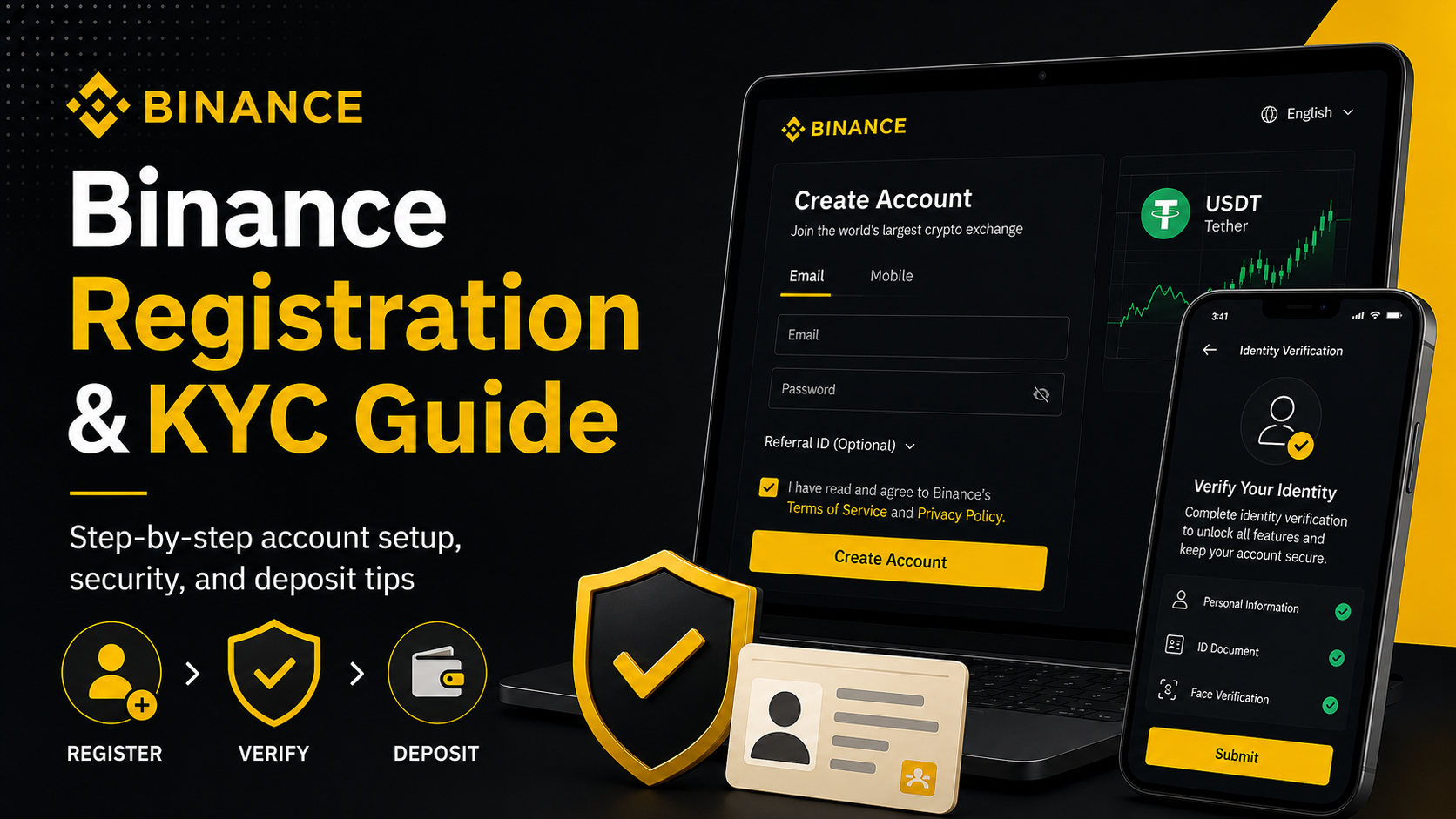
2. Create and verify your account: Register an account and complete the necessary Know Your Customer (KYC) verifications. You will need to provide government-issued identification documents such as driver\'s license, passport and proof of address.
3. Deposit in US dollars: Use US dollars to deposit money into your trading account. Most U.S. exchanges accept deposits via bank transfer (ACH), wire transfer, debit card and even PayPal.
4. Buy Bitcoin: After the funds in the account are received, enter the Bitcoin trading area of the exchange. Enter the amount in US dollars to invest or specify the exact amount of Bitcoin to purchase, and complete the transaction.
After the purchase is completed, transfer Bitcoin to a secure personal wallet. Using a reputable hardware wallet or a trustworthy software wallet gives you complete control of your Bitcoin assets and provides the best protection for your investments.
Final thoughts
Choosing the right cryptocurrency exchange in the United States means combining your personal goals with a platform that combines strong security, transparent compliance and user-friendly features.
Whether you are a veteran trader using advanced tools on Kraken or Binance.US, looking for simple novices using Uphold or Robinhood, or an investor seeking unique advantages such as the Gemini Bitcoin Rewards Card or Coinbase\'s extensive regulatory compliance, clarifying your needs is key.