Exchange Ranking
 Top Exchanges
 24h Volume Ranking
 Popularity Ranking
 Exchange BTC Balance
 Proof of Reserves
 Decentralized Exchanges
 Funding Rate
 Funding Heatmap
 Liquidation Data
 Max Pain
 Long/Short Ratio
 Whale L/S Ratio
 Binance/Okex/Huobi L/S
 Bitfinex Margin L/S
 ETF Tracker
 Solana ETF
 XRP ETF
 Hong Kong ETF
 Bitcoin Treasuries
 Crypto Reversal
 Ethereum Reserves
 HyperLiquid Wallet Analysis
 Hyperliquid Whale Watch
 Large Transactions
 On-chain Movement
 Bitcoin ROI
 Stablecoin Market Cap
 Options Analysis
 News
 Articles
 Economic Calendar
 Features
 Wallet
 Contract Calculator


 Security
 Collections
 Watchlist
 Following
 BTC
 ETH
 SOL
 XRP
 RWA
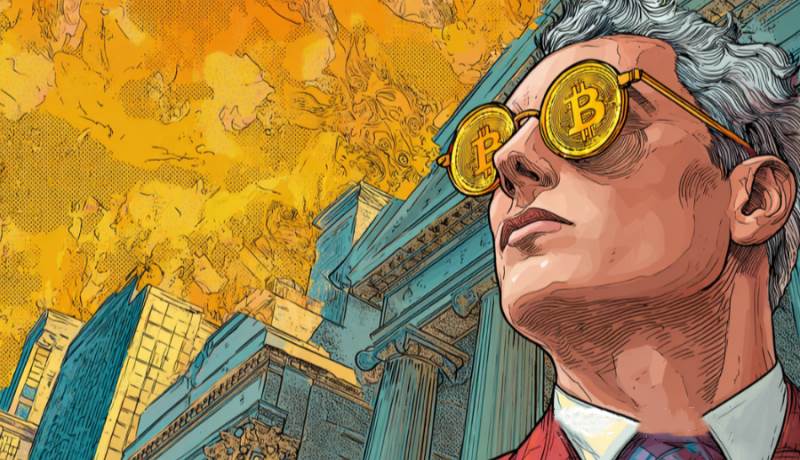
在比特币ETF资产规模持续扩大、机构配置数位资产逐步常态化的背景下,2026年正在成为加密资产财务管理行业的重要分水岭。越来越多家族办公室、基金与企业开始将加密资产纳入长期资产负债表,市场对专业托管、风险管理与收益策略的需求明显上升。结合近期机构资金流向、监管落地进展以及RWA与稳定币的快速增长,可以看到,加密资产财务管理公司正从“辅助角色”转向核心基础设施,其商业模式与行业定位,也将在2026年迎来新的重塑。
要点总结
● 专注于山寨币的资金管理公司最先面临退出风险,而专注于主要资产的资金管理公司也面临压力。
● 纯粹的资产持有模式是不可持续的;收益创造和流动性管理将决定企业的长期生存。
● 与ETF/ETE标准保持一致,以及加强合规性和透明度,对于行业的未来至关重要。
市场波动撼动了整个行业
2025年,数字资产管理公司(DAT)迅速发展,为机构投资者提供了一个便捷的数字资产投资渠道。它们的投资组合涵盖了广泛的资产,从比特币和以太坊等主流加密货币到索拉纳、瑞波币以及部分其他加密货币。这种广泛的投资模式吸引了华尔街投资者的广泛关注,他们希望通过类似股权的结构获得另类资产投资机会。
然而,下半年市场状况恶化。数字资产波动加剧和持续的价格回调导致许多数字资产交易平台(DAT)的股价大幅下跌。随着资产价值下降和流动性收紧,该行业开始面临双重挑战:资产负债表重估和运营流动性压力。投资者情绪显著减弱,引发了人们对许多以财务管理为核心业务的公司长期生存能力的根本性质疑。
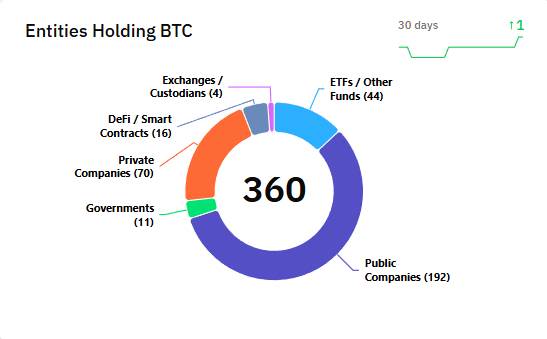
图1:各国库实体持有的比特币分布情况
山寨币国库面临不成比例的风险
行业分析师阿尔坦·图塔尔指出,以山寨币为中心的DAT在市场低迷时期结构性地更加脆弱。这些公司通常持有流动性较差、机构认可度较低的资产,因此其市值难以持续高于净资产值(mNAV)。
During periods of low market confidence, such fund management companies are often the first to lose investor support, thereby increasing the risk of delisting, restructuring, or complete withdrawal from the market. Although fund management companies that focus on major assets like Ethereum, Solana, or XRP benefit from greater liquidity and broader recognition, they still cannot escape the effects of ongoing market pressure. As the cryptocurrency market undergoes structural adjustments, portfolio construction, risk management discipline, and operational efficiency have become key factors determining which companies can survive and which will be forced to withdraw from the market.
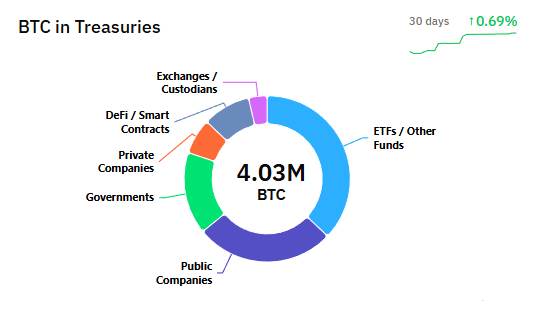
Figure 2: Distribution of entities holding Bitcoin
The advantages of single-asset strategies are disappearing
Ryan Chow, co-founder of Solv Protocol, emphasizes that companies that rely solely on holding Bitcoin or a single digital asset lack long-term sustainability. In 2025, the number of companies listed or quasi-listed with Bitcoin holdings will increase significantly. However, subsequent market downturns revealed a fundamental flaw: a lack of effective income and liquidity management capabilities.
Chow believes that future companies will no longer view digital assets merely as passive means of value storage, but rather as capital that can generate income and support liquidity strategies. This shift requires financial firms to move beyond blind reliance on price trends and develop mechanisms that actively improve capital efficiency. Without this capability, companies will rely too much on market cycles, facing significant risks during prolonged downturns.
Yield and liquidity are core competencies
Zhou further pointed out that decentralized assets with promising prospects often implement multi-level revenue management strategies. These strategies may include staking, borrowing, or selectively participating in DeFi protocols, along with dynamic portfolio rebalancing to adapt to changing market conditions. Liquidity optimization is also crucial, as it ensures the necessary flexibility to manage redemption obligations, rebalance positions, and cope with market pressures.
Such proactive management capabilities significantly enhance a company’s resilience during economic downturns. They also help stabilize investors’ expectations, shifting focus from mere asset appreciation to risk-adjusted return generation. In volatile markets, revenue and liquidity management are no longer optional extras, but rather essential components for maintaining competitiveness.
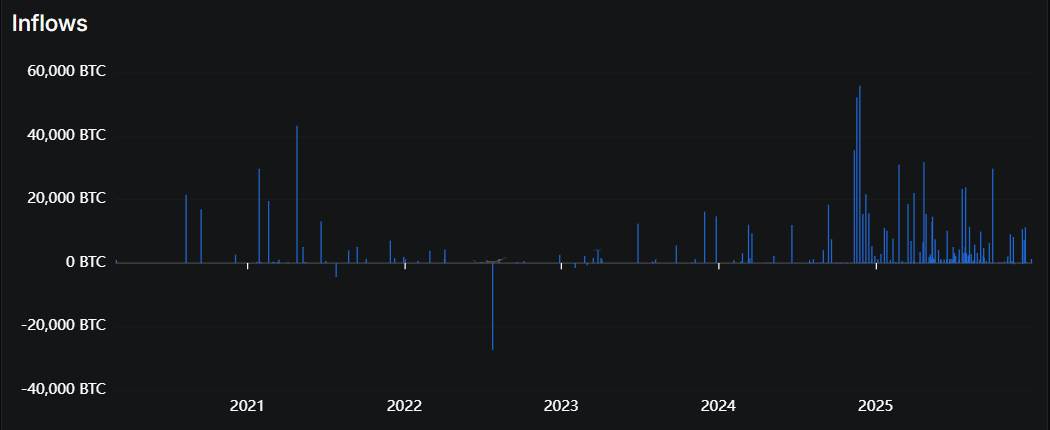
Figure 3: Trends in Bitcoin inflows and outflows (2021-2025)
ETE products become structural competitors
Vincent Chok, CEO of First Digital, emphasized the increasing competitive pressure on cryptocurrency exchange-traded products (ETEs). Compared to digital asset tokens, ETEs typically offer higher price transparency, clearer regulatory environments, and better liquidity management. These advantages make them more attractive to institutional investors seeking compliant digital asset investments, as well as conservative investors.
Chok believes that in order to maintain their relevance, digital asset investment tools must gradually align their governance, auditing standards, and asset management practices with those of exchange-traded funds (ETFs). Otherwise, digital asset investment tools risk being marginalized by regulatory investment instruments, as these tools offer similar investment opportunities but with lower risk perception and higher transparency.
Integrating with traditional financial infrastructure
As the digital asset industry matures, it becomes strategic to integrate digital asset trading systems with traditional financial infrastructure. Establishing a robust compliance framework, conducting regular audits, and adopting standardized asset management processes can significantly enhance investors’ confidence and operational stability.
In fact, this requires digital asset management companies to comply with KYC and AML requirements, provide consistent and transparent information disclosure, and hire third-party auditors to verify the authenticity of assets, their financial integrity, and risk control measures. By institutionalizing these practices, financial companies can reduce valuation volatility and narrow the credibility gap between cryptocurrency-based companies and traditional financial products.
Ultimately, by aligning operational standards with those of ETFs, digital asset investment tools can achieve similar levels of governance and professionalism, thereby becoming legitimate participants in the broader financial system, rather than marginal or speculative tools.
Industry integration and strategic direction
预计到2026年,数字资产交易(DAT)行业将经历显著的整合。市场调整、单一资产策略的局限性以及合规性和透明度方面的不足将引发大规模的洗牌。存活下来的公司可能具有以下几个显著特征:核心资产配置于比特币、以太坊和索拉纳等主要资产;完善的收益和流动性管理框架;以及与ETF或ETE基准相一致的运营标准。
数字资产管理公司(DAT)未来的战略重点包括降低单一资产波动性、提升投资组合稳定性、通过创新收益策略提高资本效率,以及通过透明度和完善公司治理来增强投资者信任。成功整合这些要素的公司不仅能够提升盈利能力和竞争力,还有助于推动数字资产管理行业的整体专业化进程。
结论
Digital asset management companies are entering a critical phase of industry restructuring. By 2026, it is likely that certain companies will become the winners, while others will fail. Market volatility, intense competition, and differences in revenue generation and liquidity management capabilities will all play a role in determining which companies can survive. Companies that rely solely on passive asset holdings are more likely to be left behind in the market. Those that succeed will stand out through diversified investment portfolios, proactive revenue generation strategies, and adherence to standardized compliance frameworks. As integration accelerates, the industry will become more concentrated and specialized. High-quality operators and companies specializing in asset management will become the dominant forces. This evolution indicates that digital asset management is gradually becoming a reliable component of the global financial market, and it is on its way to becoming more established and institutionalized.