Exchange Ranking
 Top Exchanges
 24h Volume Ranking
 Popularity Ranking
 Exchange BTC Balance
 Proof of Reserves
 Decentralized Exchanges
 Funding Rate
 Funding Heatmap
 Liquidation Data
 Max Pain
 Long/Short Ratio
 Whale L/S Ratio
 Binance/Okex/Huobi L/S
 Bitfinex Margin L/S
 ETF Tracker
 Solana ETF
 XRP ETF
 Hong Kong ETF
 Bitcoin Treasuries
 Crypto Reversal
 Ethereum Reserves
 HyperLiquid Wallet Analysis
 Hyperliquid Whale Watch
 Large Transactions
 On-chain Movement
 Bitcoin ROI
 Stablecoin Market Cap
 Options Analysis
 News
 Articles
 Economic Calendar
 Features
 Wallet
 Contract Calculator


 Security
 Collections
 Watchlist
 Following
 BTC
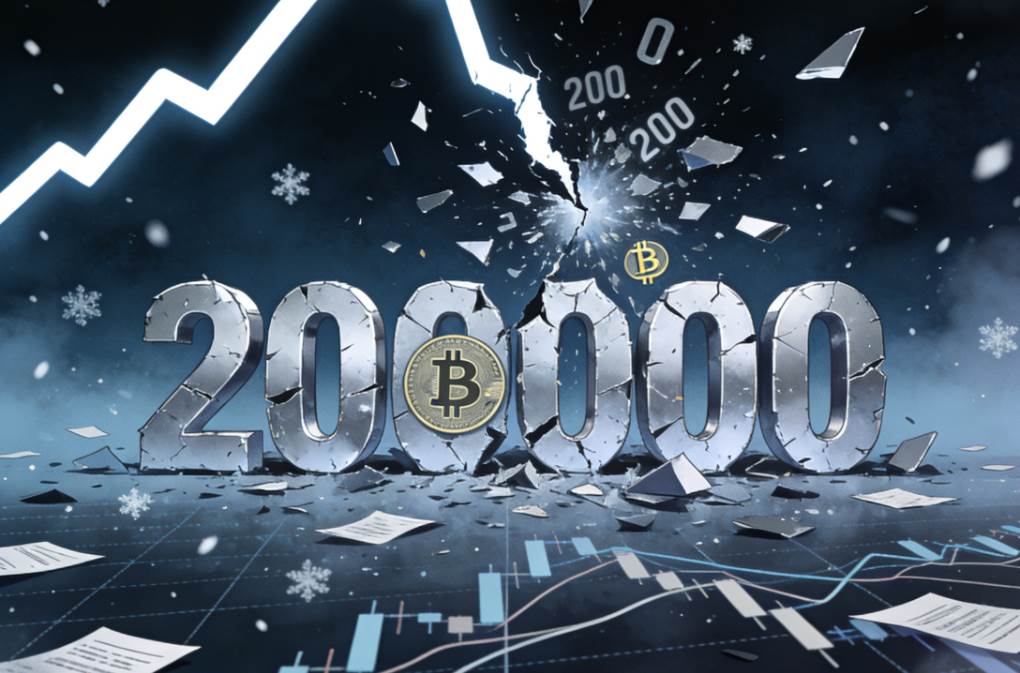
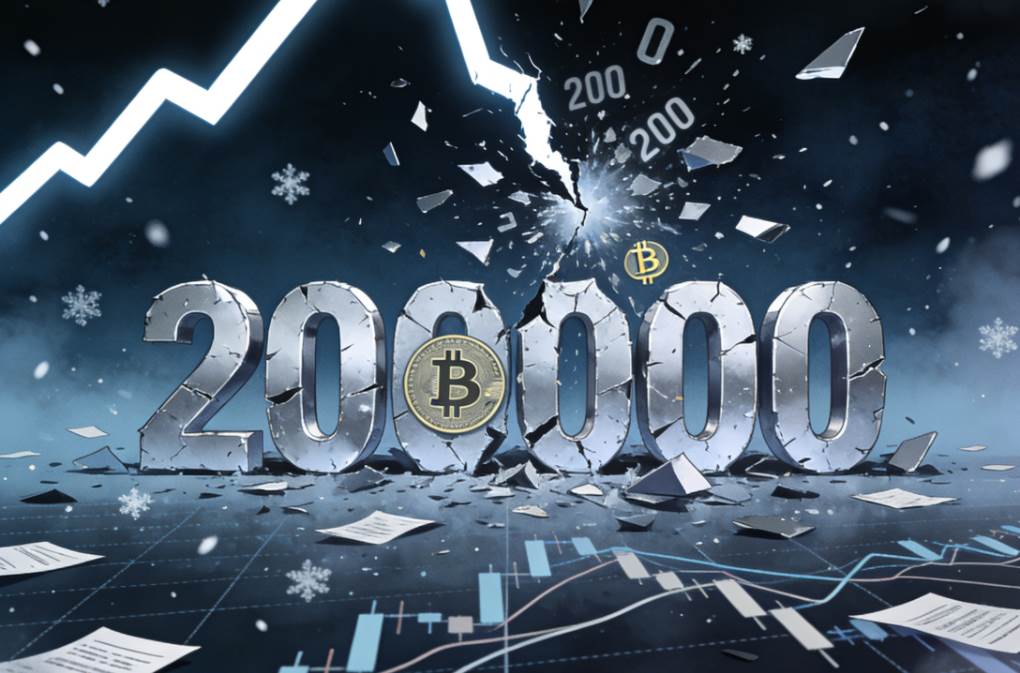
From the narrative of price halvings to the influx of ETF funds, by the end of 2024 and early 2025, Bitcoin reached a consensus high of $200,000 per unit. However, reality brought about a collective cooling of market sentiment. As inflows from ETFs slowed down, expectations regarding macro liquidity fluctuated, and miners and long-term holders of bitcoin began to realize their profits. As a result, price trends deviated from the predicted models, highlighting the problem of most judgments being overly linear and underestimating the cyclical fluctuations in the market. This “failure of predictions” wasn’t due to logical errors; rather, the market used data to remind investors that the more consensus there is, the sooner risks will emerge.
I. Consensus-based predictions: The frenzy of institutional narratives
By early 2025, Bitcoin markets exhibited rare unanimity in expectations. Many institutions and renowned market analysts provided relatively consistent annual target ranges, with $200,000 becoming a recurring benchmark.
● This isn’t just a fringe view. Wall Street bulls like Tom Lee emphasized the importance of institutional allocation and favorable macro conditions. Cathie Wood and her team argued that higher valuation levels were possible due to long-term adoption rates and structural deflation.
● The core pillar of market optimism lies in the approval of Bitcoin spot ETFs. The ETFs approved by the U.S. Securities and Exchange Commission in 2024, especially BlackRock’s IBIT fund, became one of the most successful initial products in the ETF industry in 35 years.
Traditional financial institutions finally have regulated investment tools available. It’s only a matter of time before mainstream funds flood into the market.
II. Reality vs. expectations: The discrepancy between prices and forecasts
After entering 2025, the actual performance of Bitcoin contrasted sharply with the optimistic predictions at the beginning of the year. Although the price increased several times throughout the year and reached new high points, the upward trajectory was highly unstable. Whenever the price approached high levels, volatility increased significantly, and sharp declines often disrupted trends. After Bitcoin’s price surpassed $122,000 in July, the market did not continue to rise as expected; instead, it entered a period of high-level fluctuations. By the end of 2025, while Bitcoin remained at around $90,000, market sentiment had dropped to an extreme level of fear since the outbreak of the pandemic in 2020. The Fear-Greed Index reached a low of 16 points, the lowest level since the global pandemic crisis in March 2020. This extreme divergence between price and sentiment reflects the structural divisions within the market. The four-year halving cycle, which was once considered the most reliable macroeconomic framework in the crypto industry, may no longer be valid. After the halving in 2024, the daily issuance of Bitcoin amounted to only about 450 units, valued at approximately $40 million at that time. In contrast, inflows/outflows of funds into ETFs typically exceed $1 billion to $3 billion within a single week.● The amount of Bitcoin purchased by institutions has far exceeded the output produced by miners. Data shows that by 2025, institutions will have purchased a total of approximately 934,330 Bitcoins. In contrast, miners will only produce 127,622 Bitcoins this year. Thus, the amount purchased by institutions is 7.4 times the supply of new Bitcoins available in the market.
● This structural shift means that the dominant forces in the Bitcoin market have shifted from factors related to miner economics and retail investors’ FOMO, to psychological pressures related to ETF costs and the performance demands placed on fund managers.
IV. New Driving Forces: The Mechanism Behind Institutional Cycles
● The Bitcoin market is currently experiencing a new two-year institutional cycle, driven both by ETF costs and mechanisms for evaluating fund performance. The average cost basis for holders of US spot ETFs is currently around $84,000, and this level has become the most important price benchmark in the Bitcoin market.
● The evaluation of professional funds is based on a 1-2 year time frame, with settlement fees and performance bonuses occurring on December 31st. This creates a strong behavioral anchoring effect: when funds approach the end of the year and managers do not have enough “locked-in” profits as a buffer, they tend to sell their riskiest positions.
● This mechanism leads to a typical behavioral pattern: the first year is a period of accumulation and price increases, as new funds flow into ETFs, and prices rise above the cost basis. The second year is a period of distribution and reset, during which performance pressures drive investors to sell their positions, and prices adjust until a new, higher cost basis is established.
V. Liquidity Challenges: Repricing of Macroeconomic Factors
● In addition to changes in market structure, the macroeconomic liquidity environment also has a significant impact on Bitcoin prices. By 2025, the real “controllers” of Bitcoin will not be institutions or large investors, but the Federal Reserve. It is widely expected that the Federal Reserve will begin a cycle of interest rate cuts in the second half of 2024 and throughout 2025. This expectation was a key driver of the previous price increase.
● However, recent economic data and statements by officials have caused this expectation to change. Although employment and inflation in the United States have slowed down, they still haven’t reached a level where aggressive monetary easing can be supported. Some officials have even signaled a cautious approach to interest rate cuts.
● The decline in expectations of interest rate cuts directly reduces the value of future cash flows, thereby compressing the valuation of risky assets. Assets with high volatility, including Bitcoin, are particularly affected.
VI. Market Structure: Reallocation of Capital and Emotional Troughs
● Data from the Bitcoin market at the end of 2025 reveals deeper structural changes. The market isn’t completely withdrawing capital; rather, there is a rapid reallocation of capital—from short-term, emotional investors to those with longer-term patience and stronger risk tolerance.
● Medium-sized investors holding 10-1000 BTC have continued to sell net, clearly choosing to cash out due to earlier positioning and high profits. Meanwhile, super-large investors with over 10,000 BTC have been increasing their holdings. Some long-term strategic entities have been accumulating assets despite the market downturn.
● The behavior of individual investors also shows differentiation: Some highly emotional novice investors may sell their positions due to panic, while more experienced long-term investors are seizing the opportunities. This situation means that the market’s selling pressure comes mainly from those with limited capital, while funds are shifting towards those with stronger financial resources.
Seven, Technical Signals: Battles at Key Price Levels
From a technical analysis perspective, Bitcoin is at a critical crossroads by the end of 2025. Analysts agree that if Bitcoin fails to maintain levels above $92,000, a bull market rebound may be over.
That level represents a bottleneck: either Bitcoin can break through and drive the entire crypto market upward, or it could fall back to its lows of around $74,500 by the end of 2025.
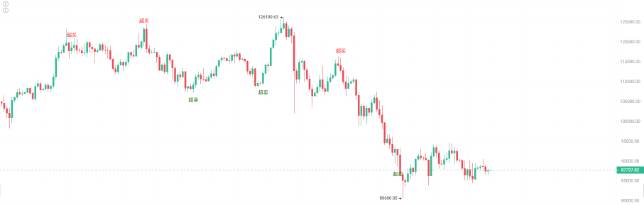
● Technical charts show that Bitcoin is currently forming an ascending wedge pattern, a bearish pattern that typically appears after a downtrend. If prices break below this pattern, they might test the low of November at $80,540. Further declines could lead to testing the lowest point of 2025, which is around $74,500.
● Data from the derivatives market is equally important: As of the end of November, there were numerous open positions concentrated in put options worth $85,000 and call options worth $200,000. This extreme positioning indicates significant divergence in market opinion regarding future trends.
Eight, The Spillover Effects of the AI Bubble
● Another important feature of the Bitcoin market in 2025 is the transmission of external risks. Artificial intelligence has become the dominant force in pricing global risk assets, and its volatility directly affects the Bitcoin market through risk appetite and liquidity conditions.
● A more profound impact comes from the competition among different narrative frameworks. The grand-scale narrative structures proposed by AI directly suppress the opportunities for the crypto industry to gain valuation premiums. Even if there is healthy data availability on the blockchain and an active developer ecosystem, it remains difficult for the crypto industry to regain its previous valuation advantages.
● When the AI bubble enters a phase of adjustment, crypto assets may face a decisive opportunity, as AI can help reallocate liquidity, risk appetite, and resources.
The average cost basis for Bitcoin ETF holders has replaced the output of miners as the new price benchmark. The annual performance pressures faced by professional fund managers, along with calendar-based cycles, are shaping the price trends of Bitcoin every two years, rather than every four years.
As the market shifts from mechanical selling by miners to decisions made by fund managers using electronic spreadsheets, the key to predicting Bitcoin prices no longer lies in calculating when halving events will occur, but rather in tracking the tides of global liquidity and the red-white numbers on institutional balance sheets. The collective failure to predict Bitcoin prices in 2025 reflects a collective lack of understanding of this significant change.