Exchange Ranking
 Top Exchanges
 24h Volume Ranking
 Popularity Ranking
 Exchange BTC Balance
 Proof of Reserves
 Decentralized Exchanges
 Funding Rate
 Funding Heatmap
 Liquidation Data
 Max Pain
 Long/Short Ratio
 Whale L/S Ratio
 Binance/Okex/Huobi L/S
 Bitfinex Margin L/S
 ETF Tracker
 Solana ETF
 XRP ETF
 Hong Kong ETF
 Bitcoin Treasuries
 Crypto Reversal
 Ethereum Reserves
 HyperLiquid Wallet Analysis
 Hyperliquid Whale Watch
 Large Transactions
 On-chain Movement
 Bitcoin ROI
 Stablecoin Market Cap
 Options Analysis
 News
 Articles
 Economic Calendar
 Features
 Wallet
 Contract Calculator


 Security
 Collections
 Watchlist
 Following
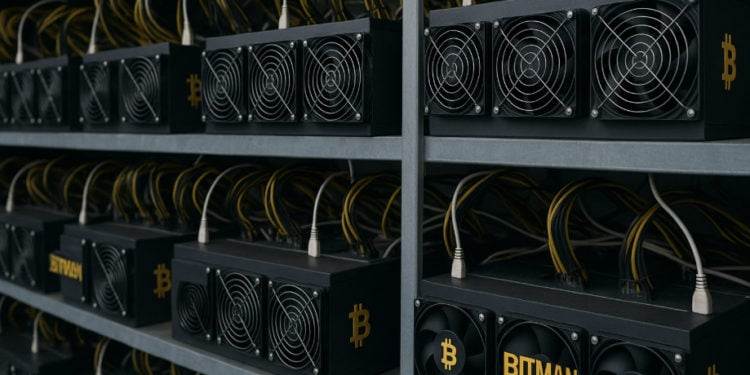
U.S. President-elect Trump recently stated publicly that he wants to make the United States a “superpower in Bitcoin.” This declaration immediately sparked enthusiasm in the market. However, ironically, the high tariffs he proposed may put additional pressure on the global mining supply chain. Two major companies that currently dominate the market—Bitmain from China and MicroBT—are likely to be the first to suffer the consequences. As a result, the cost of mining equipment will increase, and mining operations will be limited. Trump’s ambitions to develop domestic computing power might thus be hindered. While he wants to support the crypto industry through policy, he may inadvertently create difficulties for the hardware infrastructure that forms the foundation of the Bitcoin ecosystem. This struggle between policy and reality could truly test America’s ambitions in the crypto space.
Trump’s ambitions regarding Bitcoin mining
Trump once promised to make the United States a global hub for Bitcoin mining. However, the recent increased tariffs have put this ambition in a difficult position. At the Bitcoin 2024 conference, facing a crowd of enthusiastic Bitcoin supporters, he outlined his plan to turn the United States into a superpower in Bitcoin mining.
“I want Bitcoin to be mined, minted, and produced in the United States,” he said to the audience below. “You will be very satisfied with me—you will be overjoyed.”
Since his return to the White House, Trump has largely fulfilled his campaign promises: he has established a national bitcoin reserve, replaced the head of the regulatory agency that was most hostile to cryptocurrency companies during the previous administration, and appointed a “Crypto Tsar” to establish clear regulations for the industry. However, in the crucial field of bitcoin mining, the actions of this U.S. president have been contradictory. On one hand, he supports domestic mining companies, while on the other hand, he increases the operating costs of the industry through tariff policies. On April 2nd, Trump announced new punitive tariffs on 57 countries. Among these tariffs, there were taxes on goods from China (later adjusted to 55%), as well as tariffs of 24% to 36% on goods from Indonesia, Thailand, and Malaysia (Chinese companies produce some of their mining equipment in these countries). This policy puts American mining companies that rely on Chinese suppliers, including Trump’s newly established mining company, American Bitcoin, in the position of facing rising hardware costs. However, these tariffs also bring some hope: they may support small-scale American mining manufacturers, as mining equipment manufactured in the United States is not affected by the new import tariffs. Whether American hardware manufacturers can truly seize this opportunity depends largely on their potential customers, and whether American mining companies can withstand the economic impact of these tariff policies.To ensure the stability of the supply chain, mining companies typically enter long-term procurement agreements with hardware manufacturers. Now, these companies are facing a difficult problem: they may be required to pay high tariffs on Chinese mining equipment that has not yet been delivered.
Under the pressure of rising costs, many American mining companies have begun to adjust their business strategies, shifting towards artificial intelligence and other data center-related industries in order to find more stable sources of profit. This trend poses a risk of thwarting the “Bitcoin Superpower” vision—that is, the idea of American companies using American-made equipment for mining within the United States.
“If things continue to develop this way, the mining industry will continue to be pushed out of the United States,” said Chris Bendiksen, head of bitcoin research at investment firm CoinShares. “We might have witnessed the peak of the American mining industry.”
White House spokesperson Kush Desai dismissed the claim that tariffs could undermine Trump’s ambitions related to Bitcoin mining in a statement to WIRED magazine.
“Two things can be accomplished simultaneously,” he said. “We can promote the localization of hardware through tariff policies, while also using energy policies to reduce the operating costs of Bitcoin mining companies.”
The hardware race in Bitcoin mining is essentially a competition between different technologies. Mining companies must constantly upgrade their equipment to ensure that their computing power is sufficient to outperform competitors, thereby gaining the right to process transactions and receive Bitcoin rewards.
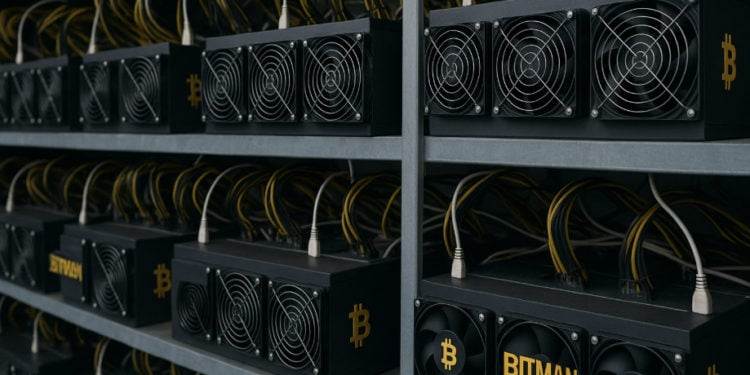
In this field, two Chinese manufacturers—Bitmain and MicroBT—almost monopolize the global market. The Cambridge Alternative Finance Center (CCA) affiliated with the University of Cambridge estimates that these two companies control 97% of the mining machine market share. Although several competitors have tried to break this duopoly over the past few years, they have failed to make significant progress in terms of hardware performance or production costs. “This path is littered with the bodies of those who tried to challenge this monopoly,” commented Bendiksen. The new tariffs have forced many American mining companies that rely on Chinese-made mining machines to reevaluate their supply chain strategies and seek alternative solutions. Analysts believe that Auradine, a mining device manufacturer based in Santa Clara, could be one of the biggest beneficiaries of this situation. In its three years of existence, Auradine has struggled to challenge the dominance of Bitmain and MicroBT in the market. However, since Trump announced the new tariffs, Auradine’s number of clients has increased significantly. “We’ve seen unprecedented interest from the market,” said Rajiv Khemani, co-founder and CEO of Auradine. “Miners want to ensure that they can continue to operate under any policy environment, regardless of potential tariffs.” To seize this opportunity, Auradine recently launched a new generation of Bitcoin mining machines and raised $153 million in Series C financing. Khemani revealed that the company will soon announce a number of high-profile customers who have signed contracts after the implementation of the new tariffs.
MARA Holdings’ strategy
One of Auradine’s key clients is MARA Holdings, an American-based mining company that not only participated in the establishment of Auradine but also holds a stake of $85.4 million in the company.
MARA’s CEO, Fred Thiel, said that although Auradine’s mining machines currently make up only a small portion of the company’s total equipment, by 2025, Auradine products will account for approximately 50% of the company’s orders.
“In an environment where geopolitical risks and tariff issues coexist, if mining machines made in the United States are priced equally to those made in China, what would you choose? The answer is obvious,” said Thiel. “If one day the U.S. government suddenly bans the import of Chinese mining machines, and you have already paid a deposit of $300 million, your situation will be extremely difficult.”
However, whether Auradine can truly benefit from tariff policies depends on whether American mining companies can withstand the impact of tariffs on their existing orders.
The current situation is particularly challenging for mining companies. While the rise in Bitcoin prices has brought some profits, factors such as increased competition, declining transaction costs, and reduced Bitcoin block rewards have significantly reduced mining companies’ profitability.
At the same time, mining companies also face fierce competition from AI companies, which, with their substantial financial resources, are competing for America’s limited energy resources. According to the latest predictions by the U.S. Department of Energy, by 2028, the power consumption of the AI industry could reach 22% of the total electricity consumption of American households.
在美国运营的比特币挖矿公司包括 Riot Platforms、Bitfarms、MARA、CoreWeave、Core Scientific、Hut 8、Iris Energy 等已纷纷寻求多元化发展,煺出挖矿市场,改造其设施以适应人工智慧训练和高效能运算。只有少数大型公司(如 CleanSpark)仍然专注于比特币挖矿。
「矿工一直是精明的电力买家,他们就像电网上的秃鹫,」Bendiksen 形容道,「但现在,AI 公司愿意支付更高的电价,矿企的生存空间正被进一步挤压。」
MARA 的 CEO 蒂尔认为,单靠关税上调并不足以迫使比特币矿工离开美国。与能源成本相比,硬体进口关税对矿企整体运营成本的影响相对较小。
然而,在已经充满挑战的市场环境下,关税政策的叠加效应无疑加剧了行业的困境。
「通常情况下,这种衝击会导致行业开始整合,」华威大学经济学教授 Thiemo Fetzer 分析道,「我们很可能会看到小型矿工被淘汰,因为装置成本上升和供应链不确定性增加使它们的生存更加艰难。」
矿企的全球布局
面对美国市场的挑战,许多矿企开始将业务拓展至海外,以规避关税风险。
「为什么我们要发展国际业务?因为它能降低单一政策风险,作为比特币矿工,你必须保持灵活性。」
与此同时,中国的矿机制造商比特大陆和 MicroBT 也在加速佈局美国本土生产,以绕过关税壁垒。
「我们正在积极投资美国市场,包括本地製造,」比特大陆挖矿业务总裁 Irene Gao 表示。
目前,比特币矿企普遍处于观望状态。在川普新关税的 90 天暂停期于 7 月结束之前,其最终影响仍不明朗,许多公司因此推迟了硬体採购决策。
「大家都在观望,看看关税政策最终会如何落地,」赫马尼说道。
川普政策的矛盾性
从表面上看,川普的关税政策与他推动美国比特币挖矿行业发展的雄心背道而驰。
「这些关税显然具有破坏性,」Bendiksen 直言不讳地评价道。
要同时实现两个目标:即扶持美国矿机制造商,又确保矿企在美国的生存能力,川普政府可能需要动用其他政策工具,例如推动能源基础设施建设,以降低矿企的电力成本。
白宫声称,近期的一系列行政命令将有助于降低美国能源价格。然而,现实情况是许多矿企仍在缩减本土业务,转向 AI 或其他领域。
「川普关于『全美比特币』的承诺,目前看来只是空话,」Bendiksen 总结道,「这更像是在迎合民族主义情绪,而非真正的产业政策。」