Exchange Ranking
 Top Exchanges
 24h Volume Ranking
 Popularity Ranking
 Exchange BTC Balance
 Proof of Reserves
 Decentralized Exchanges
 Funding Rate
 Funding Heatmap
 Liquidation Data
 Max Pain
 Long/Short Ratio
 Whale L/S Ratio
 Binance/Okex/Huobi L/S
 Bitfinex Margin L/S
 ETF Tracker
 Solana ETF
 XRP ETF
 Hong Kong ETF
 Bitcoin Treasuries
 Crypto Reversal
 Ethereum Reserves
 HyperLiquid Wallet Analysis
 Hyperliquid Whale Watch
 Large Transactions
 On-chain Movement
 Bitcoin ROI
 Stablecoin Market Cap
 Options Analysis
 News
 Articles
 Economic Calendar
 Features
 Wallet
 Contract Calculator


 Security
 Collections
 Watchlist
 Following
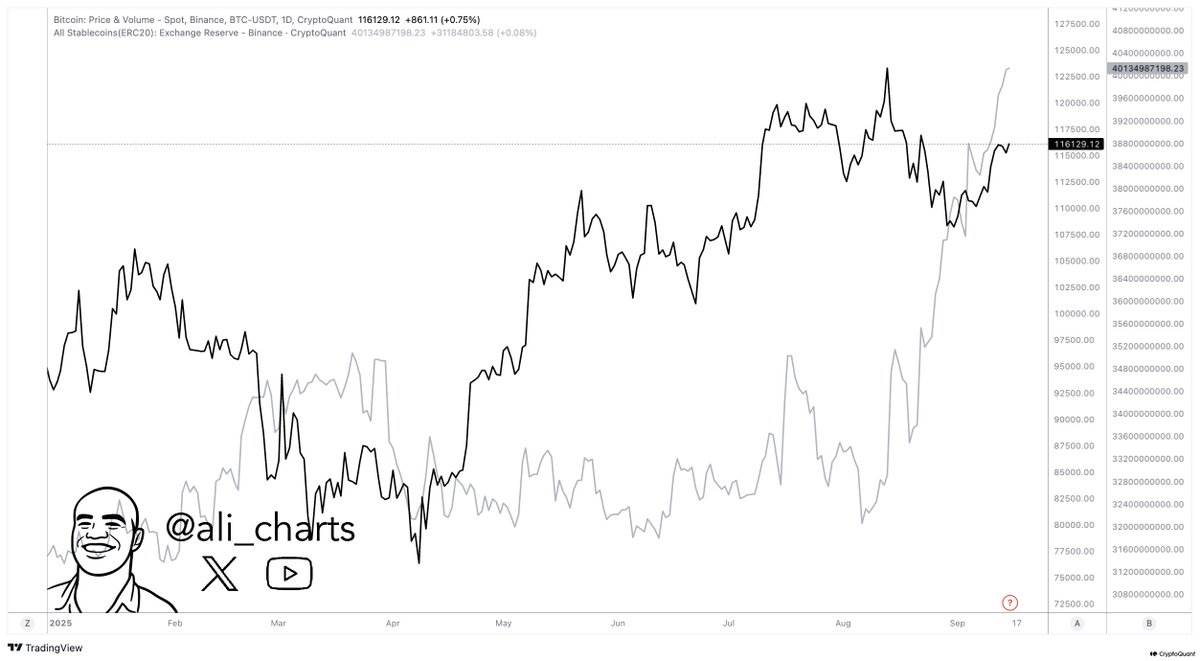
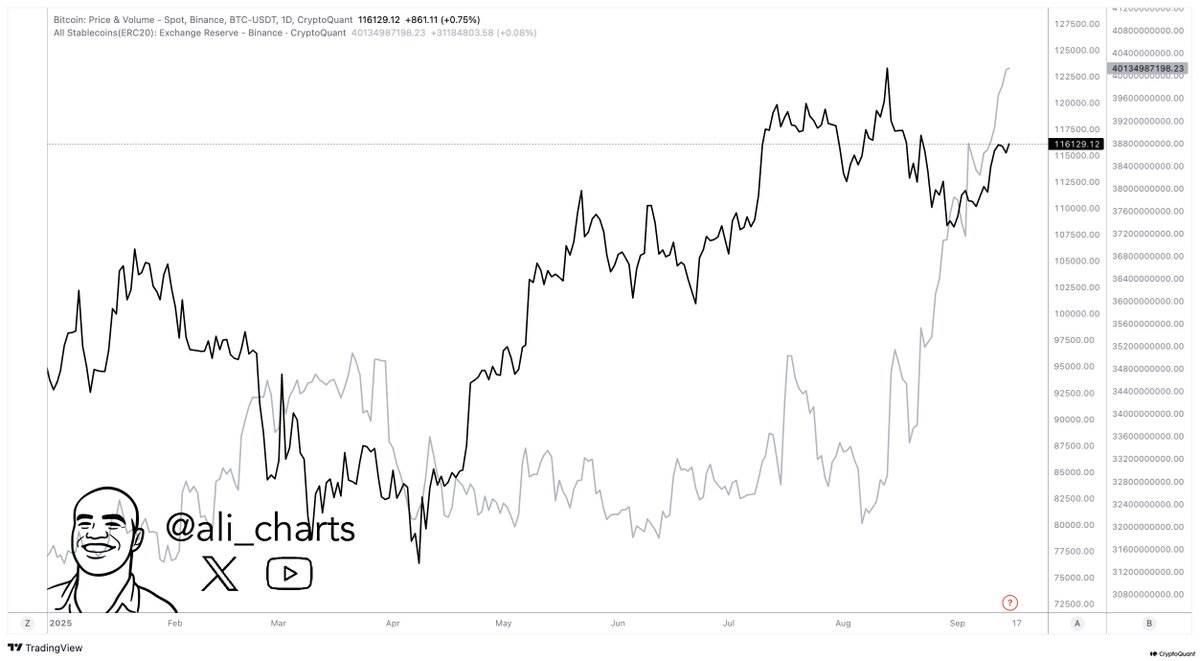
A recent set of data has sparked intense discussion in the market—Binance’s stablecoin reserves have increased significantly, from $32 billion at the beginning of the year to $44.6 billion now. In just a few months, the value has risen by 40%! This is not a small number. In the crypto market, the flow of stablecoins can often reveal investors’ true emotions.
This surge in stablecoins indicates that many funds are shifting away from high-risk crypto assets and towards relatively safe stablecoins. After the severe fluctuations last month, the market has generally entered a “wait-and-see” mode. Investors prefer to keep their assets in stable areas until clearer signals emerge in the next market trend. From this trend, it seems that stablecoins are becoming a refuge in the crypto market. This change in capital flow may also indicate that a new round of market sentiment adjustments is already underway.
In recent years, with the rapid growth of the crypto market and the increase in the number of professional investors, stablecoins have become an essential asset in the market. Given the high volatility of mainstream cryptocurrencies like Bitcoin (BTC) and Ethereum (ETH), investors often need to find risk-averse assets with more stable values. Stablecoins, which are issued based on fiat currencies like the US dollar, with prices that remain close to fixed values, are gradually becoming the “cornerstone” of stability in the crypto market.
Starting with the earliest USDT, and later introducing stablecoins such as USDC, BUSD, DAI, and TUSD, the variety and scale of stablecoins have gradually expanded. In this context, more exchanges have also started to offer trading pairs for stablecoins, providing investors with a wider range of options and creating a more active trading ecosystem for stablecoins, along with potential profit opportunities. A strategy of achieving success through stability has thus emerged. Compared to highly volatile assets, minor price deviations in stablecoin pairs have become key points in trading. This has led to the emergence of grid strategies, which are effective tools for capturing market fluctuations and generating stable returns. By combining grid strategies with the characteristics of stablecoins, investors can earn higher-quality returns with lower risk.
I. What are stablecoins?
Stablecoins are a unique type of digital asset. Unlike highly volatile cryptocurrencies like Bitcoin (BTC) and Ethereum (ETH), stablecoins operate based on a pegged to fiat currency model, such as the US dollar, thereby maintaining value stability. This makes stablecoins a valuable “foundation” for the crypto market.
Among them, USDT is the most well-known and currently the largest-valued stablecoin, ranking third among all cryptocurrencies in terms of market value. Followed by USDC, which ranks eighth in terms of total market value. In addition to these two, the number of stablecoins available on the market continues to increase. Stablecoins represented by USDE and USDS also occupy a significant share of the market.
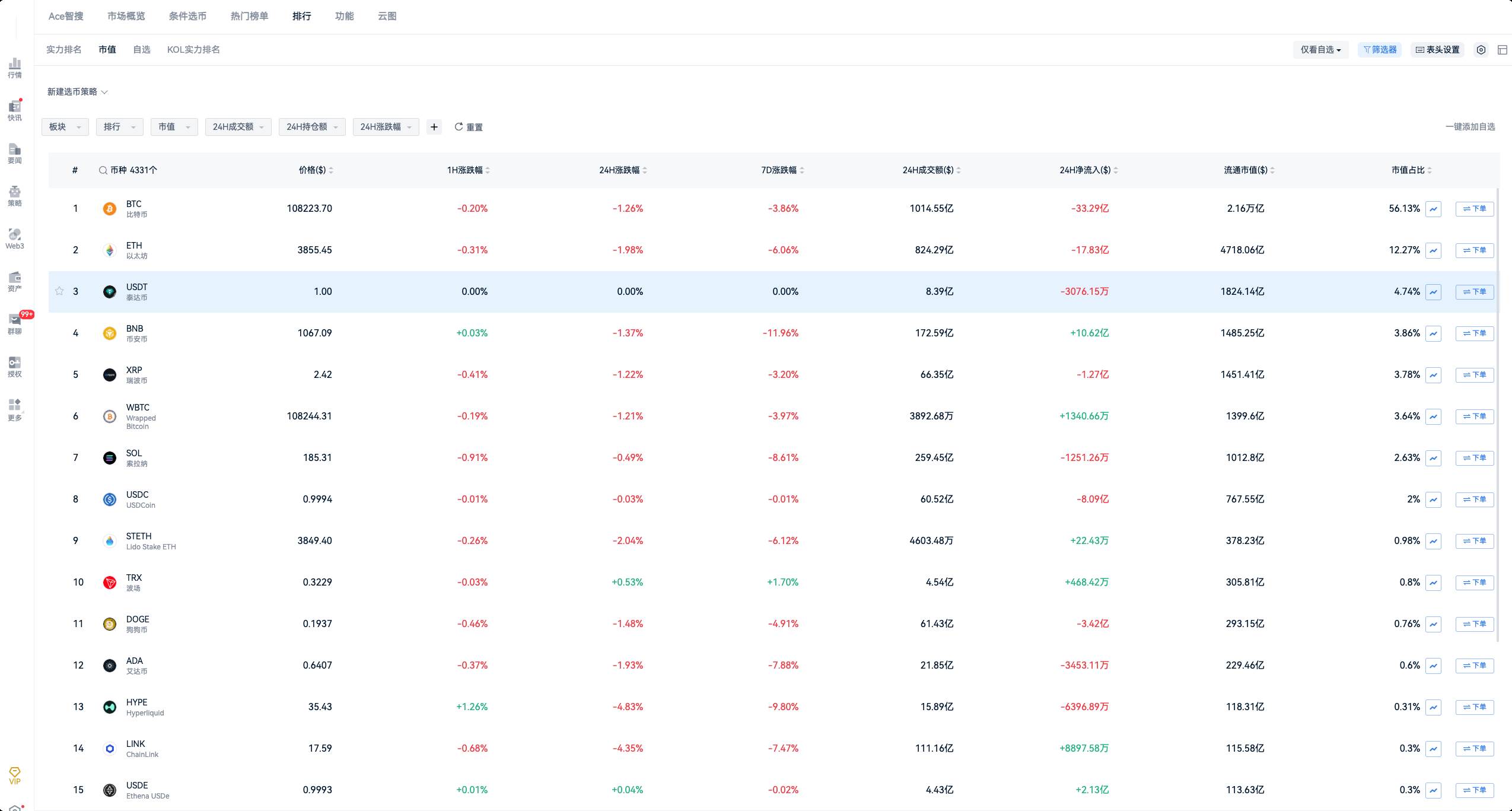
As the number of stablecoin types and their demand continue to increase, many new trading pairs of stablecoins have emerged in the market. Examples include USDC/USDT, USDE/USDT, USDS/USDT, etc. These trading pairs are widely used on major exchanges, providing investors with new opportunities to capture price fluctuations and arbitrage opportunities. For example, OKX, Binance, and Bitget offer the following trading pairs:
OKX offers:
● USDC/USDT spot
● USDC/USDT perpetual contracts
Binance offers:
● USDC/USDT spot
● USDE/USDT spot
● USDC/USDT perpetual contracts
Bitget offers:
● USDC/USDT spot
● USDE/USDT spot
● USDS/USDT spot
● USDC/USDT perpetual contracts
II. Trading characteristics of stablecoin pairs
1. Stable prices with minimal fluctuations, offering grid trading opportunities
Stablecoins are designed to be pegged to fiat currencies (such as the US dollar). Therefore, most mainstream stablecoins (such as USDE, USDC, and USDT) tend to fluctuate around the value of 1 US dollar. However, in real trading, due to factors like market supply and demand, liquidity changes, etc., the prices of stablecoin pairs may fluctuate slightly and there may be short-term deviations from the expected value.
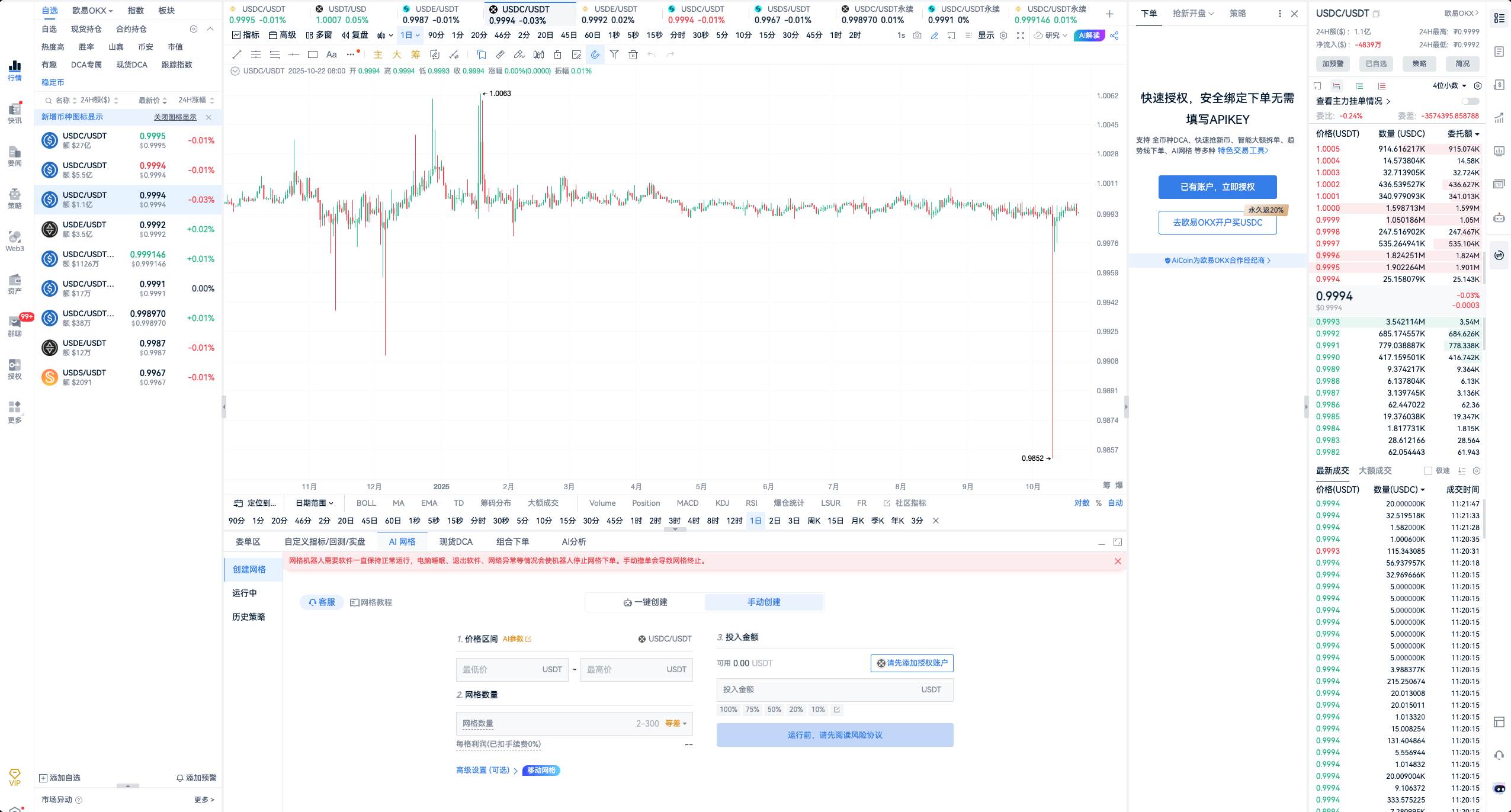
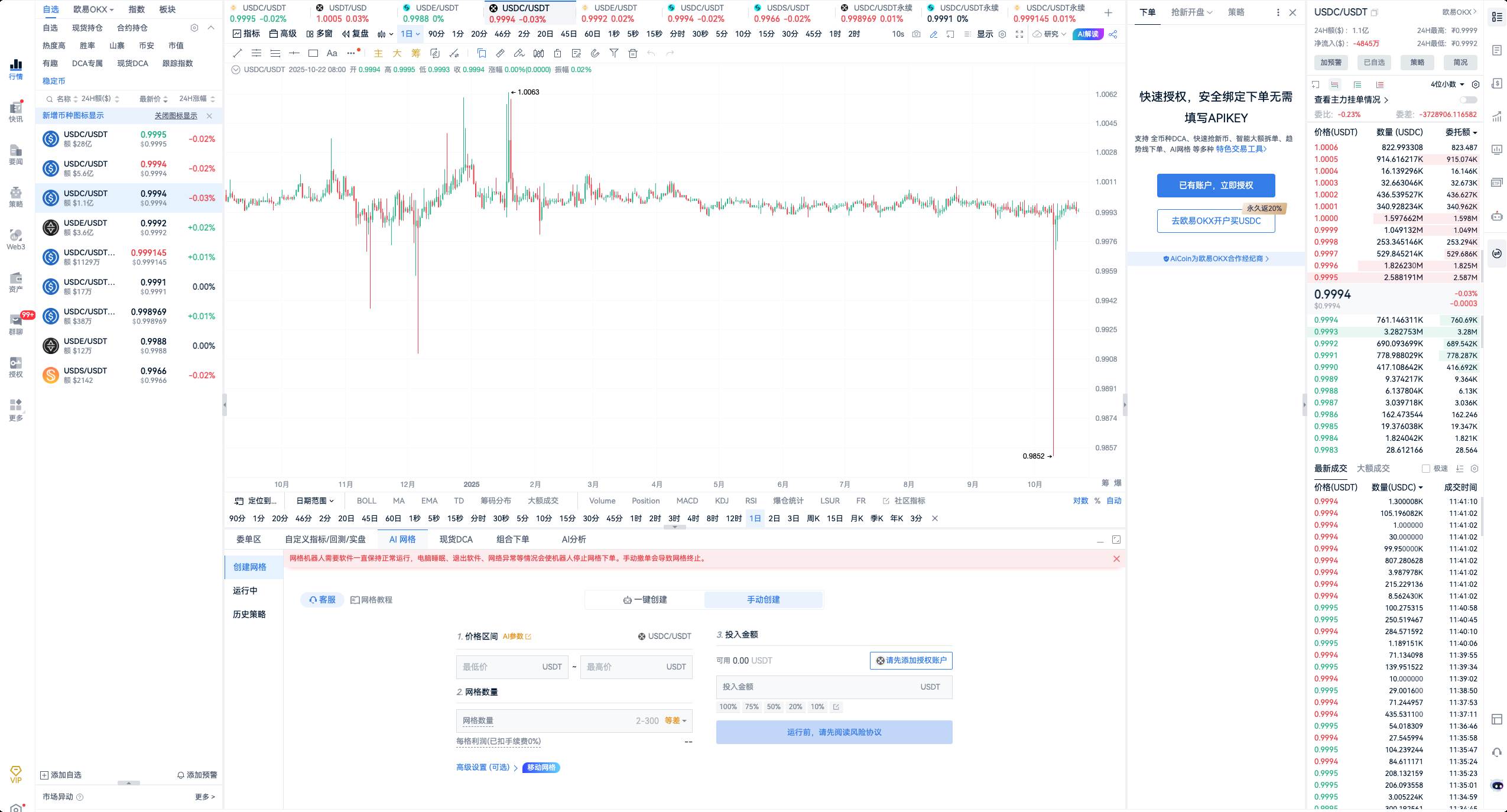
After analyzing long-term data, we found that trading pairs such as USDC/USDT have consistently experienced price fluctuations within a range close to 1.00 over a long period of time, as shown in the chart below. This regularity provides excellent trading opportunities, offering a stable foundation for strategies that rely on price movements to generate profits, such as grid trading strategies.
2. Price fluctuations create opportunities for arbitrage.
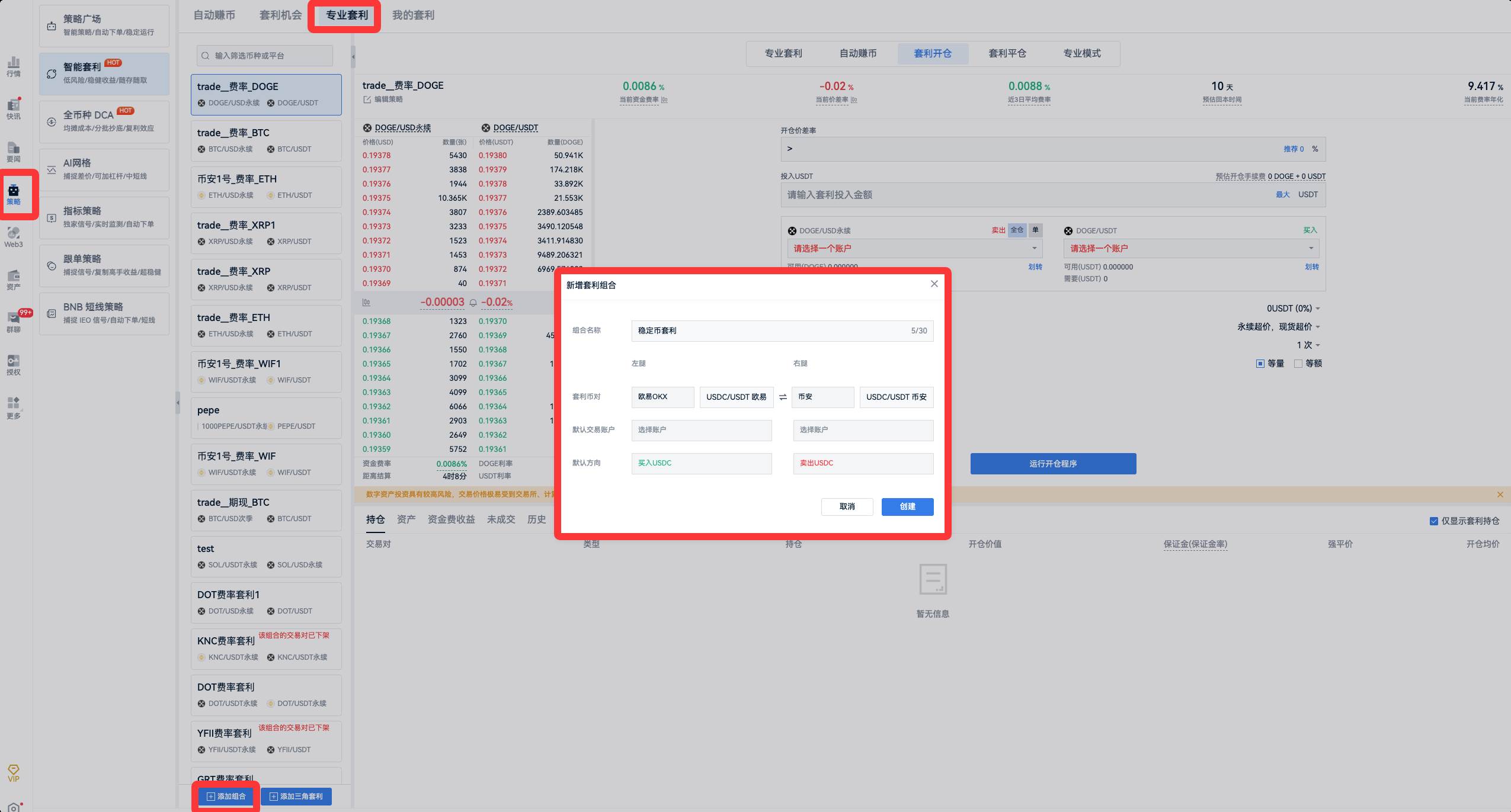
Not only on OKX exchange, but also on other exchanges like Binance, stablecoin trading pairs like USDC/USDT follow a general pattern of prices close to 1. Therefore, when prices briefly deviate from this average, it often creates opportunities for arbitrage. By monitoring prices across various mainstream exchanges (such as Binance, OKX, Bitget, etc.), traders can efficiently identify and execute cross-exchange arbitrage operations.
3. The principle behind trading stablecoin pairs using grid trading methods.
After introducing the basics of stablecoin pairs, we will further explore how stablecoin pairs can create trading opportunities and enable grid trading.
1. Volatility and trading opportunities in stablecoin pairs.
Although the prices of stablecoins are usually close to $1, their daily volatility is not completely zero. Stablecoin trading pairs like USDC/USDT still experience price fluctuations due to factors such as market supply and demand, liquidity changes, etc. This creates numerous profit-making opportunities for traders.
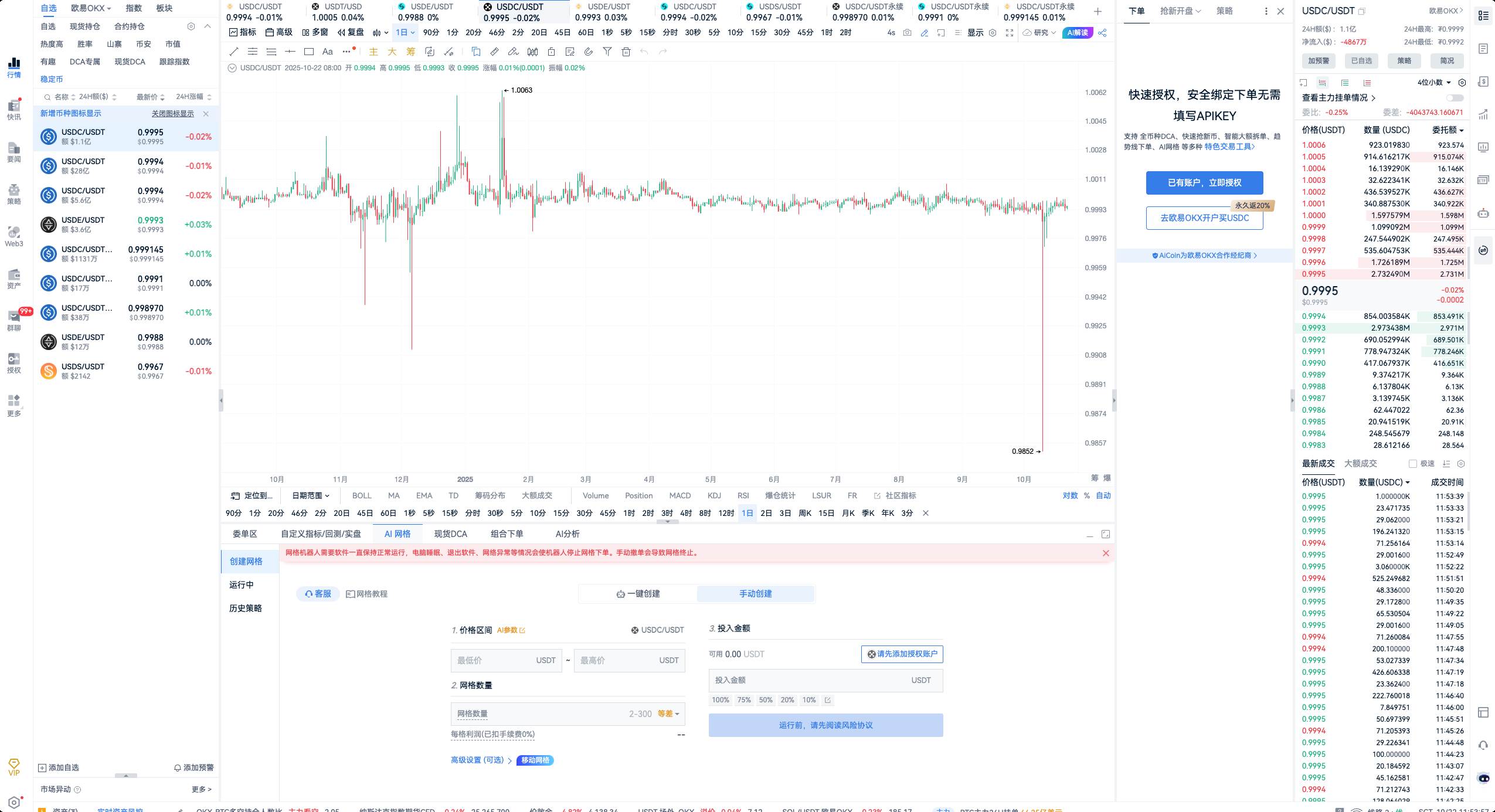
Analyzing the recent price movements of the USDC/USDT pair (as shown in the figure below), we can see that the lowest price has been 0.9852, while the highest price reached 1.0063. The range between these two values exceeds 2.14%. Although the volatility of stablecoin prices is lower than that of traditional crypto assets, it is precisely these small fluctuations that provide a basis for profit in grid trading strategies.
2. The profit model of the grid trading strategy
Asset volatility creates opportunities for trading strategies, and grid trading provides a stable mechanism for capturing these fluctuations. Suppose we use the grid strategy to trade the USDC/USDT pair, and are able to capture one-third of the daily volatility evenly. In this case, by continuously implementing this strategy over two years, we could achieve a cumulative return of over 40%, with an annualized return of more than 20%. Specifically, the grid strategy takes advantage of the frequent small fluctuations in stablecoin prices, and gradually accumulates profits through automated buying low and selling high actions.
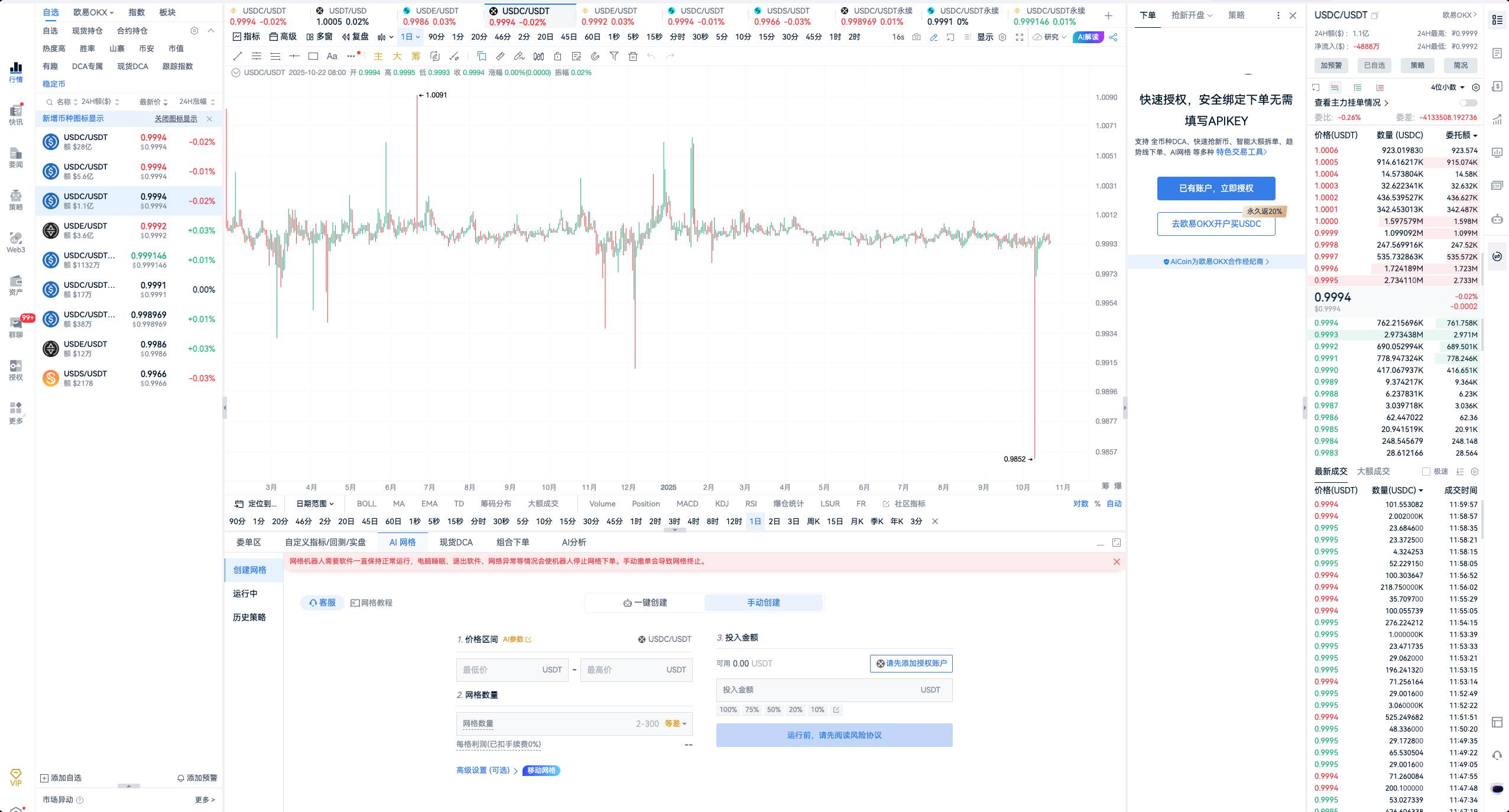
In the stablecoin trading market, in addition to the opportunities brought by regular fluctuations, if we pay attention to the distribution of orders placed near the current price, we will notice that orders close to the price are usually more concentrated, while orders farther from the current price are fewer. This uneven distribution of orders often leads to short-term sharp fluctuations in the market when large order sizes are placed, resulting in sudden increases or drops in prices. Such market conditions are known as “sharp price movements”.
Such abnormal fluctuations are not uncommon in stablecoin trading. The potential return can range from 5% to 10%, or even higher, with some extreme cases seeing returns double. Investors can capitalize on these opportunities by using grid trading strategies with significant price differentials to achieve desired profits. By observing the depth of orders placed and market trends, investors can flexibly adjust their strategies during volatile periods, thereby significantly increasing their profit potential and leveraging the market characteristics during key trading moments.
3. Summary of the principles behind stablecoin grid trading: Combining grid trading with high-frequency market making, stablecoins can take advantage of the characteristic of “deviation followed by return.” The greater the fluctuation, the higher the return, providing a natural advantage for grid trading. Grid strategies involve buying low and selling high, allowing traders to capture short-term fluctuations while avoiding the risk of grid being breached. If the grid is breached, traders can optimize their positions by increasing their stakes when the market returns to stability.
By combining grid trading with high-frequency market making, traders can capture profits from daily fluctuations in stablecoins through small grids, while also locking in high returns during key trading moments. Properly setting the spacing between grids in conjunction with high-frequency strategies can further stabilize trading results and optimize profits.
4. Automatic trading with stablecoin grid market making
The digital currency market operates almost 24/7. Whether it’s high-frequency grid market making or capturing key trading moments, manual trading methods are clearly insufficient to handle such scenarios.
If you adopt a high-frequency grid trading strategy, you need to programmatically capture the subtle fluctuations in market prices. By executing numerous transactions during price movements, you can continuously generate profits through actions such as placing orders, closing positions, etc. On the other hand, if you aim to capture explosive market opportunities, you need to monitor the liquidity of multiple pairs of assets. This is especially important when there are temporary shortages of liquidity in the market, as this can lead to significant price volatility. In such situations, using automated trading programs allows for quick responses, and it’s possible to trigger multiple grids simultaneously, thereby significantly improving profit efficiency. Under this continuous operating mode, opportunities for profit in stablecoin trading can be captured more efficiently and consistently, resulting in greater returns.
Fifthly, we recommend a stablecoin grid strategy that focuses on steady profits.
By leveraging the current ecosystem of stablecoins, we will identify new trading opportunities and strategies. We’ll help you understand stablecoins better, allowing you to enjoy stable but still flexible investment returns!