Exchange Ranking
 Top Exchanges
 24h Volume Ranking
 Popularity Ranking
 Exchange BTC Balance
 Proof of Reserves
 Decentralized Exchanges
 Funding Rate
 Funding Heatmap
 Liquidation Data
 Max Pain
 Long/Short Ratio
 Whale L/S Ratio
 Binance/Okex/Huobi L/S
 Bitfinex Margin L/S
 ETF Tracker
 Solana ETF
 XRP ETF
 Hong Kong ETF
 Bitcoin Treasuries
 Crypto Reversal
 Ethereum Reserves
 HyperLiquid Wallet Analysis
 Hyperliquid Whale Watch
 Large Transactions
 On-chain Movement
 Bitcoin ROI
 Stablecoin Market Cap
 Options Analysis
 News
News Articles
 Economic Calendar
 Features
 Wallet
 Contract Calculator


 Security
 Collections
 Watchlist
 Following
 XRP
XRP XRP fell to US$1.40: Strong employment data pushed up the Federal Reserve's interest rate hike expectations to 51%, BIS test XRPL
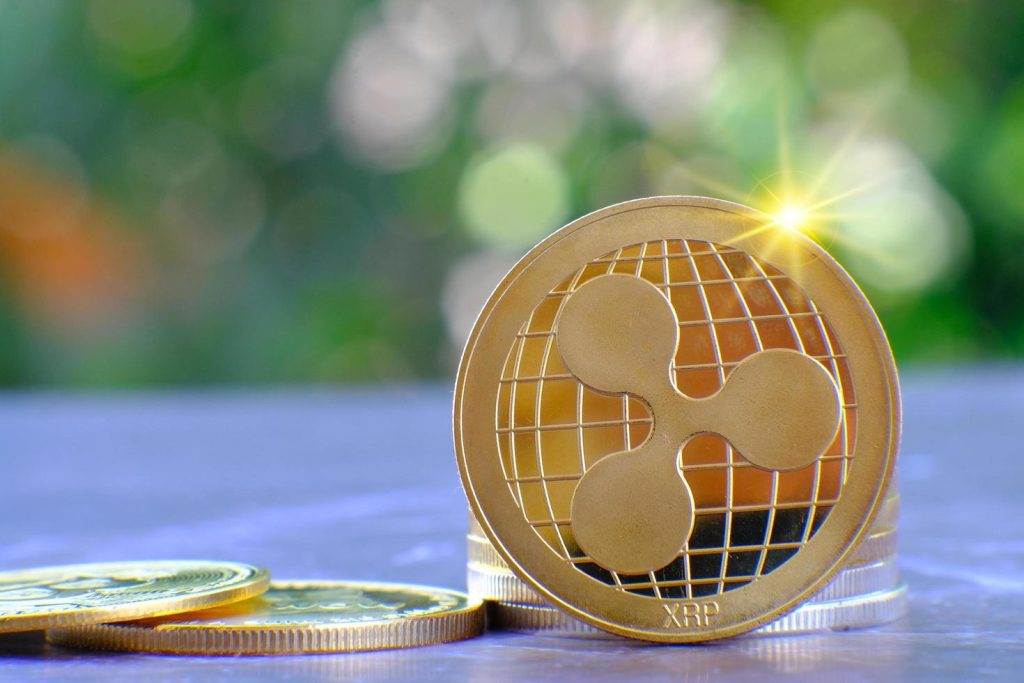
On September 5, 2026, the price of XRP slipped to about US$1.40. At the same time, the Bank for International Settlements (BIS) released a working paper aimed at testing XRP Ledger (XRPL)'s consensus protocol. The incident highlights the significant divergence between XRPL's face of the most high-profile institutional reputation test to date and the macro-driven correction of XRP assets. The correction was triggered by renewed concerns about the Federal Reserve's interest rate hike following the release of better-than-expected U.S. employment data.
As of press time, the XRP trading price was US$1.41, fluctuating within a narrow range of US$1.39 to US$1.42, showing a moderate correction trend. This trend is consistent with a decline in overall risk appetite in the crypto market, as traders are repricing the probability of tightening U.S. monetary policy. Despite weak intraday performance, the token maintained a net positive income, with a 24-hour gain of +0.77%. Currently, XRP has a market value of US$88.74 billion, and its 24-hour trading volume reaches US$1.59 billion.
Price Background and Market Sentiment
The direct reason for the correction was the release of a better-than-expected U.S. employment report. According to data, this jumped the probability of the Fed raising interest rates to 51%, thus weakening the risk appetite of speculative assets. However, the fear and greed index of the crypto market remained at 73 points (the "greedy" range). This reading confirmed that market sentiment remained generally bullish ahead of the macro shock. Therefore, the correction was a reaction to repricing of interest rates rather than a collapse of market belief.
Looking at the broader cycle, XRP has still risen 35.37% in the past 30 days and is well below the all-time high of US$3.65 set on July 17, 2025. This suggests that the current decline is a retracement in a larger uptrend rather than a trend reversal. In addition, this trend also reflects a broader crypto market sell-off, with Bitcoin also under pressure from the same interest rate narrative.
BIS's actual test of XRPL and its implications
On September 2, 2026, the Bank for International Settlements released working paper numbered 1374,"Verifiable Official Statistics: A Blockchain-Based Approach", and implemented a proof of concept on XRP Ledger DevNet. The BIS, which represents 63 national central banks, described the design as "deliberately not biased towards any particular blockchain," meaning that XRPL was selected as a test chain only because of its technological advantages and was not locked into any production system.
According to reports, the prototype anchors the cryptographic Merkle root fingerprint of the official statistical dataset into the memo field of XRPL transactions, while the underlying data itself remains off-chain. XRPL was chosen because its nominal fee per transaction is only 10 drops (0.00001 XRP), the final confirmation time is 3 to 5 seconds, it has complete developer resources, and existing research supports its consensus agreement.
In terms of performance, the paper cited a median release time of 3 to 5 seconds per data set and a verification time of 1 to 2 seconds. A single transaction can represent thousands of data sets simultaneously. The reference implementation is released as open source through BIS Open Tech, a SDMX-compliant framework co-sponsored by BIS, IMF, World Bank, European Central Bank, Eurostat, OECD, United Nations and International Labor Organization , giving multilateral legitimacy even while the blockchain layer is still in the experimental stage.
The scope limits of the project are clear and substantial. The proof of concept runs only on DevNet and is described as a "non-hardened production system." This does not mean that BIS adopts XRP as a financial asset, nor is it an announcement of the Ripple partnership. This is a research exercise, not a regulatory ruling. An accurate interpretation should be between excessive exaggeration and contempt and underestimation of "BIS adopts XRP".
Ripple CEO Brad Garlinghouse viewed the test as a verification of XRPL's core attributes, a response that also resonated with several media outlets reporting on the paper. He pointed out that low fees, fast settlement and verified records are XRPL's advantages.
How the 51% probability of raising interest rates masks bullish institutional news
The mechanism behind this paradox is simple: After employment data exceeded expectations, the probability of the Fed raising interest rates jumped to 51%. Tight monetary policy is expected to divert capital into cash and bonds, making speculative assets such as cryptocurrencies relatively unattractive. This re-pricing instantly affected the entire sector, so XRP fell simultaneously with the market rather than acting in isolation.
The time point reveals the nature of causality. The BIS paper was released on September 2, and three days later, on September 5, with the release of employment data, price weakness became apparent. This suggests that causality clearly points to macro catalysts rather than institutional signals. BIS news has either been absorbed by the market or exists as long-term fundamentals rather than immediate price drivers.
The decline even as the Fear and Greed Index remained high at 73 highlights how macro shocks can overwhelm existing bullish positions. In 2024 and 2025, anxiety about raising interest rates has led to multiple risk-averse episodes in the crypto market, and this pattern is repeated again.
XRP ETF inflows suggest a correction rather than a reversal
The structural force against macro selling lies in continued institutional demand. Since July 17, 2026, five XRP ETFs listed in the United States have recorded capital inflows for eight consecutive weeks, with total net assets reaching US$1.48 billion, accounting for approximately 1.69% of XRP's market value. This accumulation continues during the current period of volatility, distinguishing short-term interest-rate driven price behavior from medium-term capital flows.
The divergence between fund demand and spot performance is not new for such assets. It has previously been recorded that U.S. XRP funds outperformed tokens during a certain rally. According to unconfirmed reports, Bitwise research director Ryan Rasmussen pointed out in a presentation to 400 wealth managers that XRP is the most requested token, although the data point has not been independently verified.
Given that XRP has risen 35.37% in the past 30 days and spot prices are well below the historical record of US$3.65, ETF trends maintain the narrative integrity that has accumulated over time, even if the short-term direction is subject to Fed policy. More broadly, policymakers are also weighing forward-looking risks, such as the G7's push for the transition of the main chain to backward quantum cryptography.
Frequently Asked Questions (FAQ)
Why is BIS testing XRPL, but XRP is falling?
Macroscopic interest rate hikes drove market-wide risk aversion action on September 5, when the probability of a Fed rate hike rose to 51% due to a strong jobs report. The BIS paper released on September 2 is a long-term fundamental signal rather than an immediate price catalyst, with time differences pointing to macro data as the cause of the decline.
What exactly did BIS test on XRP Ledger?
BIS ran a proof-of-concept on DevNet, anchoring the cryptographic fingerprints of the official statistical dataset into the XRPL transaction memorandum, leaving the actual data offline. This is just research work, clearly stated as a "non-reinforced production system" and not a partnership with Ripple.
Does BIS test XRPL mean an increase in XRP prices?
BIS's participation is a positive reputation signal for XRPL, but its design clearly does not favor any particular blockchain, so there is no guarantee that XRPL will be selected for any production deployment. Short-term prices are currently determined by macro factors rather than the paper.
How does the Federal Reserve's interest rate increase affect XRP prices?
Higher interest rates make cash and bonds relatively more attractive, reduce risk appetite, and draw capital away from speculative assets such as cryptocurrencies, putting pressure on prices across the sector, including XRP.
Are investors still buying XRP despite the decline?
The U.S. -listed XRP ETF recorded capital inflows for eight consecutive weeks from July to September 2026, with total net assets reaching US$1.48 billion, indicating that institutional accumulation continued during the correction period.
Specific triggers to focus on next include: the Fed's response to upcoming inflation and labor data, which will confirm or eliminate a 51% probability of a rate hike; whether the BIS shifts from DevNet to a reinforcement or production phase implementation; and whether the XRP ETF inflows extend for a ninth week to strengthen the judgment of a "correction rather than a reversal."
Disclaimer : This article is for reference only and does not constitute financial or investment advice. There are significant risks in the cryptocurrency and digital asset markets. Be sure to conduct independent research before making a decision.