Exchange Ranking
 Top Exchanges
 24h Volume Ranking
 Popularity Ranking
 Exchange BTC Balance
 Proof of Reserves
 Decentralized Exchanges
 Funding Rate
 Funding Heatmap
 Liquidation Data
 Max Pain
 Long/Short Ratio
 Whale L/S Ratio
 Binance/Okex/Huobi L/S
 Bitfinex Margin L/S
 ETF Tracker
 Solana ETF
 XRP ETF
 Hong Kong ETF
 Bitcoin Treasuries
 Crypto Reversal
 Ethereum Reserves
 HyperLiquid Wallet Analysis
 Hyperliquid Whale Watch
 Large Transactions
 On-chain Movement
 Bitcoin ROI
 Stablecoin Market Cap
 Options Analysis
 News
News Articles
 Economic Calendar
 Features
 Wallet
 Contract Calculator


 Security
 Collections
 Watchlist
 Following
 BTC
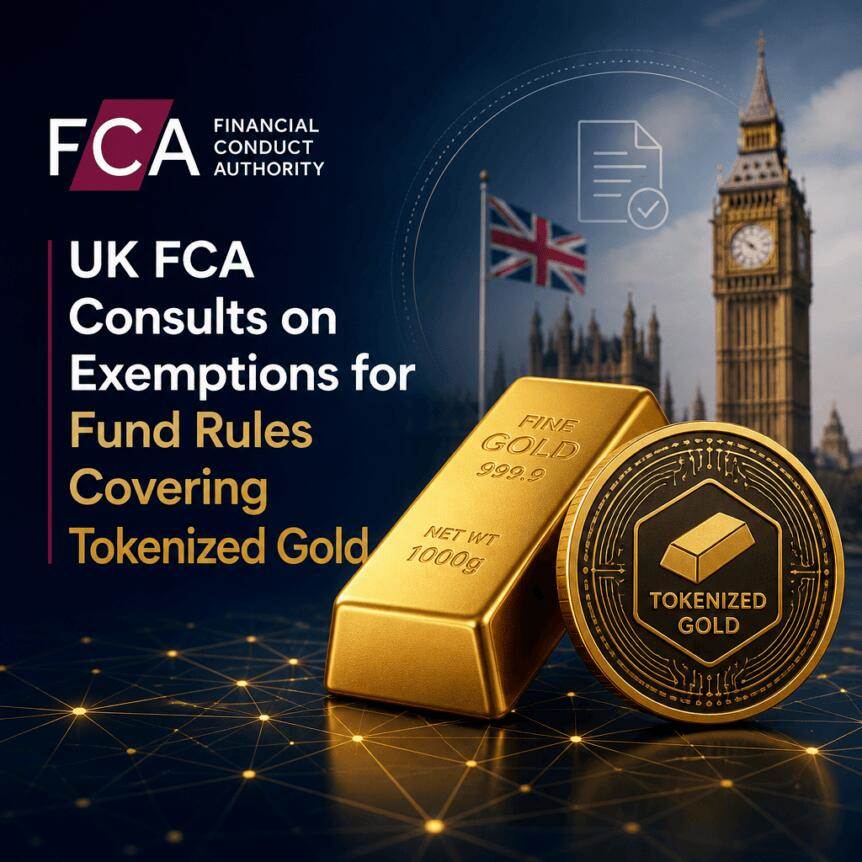
BTC The UK's Financial Conduct Authority seeks public comment on exemptions from certain fund rules for tokenized gold products
The UK's Financial Conduct Authority (FCA) has launched a consultation process to collect opinions on whether certain tokenized gold products should be exempted from certain UK fund rules. The move comes as regulators weigh how tokenization technology can reshape all aspects of wholesale financial market infrastructure, including transactions, transfers, pledges and custody.
The FCA made it clear in its request for comment issued on Monday that its focus is on tokenized products that represent ownership of physical gold, which require transparent underlying asset support, clear ownership rights and redemption arrangements designed to operate reliably. The consultation will close on October 23.
Core Points
- Classification evaluation: The FCA is evaluating whether some tokenized gold products fall within the regulatory scope of the UK Collective Investment Scheme (CIS) or Alternative Investment Fund (AIF). This classification will have a substantial impact on market participation.
- Regulatory concerns: Regulators are concerned that ambiguity in the scope of application of fund rules may delay the development of tokenized gold application scenarios, including its potential use in wholesale collateral.
- Policy response: The FCA may respond to industry feedback by clarifying existing rules, establishing recognized regulatory classifications, or considering targeted rule or legislative changes.
- Macro background: The consultation is part of a broader effort in the UK to promote wholesale grade tokenization and also involves the FCA's collaborative work with the Bank of England.
Why the classification of tokenized gold is important
The main driving force for the FCA's consultation is risk considerations: depending on the structure, tokenized gold products may be classified as CIS or AIF, or there is uncertainty as to whether they meet these thresholds. Regulators have warned that if the classification of products is unclear, it may affect investors 'willingness or even ability to hold these tokens.
For market participants, classification determines the regulatory expectations that follow, including the compliance framework that must be applied. This will affect product design, distribution plans, and institutional investors 'willingness to use tokenization tools in real-world settlement and collateral workflows.
FCA said it will consider multiple policy options based on industry feedback. These include clarifying how existing rules apply, developing recognized classification systems for specific regulatory purposes, and assessing whether targeted rule changes are needed-or legislative adjustments if necessary. In addition, if stakeholders indicate that the current framework is not suitable for tokenization mechanisms in wholesale scenarios, the FCA also reserves the possibility of establishing a special regulatory system for tokenized gold or commodities.
Wholesale level tokenization: Regulators signal progress, focus on collateral applications
The FCA's consultation occurred simultaneously with a feedback statement jointly issued by the FCA and the Bank of England on tokenization in wholesale financial markets. In the statement, regulators noted that they received 123 responses to a May consultation and that the business community generally supported the UK's work on wholesale tokenization.
"Collateral" became the most frequently discussed application scenario in replies. Companies requested further clarification of the qualifications of tokenized collateral, and explicitly mentioned tokenized money market funds, gold and stablecoins. This focus is consistent with the FCA's current inquiry about tokenized gold not only as a tradable asset, but also potentially as collateral in wholesale arrangements.
Looking ahead, the FCA and the Bank of England said they plan to release a tokenization roadmap later this year outlining specific details and target dates for the different working groups. This is important for investors and developers, because roadmap often foreshadows what form guidance will take-be it clarifications, new categories, exemptions, or other regulatory paths to unlock product development.
London's gold market remains the backdrop for UK policy
The backdrop for this policy debate is London's dominant position in global gold trading. According to the World Gold Council, London accounts for about 70% of the total nominal trading volume in the over-the-counter gold market. In effect, this means that changes in the way gold is represented and mobilized (such as through tokenization formats) could have a ripple effect on participants who rely on wholesale market infrastructure.
The FCA has previously discussed the possibility of tokenizing the gold framework with banks and other market participants. The latest consultation essentially translates previous discussions into a formal feedback process on regulatory adaptability.
The broader UK regulatory landscape also includes ongoing work related to stablecoins and central bank digital currency experiments. In addition, the Bank of England has been testing the interoperability of digital pounds in cross-border payments. While these initiatives are different from tokenized gold, they reflect a gradual, multi-track approach to the tokenized finance area that covers asset issuance and settlement.
Outlook for next steps in tokenized gold projects
As consultations continue until October 23, the pressing question facing developers and issuers is how to design tokenized gold products, especially those intended for wholesale collateral, to make regulatory classifications clearer and enhance market confidence. If the FCA concludes that some of the existing fund rule frameworks do not fit well with physically backed tokenized gold, regulators may turn to providing clearer guidance, targeted exemptions or a more customized regulatory regime.
All parties should pay close attention to the industry response and the subsequent roadmap signals released by the FCA later this year, as the actual impact will depend on whether regulators can reduce classification ambiguity without weakening investor protection. The end result may affect the pace at which tokenized gold products expand from the pilot phase to wider wholesale applications.