Exchange Ranking
 Top Exchanges
 24h Volume Ranking
 Popularity Ranking
 Exchange BTC Balance
 Proof of Reserves
 Decentralized Exchanges
 Funding Rate
 Funding Heatmap
 Liquidation Data
 Max Pain
 Long/Short Ratio
 Whale L/S Ratio
 Binance/Okex/Huobi L/S
 Bitfinex Margin L/S
 ETF Tracker
 Solana ETF
 XRP ETF
 Hong Kong ETF
 Bitcoin Treasuries
 Crypto Reversal
 Ethereum Reserves
 HyperLiquid Wallet Analysis
 Hyperliquid Whale Watch
 Large Transactions
 On-chain Movement
 Bitcoin ROI
 Stablecoin Market Cap
 Options Analysis
 News
 Articles
 Economic Calendar
 Features
 Wallet
 Contract Calculator


 Security
 Collections
 Watchlist
 Following
CFTC crypto exchange regulatory plan: Strengthen supervision of custody platforms, temporarily exclude chain trading from federal jurisdiction
The U.S. Commodity Futures Trading Commission (CFTC) said on Monday that its rules plan for cryptocurrency exchanges will strengthen supervision of custody trading platforms and exclude self-custody and chain trading from the scope of federal supervision.
The CFTC outlined two interrelated frameworks in a proposed advance notice of rulemaking: the Regulation CTX and the Regulation CAM. The move aims to solicit public comment before the rules are formally drafted, and once the notice is published in the Federal Register, the public will have 60 days to comment.
Leveraged Transactions and Private Key Standards
According to the CTX Regulations, even if leverage is provided only through the terms of service, transactions with full payment will be regulated by the CFTC as long as the purchased cryptocurrency is stored in the exchange's internal books rather than the customer's own wallet. Only transactions through "actual delivery" are exempt from such regulation, which the agency suggests may require customers to hold their own private keys. The CFTC also pointed out that on-chain trading agreements can usually meet this standard.
However, the "private key standard" is currently only a preliminary recommendation and has not yet become an established policy. Agencies are also weighing reserve certification requirements and listing standards for vulnerable tokens, but neither has been finalized.
Market segmentation and licensing system
This exemption clause draws a clear line in the U.S. market. Exchanges that keep client assets on their own books and provide leverage will face a federal regulatory system. Among them, the "CAM Regulations" create a license called the "Crypto Asset Market" with a model similar to the status of a futures exchange. Transactions under this license must be conducted through futures commission merchants, these brokers are subject to anti- money laundering regulations, and leveraged funds can only come from these brokers or banks they sponsor . Exchanges that do not provide any leveraged services can continue to operate under a state-level money carrier license.
Change in regulatory thinking
This move also marks a shift in the CFTC's own position. The notice describes the cases it filed against Kraken, Ooki DAO and Uniswap during the Biden administration as "regulated through law enforcement."
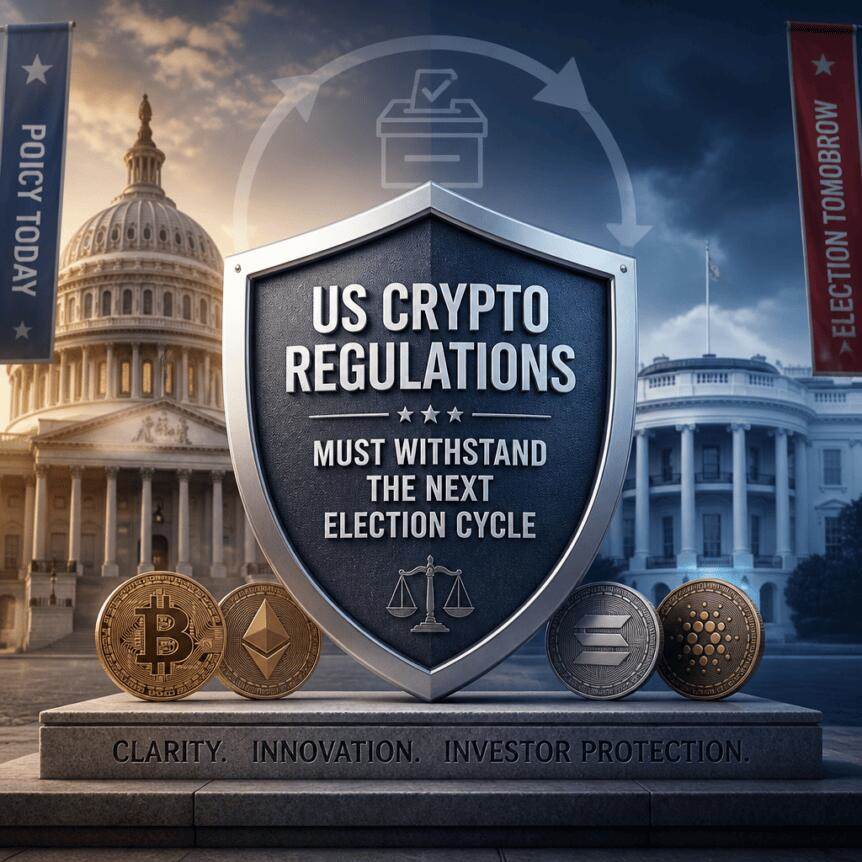
The plan was introduced in the context of the failure of congressional legislation. The Clarity Act, which aims to set ground rules for most U.S. encryption activity, failed in the Senate in September, and the CFTC submitted the framework to the White House for review. Chairman Michael Selig said in August that if Congress did not act, the agency would make its own rules.
Selig said the rules were "designed to prevent, rather than just prosecute, fraudulent schemes such as FTX."
Coordination with other regulatory agencies
At the same time, the U.S. Securities and Exchange Commission (SEC) is also moving forward on a parallel track, proposing its own Regulation Crypto Assets in August and introducing an innovation exemption for tokenized stocks last month. At present, it is unclear how the frameworks of the two institutions work together.