Exchange Ranking
 Top Exchanges
 24h Volume Ranking
 Popularity Ranking
 Exchange BTC Balance
 Proof of Reserves
 Decentralized Exchanges
 Funding Rate
 Funding Heatmap
 Liquidation Data
 Max Pain
 Long/Short Ratio
 Whale L/S Ratio
 Binance/Okex/Huobi L/S
 Bitfinex Margin L/S
 ETF Tracker
 Solana ETF
 XRP ETF
 Hong Kong ETF
 Bitcoin Treasuries
 Crypto Reversal
 Ethereum Reserves
 HyperLiquid Wallet Analysis
 Hyperliquid Whale Watch
 Large Transactions
 On-chain Movement
 Bitcoin ROI
 Stablecoin Market Cap
 Options Analysis
 News
 Articles
 Economic Calendar
 Features
 Wallet
 Contract Calculator


 Security
 Collections
 Watchlist
 Following
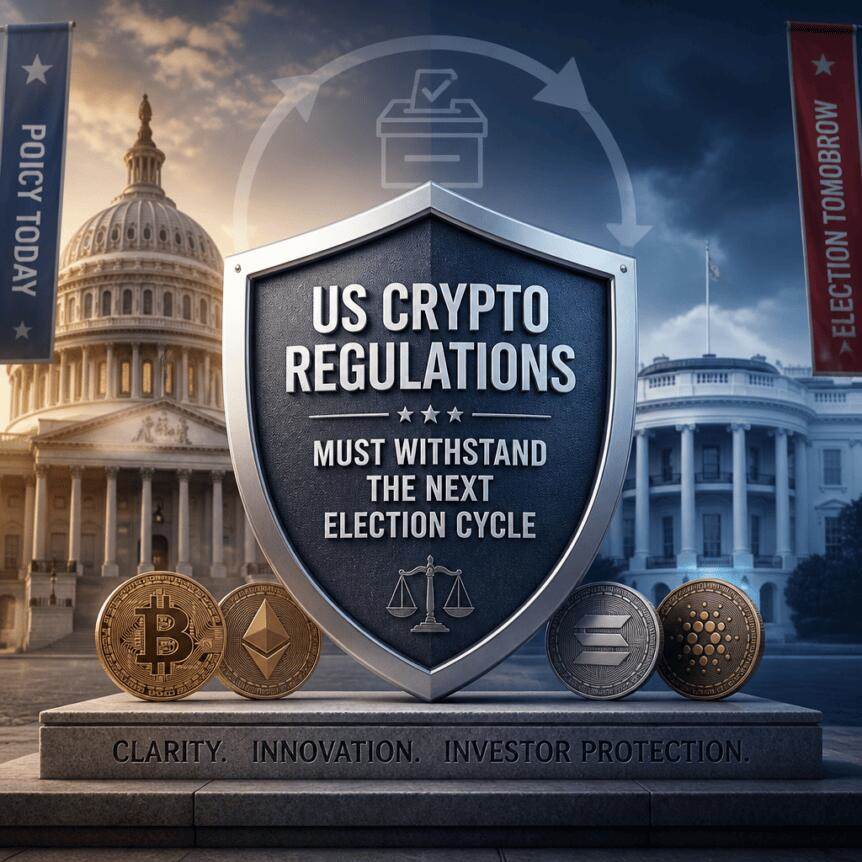
U.S. digital asset regulation: lack of policy uncertainty under a unified legislative framework
Although the United States has not yet established a unified legislative framework for digital asset regulation, former New York Gov. Andrew M. Cuomo (2001) Cuomo pointed out in a commentary that current policy uncertainty is putting heavy pressure on developers, investors and ordinary consumers. Como cited the CLARITY Act as an example. Although the bill was passed by the U.S. House of Representatives in 2025, it has not yet been submitted to the President for signature. He believes the bill aims to clarify how regulators such as the Securities and Exchange Commission (SEC) and the Commodity Futures Trading Commission (CFTC) supervise markets.
As Congress failed to push for further implementation of the bill, Cuomo said federal agencies turned to using existing authority to push for new rules. He commented that this practice may have a supporting effect in the short term, but is fragile in the long term because it lacks the lasting effect of laws formally enacted by Congress.
Core Points
- Status of the CLARITY Act: The CLARITY Act, which aims to create a national regulatory framework for digital assets, was passed in the House of Representatives in 2025, but has not yet entered the next legislative process.
- Limitations of agency-led legislation: Cuomo believes that rulemaking led by regulators is not as durable as Congressional legislation because the former may be reversed or subject to political constraints.
- Impact of changes in power in Congress: He warned that the next change in congressional powers could significantly affect the way cryptocurrency regulation is implemented or the challenges it faces.
- Call for bipartisan cooperation: Cuomo urges passage of bipartisan digital asset legislation to reduce ambiguity and allow companies to invest in a more certain regulatory environment.
- Drawing on international experience: He cited Europe's Crypto Asset Markets Regulation (MiCA) and Singapore's Payment Services Act as examples of other jurisdictions moving towards clear rules.
Why the CLARITY Act is in focus
Como attributed the core issue to the mismatch between rapidly developing technology and the incomplete federal regulatory process. In his view, the CLARITY Act was designed to fill this gap by establishing clearer national rules for digital assets and defining the respective areas of responsibility of the SEC and the CFTC.
He pointed out that although the bill was passed by the House in 2025, Congress has not yet submitted it to the president. Previous reports pointed out that the Senate failed to advance the bill in September, leaving uncertainty about the future direction. For market participants, this legislative stagnation is significant because it leaves unresolved issues such as enforcement and market structure-issues that directly affect whether companies choose to develop products in the United States, recruit locally, and raise funds on a stable legal basis.
Institutional rule-making fills gaps, but brings political risks
Against the backdrop of congressional gridlock, Cuomo believes that the SEC and CFTC have quickly reshaped cryptocurrency regulation with new rules. The article described the move as an attempt to restructure the market in the absence of Congressional-level market structure laws, including proposing a federal framework for cryptocurrency trading platforms and implementing a more targeted regulatory regime for specific crypto assets.
While Cuomo acknowledged that these regulatory initiatives could create opportunities in the short term, he emphasized that they relied on the agency's existing legal authority rather than newly enacted laws. He believes that distinction affects the durability of the rules and creates political vulnerability-especially if Congress opposes the rules or attempts to restrict agency action.
From the perspective of investors and operators, the risk he highlighted was not just regulatory changes, but that rules could be modified, repealed or substantively destabilized as political priorities shift after the election.
How elections reshape cryptocurrency regulation
Cuomo's core warning is that the regulatory environment for digital assets may be particularly sensitive to political control in Washington. He pointed out that forecasts of markets and election trends suggest that Democrats may control one or two congressional seats after the midterm elections, and argued that Congress's ability to hinder agency action should not be underestimated.
He cited his experience during the 1994 midterm elections, when Republicans controlled both houses of Congress. Cuomo described how regulation was strengthened, how money became leveraged, and how congressional tools were used to challenge and restrict executive branch agencies. His view is that cryptocurrency policy, driven in part by administrative rulemaking, could face similar scrutiny if political dynamics change.
He also outlined several congressional mechanisms that could affect agency oversight, including requiring agencies to submit before rules take effect, potential budget constraints, legislation to overturn agency actions, and the Congressional Review Act to repeal regulatory provisions. He further pointed out that investigations and hearings-in conjunction with subpoenas-could also add operational uncertainty to regulated industries.
In practice, this means that compliance planning may become a changing goal if major regulatory decisions are seen as relevant to a particular political moment rather than being rooted in enduring bipartisan legislation.
What can the United States learn from other regulatory frameworks
Como believes that the United States should combine technological innovation with consistent and understandable regulatory oversight. When the legislative path stalled, he said, ambiguity remained-which could cause problems for business decisions, investor confidence and consumer protection.
In his view, a stable regulatory system should clarify what is legal and what is prohibited, who is responsible for supervising specific activities, and how to enforce them. He emphasized that companies should not make long-term investments based on which party controls Congress or the executive branch.
他将美国的情况与其他转向更清晰标准的司法管辖区进行了对比。在文章中,他引用了欧洲《加密资产市场法规》(MiCA)和新加坡《支付服务法》作为提供监管确定性和设定市场预期的框架范例。
科莫总结道,通过两党授权来规范数字资产活动应成为下一届国会的首要任务——这一努力旨在减少不确定性,使企业能够在美国安全、理性地投资,同时解决消费者保护和市场诚信问题。
展望未来
当前的问题是,国会是否会重新激活《CLARITY法案》,或在选举驱动的政治转变改变现有机构规则轨迹之前,寻求替代性的两党立法。对于市场参与者来说,需要关注的关键变量不仅是监管机构宣布了什么,更是国会是将这些规则视为既定政策,还是视为可以重新开启讨论的内容。