Exchange Ranking
 Top Exchanges
 24h Volume Ranking
 Popularity Ranking
 Exchange BTC Balance
 Proof of Reserves
 Decentralized Exchanges
 Funding Rate
 Funding Heatmap
 Liquidation Data
 Max Pain
 Long/Short Ratio
 Whale L/S Ratio
 Binance/Okex/Huobi L/S
 Bitfinex Margin L/S
 ETF Tracker
 Solana ETF
 XRP ETF
 Hong Kong ETF
 Bitcoin Treasuries
 Crypto Reversal
 Ethereum Reserves
 HyperLiquid Wallet Analysis
 Hyperliquid Whale Watch
 Large Transactions
 On-chain Movement
 Bitcoin ROI
 Stablecoin Market Cap
 Options Analysis
 News
 Articles
 Economic Calendar
 Features
 Wallet
 Contract Calculator


 Security
 Collections
 Watchlist
 Following
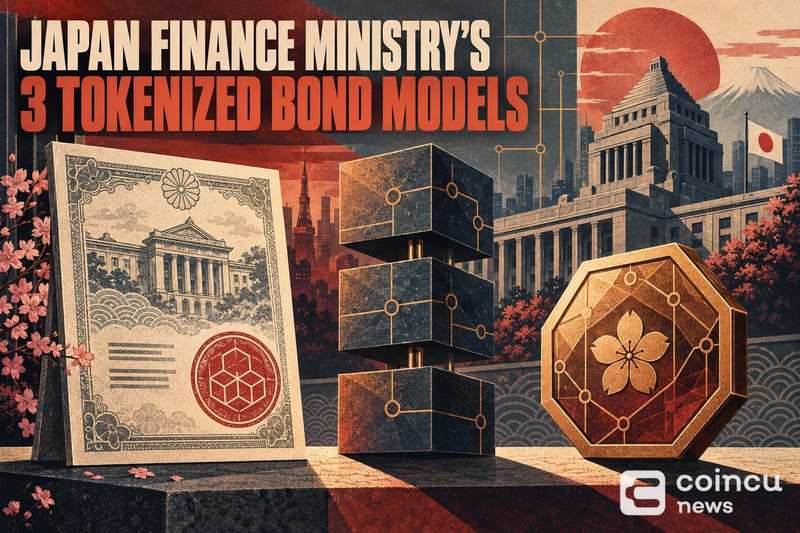
日本财务省提出三种代币化国债发行结构模型
据相关报道,日本财务省提出了一项提案, outlining 了三种不同的代币化政府债券发行结构模型。这标志着世界第三大经济体在主权债务数字化方面迈出了正式一步。截至本文发布时,财务省尚未确认是否有任何一种模型将进入实施阶段,且所有三个框架的关键结构细节均未公开披露。
财务省提案的核心内容
财务省的提案核心在于“代币化政府债券”。这是一种主权债务形式,其所有权记录和转移通过分布式账本进行,而非传统的中央证券存管机构基础设施。与传统的日本国债(JGB)不同,代币化版本理论上能够实现近乎即时的结算、可编程的利息支付,并使零售投资者无需通过经纪人中介即可直接参与投资。
财务省将这一问题框定为三种替代模型之间的选择,而非单一指定的设计。这一结构表明,该提案仍处于咨询阶段,而非宣布启动阶段。截至本文发布时,独立核实来源中并未披露模型1、模型2和模型3的具体区别;关于发行、托管、结算轨道以及合格参与者等具体机制仍待进一步披露。
为何此时提出该提案至关重要
Japan has one of the deepest government bond markets in the world, with Japanese government bonds issuing covering institutional investors, regional banks and retail depositors. Even if the tokenization framework covers only a small portion of the market, it would be a major stress test of blockchain-based sovereign debt infrastructure, a departure from the smaller pilot projects carried out by the European Central Bank and multilateral lenders in recent years.
The proposal is made against the backdrop of increasing volatility in global bond markets and growing pressure on governments to modernize debt management and attract a broader investor base.
Three major models: confirmed and unconfirmed matters
The Ministry of Finance proposed three independent models rather than the unified design of the framework itself has information content. In the context of sovereign digital assets, multi-model proposals often reflect unresolved trade-offs in at least three dimensions: the degree of fragmentation of the underlying ledger, the role of licensed intermediaries in relation to direct government issuance, and how to manage liquidity in secondary markets. As of the time of publication of this article, official documents have not confirmed whether Japan's three models correspond to these differences.
Given the lack of verified source documentation, any analysis of the specific mechanisms of Model 1, Model 2, or Model 3 (including settlement final rules, custody arrangements, or KYC frameworks) will be speculative. The Ministry of Finance's complete proposal text, consultation documents or supporting technical appendices have not been independently confirmed from the sources on which this article is based. Readers should treat specific model details reported elsewhere as unconfirmed unless they can be traced to official Ministry of Finance documents.
How the tokenized Japanese government bonds framework may shape the Japanese bond market
No matter which model is ultimately selected, a finalized framework will require coordination between the Ministry of Finance, the Bank of Japan (Central Bank), the Financial Services Agency (FSA) and the Japan Securities Depository Center. The decision on the settlement currency-whether the yen stablecoin or the central bank digital currency will serve as a cash leg-will have the most significant downstream impact on market infrastructure. The growing role of stablecoins as commercial settlement infrastructure means that this option will come under close scrutiny from domestic regulators and international observers.
For institutional investors, the three-model structure introduces a choice risk: if a commitment is made to establish custody and compliance infrastructure before the Ministry of Finance makes a choice, conversion costs will arise once a different framework is adopted. For retail investors and digital asset infrastructure providers, the proposal sends a signal of intent, but fails to provide the legal certainty needed to build distribution products or custody services. In Japan's legislative process, there can be years of gaps between ministerial proposals and binding legal frameworks.
Subsequent development of proposals
Ministerial proposals of this structure typically go through a public comment period, cross-agency review, and congressional legislative or regulatory amendment cycles before any model can be used for actual release. As of the time of publication of this article, there were no confirmation messages regarding model selection schedules, consultation deadlines, or pilot release goals. The Ministry of Finance has also not publicly stated whether it plans to pilot all three models at the same time and select one for development, or postpone until the working group recommends it.
Investors and infrastructure providers should pay attention to the official release of the Ministry of Finance's complete proposal document, which will define model qualification standards, ledger technical requirements, and regulatory scope. Any FSA rule amendment or Bank of Japan digital currency coordination announcement related to this proposal will be the next specific milestone. In the absence of these triggers, the proposal remains in the framework state under consideration rather than an established release roadmap.
FAQs: Japan's tokenization government bond proposal
什么是代币化政府债券?
代币化政府债券是主权债务工具,其所有权和转让权以分布式账本上的数字代币形式表示,与传统的证券基础设施相比,能够实现可编程结算,并可能扩大投资者覆盖面。
日本财务省提出了多少种模型?
根据财务省的提案,共提出了三种模型。截至本文发布时,独立核实来源中尚未公开详细说明这三种模型之间的结构差异。
日本是否已选定最终模型?
否。该提案提出了三个选项,表明选择过程正在进行中。目前尚未确认最终选定的模型、实施时间表或试点发行日期。
投资者和基础设施提供商接下来应关注什么?
关键的未来信号包括:财务省完整提案文件的正式发布、与该框架相关的任何金融厅监管修正案,以及日本银行关于数字结算货币的声明。公众评论期或跨部门工作组的公告将表明该提案正在推进日本的政策流程。