Exchange Ranking
 Top Exchanges
 24h Volume Ranking
 Popularity Ranking
 Exchange BTC Balance
 Proof of Reserves
 Decentralized Exchanges
 Funding Rate
 Funding Heatmap
 Liquidation Data
 Max Pain
 Long/Short Ratio
 Whale L/S Ratio
 Binance/Okex/Huobi L/S
 Bitfinex Margin L/S
 ETF Tracker
 Solana ETF
 XRP ETF
 Hong Kong ETF
 Bitcoin Treasuries
 Crypto Reversal
 Ethereum Reserves
 HyperLiquid Wallet Analysis
 Hyperliquid Whale Watch
 Large Transactions
 On-chain Movement
 Bitcoin ROI
 Stablecoin Market Cap
 Options Analysis
 News
News Articles
 Economic Calendar
 Features
 Wallet
 Contract Calculator


 Security
 Collections
 Watchlist
 Following
 BTC
BTC How can El Salvador continue to increase its Bitcoin holdings?
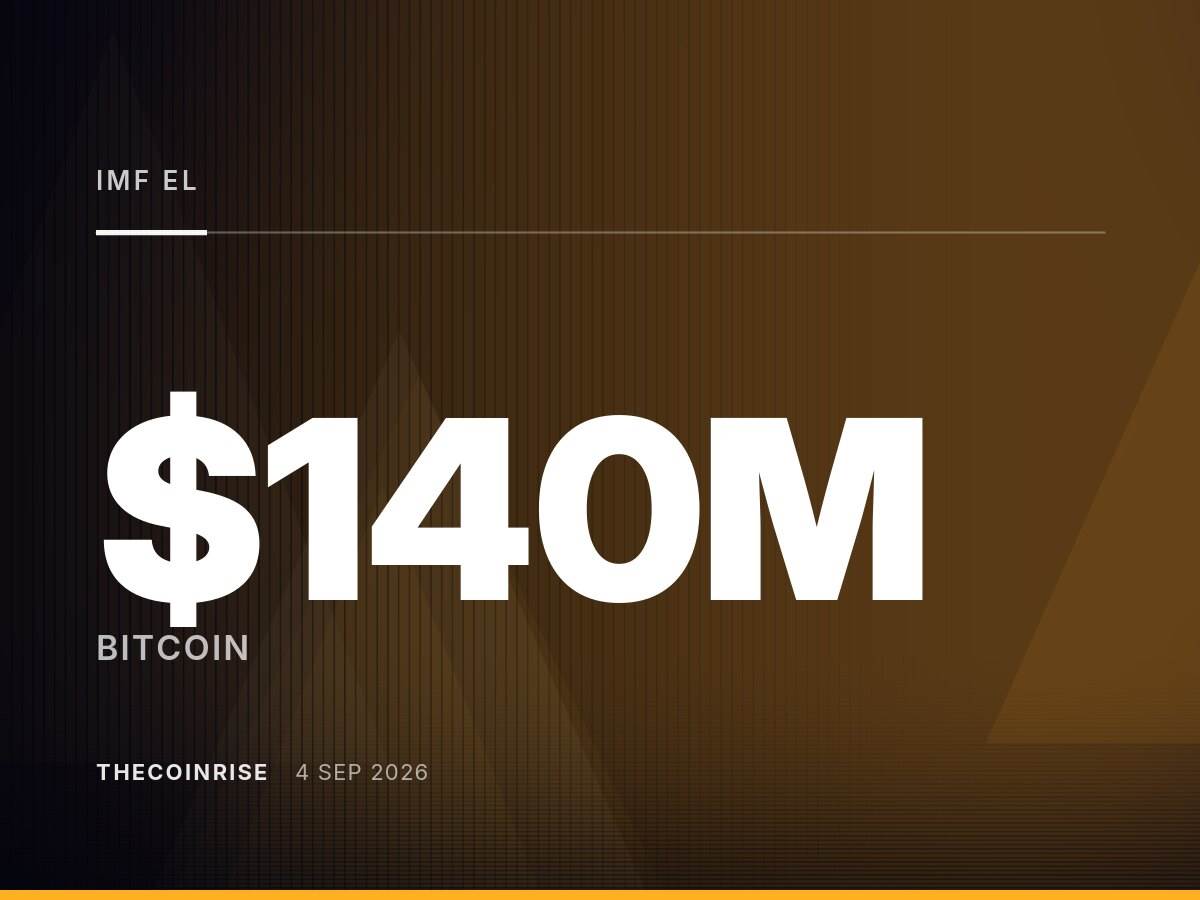
According to the International Monetary Fund (IMF), El Salvador has not used public funds to accumulate Bitcoin since June 2025. The agency noted that documents provided by Salvadoran authorities showed that subsequent growth in the country's Bitcoin holdings came from private donations. The disclosure helps explain the apparent conflict between El Salvador's rising bitcoin balance and its commitments under an IMF-backed economic plan.
The IMF said it would work with authorities to keep public sector Bitcoin holdings unchanged after the first review of the plan. However, El Salvador's official bitcoin tracking data nonethereal continues to rise. After adding more than 1,000 bitcoins in November, its balance reached 7,764.37 and continues to receive 1 bitcoin per day. The government had previously described the addition of 1,090 bitcoins in November as a purchase worth approximately $100 million at the time. Earlier, shortly after the IMF said public sector holdings were expected to remain unchanged, the government added 8 more bitcoins, bringing the reported balance to 6,190.18. The IMF's latest assessment changes the interpretation of financing such growth. It said the accumulation since June 2025 reflected recorded private donations rather than government spending, adding that no further accumulation was expected beyond these recorded donations.
Why is funding critical to the IMF agreement?
The difference between public purchases and private donations of Bitcoin is important because El Salvador's cryptocurrency policy has been one of the closely watched conditions in its IMF program. Currently, the country and IMF staff have reached a staff-level agreement on the second and third consolidated reviews of arrangements covering El Salvador's 40-month expansion of facilities. After receiving approval from the IMF's executive board and completing agreed preliminary actions, these reviews will release approximately $140 million in new funding.
Public sector Bitcoin purchases may raise questions about whether El Salvador is complying with conditions designed to limit the government's financial exposure to cryptocurrencies. Private donations allow reported balances to increase without necessarily incurring the same financial costs, although they still leave issues of governance, custody and disclosure for authorities to resolve. The IMF did not identify the donors, did not disclose the value of individual contributions, and did not provide the total amount of bitcoins received privately since June 2025. This allows investors and creditors to obtain less information than normal for regular public sector asset transactions.
Investor revelation
The IMF's conclusions allayed concerns that El Salvador has been using budget resources to continue to buy Bitcoin in violation of its program commitments. The next issue is transparency: Creditors want clearer records of how donated bitcoins entered public custody, who controlled it and how it was valued.
What is happening to El Salvador's crypto policy?
El Salvador has reduced the government's direct role in parts of its cryptocurrency infrastructure. Most ownership and operational control of Chivo's crypto-wallet has been transferred to private operators, while the government retains a minority stake and custody responsibility for customer assets. The IMF said authorities are also working to increase transparency of Bitcoin held across multiple wallets and strengthen governance and risk management of public sector cryptocurrency assets. These changes follow a broader retreat from the original structure adopted by El Salvador when it became the first country to designate Bitcoin as legal tender in 2021. Under the IMF agreement, acceptance of bitcoin by the private sector became voluntary, taxes must be paid in dollars, and Bitcoin accumulation in the public sector was restricted. As a result, current policies distinguish between Bitcoin's continued presence on the government's balance sheet and the government's willingness to invest new public money in it.
What does the IMF Agreement mean for Bitcoin holdings?
The latest agreement does not require El Salvador to dispose of its existing Bitcoin holdings. Instead, the focus is on preventing further accumulation of public funds while improving supervision and reporting of assets already controlled by the public sector. This allows President Nayb Bukele's government to have a significant bitcoin balance while reducing the financial exposure caused by additional purchases. On Friday, Bitcoin traded at close to $81,000, up about 4.5% from the previous 24 hours. Based on current market prices, the value of 7,764.37 BTC units exceeded $600 million. This arrangement also shows how El Salvador adapts to its Bitcoin policy without abandoning its Bitcoin policy completely. Governments can continue to hold cryptocurrencies received through recorded private donations, while the IMF can maintain restrictions on the use of public resources. The open question for creditors is whether future disclosures provide enough detail to independently distinguish donated bitcoins from government-funded acquisitions. The IMF's latest review provides answers on funding since June 2025, but continued transparency is needed if El Salvador's official bitcoin balance continues to rise.