Exchange Ranking
 Top Exchanges
 24h Volume Ranking
 Popularity Ranking
 Exchange BTC Balance
 Proof of Reserves
 Decentralized Exchanges
 Funding Rate
 Funding Heatmap
 Liquidation Data
 Max Pain
 Long/Short Ratio
 Whale L/S Ratio
 Binance/Okex/Huobi L/S
 Bitfinex Margin L/S
 ETF Tracker
 Solana ETF
 XRP ETF
 Hong Kong ETF
 Bitcoin Treasuries
 Crypto Reversal
 Ethereum Reserves
 HyperLiquid Wallet Analysis
 Hyperliquid Whale Watch
 Large Transactions
 On-chain Movement
 Bitcoin ROI
 Stablecoin Market Cap
 Options Analysis
 News
News Articles
 Economic Calendar
 Features
 Wallet
 Contract Calculator


 Security
 Collections
 Watchlist
 Following
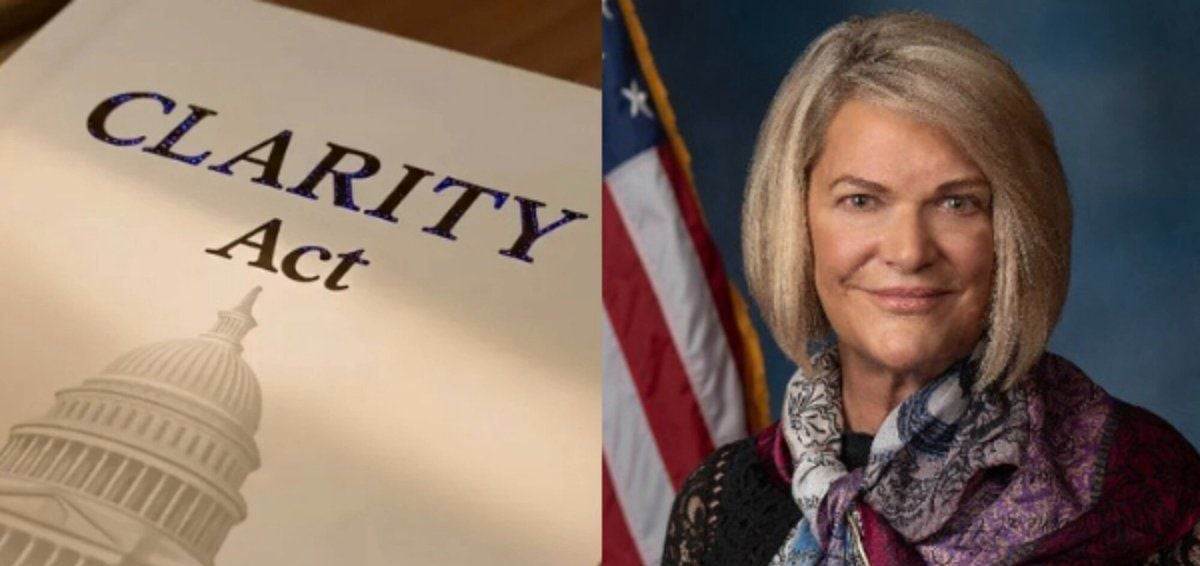
A revised version of the CLARITY Act proposes to include controlled DeFi protocols in CFTC regulation, and a Senate procedural vote is imminent.
On September 10, US Senate Republicans issued a revised version of the draft CLARITY Act, proposing to implement registration requirements for decentralized financial (DeFi) transaction protocols under central control. The 630-page draft is designed to prepare for a procedural vote on September 15.
Senator Cynthia Loomis said the change reflects the results of negotiations with Democrats in August. However, due to unresolved disputes over ethics protection mechanisms and stablecoins, the bill has not yet reached a firm bipartisan consensus.
The revised version focuses on the centrally controlled DeFi protocol
According to media reports, the revised CLARITY Act focuses on who can control the transaction protocol, rather than how developers describe its nature. If certain entities act together and are able to materially change the operations, functions, or consensus rules of the agreement, they will be brought into the scope of regulation.
Such agreements will face registration requirements with the Commodity Futures Trading Commission (CFTC), which will work with the U.S. Treasury Department to develop implementation details. Therefore, the proposal clearly distinguishes between truly decentralized systems and platforms that retain the substantive power of identifiable subjects.
Another amendment to the CLARITY Act limits relevant DeFi provisions to spot and cash digital commodity transactions. Loomis pointed out that the move is aimed at addressing tribal governments 'concerns about forecasting markets.
In addition, the draft also clarifies the way credit unions conduct crypto asset activities. Loomis said lawmakers have adopted more than 114 proposed provisions proposed by Democrats.
Differences on ethics and stablecoins complicate Senate support
Despite the above addition, this did not establish Democratic support for the full CLARITY Act. Negotiating parties have yet to reach agreement on a framework for ethical codes that will cover public officials and digital assets.
The latest version of the legal text still uses the Ministry of Justice as the main law enforcement agency. Democrats had previously challenged earlier proposals, and an alternative proposal proposed by Sen. Tom Tillis has not yet announced a deal.
The September 15 vote only involves procedural obstacles to the passage of legislation. It does not itself directly enact the CLARITY Act and does not guarantee final passage.
As the vote approaches and lobbying intensified, banking groups continue to challenge the stablecoin reward mechanism. They argue that competitive yields could draw deposits away from banks, weakening banks 'ability to lend.