Exchange Ranking
 Top Exchanges
 24h Volume Ranking
 Popularity Ranking
 Exchange BTC Balance
 Proof of Reserves
 Decentralized Exchanges
 Funding Rate
 Funding Heatmap
 Liquidation Data
 Max Pain
 Long/Short Ratio
 Whale L/S Ratio
 Binance/Okex/Huobi L/S
 Bitfinex Margin L/S
 ETF Tracker
 Solana ETF
 XRP ETF
 Hong Kong ETF
 Bitcoin Treasuries
 Crypto Reversal
 Ethereum Reserves
 HyperLiquid Wallet Analysis
 Hyperliquid Whale Watch
 Large Transactions
 On-chain Movement
 Bitcoin ROI
 Stablecoin Market Cap
 Options Analysis
 News
News Articles
 Economic Calendar
 Features
 Wallet
 Contract Calculator


 Security
 Collections
 Watchlist
 Following
Eight major banking industry associations urge Senate to tighten Transparency Act stablecoin rewards limits
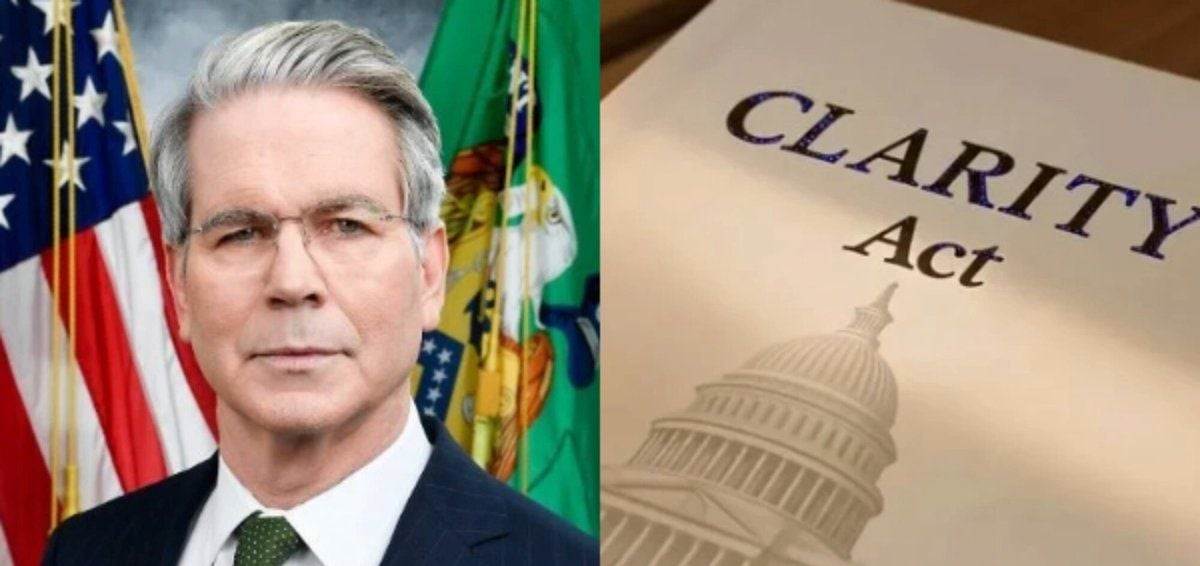
On Monday, eight banking trade groups wrote to Senate leaders urging them to tighten restrictions on stablecoin rewards in the Clarity Act. They argued that exceptions in the bill could lead to interest-like payments, pulling deposits out of the banking system.
In a letter from the group to Senate leaders John Thune and Chuck Schumer, parties said they could not support provisions in the latest revision of the Clarity Act involving trading rewards involving stablecoins, which are usually tokens pegged to the U.S. dollar, and sought to impose stricter restrictions on payments related to the amount or duration of the customer's possession.
"We support this distinction in principle, but we believe that the current legislative text is drafted with loopholes that provide a way to circumvent the ban, which still allows interest and interest-like payments to be made on stablecoin balances." The group wrote in the letter.
Signatories include the American Bankers Association, the Bank Policy Institute and the Independent Community Bankers of America, which represent large banks and community lending institutions. The letter was issued ahead of a key Senate procedural vote scheduled for Tuesday, after a revised version of the Clarity Act was released.
Although the bill would establish federal rules for digital assets and clarify the responsibilities of regulators, the group called for the removal of the word "solely" from the payment clause related to holding stablecoins in the restrictions. They are also seeking to replace the equivalence standard with a "substantially similar" test, thereby broadening the scope of restrictions to cover incentives similar to deposit interest.
Another request is to remove language that allows other legal rewards depending on the customer's balance, duration or tenure. "Given that interest payments are usually calculated with reference to duration, balance and term of office, this subsection appears to contradict the original ban." The groups wrote in the letter.
Banks believe these incentives could attract funds that could otherwise be used to fund mortgages, agriculture and small businesses. The letter noted that community-based and mission-driven lenders may be particularly vulnerable, but did not provide estimates of potential outflows or evidence that predicted loan reductions have occurred.
The groups also rejected a proposed deposit-loss "circuit breaker" mechanism that they believe would allow regulators to respond after a large outflow of funds occurs. "A circuit breaker that is activated only after a major deposit loss is not a safeguard at all." "Congress should address this risk in advance, ensuring that the Clarity Act prohibits incentives and incentives to pay stablecoins that act like interest on deposits, rather than waiting until damage is caused to banks, borrowers and communities before giving regulators the power to respond," the group wrote.
The letter reiterated demands made by six banking trade groups in May this year, including limiting incentives linked to account balances and adopting a "substantial similarity" criterion.
The controversy has spread to senators 'districts, with local community bankers pushing for stricter restrictions and cryptocurrency advocates gathering support for the bill. Cryptocurrency companies believe stablecoin rewards should remain available and the industry needs clearer federal rules.