Exchange Ranking
 Top Exchanges
 24h Volume Ranking
 Popularity Ranking
 Exchange BTC Balance
 Proof of Reserves
 Decentralized Exchanges
 Funding Rate
 Funding Heatmap
 Liquidation Data
 Max Pain
 Long/Short Ratio
 Whale L/S Ratio
 Binance/Okex/Huobi L/S
 Bitfinex Margin L/S
 ETF Tracker
 Solana ETF
 XRP ETF
 Hong Kong ETF
 Bitcoin Treasuries
 Crypto Reversal
 Ethereum Reserves
 HyperLiquid Wallet Analysis
 Hyperliquid Whale Watch
 Large Transactions
 On-chain Movement
 Bitcoin ROI
 Stablecoin Market Cap
 Options Analysis
 News
News Articles
 Economic Calendar
 Features
 Wallet
 Contract Calculator


 Security
 Collections
 Watchlist
 Following
 UNI
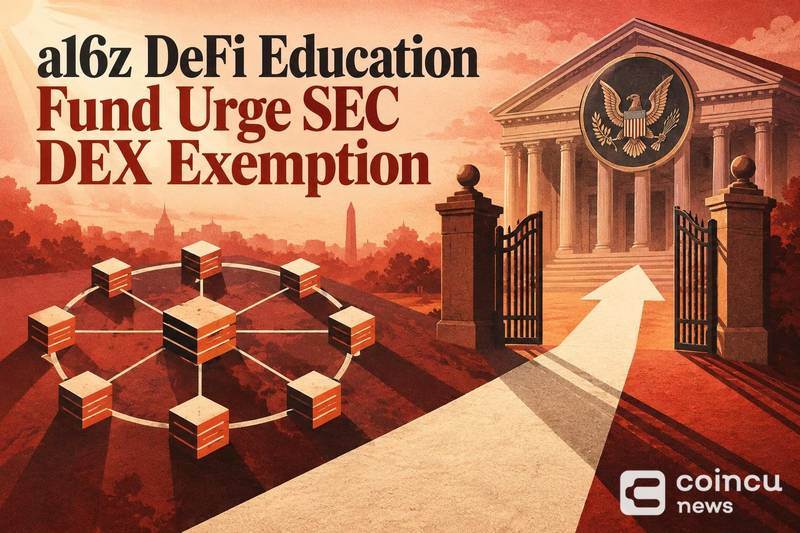
UNI a16z与DeFi教育基金呼吁SEC豁免去中心化交易所的注册要求
a16z(Andreessen Horowitz)旗下的加密业务部门与DeFi教育基金已联合敦促美国证券交易委员会(SEC)将去中心化交易所(DEX)从联邦交易所注册要求中豁免。此举旨在为自动化的链上交易基础设施与传统市场中受经纪商-交易商及交易所框架监管的基础设施之间,划清正式的监管界限。
请求内容澄清
根据在SEC.gov发布的声明,该请求要求监管机构明确:DEX通过自我执行的智能合约路由交易,而非由集中式运营商操作,因此不应受到与传统证券交易所相同的注册义务约束。需要强调的是,这是一项寻求监管救济请愿书,而非已获得的豁免;SEC尚未作出正式裁决或发布指导文件。
背景与参与方
a16z的投资组合涵盖基础设施、DeFi协议以及Web3开发者教育倡议,此前曾就数字资产分类问题与SEC进行过沟通。DeFi教育基金是一个由加密行业利益相关者资助的政策倡导组织,将交易所监管作为其核心游说优先事项之一。他们的联合提交标志着有组织地为非托管型交易基础设施确立独立法律类别的努力进一步升级。
为何交易所注册规则是DEX争议的核心
根据1934年《证券交易法》,“交易所”被广泛定义为任何聚集证券买卖双方的组织。DEX利用流动性池和自动做市商算法执行兑换,无需中央对手方。支持者认为,由于没有任何单一实体代表用户匹配或路由订单,这种设计不符合法定定义中的“交易所”概念。
若将交易所注册要求强加于DEX开发者或治理代币持有者身上,将带来合规义务,包括注册经纪商-交易商要求、记录保存指令和市场监控职责,这些规定原本是为具有可识别运营商的集中式场所设计的。批评广泛适用性的人指出,将DEX协议纳入该框架实际上会迫使协议开发人员在部署代码前寻求注册,而SEC目前在多个数字资产产品类别中正在应对这一门槛。在当前指导下,在一个不可许可、不可变的协议中,哪一方应被视为承担责任的“交易所”,这一问题仍未解决。
SEC豁免对DeFi意味着什么
如果获得正式豁免,将为位于美国的开发者和流动性提供者提供更清晰的合规基准,降低法律不确定性,从而减少协议开发活动向离岸司法管辖区转移的趋势。如果没有豁免,构建链上交易基础设施的团队将面临风险,即SEC可能将其部署活动归类为运营未注册交易所。虽然该机构在此类案件中选择性地应用了执法立场,但在相邻案例中施加了巨额罚款。
该请求还可能影响机构参与者如何与DeFi互动。受监管实体的合规团队在向DeFi协议投入资金之前,通常需要具备法律依据的法律意见;一份正式的SEC豁免或不采取行动函将使这些意见更具辩护力。这一结果对于Uniswap等已经面临SEC调查问询的协议具有特别重要的意义。
SEC需要权衡的关键问题
任何豁免都需要精确定义其范围,具体包括哪些类型的协议符合条件、是否包含或排除治理代币持有者,以及救济措施是否延伸至前端界面以及底层合约。过于宽泛的豁免可能会造成监管空白,使不良行为者得以通过将集中式产品标记为去中心化来加以利用;而过于狭窄的豁免则提供的实际救济有限。
Investor protection is at the heart of the SEC's mission. In the absence of the supervisory infrastructure required to register an exchange, institutions need to assess whether users exempt from DEX still maintain adequate recourse mechanisms for fraud, manipulation, or smart contract failure. SEC Chairman Paul Atkins has expressed his willingness to accept a tailor-made digital asset framework, and his July 2025 comments on digital finance indicate that the committee is actively reviewing how traditional exchange definitions apply to on-chain systems.
FAQs: SEC DEX Exchange Registration Waivers
What do the a16z and DeFi Education Fund require the SEC to do?
They asked the SEC to formally exempt decentralized exchanges from the exchange registration requirements of the Securities Exchange Act, citing the fact that the DEX architecture does not meet the legal definition of an exchange because there is no centralized operator to match or route orders.
Does this mean that DEX has been exempted from registration?
No. This is an advocacy request for the SEC, not a regulatory decision. Under current U.S. law, DEX remains legally ambiguous, and the SEC has not issued guidance documents confirming that any DEX is exempt from registration.
Why is exchange registration exemptions important to DeFi?
Registration requirements designed for centralized locations impose operability, record-keeping and monitoring obligations, which are technically incompatible with non-permissible, immutable smart contract systems. Waivers or formal no-action letters would reduce legal risk for U.S. developers and make it easier for regulated agencies to participate in the DeFi market, which increasingly overlaps with regulated product categories.