Exchange Ranking
 Top Exchanges
 24h Volume Ranking
 Popularity Ranking
 Exchange BTC Balance
 Proof of Reserves
 Decentralized Exchanges
 Funding Rate
 Funding Heatmap
 Liquidation Data
 Max Pain
 Long/Short Ratio
 Whale L/S Ratio
 Binance/Okex/Huobi L/S
 Bitfinex Margin L/S
 ETF Tracker
 Solana ETF
 XRP ETF
 Hong Kong ETF
 Bitcoin Treasuries
 Crypto Reversal
 Ethereum Reserves
 HyperLiquid Wallet Analysis
 Hyperliquid Whale Watch
 Large Transactions
 On-chain Movement
 Bitcoin ROI
 Stablecoin Market Cap
 Options Analysis
 News
 Articles
 Economic Calendar
 Features
 Wallet
 Contract Calculator


 Security
 Collections
 Watchlist
 Following
 BTC
 ETH
 SOL
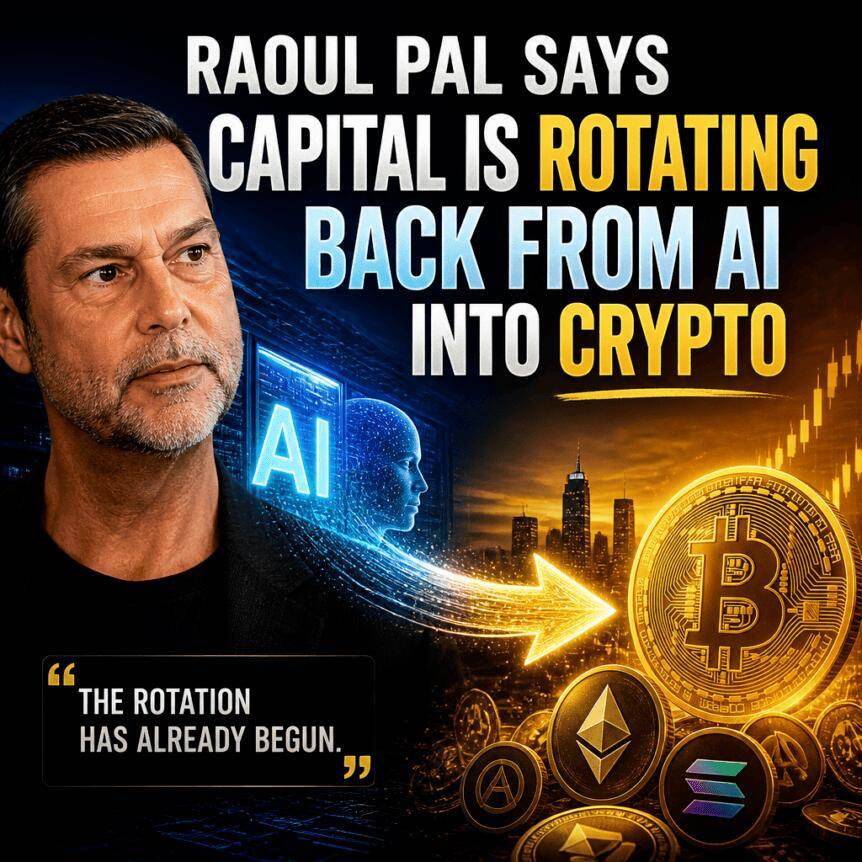
Real Vision founder Raoul Pal: The next round of rise in cryptocurrencies may depend on the shift in macro liquidity
Real Vision founder Raoul Pal pointed out that the next round of rise in the cryptocurrency market may depend on changes in the macro environment, especially the weakening of the US dollar and easing of financial conditions. These changes will help liquidity flow back into risky assets. In the latest issue of Cointelegraph's "Trade Secrets" program, Pal believes that current high bond yields and a strong dollar are hindering the free flow of capital into the crypto sector.
Although he did not clearly give a comprehensive "green light" signal for the entire market, Pal emphasized that if the US dollar could be pushed weaker, it would improve the overall background for cryptocurrencies. At the same time, he also cautiously stated that this change will not be achieved overnight and its timeliness remains to be seen.
Summary of Core Views
- Macro liquidity drives market momentum: Pal linked the broader cryptocurrency market to macro liquidity, arguing that a weaker dollar could "open the door" for further gains.
- Current resistance factors: Higher bond yields and a strong U.S. dollar currently act as headwinds, limiting the liquidity available for cryptocurrencies.
- Opportunities for capital rotation: Pal expects that when market attention is suspended or cooled away from AI trading hotspots, cryptocurrencies will usher in positive trends.
- Demand potential of AI agents: He believes that over time, AI agents may increase demand for smart contract platforms such as Ethereum and Solana.
- On-chain activity is not equal to economic density: For Pal, Solana's high on-chain activity does not automatically translate into excess performance relative to Ethereum, because Ethereum has a stronger DeFi capital concentration.
Why focus on the U.S. dollar and yields
In Pal's analytical framework, the strength of the U.S. dollar is closely related to the liquidity available in speculative markets, including cryptocurrencies. He pointed to two overlapping constraints: high bond yields and a strong dollar, which together tighten risk-taking conditions.
If these forces were reversed-specifically, if policymakers or markets pushed the dollar weaker-Pal suggested that cryptocurrencies could get what he described as a "green light", allowing for more room for volatility. However, he stressed that he had not fully bet on the scenario and noted that uncertainty remained about whether the necessary changes would be achieved quickly and broadly enough.
This distinction is crucial for traders and investors, as the rebound of cryptocurrencies often relies on continued liquidity conditions rather than improvements in isolated factors. Pal's views imply that even if the specific narrative in the crypto space remains strong, macro constraints may still limit the market's upside.
AI trading stagnation as a source of rotation towards cryptocurrencies
Pal also described how cryptocurrencies benefit from the withdrawal of capital from competing themes. He highlighted a period in mid-to-late August during which Bitcoin's recovery was arguably strengthened-BTC allegedly rose by about 25% to about $80,000 between August 19 and August 25.
During the same window, Pal pointed to Nvidia's poor performance, recording seven consecutive trading days of losses. The key point of his argument is not that AI stocks and Bitcoin always move in opposite directions, but that shifts in investor preferences can redirect liquidity.
Pal warned that an "AI crash" will be a situation that cryptocurrencies do not want to see. In his view, a sharp market rupture is likely to indicate that liquidity is being withdrawn from the system-which is exactly what cryptocurrencies need to avoid in order to rise more sustainably.
Instead, he described a more favorable "next-best scenario": AI stocks sideways rather than collapse. In his view, this stagnation in momentum could reduce competition for capital and allow capital to flow back into the crypto market.
He further pointed to an upward trend in borrowing costs, citing data that the U.S. 10-year Treasury yield reached 5.29% in September, and mentioned a one-quarter percentage point increase in the Federal Reserve's benchmark interest rate. He believes that these developments make it difficult to improve quickly the macro conditions on which cryptocurrencies rely.
From AI payments to tokenized agency financing
Pal的论点超越了流动性范畴,延伸至新兴的AI代理行为如何为区块链基础设施创造新需求。他认为,AI代理越来越需要交易——特别是为了访问和支付内容费用——而基于稳定币的支付可以在其中发挥作用。
他引用了亚马逊云服务(AWS)在6月宣布的一项功能,该功能旨在允许内容所有者向AI机器人收费以获取访问权限。他还指出了Coinbase在代理支付中的参与,表示Coinbase通过其x402协议处理验证和结算,Base网络上的USDC是支持的选项之一。
在更广泛的代理如何为运营融资的问题上,Pal提出了一种模型:代理通过发行代币来筹集运行任务所需的资金。正如他所描述的那样,代币资助的项目可以在不同的时间范围内运作——从一周到一年——同时代理执行工作并产生回报。
在该框架内,Pal表示以太坊和Solana都将受益,因为它们的智能合约可以促进由代理驱动的商业活动所需的交易。他的预期并非立即的主导地位,而是逐步采用:“我的猜测是,随着AI使用它们,它们将获得更多的采用。”
Solana vs. 以太坊:活跃度不等于经济密度
Pal对以太坊和Solana都表示了热情,但他呼吁对Solana在本轮周期内市值超越以太坊的说法保持谨慎。他引用了Multicoin Capital联合创始人Kyle Samani此前在“Trade Secrets”节目中的预测,即SOL可能在“本轮市场周期”内超过ETH的市值,随后他表示Samani应该“稍安勿躁”。
Pal认为原因在于两个网络在不同的指标上各有所长。他引用DefiLlama数据对比每日活跃地址——声称Solana在周一的前24小时内记录了约320万活跃地址,而以太坊仅为38.7万。然而,他将此与DeFi资本进行对比:根据同一比较来源,以太坊在去中心化金融协议中约有544亿美元,而Solana约为67亿美元。
Pal描述了一个他称为“经济密度”的概念,即总锁仓价值除以活跃用户数。他的论点是:以太坊相对于其用户数量吸引了更多资本,而Solana的活动通常涉及较小的“单笔金额”。用他的话来说,“Solana的核心活动是投机”,这虽然有意义,但不一定等同于驱动长期实力的那种资本集中。
他还表示,他已停止提供公开的价格目标,因为预测在网上会被“剪辑并重新传播”。他引用了“到2030年比特币达到百万美元”的叙事作为一个“迷因”(meme),同时补充说他对到2032年实现这一目标的想法没有异议——尽管他没有将其呈现为确切的预测。
对于读者而言,需要密切关注的首要信号是宏观压力是否足以将加密叙事转化为持续的流动性——以及AI相关资本是否真正暂停、轮动或分裂。下一个考验将是条件是否会在更广泛的层面(美元和收益率)改善,还是仅在市场的孤立角落改善。