Exchange Ranking
 Top Exchanges
 24h Volume Ranking
 Popularity Ranking
 Exchange BTC Balance
 Proof of Reserves
 Decentralized Exchanges
 Funding Rate
 Funding Heatmap
 Liquidation Data
 Max Pain
 Long/Short Ratio
 Whale L/S Ratio
 Binance/Okex/Huobi L/S
 Bitfinex Margin L/S
 ETF Tracker
 Solana ETF
 XRP ETF
 Hong Kong ETF
 Bitcoin Treasuries
 Crypto Reversal
 Ethereum Reserves
 HyperLiquid Wallet Analysis
 Hyperliquid Whale Watch
 Large Transactions
 On-chain Movement
 Bitcoin ROI
 Stablecoin Market Cap
 Options Analysis
 News
 Articles
 Economic Calendar
 Features
 Wallet
 Contract Calculator


 Security
 Collections
 Watchlist
 Following
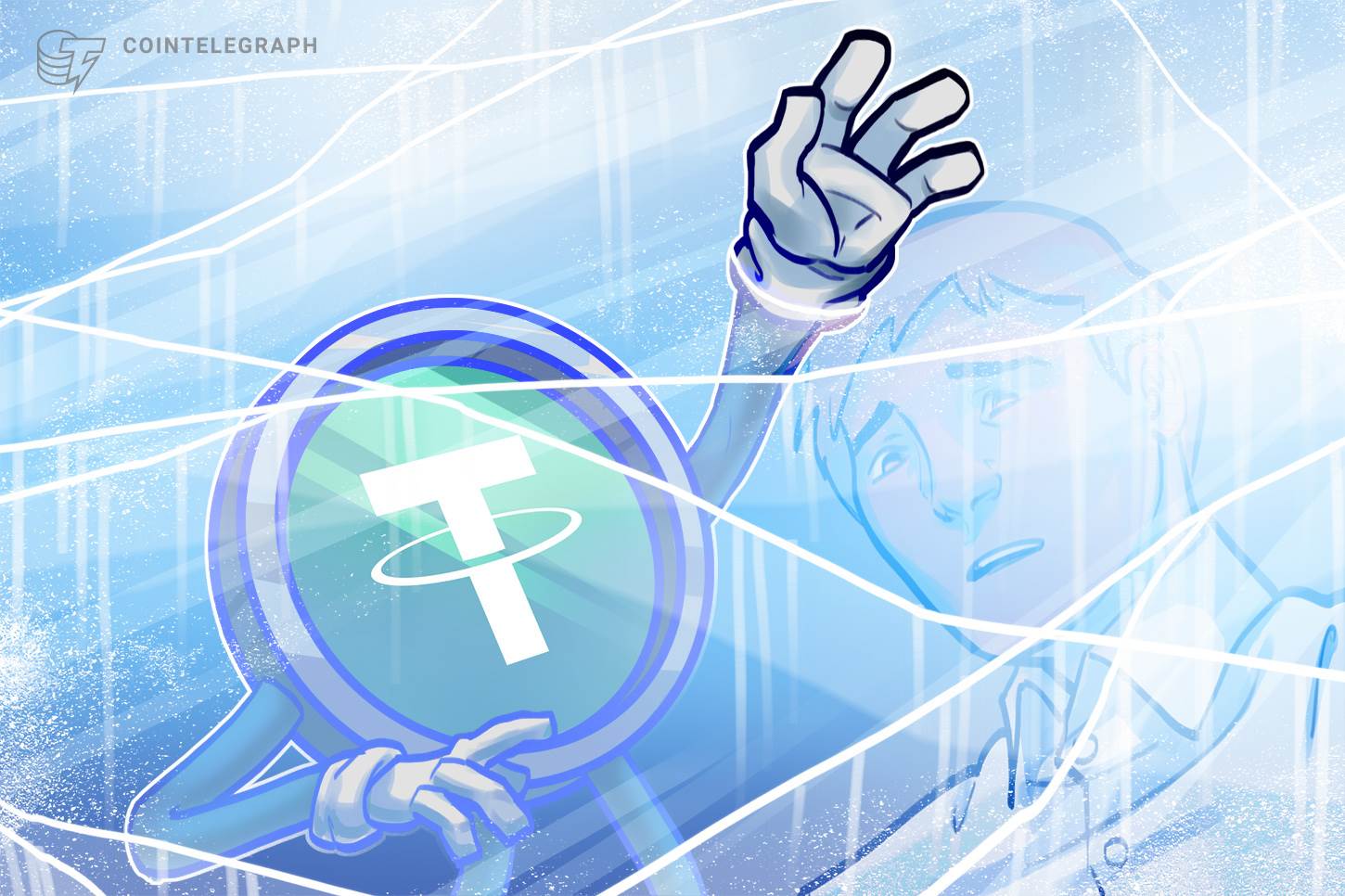
Cross-border payment company Conduit sues Tether: US$2.76 million USDT freezing triggered legal dispute
Cross-border payment company Conduit Technology filed a lawsuit against Tether. The company said it was unable to access the funds for more than a year because about $2.76 million in USDT in its corporate treasury wallets were frozen. Conduit argued that Tether froze the funds without obtaining a court order or a relevant investigation request from the Brazilian police.
The lawsuit was filed in the U.S. District Court for the Southern District of New York on October 5. The defendants include Tether Holdings, Tether International, Tether Operations and Tether Investments. Conduit seeks a court order to restore access to the USDT and seeks at least $2.76 million in compensatory damages, additional indirect and punitive damages, and forfeiture of revenue allegedly earned from reserves supporting the frozen tokens. As of October 6, Tether had not publicly responded to the allegations. The case is currently in the complaint stage and has not yet been judicial ruled.
Why did Conduit believe that the Brazilian investigation was not sufficient to justify the freeze?
The dispute stems from a Brazilian federal police investigation involving Bull Intermediação de Negócios and Onix Intermediações, two companies that had previously used Conduit's platform. Conduit claims that its vault wallet was never listed by Brazilian police as one of the addresses to be frozen. According to the indictment, police identified a set of suspected wallet addresses and shared them with Tether's T3 Financial Crimes Unit, which then applied its own criteria to decide which other wallets should be restricted. Conduit said its wallet was independently identified by Tether and included on the list. In addition, Conduit accused a Brazilian court of confirming that Conduit was neither the subject of the investigation nor one of the companies whose assets were ordered to freeze.
The point in time forms a key part of Conduit's argument. Allegedly, Onix's last transaction on the platform occurred on April 22, 2025, and the vault wallet was not created until May 20. Conduit noted that before the wallet was frozen in September, it processed 4,427 transactions involving 78 counterparties and a total volume of more than $1.1 billion, none of which were related to Onix.
Tether is increasingly using issuer level controls to immobilize USDT addresses. Previous reports pointed out that 18 USDT addresses were hit by blacklisting incidents worth US$3.75 million, while emphasizing that freezing wallets alone does not establish criminal ownership or misconduct.
Investor Enlightenment
The real question is not whether Tether can technically freeze USDT-obviously it can. At the heart of the controversy is when this power can be legitimately exercised when the holder claims that law enforcement has not targeted him or his wallet.
Why does this case have significance exceeding US$2.76 million?
Conduit's wallet is held through a Fireblocks institutional escrow account, and the company says only its own treasury employees have signature rights. However, because Tether controls management functions at the token level, USDT remains non-transferable. This distinction is crucial for companies that view stablecoins as operating cash. Private key control protects wallets from unauthorized transaction signatures, but does not necessarily prevent issuers of centralized stablecoins from restricting the use of the token itself. As USDT becomes more deeply integrated into the payments space, this issue becomes increasingly important. Data shows that in the first half of 2026, USDT accounted for approximately US$95 billion in identified commercial payments, especially strong use in business-to-business (B2B) and cross-border transfers. For payment companies that use stablecoins to pre-charge channels and settle customer transactions, an issuer's freeze can become a liquidity event rather than just a compliance inconvenience. Conduit alleges that the lost working capital reduced its previous ability to settle transactions at the speed and scale, and led to layoffs and office closures.
Investor Enlightenment
The case exposed the fund management risks of companies that deposit large amounts of working capital in centralized stablecoins: self-custody does not eliminate the risk of issuer intervention. Therefore, diversified configurations between banks, stablecoin issuers and settlement tracks may be as important as wallet security.
What exactly does Conduit ask the court to decide?
This lawsuit is more than a simple request to unfreeze tokens. Conduit filed claims for conversion, unjust enrichment, breach of fiduciary obligations, as well as claims under the Federal Computer Fraud and Abuse Act, while also seeking declaratory relief and accounting audits. The argument of computer fraud is particularly eye-catching. Conduit accused Tether of using its administrative infrastructure to unauthorized change wallet status and prevent USDT transfers. Whether courts accept this interpretation may affect how blockchain functions controlled by issuers are handled under existing federal law. Conduit also argued that Tether continues to generate income from reserve assets supporting the frozen USDT. In addition to restoring $2.76 million and awarding at least another $2.76 million in compensatory damages, it also required an accounting audit and forfeiture of interest, income and profits related to the reserve.
Tether's freezing ability is often seen as a compliance advantage. Its T3 initiative, which works with Tron and TRM Labs, is expanding rapidly, and T3 's financial crimes unit has reportedly frozen $300 million in funds related to illegal activity by the end of 2025. Recently, Tether said that under the direction of U.S. authorities, it froze nearly $550 million in Iran-related USDT in 2026.
Investor Enlightenment
如果法院触及Tether冻结权力的边界,而不是在较窄的程序基础上解决案件,那么判决将最为重要。一项定义在没有直接政府命令的情况下何时可以使用发行方级别控制的决定,可能会影响整个中心化稳定币行业的合规实践。