Exchange Ranking
 Top Exchanges
 24h Volume Ranking
 Popularity Ranking
 Exchange BTC Balance
 Proof of Reserves
 Decentralized Exchanges
 Funding Rate
 Funding Heatmap
 Liquidation Data
 Max Pain
 Long/Short Ratio
 Whale L/S Ratio
 Binance/Okex/Huobi L/S
 Bitfinex Margin L/S
 ETF Tracker
 Solana ETF
 XRP ETF
 Hong Kong ETF
 Bitcoin Treasuries
 Crypto Reversal
 Ethereum Reserves
 HyperLiquid Wallet Analysis
 Hyperliquid Whale Watch
 Large Transactions
 On-chain Movement
 Bitcoin ROI
 Stablecoin Market Cap
 Options Analysis
 News
 Articles
 Economic Calendar
 Features
 Wallet
 Contract Calculator


 Security
 Collections
 Watchlist
 Following
 ADA
TLDR
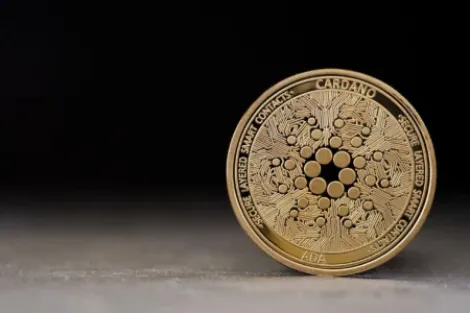
On October 7, 2026, the Cardano Foundation officially activated CIP-0113, a compliance-oriented token agreement.
Issuers of regulated digital instruments can now freeze balances, recover assets and restrict eligible recipients.
The verification logic runs directly on the Cardano blockchain rather than relying on external infrastructure.
Early adopters include Eternl, GeroWallet, CardanoScan, and the developer toolkit BloxBean.
The Swiss Capital Markets and Technology Association recognizes CIP-0113 is consistent with its on-chain equity framework.
On-chain execution architecture
On October 7, 2026, the Cardano Foundation announced the official activation of the CIP-0113 protocol specification on the Cardano production network. This means that Cardano tokens can now be frozen. According to the Cardano Foundation, the new CIP-0113 standard allows issuers that issue stablecoins, funds and bonds on the $ADA network to freeze or confiscate holders 'assets when required by the rules.
CIP-0113 provides asset issuers with management capabilities: including suspending token movements, confiscating balances, and defining qualified counterparties in transactions. The agreement mainly targets instruments subject to financial regulations, such as fiat-linked stablecoins, tokenized investment vehicles and digital debt securities. Traditional cryptocurrency tokens allow unrestricted point-to-point transfers, a design that conflicts with financial institutions 'legal obligations to verify identity and enforce sanctions compliance.
CIP-0113 embeds compliance logic into the token architecture itself. Cardano's consensus layer verifies these embedded strategies before any transaction is finalized. For example, for a tokenized fund that is restricted to qualified investors, if the transfer attempt points to a wallet address that has not yet been verified, the agreement may reject the operation. Similarly, stablecoin issuers may block tokens from entering addresses marked on sanctions lists.
The authentication mechanism does not rely on a centralized control panel or off-chain servers. Cardano's ledger evaluates compliance rules every time a casting, destruction or transfer event occurs. This architecture ensures that restrictions remain in effect regardless of what wallet software or exchange platform the holder chooses. According to the foundation, the deployment process does not require a hard fork on the network, but instead leverages features that already exist in the Cardano protocol.
Frederik Gregaard, CEO of the Cardano Foundation, said in a statement: "The rules must move with the assets and be enforced every time they move."
Flexible frameworks and ecosystem integration
CIP-0113 uses a modular architecture rather than a rigid rule book. Basic standards are combined with interchangeable policy modules that publishers can update or replace as needs change.
Support for this specification has been integrated on multiple platforms. Wallet providers Eternl and GeroWallet, blockchain indexing service CardanoScan, and developer infrastructure company BloxBean have all achieved compatibility. Similar capabilities exist in competitive networks. Ethereum's ERC-3643 provides licensed token capabilities, Solana provides transfer hooks through its Token Extensions program, and XRP Ledger supports issuer controlled freezing and balance recovery capabilities.
The Swiss Financial Markets and Technology Association, a Swiss financial standards body, officially recognized the CIP-0113 token. The organization said the assets met standards equivalent to its guidelines for issuing tokenized equity instruments in Switzerland.
The preparation of this specification began in 2023. It received formal approval in the Cardano Improvement Proposal (CIP) repository on September 29, 2026, and will be running online on the main network during the TOKEN2049 industry event approximately a week later.
Cardano's native architecture introduces a unique consideration. The ledger's UTXO model allows multiple types of tokens to coexist in the same transaction output, similar to the fact that different banknotes share a physical wallet. When an issuer applies a restriction to one token in a bundled output, other assets in the same output may be inadvertently affected. CIP-0113 alleviates this problem through the "uncracking" process described by the foundation.
Wallet software and decentralized financial protocols must be cautious when combining restricted and unrestricted tokens in shared output. The foundation's technical document recommends that lending platforms check their embedded policies before accepting tokens as collateral for loans, because certain rule configurations allow authorized entities to transfer tokens without the holder's authorization.
ADA (Cardano's native cryptocurrency) is not affected by these protocol additions and continues to operate as a non-privileged transferable asset. Only those tokens that voluntarily implement CIP-0113 will carry the new control mechanism. In the past 24 hours, the market value of ADA has dropped 4.5%, consistent with the general downward trend in the cryptocurrency market.