Exchange Ranking
 Top Exchanges
 24h Volume Ranking
 Popularity Ranking
 Exchange BTC Balance
 Proof of Reserves
 Decentralized Exchanges
 Funding Rate
 Funding Heatmap
 Liquidation Data
 Max Pain
 Long/Short Ratio
 Whale L/S Ratio
 Binance/Okex/Huobi L/S
 Bitfinex Margin L/S
 ETF Tracker
 Solana ETF
 XRP ETF
 Hong Kong ETF
 Bitcoin Treasuries
 Crypto Reversal
 Ethereum Reserves
 HyperLiquid Wallet Analysis
 Hyperliquid Whale Watch
 Large Transactions
 On-chain Movement
 Bitcoin ROI
 Stablecoin Market Cap
 Options Analysis
 News
 Articles
 Economic Calendar
 Features
 Wallet
 Contract Calculator


 Security
 Collections
 Watchlist
 Following
 ETH
Ethereum Sepolia Test Network activates the Glamstam upgrade, raising the block Gas limit to nearly 200 million
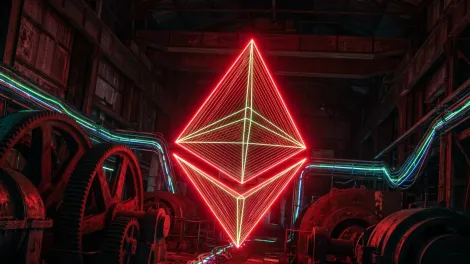
On October 6, Ethereum Sepolia Test Network officially activated the Glamstam upgrade at epoch 353,024. This upgrade raises the Gas limit for blocks to nearly 200 million, more than three times the 60 million Gas limit for the main network. The change was implemented at 13:53:36 UTC, marking a major technical test for the Ethereum ecosystem.
Glamsterdam-upgrade details
The higher Gas cap means each block can handle more computing work than ever before, resulting in higher throughput during network congestion. However, upgraded block activity data shows that this new cap is largely unfilled. Etherscan snapshots of 25 consecutive blocks (numbered 11,872,013 to 11,872,037) show that the actual Gas usage per block is between 47.1 million and 85.9 million, which is approximately 24% to 43% of the maximum allowed value.
Despite the significant increase in capacity, not all capacity is being actively used. Higher caps provide flexibility when transaction demand rises, but networks can benefit from reduced congestion only when blocks are closer to their caps filling. The adjustment is designed to help alleviate the surge in fees during peak periods.
Past adjustments and future plans
Ethereum's Gas cap has been steadily rising. In February 2025, the validators voted with a narrow margin to approve the increase from 30 million to 32 million, and then the cap reached 60 million in 2025. The Fusaka upgrade launched in December 2025 sets this value as the default. Previously, Ethereum researchers had warned that the Gas limit exceeding 40 million could cause network communication problems, so the increase is usually conservative.
The Ethereum Foundation has outlined two major roadmap changes to prepare for future expansion. The block-level access list will record the accounts and data referenced by each block, allowing nodes to verify transactions in batches. At the same time,'s embedded Proposer-Builder Separation mechanism moves the process of selecting who assembles each block directly to the protocol layer, reducing reliance on external middleware.
Ethereum co-founder Vitalik Buterin described a broader shift in July this year that could revolutionize most protocols in the next few years. Glamsburg is seen as a milestone step and could be a potential prelude to further raising the Gas cap to nearly 200 million.
There is currently no change to the main network Gas cap
Sepolia is a non-financial test network that allows developers to experiment on real-time infrastructure without risking losing real assets. It had hosted a preview of the Merge before the Ethereum main network switched to a proof-of-stake (PoS) in July 2022.
Currently, an official date has not been set for the next public test network Hoodi. The Ethereum main network still retains a 60 million Gas cap and has no planned upgrades. While these developments demonstrate continued efforts to increase network capacity, Ethereum developers remain cautious in expanding the computing power of the main network. It is expected that continuous monitoring and testing will be required before upgrades outside of the test environment are carried out.