Exchange Ranking
 Top Exchanges
 24h Volume Ranking
 Popularity Ranking
 Exchange BTC Balance
 Proof of Reserves
 Decentralized Exchanges
 Funding Rate
 Funding Heatmap
 Liquidation Data
 Max Pain
 Long/Short Ratio
 Whale L/S Ratio
 Binance/Okex/Huobi L/S
 Bitfinex Margin L/S
 ETF Tracker
 Solana ETF
 XRP ETF
 Hong Kong ETF
 Bitcoin Treasuries
 Crypto Reversal
 Ethereum Reserves
 HyperLiquid Wallet Analysis
 Hyperliquid Whale Watch
 Large Transactions
 On-chain Movement
 Bitcoin ROI
 Stablecoin Market Cap
 Options Analysis
 News
News Articles
 Economic Calendar
 Features
 Wallet
 Contract Calculator


 Security
 Collections
 Watchlist
 Following
 BTC
BTC  ETH
ETH Key insights
Although the U.S. government has expanded the scale of long-term debt repurchases, negative news on U.S. Treasury yields continues to ferment. As inflationary pressures persist, the 10-year Treasury yield approaches the 5% mark. Bitcoin is weakening as higher yields put more pressure on various risky assets.
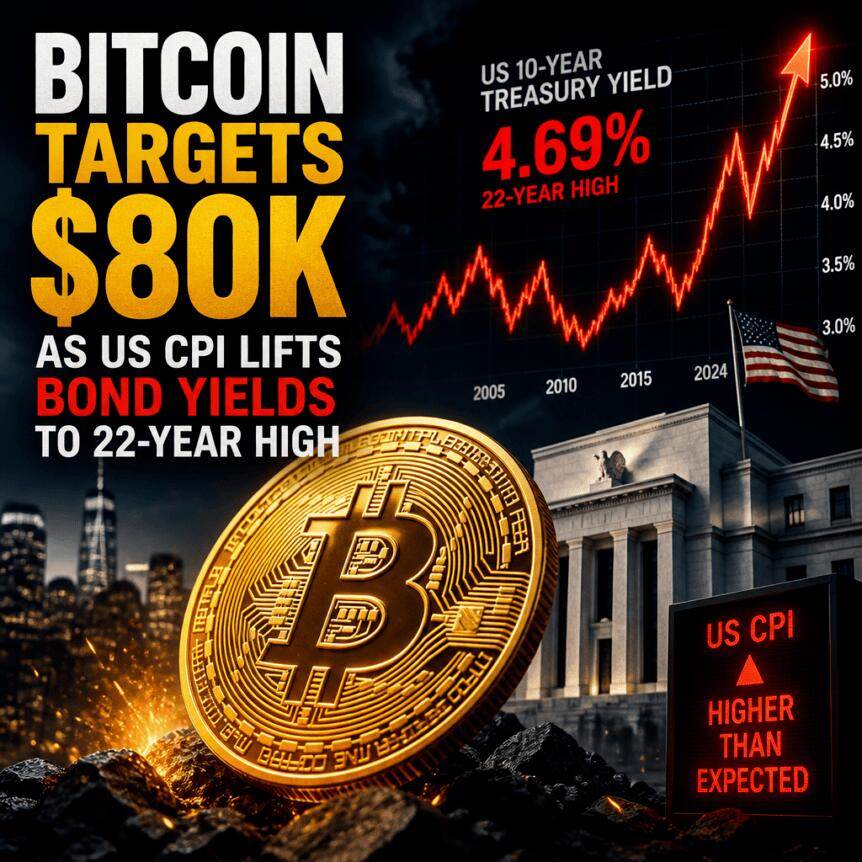
On September 11, even though the U.S. government expanded its long-term debt repurchase program, U.S. Treasury yields were still closer to the 5% threshold. The yield on the benchmark 10-year Treasury bond once reached 4.979%, before falling back to around 4.95%, continuing a wave of global bond selling triggered by concerns about inflation, oil prices and monetary policy. The yield on the 30-year Treasury note also climbed to 5.3836%, setting a new high in about 19 years.
The impact of this trend goes beyond the government bond market, as rising government yields push up discount rates on various financial assets. Bitcoin and Ether have weakened along with stocks as traders 'expectations for another Fed rate hike increase. As a result, rising borrowing costs have added new sources of pressure to an already fragile risk environment.
Despite the expansion of repurchase scale, the negative outlook on U.S. bond yields has intensified.
The U.S. Treasury Department announced on August 19 that it will expand long-term liquidity support for the repurchase program starting from September 9. The Treasury has increased the maximum size of each operation from $2 billion to at least $4 billion. 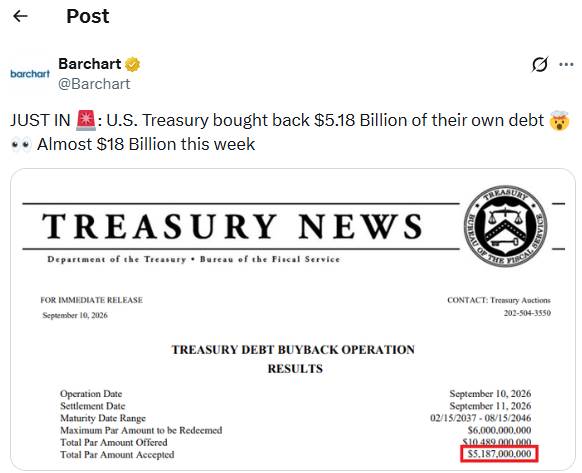 The U.S. Treasury completed $5.18 billion in debt repurchases. Source: X Reuters reported that the Ministry of Finance subsequently expressed its willingness to purchase up to $6 billion in 10 to 20-year debt. The amount was three times the previous cap, but failed to reverse the sell-off of long-term bonds.
Federal Reserve H.15 data shows that the 10-year fixed yield to maturity was reported at 4.80% on September 9. In the same official data set, the 30-year yield was at 5.25%.
Market pricing further deteriorated after the latest round of repurchase announcements. Reuters reported that during the Asian trading session on September 11, the 10-year yield reached 4.965%. This has brought U.S. Treasury interest rates back to highs not seen since the end of 2023. The move also challenges the assumption that large-scale buybacks can quickly stabilize long-term yields.
The Treasury designed the Repurchase Programme primarily to improve the liquidity of older securities. In its August 19 statement, it cited the strong participation of traders in the long-term sector as the basis for expanding the scale of operations.
An International Monetary Fund working paper reached a similar conclusion, arguing that the program was designed to boost liquidity rather than being seen as a permanent yield control tool.
U.S. bond yields face new inflationary pressures
Inflation data adds another pressure to U.S. bond yields. Data from the U.S. Bureau of Labor Statistics showed that the final demand producer price index rose 0.4% month-on-month in August. 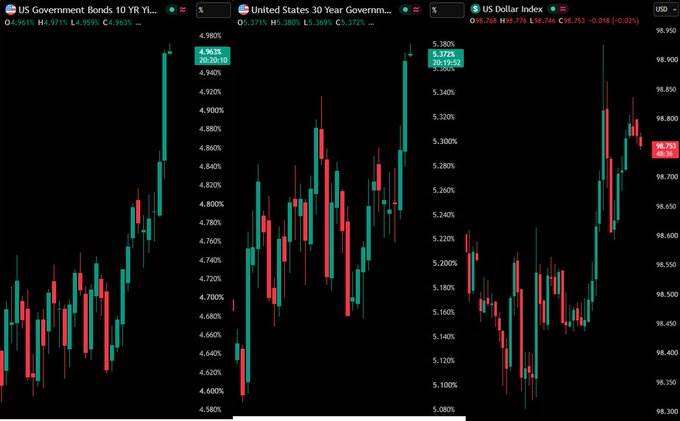 The weakening dollar comes as U.S. bond yields soar. Source: X Producer Price Index (PPI) rose 5.4% year-on-year. Among them, commodity prices rose by 1.1%, and service prices rose by 0.1%.
Energy markets subsequently exacerbated inflation concerns. Reuters reported that during the Asian trading session on September 11, Brent crude oil prices hit US$108.96 per barrel.
High oil prices have raised concerns about persistent input costs. This background has weakened demand for long-term bonds and supported the overall upward yield curve. The U.S. bond yield chart also shows that before the latest wave of gains, the market has experienced extensive repricing. Federal Reserve data showed that the 10-year yield in early September was about 4.64%. As of September 9, the interest rate had climbed to 4.80%. As investors demand more compensation for duration and inflation risks, the 30-year yield also rises.
Tony Miano, an analyst at Wells Fargo Investment Research, said that more macro forces are still pushing yields upward. He pointed to fiscal deficits, inflationary pressures and increased global bond issuance. This assessment is consistent with the Ministry of Finance's stated goals. The department described the plan as a liquidity support mechanism rather than a tool used to fix market interest rates.
U.S. bond yields put pressure on Bitcoin and risky assets
Higher U.S. bond yields also drag on the crypto market. During the Asian trading session on September 11, Bitcoin trading prices hovered around US$76,600, while Ethereum fluctuated around US$2,440.
The correction follows rising market expectations for the Federal Reserve to raise interest rates again. CME FedWatch data shows that the probability of a 25 basis point rate hike next week is about 72%. 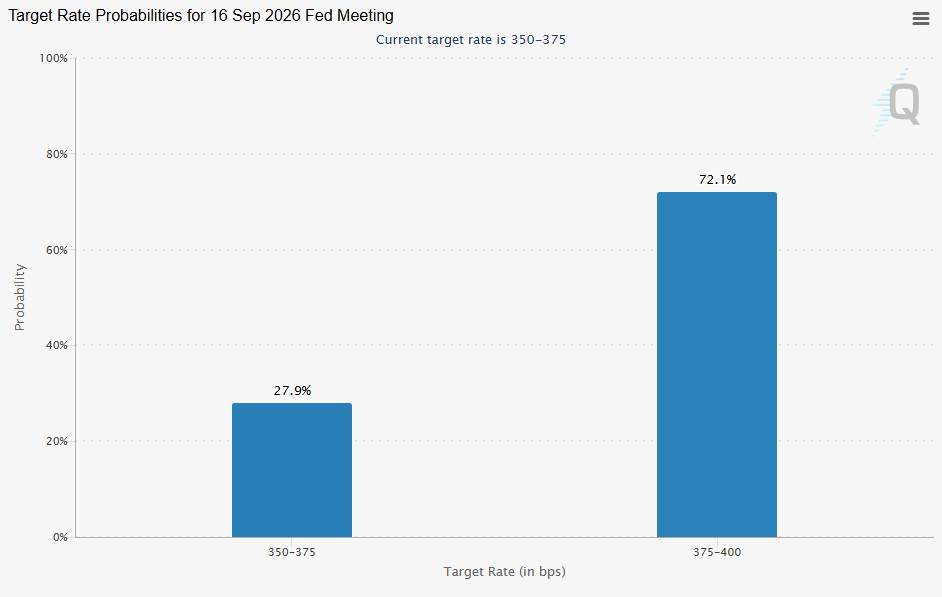 The probability of raising interest rates on September 16 rose to 72.1%. Source: X The day before, the probability was only about 61%. Higher oil prices and stronger producer inflation data have prompted traders to shift to tighter policy expectations.
Higher U.S. bond yields may reduce demand for volatile assets such as Bitcoin. As nominal returns rise, government bonds become relatively more attractive.
Despite this, there is no fixed inverse relationship between cryptocurrency and bond yields. Bitcoin recorded gains in August amid high borrowing costs and persistent inflation concerns. The difference between the current situation is that oil prices and bond yields are rising simultaneously. This combination has exacerbated market fears of another round of monetary tightening.
For crypto traders, the U.S. bond yield chart is now as important as the U.S. dollar. As markets reprice Fed policy expectations, the 10-year yield approaches 5%. The U.S. Bureau of Labor Statistics is scheduled to release August consumer price index (CPI) data on September 11. Subsequently, the Federal Reserve will hold a meeting from September 15 to 16. Its official schedule shows that the interest rate decision and press conference are scheduled to be held on September 16.
This article is for reference only and should not be regarded as financial or investment advice. Cryptocurrency, bond and stock markets remain volatile. Readers should conduct independent research before making investment decisions.