Exchange Ranking
 Top Exchanges
 24h Volume Ranking
 Popularity Ranking
 Exchange BTC Balance
 Proof of Reserves
 Decentralized Exchanges
 Funding Rate
 Funding Heatmap
 Liquidation Data
 Max Pain
 Long/Short Ratio
 Whale L/S Ratio
 Binance/Okex/Huobi L/S
 Bitfinex Margin L/S
 ETF Tracker
 Solana ETF
 XRP ETF
 Hong Kong ETF
 Bitcoin Treasuries
 Crypto Reversal
 Ethereum Reserves
 HyperLiquid Wallet Analysis
 Hyperliquid Whale Watch
 Large Transactions
 On-chain Movement
 Bitcoin ROI
 Stablecoin Market Cap
 Options Analysis
 News
News Articles
 Economic Calendar
 Features
 Wallet
 Contract Calculator


 Security
 Collections
 Watchlist
 Following
 ETH
ETH Robinhood Chain 新闻:450 万美元的手续费为何在以太坊上仅变为 400 美元?
以下是一则关于 Robinhood Chain 的新闻,揭示了 Layer 2(二层网络)实际运作中日益加剧的张力。根据 Bitquery 的详细调查,Robinhood Chain 在 9 月 3 日收取了约 450 万美元的交易手续费,而同一天支付给以太坊用于数据发布和证明的成本仅为 398 美元。这一比例约为 11,400 比 1,引发了人们对 Layer 2 增长究竟在何处产生真实价值的深刻质疑。
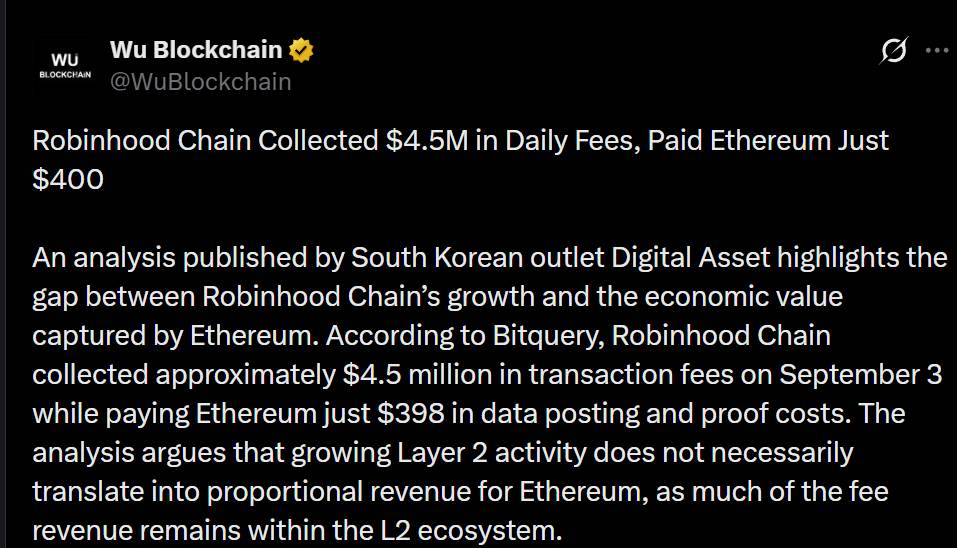 来源:WuBlockchain 在 X 平台上的报道
手续费激增的真正原因
Robinhood Chain 的气费(Gas Price)并非缓慢攀升,而是急剧飙升。8 月 24 日,该链的基础费用突破了其常规底价,且再未回落,最终在 11 天内上涨了 25 倍。典型的兑换交易在 8 月 22 日成本约为 1 美分,到 9 月 3 日已涨至 48 美分。
以下是这一变化的规模对比:
- 指标:气费、每日消耗气体量、收取的手续费
- 8 月 22 日:0.020 gwei、1,091 亿单位、54,701 美元
- 9 月 3 日:0.511 gwei、3,393 亿单位、4,503,705 美元
在此期间,需求大致翻了三倍,但由于 Robinhood Chain 定价公式的机制,收取的手续费激增了 82 倍。这并非系统故障,而是定价机制在需求超过特定阈值后,对拥堵情况进行的有意惩罚。
谁真正导致了此次激增
推动需求上升的并非成千上万的普通用户。根据 Bitquery 的链上分析,仅有八个合约地址就占据了整个气体使用量增长的 79%。其中三个特定的基础设施组件发挥了主要作用:
- 兑换路由器:仅在 9 月 3 日当天处理了 170 万笔交易,支付了当日收取总费用的 24.3%。
- 结算合约:被 31 个钱包使用,这些钱包几乎全部由单一源钱包资助,贡献了总费用的另外 15.4%。
- 账户抽象基础设施(ERC-4337):每天处理约 65 万次打包钱包操作。
与此同时,当天约有 38.2 万个普通钱包也支付了手续费,它们与高频交易合约一样,被收取完全相同的网络价格,因为 Robinhood Chain 没有允许任何人付费插队的优先系统。
资金实际流向何处
这是使 Robinhood Chain 新闻备受关注的核心所在。与以太坊燃烧部分交易手续费不同,Robinhood Chain 不燃烧任何手续费。每一笔收取的费用都分成两部分,分别进入该链指定的两个账户:一个用于基础底价,另一个用于拥堵附加费。用户支付的大约 99% 的资金流入了一个持有数千枚以太币的单一账户。
相比之下,该链实际运营的成本——即向以太坊发布交易数据以确保证书安全——在 9 月 3 日仅为数据发布 396 美元加上证明成本 2 美元。Robinhood Chain 当天实际上是以太坊 Blob 空间最大的买家之一,发送了整个以太坊网络上 36% 的 Blob 交易,但这笔账单相对于收取的 450 万美元来说,简直可以忽略不计。
这对 Layer 2 经济模型意味着什么
这项调查更广泛的意义触及了区块链基础设施中持续争论的核心:Layer 2 活动的增长并不自动转化为以太坊本身的成比例收入。值得理解几点启示:
- Blob 空间:以太坊出售给 L2 用于廉价发布数据的机制,目前定价足够低,即使大规模的收费收集对 L2 运营商来说也几乎不构成成本。
- 价值留存:随着 Layer 2 使用量的增加,大部分经济价值完全保留在该 L2 自身的生态系统内。
- 用户负担: Ordinary users on the chain equally absorb the cost of congestion, whether or not they are the cause of the surge in demand.
Failed transactions tell their story
One interesting side effect Bitquery points out is that during this period, the failure rate on the chain actually halved. From about one-fifth of transactions failed on August 21, it dropped to one-tenth on September 3. When gas bills are almost free, automated trading software can bear the risk of speculative trading and bear the losses of failure. Once fees turned into real money, the same software became significantly more cautious, which the survey said was the clearest evidence of participants responding to price changes in real time.
Conclusion
This round of Robinhood Chain news reveals a real structural gap in the current Layer 2 economic performance. A network can collect millions of dollars a day from users, while paying only a few hundred dollars to its underlying clearing layer, Ethereum, over the same period. Whether this gap will narrow as Blob space becomes more expensive, or whether this simply reflects the thin share of revenue Ethereum currently receives from L2 activity, remains an open question that cannot be fully answered by data alone.