Exchange Ranking
 Top Exchanges
 24h Volume Ranking
 Popularity Ranking
 Exchange BTC Balance
 Proof of Reserves
 Decentralized Exchanges
 Funding Rate
 Funding Heatmap
 Liquidation Data
 Max Pain
 Long/Short Ratio
 Whale L/S Ratio
 Binance/Okex/Huobi L/S
 Bitfinex Margin L/S
 ETF Tracker
 Solana ETF
 XRP ETF
 Hong Kong ETF
 Bitcoin Treasuries
 Crypto Reversal
 Ethereum Reserves
 HyperLiquid Wallet Analysis
 Hyperliquid Whale Watch
 Large Transactions
 On-chain Movement
 Bitcoin ROI
 Stablecoin Market Cap
 Options Analysis
 News
 Articles
 Economic Calendar
 Features
 Wallet
 Contract Calculator


 Security
 Collections
 Watchlist
 Following
 BTC
 ETH
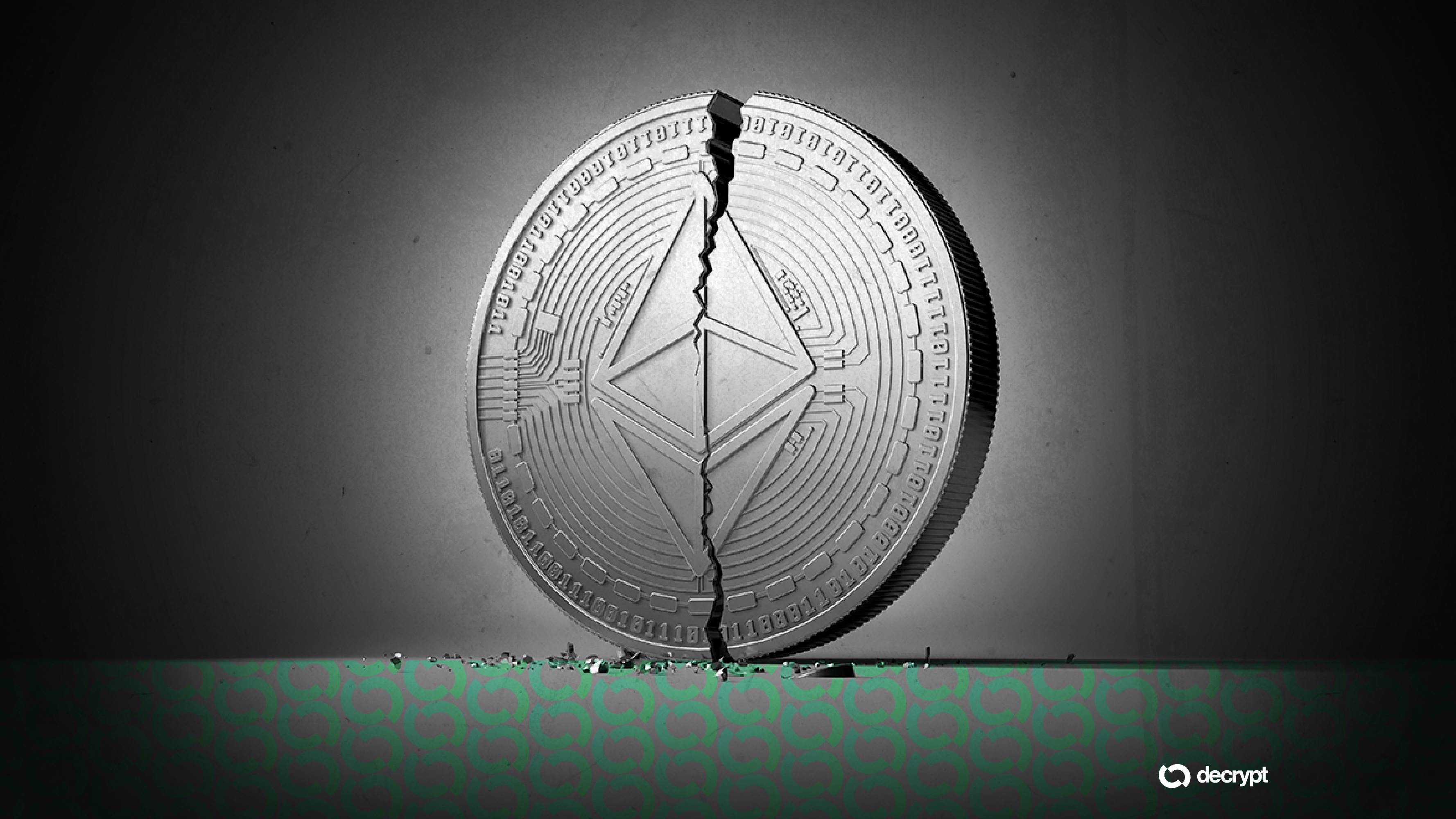
Justin Drake, a researcher at the Ethereum Foundation, calls on the industry to enter a "bunker model"
Justin Drake has been warning for years that quantum computers may crack cryptocurrencies in the future. Now, the Ethereum Foundation researcher says artificial intelligence may be the first to achieve this breakthrough.
Drake wrote in a post on Platform X on Wednesday: "Today I call on the blockchain industry to calmly start planning a 'bunker model'." His suggestion is to control the mass migration of funds to completely new addresses where transactions have never been signed, and where the public keys of those addresses remain hidden behind the hash value.
Potential risks to ECDSA signature scheme
The core of the concern is ECDSA (Elliptic Curve Digital Signature Algorithm), a signature scheme used by Bitcoin and Ethereum to prove that transactions are authorized by the correct private key. When a wallet signs a transaction, its public key becomes visible on the chain. If ECDSA is compromised, an attacker can inversely derive the private key from the public key, thereby stealing assets in the wallet.
Drake said it is reasonable to prepare for the ECDSA to be breached before Q-Day, the moment when quantum computers are powerful enough to crack today's encryption technology."In the worst case scenario, it may take months rather than years." By "breach" he means that on existing hardware (such as a large GPU cluster), private keys can be recovered in about a week.
AI-driven mathematical progress triggers new anxiety
He pointed to a recent wave of AI-driven mathematical research, including the 722 results released by OpenAI on Tuesday, as a sign that long-held assumptions are disintegrating. "Elliptic curves seem particularly vulnerable to superintelligence," he wrote. He believes that the rich mathematical structure of elliptic curves leaves room for clever attacks, and that the hash function is designed to withstand such attacks.
Drake emphasized that holders should not rush or panic, pointing out that moving assets does not require new encryption technology or wallets. He urged institutions such as Binance, Bitbank, Robinhood, Bitfinex and Tether to strengthen their cold storage security. He also mentioned that addresses holding less than 50 BTC are to some extent protected by the so-called "Satoshi Shield": approximately 20,000 exposed addresses associated with Bitcoin's founders, each holding 50 BTC, could become a primary target for attackers.
Accelerate the transition to resistance to quantum cryptography
This warning marks a sharp escalation of anxiety surrounding the possible breach of the security of cryptocurrencies. In March, after a Google paper suggested that quantum computers might crack encryption earlier than expected, Drake set the probability of Q-Day occurring before 2032 at 10% or more.
Earlier this year, the Ethereum Foundation established a dedicated quantum-resistant team, and co-founder Vitalik Buterin also proposed plans to transition the network to quantum-resistant cryptography. Drake said the roadmap for Ethereum's transition to hash-based cryptography should now accelerate. "I will push for maximum defensive acceleration," he wrote.